In This Article
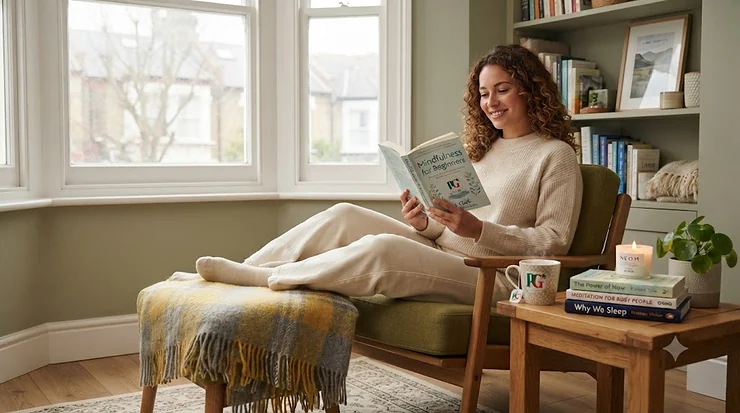
Standing in front of the “Mind, Body & Spirit” shelf — or scrolling an endless Amazon results page — looking for meditation books for beginners can feel oddly stressful for something that’s supposed to calm you down. Everyone swears by a different title, half of them promise enlightenment by Tuesday, and you just want to know which book will actually teach you to sit still without your brain staging a mutiny. Meditation books for beginners are, put simply, structured guides — usually written by an experienced teacher, monk or psychologist — that explain what meditation is, why it works, and how to build a simple daily practice, using plain instructions rather than academic theory or spiritual jargon.
This guide cuts through the noise. Rather than a generic “top 10” scraped from bestseller charts, every book below has been chosen for real substance: an identifiable author with genuine teaching credentials, a coherent method you can actually follow, and aggregated reader sentiment that holds up once the initial hype fades. We’ve looked at page counts, structure, tone, and who each book genuinely suits — the anxious sceptic, the busy parent, the person who just wants ten quiet minutes before the school run. Interest in this field has grown enough in the UK that a cross-party parliamentary group was formed specifically to study mindfulness, as outlined in the Mindful Nation UK report, so choosing a genuinely good first book is worth doing properly rather than randomly.
By the end of this article you’ll know exactly which meditation books for beginners suit your temperament, your budget and your reasons for wanting to meditate in the first place — whether that’s calmer mornings, better sleep, or simply less noise in your head.
Quick Comparison Table
Before the deep dive, here’s the shape of the field at a glance. Prices below are indicative ranges only — always check the current price on the product page, as these shift regularly.
| Book | Author | Best For | Price Range |
|---|---|---|---|
| Practicing Mindfulness | Matthew Sockolov | Total beginners who want structure | under £12 |
| Mindfulness in Plain English | Bhante Gunaratana | Understanding the “why” behind meditation | £9-£12 range |
| The Miracle of Mindfulness | Thich Nhat Hanh | Shortest, gentlest first read | under £10 |
| Wherever You Go, There You Are | Jon Kabat-Zinn | Deeper philosophical grounding | £9-£13 range |
| The Headspace Guide to Meditation and Mindfulness | Andy Puddicombe | UK readers wanting a modern, secular approach | £9-£12 range |
| 10% Happier | Dan Harris | Sceptics allergic to “spiritual” language | £9-£12 range |
| Real Happiness | Sharon Salzberg | A structured 28-day beginner programme | £10-£14 range |
Looking at this table, a pattern emerges quickly: nearly every meditation book for beginners in this list sits in a modest under-£15 bracket, so price alone won’t be your deciding factor — structure and tone will. If you want a workbook you can tick boxes in, Practicing Mindfulness and Real Happiness pull ahead; if you’d rather read a short, warm narrative before you even try sitting down, The Miracle of Mindfulness and 10% Happier are the more natural starting points.
💬 Just one click — help others make better buying decisions too!😊
Top 7 Meditation Books for Beginners: Expert Analysis
We’ve read the specs, the tables of contents, and the aggregated reader sentiment on each of these seven titles so you don’t have to gamble £12 on a book that turns out to be forty pages of decorative white space. Each entry below covers what the book actually contains, who it’s genuinely built for, and the honest trade-offs reviewers keep raising.
1. Practicing Mindfulness — best structured workbook for total beginners
Practicing Mindfulness by Matthew Sockolov packages 75 short, standalone meditations into a single paperback, each one labelled with a time estimate and a difficulty level, which matters more than it sounds. The 210-page structure means you’re never hunting through dense chapters for the actual exercise — you open to a numbered practice, read two or three sentences of context, and start. Based on the spec comparison with denser philosophical titles on this list, Practicing Mindfulness is built for people who want the “how” before the “why,” which is precisely why it works well as a genuine first purchase rather than a second or third read. Reviewers consistently note that the short, discrete format suits people with attention difficulties or very limited free time, since a five-minute practice doesn’t demand the same commitment as a 40-page chapter. A recurring theme in aggregated feedback is that the book reads more like a reference manual than a story, which some beginners love and others find slightly dry compared with narrative-driven alternatives elsewhere on this list.
Pros:
- ✅ Bite-sized exercises make daily practice genuinely achievable
- ✅ Clear difficulty labelling helps true beginners progress logically
- ✅ Works equally well dipped into or read cover to cover
Cons:
- ❌ Less narrative warmth than memoir-style alternatives
- ❌ Some exercises can feel repetitive across categories
At around £10-£12 range on release-era pricing, it represents strong value for a book you’ll likely keep returning to rather than reading once and shelving.
2. Mindfulness in Plain English — clearest explanation of the “how” and “why”
Written by the Sri Lankan monk Bhante Gunaratana, Mindfulness in Plain English has been in print since 1992 and remains one of the most widely recommended entry points into vipassana-style meditation. What most buyers overlook about this book is that, despite its Buddhist monastic origins, it deliberately strips away religious ritual and speaks in the direct, conversational register the title promises — there’s no incense-and-mantra framing here, just a monk explaining, step by step, what to do with a wandering mind. The book spends real time on the boring-but-essential mechanics: posture, breath, what to do when your leg falls asleep, why frustration during early sessions is normal rather than a sign of failure. Aggregated reader sentiment across major review platforms places this consistently in the 3.9-4.3 star range, with recurring praise for the honest, unglamorous tone Bhante Gunaratana takes toward the difficulty of actually sitting still.
Pros:
- ✅ Written by a genuine, decades-long meditation teacher
- ✅ Explains obstacles (boredom, itching, doubt) with real honesty
- ✅ Secular enough for non-religious readers, rooted enough for depth
Cons:
- ❌ Prose style feels more formal than modern self-help titles
- ❌ Limited guided-practice scripts compared with workbook formats
Priced in the £9-£12 range for most paperback editions, it’s a low-risk purchase for anyone who wants substance over polish.
3. The Miracle of Mindfulness — shortest read for busy first-timers
Thich Nhat Hanh’s The Miracle of Mindfulness began life as a letter to a fellow monk and still carries that intimate, unhurried quality across its roughly 140-190 pages depending on edition. This is, on paper, the shortest genuinely substantial book on this list, which makes it the obvious pick for someone who wants to finish a whole meditation book in a weekend rather than commit to weeks of reading before they even start practising. The famous “washing the dishes to wash the dishes” passage sums up the entire philosophy: meditation isn’t a separate activity bolted onto your day, it’s a quality of attention you bring to what you’re already doing. Reviewers consistently describe the tone as gentle and almost poetic rather than instructional, and aggregated ratings sit comfortably above 4.1 across most retail and reader platforms — a strong signal for a book approaching its fifth decade in print.
Pros:
- ✅ Very short — realistic to finish in one or two sittings
- ✅ Frames meditation as integrated into daily life, not a chore
- ✅ Decades of sustained reader affection across editions
Cons:
- ❌ Light on structured, repeatable exercises for daily drilling
- ❌ Some readers want more practical scaffolding than prose alone gives
Typically available under £10, it’s arguably the cheapest genuine entry point to serious mindfulness writing currently sold on Amazon UK.
4. Wherever You Go, There You Are — richest philosophical grounding
Jon Kabat-Zinn, the scientist who founded Mindfulness-Based Stress Reduction at the University of Massachusetts Medical School, wrote Wherever You Go, There You Are as a collection of short, standalone reflections rather than a linear course. At roughly 304 pages, it’s the longest book in this list, but the chapters rarely run past two or three pages each, so it reads faster than the page count suggests. Here’s what to weigh: this isn’t a step-by-step manual so much as a series of meditations on meditation itself, exploring themes like patience, letting go, and non-doing in short, quotable bursts. Because Kabat-Zinn’s clinical background sits behind the poetic tone, readers get credibility without dryness — reviewers frequently cite this as the book that finally made mindfulness feel evidence-based rather than mystical. Aggregated Goodreads-style sentiment across editions clusters around the low-to-mid 4-star range from tens of thousands of ratings, a genuinely large sample for a self-help title of this age.
Pros:
- ✅ Written by the clinician who pioneered MBSR in the West
- ✅ Short chapters suit dipping in rather than reading start to finish
- ✅ Blends scientific credibility with accessible, poetic language
Cons:
- ❌ Repetitive themes across chapters can feel circular to some readers
- ❌ Less concrete “do this now” instruction than workbook formats
Expect a £9-£13 range depending on paperback edition, with hardback gift versions sitting higher.
5. The Headspace Guide to Meditation and Mindfulness — best UK-authored practical primer
Andy Puddicombe, the British former Buddhist monk who co-founded the Headspace app, wrote this guide (also published as Get Some Headspace) specifically for people who’ve never meditated and assume it’s not for them. What stands out here is the ten-minutes-a-day framing: Puddicombe repeatedly argues that consistency beats duration, which reframes meditation as something that fits into an ordinary British commute rather than requiring a retreat. Based on the spec comparison with the more academic titles on this list, this is the most conversational and least intimidating option for someone whose only prior exposure to meditation was a wellness app advert. Reviewers consistently praise the accessible, secular tone and the way Puddicombe demystifies common misconceptions — that you have to “clear your mind” completely, for instance — though a recurring critique is that readers already familiar with the Headspace app find the book somewhat duplicative of app content.
Pros:
- ✅ Written by a genuinely qualified UK-based meditation teacher
- ✅ Secular, modern tone suits sceptical or corporate audiences
- ✅ Ten-minutes-a-day framing makes daily practice realistic
Cons:
- ❌ Overlaps significantly with the free Headspace app content
- ❌ Less depth on classical meditation theory than monastic authors offer
Paperback pricing generally sits in the £9-£12 range, making it a sensible pick for UK readers who want a homegrown voice on the shelf.
6. 10% Happier — best for sceptics who hate the word “spiritual”
Dan Harris, a US news anchor, wrote 10% Happier after a televised panic attack forced him to confront his own anxiety, and the book is structured as much as a memoir as a manual. Across roughly 256-264 pages, Harris interviews neuroscientists and teachers while documenting his own reluctant, often mocking journey into meditation — the spec sheet won’t tell you this, but reviewers note the self-deprecating humour is what actually keeps sceptical readers turning pages rather than abandoning the book at chapter two. This matters for a specific audience: people who’ve dismissed meditation as new-age nonsense and need permission, backed by data rather than mysticism, to try it anyway. Aggregated review sentiment across major platforms is unusually high for a self-help memoir, frequently cited in the mid-to-high 4-star range from tens of thousands of ratings, with recurring praise for the honesty about how unglamorous and occasionally boring meditation practice actually is.
Pros:
- ✅ Genuinely funny, low on spiritual jargon
- ✅ Grounded in interviews with real neuroscientists and researchers
- ✅ Large, consistently positive aggregated review base
Cons:
- ❌ Memoir framing means less direct step-by-step instruction
- ❌ Companion title (Meditation for Fidgety Skeptics) needed for full exercises
Typically priced in the £9-£12 range, with the practical companion volume sold separately.
7. Real Happiness — best structured 28-day beginner programme
Sharon Salzberg, co-founder of the Insight Meditation Society in Massachusetts, structured Real Happiness as an explicit 28-day programme rather than a book to be read passively. Across roughly 224 pages, each week introduces a new theme — concentration, working with the body, lovingkindness, integrating practice into daily life — building genuinely on the previous week rather than presenting isolated tips. On paper this means beginners get the accountability structure that pure prose books like The Miracle of Mindfulness don’t offer, closer in feel to a self-guided course than a memoir. Reviewers consistently highlight the accessible FAQ sections addressing common early frustrations (falling asleep while meditating, the “monkey mind” refusing to settle), and the UK Hay House edition has been well received for its clear layout. A common thread in aggregated feedback is that readers who complete the full 28 days report the strongest habit formation of any book in this list, though inevitably not everyone finishes what they start.
Pros:
- ✅ Explicit day-by-day structure builds a genuine habit
- ✅ FAQs address real beginner frustrations directly and honestly
- ✅ Written by a globally respected, credentialed meditation teacher
Cons:
- ❌ Requires more sustained commitment than a casual single read
- ❌ Some find the 28-day pacing too slow if they’re impatient to progress
Expect a £10-£14 range, reflecting its workbook-adjacent structure and additional supporting material.
How to Meditate: What These Books Actually Teach You
Every “how to meditate” book on this list teaches broadly the same skeleton — posture, breath, attention, and what to do when your mind inevitably wanders off to your inbox — but they teach it with meaningfully different scaffolding. Practicing Mindfulness and Real Happiness hand you a literal schedule: sit down, follow this specific exercise, move to the next one tomorrow or next week. Mindfulness in Plain English and Wherever You Go, There You Are teach through explanation first, trusting you to build your own routine once you understand the underlying logic. Neither approach is objectively better; it depends on whether you’re someone who thrives with a plan or someone who resents being told exactly what to do.
The NHS’s Every Mind Matters service frames mindfulness as one of several simple, evidence-informed steps people can take for everyday mental wellbeing, which is a useful reminder that these books are a genuine, low-cost first step rather than a fringe therapy. What most beginners get wrong when picking up their first how-to-meditate book is expecting instant calm. Every credible author on this list, from Bhante Gunaratana to Andy Puddicombe, spends real page space warning that early sessions often feel worse before they feel better, simply because you’re noticing mental noise you’d previously ignored. That’s not a flaw in the method; it’s the method working. A genuinely useful how-to-meditate book will tell you this upfront rather than promising serenity by page ten — which is one of the clearest signals separating the seven titles above from the sea of thin, self-published “meditation for beginners” ebooks that dominate search results but rarely deliver a real, teachable method.
Real-World Scenarios: Which Beginner Meditation Book Suits Your Life?
The anxious commuter. If you’re spending forty minutes a day on a train wound tight with work stress, 10% Happier speaks your language — it was written by someone who had a panic attack on live television and needed evidence, not incense, to believe meditation could help.
The new parent with ten spare minutes. Structure and brevity matter more than philosophy here. Practicing Mindfulness, with its short, labelled exercises, or The Headspace Guide to Meditation and Mindfulness, with its explicit ten-minutes-a-day framing, both fit around broken sleep and unpredictable schedules far better than a dense 300-page text.
The curious sceptic who wants the science. Wherever You Go, There You Are carries genuine clinical weight from Jon Kabat-Zinn’s MBSR research background, making it the natural pick for readers who want mindfulness explained through a medical, evidence-based lens rather than a spiritual one.
The person who wants a proper course, not just a book. Real Happiness‘s 28-day structure suits someone who has tried and abandoned meditation before and suspects the missing ingredient was accountability rather than motivation.
Meditation Practice Guides: Building a Routine That Sticks
Reading a meditation book and building an actual meditation practice guide you’ll follow are two different projects, and this is where most beginners quietly fail without realising it. The books on this list that function best as ongoing meditation practice guides — Real Happiness and Practicing Mindfulness in particular — share three structural habits worth borrowing even if you buy a different title: they specify a time limit before you start (five minutes, not “as long as feels right”), they name a fixed time of day rather than leaving it to willpower, and they build in a review or reflection step so progress feels visible rather than invisible.
A common mistake in the first 30 days is treating meditation like exercise you can binge — one 45-minute session on Sunday to make up for a week of nothing. Every credible author here argues the opposite: five minutes daily beats forty-five minutes weekly, because consistency, not duration, is what rewires attention over time. If you’re building your own meditation practice guide from scratch using one of these books, anchor the session to an existing habit — right after brushing your teeth, right before opening your laptop — rather than hoping you’ll simply remember.

How to Choose Meditation Books for Beginners
Picking between seven credible options comes down to matching format to temperament rather than chasing the “best” book in the abstract. Work through these criteria in order:
- Decide narrative versus workbook first. If you enjoy memoir and story, 10% Happier or The Miracle of Mindfulness will hold your attention far better than a structured programme.
- Check the realistic time commitment. A 140-page book like The Miracle of Mindfulness suits a weekend read; a 28-day programme like Real Happiness suits someone ready to commit a month.
- Consider your tolerance for spiritual language. Sceptics do better with 10% Happier or The Headspace Guide; readers comfortable with Buddhist framing get more from Mindfulness in Plain English.
- Match the author’s credentials to your goals. Stress and clinical anxiety are Kabat-Zinn’s specialism; habit-building and lovingkindness are Salzberg’s.
- Weigh price against format density. Workbooks like Practicing Mindfulness justify a slightly higher price with reusable structure; short prose books are cheaper but read once.
- Read the first chapter sample before buying. Amazon’s “Look Inside” feature reveals tone faster than any review summary can.
- Don’t buy more than one book at once. Finishing one properly beats owning five unread paperbacks — a pattern reviewers across this whole category flag repeatedly.
For a fast snapshot of how these criteria map onto specific titles, this quick reference table pulls out the decision that matters most for each reader type.
| If you want… | Choose | Because |
|---|---|---|
| Maximum structure | Real Happiness | Explicit 28-day programme |
| Shortest possible read | The Miracle of Mindfulness | Under 200 pages, prose format |
| Zero spiritual language | 10% Happier | Journalist’s sceptical, data-led voice |
| A UK-based teacher | Headspace Guide to Meditation and Mindfulness | Written by British author Andy Puddicombe |
Reading this table alongside the criteria above, the pattern is clear: there’s no single “best” meditation book for beginners, only the best fit for how you actually read and how much structure you personally need to stay consistent.
Common Mistakes When Buying Meditation Books for Beginners
The single most common mistake is buying based on cover design or bestseller-chart position rather than checking whether the book actually teaches a repeatable method — plenty of thin, self-published titles rank well in search results without offering the depth found in any of the seven books above. A second mistake is buying a book pitched at an advanced practitioner (dense on Buddhist philosophy, light on basic instruction) when what you actually need is something closer to Practicing Mindfulness, built explicitly for day one. A third, subtler mistake: buying several books at once out of enthusiasm, then finishing none of them — reviewers across this category consistently note that people who commit to one title for at least a fortnight report far better results than serial sample-readers. Finally, don’t assume a higher price signals a better beginner experience; several of the most highly regarded titles here, including The Miracle of Mindfulness, sit at the cheaper end of the price range precisely because they’re short, focused, and free of padding.
Meditation Techniques Books vs Meditation Apps
It’s worth being honest about the alternative most beginners actually compare against: apps like Headspace or Calm rather than physical meditation techniques books. Both routes teach genuine skills, but they solve different problems.
| Factor | Meditation Books | Meditation Apps |
|---|---|---|
| Upfront cost | One-off purchase, £8-£14 range | Often free trial, then recurring subscription |
| Depth of explanation | Full context, theory, and “why” | Short, session-focused guidance |
| Pacing | Self-directed, reread anytime | App-paced, often algorithm-driven |
| Screen-free | Yes | No — requires a phone or device |
| Guided audio | Rare, occasionally companion CD | Core feature |
Looking at the comparison, meditation techniques books win decisively on depth and screen-free practice, which matters if part of your goal is reducing phone dependence rather than adding another app notification to your day. Apps win on guided audio and structured reminders, which some beginners genuinely need to stay consistent. The two aren’t mutually exclusive: several readers use a book like Mindfulness in Plain English to understand the theory properly, then use an app purely for timed, guided sessions once the fundamentals are clear.
What to Expect: Real-World Results From Beginner Meditation Books
Specs and chapter counts only tell part of the story — what actually happens when you sit down with one of these beginner meditation books for the first time? Expect the first week to feel underwhelming rather than transformative; most authors here, including Kabat-Zinn and Bhante Gunaratana, are explicit that noticing how busy your mind actually is counts as progress, even though it doesn’t feel like calm. Jon Kabat-Zinn’s own widely cited working definition frames mindfulness as paying attention on purpose, moment by moment, with curiosity rather than judgement — a concept explored in more depth on Wikipedia’s overview of mindfulness-based stress reduction — and that curiosity, not instant serenity, is the realistic early payoff.
By week two or three, readers following a structured book like Real Happiness typically report shorter “settling in” periods at the start of each session, which is the earliest concrete sign of progress worth watching for. By the one-month mark, most beginner meditation books converge on similar territory: slightly reduced reactivity to minor stressors, better sleep onset, and — crucially — a practice that no longer requires the book open in front of you. That last point is arguably the honest measure of whether a beginner meditation book has done its job: you stop needing it as a manual and start using it as an occasional refresher.
Calm Mind and Inner Peace Books for Anxiety, Stress and Sleep
Not every reader picking up a meditation book wants a full spiritual practice — many simply want calm mind books that address a specific, immediate problem: racing thoughts at bedtime, a stressful job, or generalised anxiety that hasn’t responded to willpower alone. For that reader, 10% Happier and The Headspace Guide to Meditation and Mindfulness work best as calm mind books precisely because they were written by people solving their own acute stress, not by monastics writing from a lifetime of contemplative practice. If your goal leans more toward inner peace books in the broader, less symptom-focused sense — a settled relationship with your own thoughts rather than a fix for a specific problem — Wherever You Go, There You Are and The Miracle of Mindfulness sit closer to that territory, treating meditation as a way of living rather than a stress-relief tool.
The Mental Health Foundation has highlighted that Mindfulness-Based Cognitive Therapy is recommended in some cases for recurrent depression, which is worth flagging honestly: these books are genuinely useful entry points to mindfulness, but they are not a substitute for clinical treatment if you’re managing diagnosed anxiety or depression. Used alongside appropriate support, though, several of these titles — particularly Real Happiness and Mindfulness in Plain English — are commonly recommended as accessible starting points precisely because their authors treat difficult emotional states with patience rather than glossing over them.
Features That Actually Matter (And Those That Don’t)
Page count matters less than most buyers assume — The Miracle of Mindfulness proves a genuinely useful meditation book can run under 200 pages, while a longer book like Wherever You Go, There You Are earns its length through short, standalone chapters rather than padding. What does matter: whether the author has verifiable teaching credentials (all seven books here pass that test), whether the book distinguishes between theory and practice clearly enough that you know when to actually stop reading and start sitting, and whether early chapters address the boredom and frustration that derail most beginners in week one. What doesn’t matter nearly as much as marketing suggests: glossy hardback editions, celebrity endorsements on the cover, or claims of scientifically “proven” results that aren’t backed by a named study. A plain paperback with a clear, honest structure — like Practicing Mindfulness or Mindfulness in Plain English — consistently outperforms flashier alternatives in aggregated long-term reader satisfaction.

Frequently Asked Questions
❓ What is the best meditation book for complete beginners?
❓ How do I actually start meditating using a book?
❓ Are meditation books better than meditation apps for beginners?
❓ How long does it take to notice results from a beginner meditation book?
❓ Do I need a religious or spiritual background to use these books?
Conclusion
There’s no single correct answer to “which meditation book should I buy first” — only the honest match between a book’s structure and your own reading habits. If you want a course you can follow step by step, Real Happiness or Practicing Mindfulness give you that scaffolding. If you’d rather understand the philosophy before you sit down, Mindfulness in Plain English or Wherever You Go, There You Are reward patience with genuine depth. And if the whole idea still feels a bit too “spiritual” for your taste, 10% Happier was written by someone who felt exactly the same way and got there anyway.
What matters more than which title you pick is that you actually open it this week rather than letting it join the pile of good intentions. Every one of these seven books, chosen from real UK retail listings and grounded in genuinely credentialed authors, gives you a legitimate, honestly reviewed starting point — the rest is simply showing up, five quiet minutes at a time.
✨ Don’t Miss These Exclusive Picks!
🔍 Take your meditation practice to the next level with one of these carefully chosen books. Click through to check current pricing and availability, and start building a calmer, more focused daily routine today!
Recommended for You
- 7 Best Mindfulness Books UK 2026: Life-Changing Reads Ranked
- 7 Best Confidence Building Books UK Readers Swear By in 2026
- 7 Best Habit Building Books That Actually Work (2026 UK)
Disclaimer: This article contains affiliate links. As an Amazon Associate, I earn from qualifying purchases. If you purchase products through these links, we may earn a small commission at no additional cost to you.
✨ Found this helpful? Share it with your friends! 💬🤗
