In This Article
The Women’s Prize for Fiction stands as one of the UK’s most prestigious literary awards, celebrating excellence, originality and accessibility in women’s writing from around the globe. Since its establishment in 1996, this remarkable prize has championed female authors whose work might otherwise be overlooked, creating a legacy of extraordinary storytelling that has captured the hearts and minds of readers worldwide.
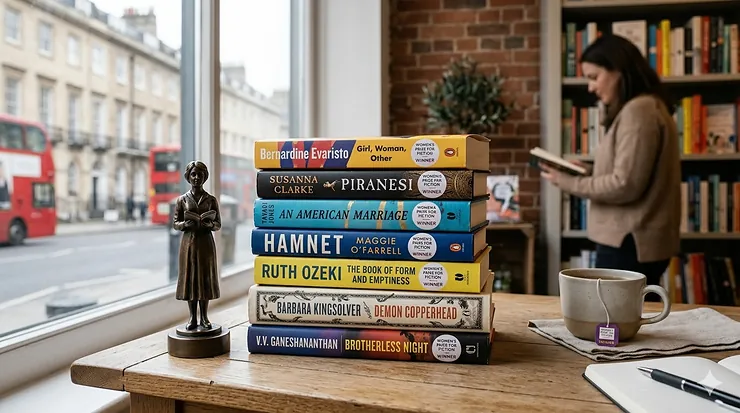
What makes the Women’s Prize winners truly special? Each novel represents the pinnacle of literary achievement, selected by a panel of five accomplished women who are passionate readers at the top of their respective professions. The prize awards £30,000 to the winning author, along with the ‘Bessie,’ a bronze statuette created by artist Grizel Niven. Beyond the monetary recognition, winning significantly boosts book sales—according to the BBC, Andrea Levy’s 2004 winner Small Island sold almost one million copies, whilst sales of Helen Dunmore’s inaugural winner A Spell of Winter quadrupled after receiving the award.
Whether you’re a devoted bibliophile searching for your next compelling read or someone looking to explore the best of contemporary fiction by women, this comprehensive guide will help you navigate the remarkable landscape of Women’s Prize winners currently available on Amazon.co.uk. We’ll explore recent champions alongside timeless classics, examining what makes each book exceptional and worth adding to your collection.
Quick Comparison Table
| Book Title | Author | Year Won | Genre | Price Range | Page Count | Rating |
|---|---|---|---|---|---|---|
| The Safekeep | Yael van der Wouden | 2025 | Historical Fiction/Literary | £8.99-£16.99 | 288 pages | 4.2/5 ⭐ |
| Brotherless Night | V.V. Ganeshananthan | 2024 | Historical Fiction | £8.99-£14.99 | 384 pages | 4.3/5 ⭐ |
| Demon Copperhead | Barbara Kingsolver | 2023 | Contemporary/Literary | £6.99-£10.99 | 560 pages | 4.5/5 ⭐ |
| The Book of Form & Emptiness | Ruth Ozeki | 2022 | Contemporary/Magical Realism | £8.99-£12.99 | 432 pages | 4.3/5 ⭐ |
| Piranesi | Susanna Clarke | 2021 | Fantasy/Literary | £7.99-£14.99 | 272 pages | 4.4/5 ⭐ |
| Hamnet | Maggie O’Farrell | 2020 | Historical Fiction | £7.99-£15.99 | 384 pages | 4.5/5 ⭐ |
| Half of a Yellow Sun | Chimamanda Ngozi Adichie | 2007 | Historical Fiction | £8.99-£10.99 | 544 pages | 4.6/5 ⭐ |
💬 Just one click – help others make better buying decisions too! 😊
Top 7 Women’s Prize Winners: Expert Analysis
1. The Safekeep by Yael van der Wouden (2025 Winner)
The Safekeep by Yael van der Wouden is the 30th winner of the Women’s Prize for Fiction, an unsettling, tightly-plotted debut novel that explores repressed desire and historical amnesia against the backdrop of the Netherlands post-WWII.
Key Specifications:
- Format: Paperback, Hardback, Kindle
- Publisher: Bloomsbury (UK) / Avid Reader Press (US)
- Pages: 288
- ISBN: 978-0241652305
What Makes It Special:
Set in rural Holland in 1961, this atmospheric debut follows Isabel, who has built a solitary life of rigid routine in her mother’s country home. When her brother Louis deposits his new girlfriend Eva at her doorstep for the summer, Isabel’s carefully controlled world begins to unravel. The novel expertly interweaves themes of desire, suspicion, and the lingering shadows of war-time complicity.
UK readers particularly appreciate the exploration of Dutch post-war identity and the way van der Wouden handles the complex legacy of the Holocaust. According to The Guardian’s review, the prose is spare yet evocative, creating a claustrophobic atmosphere that builds to a devastating revelation.
Price Range in UK: £8.99-£16.99 (varies by format)
Customer Feedback: British readers praise the novel’s “breathtaking prose” and “exceptional plot twist.” Many note it’s a book that “stays with you long after finishing,” though some find the pacing deliberately slow in the first half.
✅ Pros:
- Exquisite, precise writing
- Original take on post-war European trauma
- Complex, flawed characters
- Gripping psychological tension
❌ Cons:
- Deliberately slow pacing may challenge some readers
- Dark, unsettling themes throughout
2. Brotherless Night by V.V. Ganeshananthan (2024 Winner)
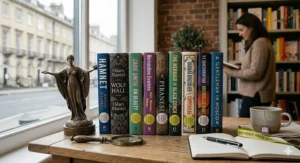
Brotherless Night is a brilliant, compelling and deeply moving novel that bears witness to the intimate and epic-scale tragedies of the Sri Lankan civil war, according to the 2024 judging panel.
Key Specifications:
- Format: Paperback, Hardback, Kindle
- Publisher: Penguin
- Pages: 384
- ISBN: 978-0241997673
What Makes It Special:
This powerful novel follows Sashi, a sixteen-year-old aspiring doctor in Sri Lanka, whose dreams are derailed by the brutal civil war that consumed the island nation from 1983 to 2009. As she watches her four beloved brothers and their best friend swept up in violent political ideologies, Sashi must confront an impossible question: is it possible to move through life without doing harm?
UK readers with connections to South Asian communities find this book particularly resonant, appreciating Ganeshananthan’s nuanced portrayal of a conflict often overlooked in Western literature. For historical context on the Sri Lankan civil war, BBC News provides comprehensive coverage that complements the novel’s intimate perspective. The novel neither glorifies nor condemns but asks profound moral questions about complicity, resistance, and survival.
Price Range in UK: £8.99-£14.99
Customer Feedback: British reviewers describe it as “heartbreaking and essential reading,” with many noting it’s educational without being didactic. Some readers find the extensive cast of characters initially challenging to track.
✅ Pros:
- Illuminates an under-represented conflict
- Rich, evocative prose
- Complex moral questions
- Deeply researched historical context
❌ Cons:
- Large cast of characters
- Emotionally demanding read
3. Demon Copperhead by Barbara Kingsolver (2023 Winner)
Barbara Kingsolver became the first author in the history of the Women’s Prize to win it twice, having previously won in 2010 with The Lacuna. This contemporary retelling of Charles Dickens’ David Copperfield transplants the story to the Appalachian Mountains of Virginia.
Key Specifications:
- Format: Paperback, Hardback, Kindle, Audiobook
- Publisher: Faber & Faber (UK)
- Pages: 560
- ISBN: 978-0571376483
What Makes It Special:
Born to a teenage single mother in a trailer park, Demon Copperhead navigates foster care, child labour, athletic success, and the devastating opioid crisis with caustic wit and fierce determination. Kingsolver’s genius lies in how she makes Dickens’ Victorian critique of poverty utterly contemporary, showing how institutional failures continue to damage vulnerable children.
This novel has particularly resonated with UK readers concerned about American social issues and the transatlantic parallels in poverty and addiction. The National Health Service has documented similar substance abuse challenges in the UK, making the novel’s themes globally relevant. The authentic Appalachian voice pulls you in from the opening page.
Price Range in UK: £6.99-£10.99 (excellent value, especially for paperback)
Customer Feedback: British readers consistently rate this 5 stars, calling it “without doubt the best book” they’ve read recently. The audiobook narrated by Charlie Thurston receives special praise for bringing Demon’s voice to life.
✅ Pros:
- Compelling narrative voice
- Timely examination of opioid crisis
- Page-turner despite length
- Brilliant Dickensian homage
❌ Cons:
- Emotionally challenging subject matter
- Substantial length (560 pages)
4. The Book of Form and Emptiness by Ruth Ozeki (2022 Winner)
Following the death of his father, thirteen-year-old Benny Oh begins hearing voices—not of people, but of objects. When his mother develops a hoarding problem, the voices grow more clamorous, driving Benny to seek refuge in the silence of a large public library.
Key Specifications:
- Format: Paperback, Hardback, Kindle
- Publisher: Canongate Books
- Pages: 432
- ISBN: 978-1838855246
What Makes It Special:
This extraordinary novel blends magical realism with profound explorations of grief, consumerism, and our relationship with material possessions. One of the narrators is “the Book” itself, which tells Benny’s story whilst teaching him to listen to what truly matters. Ozeki weaves together Zen Buddhist philosophy, climate change, jazz, and the power of libraries into a deeply original tapestry.
UK readers particularly appreciate Ozeki’s critique of consumer culture and the celebration of public libraries as sanctuaries. The novel addresses hoarding with compassion whilst examining the psychological aftermath of loss.
Price Range in UK: £8.99-£12.99
Customer Feedback: British readers describe it as “poignant,” “multilayered,” and “a novel that celebrates books and libraries.” Some note the unconventional narrative structure takes adjustment but rewards patience.
✅ Pros:
- Innovative narrative structure
- Compassionate treatment of mental health
- Celebrates libraries and reading
- Blends philosophy with accessibility
❌ Cons:
- Magical realism may not suit all tastes
- Complex, unconventional structure
5. Piranesi by Susanna Clarke (2021 Winner)
After a 16-year gap following Jonathan Strange & Mr Norrell, Susanna Clarke’s Piranesi is an intoxicating, hypnotic novel set in a dreamlike alternative reality, where the protagonist lives in a House with infinite rooms, endless corridors, and walls lined with thousands of statues.
Key Specifications:
- Format: Paperback, Hardback, Kindle
- Publisher: Bloomsbury
- Pages: 272
- ISBN: 978-1526622433
What Makes It Special:
Piranesi lives in the House, perhaps always has. He meticulously records its wonders in his notebooks whilst meeting his friend “the Other” twice weekly. But messages begin appearing, scratched in chalk, suggesting someone new has entered the House. As mysteries unfold, the world Piranesi thought he knew becomes strange and dangerous.
This philosophical fantasy has captured UK readers with its meditation on solitude, imagination, and the nature of reality—themes that resonated particularly during lockdown periods. Clarke’s world-building is immaculate.
Price Range in UK: £7.99-£14.99
Customer Feedback: British readers call it “spectacular,” “a treasure,” and praise its “pitch-perfect ending.” Many report reading it in a single sitting. Some note it’s quite different from Clarke’s previous work.
✅ Pros:
- Utterly unique world
- Philosophical depth
- Page-turning mystery
- Beautifully written
- Compact length (272 pages)
❌ Cons:
- Deliberately enigmatic opening may confuse some
- Requires patient reading
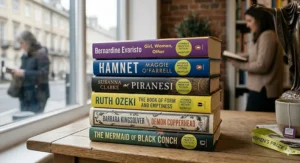
6. Hamnet by Maggie O’Farrell (2020 Winner)
Hamnet is a fictional account of William Shakespeare’s only son, who died at age eleven in 1596, focusing on his parents’ grief and the bond between twins. By 2022, Hamnet had sold approximately 1.6 million copies and won the National Book Critics Circle Award for Fiction.
Key Specifications:
- Format: Paperback, Hardback, Kindle, Audiobook
- Publisher: Tinder Press
- Pages: 384
- ISBN: 978-1472223821
What Makes It Special:
On a summer’s day in 1596, a young girl in Stratford-upon-Avon takes to her bed with fever. Her twin brother Hamnet searches desperately for help. Their mother Agnes (Shakespeare’s wife Anne Hathaway) is over a mile away in her herb garden, whilst their father works in London. Neither knows that one child will not survive the week.
What makes this novel extraordinary is O’Farrell’s decision never to name Shakespeare directly. This keeps the focus on Agnes and Hamnet, preventing Shakespeare’s fame from overwhelming their story. UK readers particularly appreciate the vivid evocation of Elizabethan Stratford and the lyrical prose. For those interested in the historical context, Wikipedia’s article on Hamnet Shakespeare provides fascinating background on the limited records that exist about Shakespeare’s only son.
Price Range in UK: £7.99-£15.99
Customer Feedback: British readers consistently praise the “beautiful,” “deeply moving” storytelling and “poetic” writing. Many note crying whilst reading. The audiobook narrated by Daisy Donovan receives special praise.
✅ Pros:
- Exquisitely written
- Emotional without being manipulative
- Fascinating historical detail
- Unique narrative choice not naming Shakespeare
❌ Cons:
- Deeply sad (grief is central theme)
- Non-linear timeline may challenge some readers
7. Half of a Yellow Sun by Chimamanda Ngozi Adichie (2007 Winner)
In 2015, Half of a Yellow Sun was selected as the “Best of the Best” winner in the prize’s history through public vote, cementing its status as an enduring masterpiece.
Key Specifications:
- Format: Paperback, Hardback, Kindle, Audiobook
- Publisher: HarperCollins
- Pages: 544
- ISBN: 978-0007200283
What Makes It Special:
Set in 1960s Nigeria, this sweeping epic follows three characters whose lives are transformed by the Biafran civil war: Ugwu, a village boy working for a revolutionary university professor; Olanna, who has abandoned privilege in Lagos for love; and Richard, an English writer who falls for Olanna’s sharp-tongued twin sister. The novel illuminates the devastating conflict with grace, compassion, and unflinching honesty.
UK readers particularly value how this novel educates about a conflict rarely covered in British schools, whilst Nigeria’s colonial relationship with Britain adds resonance. For deeper understanding of this period, Wikipedia’s comprehensive article on the Nigerian Civil War provides essential historical context. Adichie’s storytelling prowess makes complex historical events utterly accessible.
Price Range in UK: £8.99-£10.99 (excellent value for a modern classic)
Customer Feedback: British readers call it “heartbreaking, funny, exquisitely written” and “a literary masterpiece.” Many report it changed their understanding of African history. Some note the first half moves slowly but builds powerfully.
✅ Pros:
- Epic scope with intimate character focus
- Illuminates under-represented history
- Beautiful prose
- Richly developed characters
- “Best of the Best” winner
❌ Cons:
- Substantial length (544 pages)
- Contains distressing war scenes
- First half slower-paced
What Makes a Women’s Prize Winner Stand Out?
Understanding what elevates these novels to prize-winning status helps appreciate their exceptional quality and guides your book selections.
Literary Excellence Meets Accessibility
The Women’s Prize celebrates originality, accessibility and excellence in writing by women, connecting world-class writers with readers everywhere. Unlike some literary prizes that favour obscure experimental work, these novels balance artistic achievement with readability. They’re books you can discuss with your reading group whilst also submitting for academic analysis.
Consider Demon Copperhead: Barbara Kingsolver transforms Dickensian social critique into a page-turner that grips from the first sentence. Or Piranesi, which wraps philosophical meditation on reality and identity inside an addictive mystery. This combination of depth and accessibility makes these books perfect for both casual readers and literature enthusiasts.
Diverse Voices and Perspectives
The Women’s Prize has consistently championed diverse voices, bringing stories from across the globe to British readers. Half of a Yellow Sun opened eyes to the Biafran conflict; Brotherless Night illuminates Sri Lanka’s civil war; The Safekeep examines Dutch complicity in the Holocaust. These aren’t just “issues books”—they’re masterfully crafted novels that happen to expand our understanding of the world.
For UK readers seeking to broaden their literary horizons beyond British and American perspectives, the Women’s Prize winners offer an excellent curated selection. Authors like Chimamanda Ngozi Adichie, V.V. Ganeshananthan, and Ruth Ozeki bring cultural insights and storytelling traditions that enrich British literary culture.
Emotional Resonance and Intellectual Depth
What separates these winners from merely good novels is their ability to operate on multiple levels simultaneously. Hamnet devastates with its portrayal of parental grief whilst also exploring how art transforms suffering. The Book of Form and Emptiness tackles hoarding with compassion whilst examining consumerism and climate change. These are books that make you feel deeply whilst also making you think.
British readers frequently note in reviews that these novels “stay with you” long after finishing—not just the plots, but the themes, questions, and emotional truths they explore. They’re books worth re-reading, discussing in book clubs, and recommending to friends.
How to Choose the Right Women’s Prize Winner for You
With such remarkable books to choose from, how do you decide which Women’s Prize winner deserves a spot on your shelf? Here’s a practical framework to guide your selection.
Match Genre to Your Reading Preferences
Start by considering which genres you naturally gravitate towards:
Historical Fiction Enthusiasts: The Safekeep, Brotherless Night, Hamnet, and Half of a Yellow Sun all offer richly researched historical settings. Half of a Yellow Sun provides sweeping epic scope, whilst Hamnet offers intimate Elizabethan domestic drama. The Safekeep and Brotherless Night examine 20th-century conflicts with psychological depth.
Contemporary/Literary Fiction Readers: Demon Copperhead brings Dickensian social critique into modern America with devastating effect. The Book of Form and Emptiness blends contemporary American life with magical realism and Zen philosophy.
Fantasy/Speculative Fiction Fans: Piranesi offers philosophical fantasy unlike anything else—a puzzle-box mystery set in an impossible house. If you appreciated Jonathan Strange & Mr Norrell, Clarke’s singular vision will captivate you.
Consider Emotional Readiness
These are powerful books that don’t shy from difficult subjects. Match your current emotional capacity:
Lighter Reads: Piranesi, despite its mysteries, offers a strangely comforting reading experience. The protagonist’s contentment in the House provides solace even as secrets unfold.
Moderate Emotional Weight: The Book of Form and Emptiness and The Safekeep balance challenging themes (grief, trauma) with moments of beauty and hope.
Emotionally Demanding: Hamnet, Demon Copperhead, Brotherless Night, and Half of a Yellow Sun tackle grief, violence, war, and poverty unflinchingly. Read when you’re prepared to be moved and challenged.
Think About Time Commitment
Page count matters when planning your reading:
Quick Reads (Under 300 pages): Piranesi (272 pages) can be devoured in a day or two—perfect for a weekend read.
Medium Length (300-400 pages): The Safekeep (288), Brotherless Night (384), Hamnet (384), and The Book of Form and Emptiness (432) offer substantial stories without overwhelming length.
Epic Reads (500+ pages): Demon Copperhead (560) and Half of a Yellow Sun (544) require commitment but reward with immersive, transformative experiences.
Budget Considerations
All these titles offer excellent value, but paperback editions provide the best bang for your pound:
Budget-Friendly (£6.99-£8.99): Demon Copperhead, Piranesi, Hamnet, and Half of a Yellow Sun frequently available at lower price points.
Mid-Range (£8.99-£12.99): The Book of Form and Emptiness, Brotherless Night.
Premium (£12.99-£16.99): The Safekeep (as the newest winner, still in higher-priced editions).
Money-Saving Tip: Kindle editions often run promotions. Check Amazon’s daily deals, and consider Kindle Unlimited if you read frequently. Many libraries stock Women’s Prize winners—the British Library maintains an excellent collection. Additionally, The Guardian’s books section frequently features interviews with Women’s Prize winners and coverage of literary events.
Understanding the Women’s Prize for Fiction: History and Impact
To truly appreciate these winning novels, it’s valuable to understand the prize’s origins and cultural significance within British literary life.
The Prize’s Foundation and Mission
The prize was established in 1996 to recognise the contribution of female writers, following the all-male shortlist for the 1991 Booker Prize despite 60% of novels published that year being by female authors. This glaring oversight sparked conversations among authors, publishers, agents, booksellers, librarians, and journalists, leading to the creation of a prize exclusively celebrating women’s writing.
The Women’s Prize for Fiction (previously the Orange Prize for Fiction from 1996-2012, and Baileys Women’s Prize for Fiction from 2014-2017) is one of the United Kingdom’s most prestigious literary prizes, awarded annually to a female author of any nationality for the best original full-length novel written in English and published in the United Kingdom. You can read more about the prize’s history and mission on Wikipedia’s comprehensive article.
The prize doesn’t exist to suggest women’s writing needs separate recognition due to inferiority—quite the opposite. It acknowledges that brilliant women’s writing was and is routinely overlooked by major literary awards. The BBC has suggested that the prize forms part of the “trinity” of UK literary prizes, along with the Booker Prize and the (now defunct) Costa Book Awards.
The Selection Process
Each year, a panel of five leading women, all passionate readers at the top of their respective professions, choose the winner based on three core tenets: excellence, originality, and accessibility. This judging panel changes annually, ensuring fresh perspectives and diverse tastes influence selections.
The process typically follows this timeline:
- Summer (previous year): UK publishers submit eligible books
- March: Longlist of 16 novels announced
- April: Shortlist of 6 novels revealed
- June: Winner announced at an annual summer party in London
This structured approach creates anticipation and discussion throughout the British literary calendar, with bookshops creating dedicated displays and reading groups tackling longlisted titles.
Cultural and Commercial Impact
The Women’s Prize wields significant cultural influence. Sales of works by nominees are significantly boosted—Levy’s 2004 winning book sold almost one million copies (in comparison to less than 600,000 for the Booker Prize winner of the same year), whilst sales of Helen Dunmore’s A Spell of Winter quadrupled after being awarded the inaugural prize.
For British readers, the prize serves multiple functions:
- Discovery Tool: Introduces readers to authors they might not encounter otherwise
- Quality Guarantee: The rigorous selection process ensures literary excellence
- Conversation Starter: Provides shared cultural reference points for book discussions
- Global Connection: Brings international perspectives to British readers
The prize has also spawned sister awards: in 2023, the Women’s Prize for Non-Fiction was launched, first awarded in 2024, whilst in 2025, a one-off Outstanding Contribution Award recognised Bernardine Evaristo’s body of work.
✨ Don’t Miss These Exclusive Deals!
🔍 Take your reading experience to the next level with these carefully selected prize-winning novels. Click on any highlighted book title to check current pricing and availability on Amazon.co.uk. These extraordinary works will transport you into worlds you never knew existed!
Where Women’s Prize Winners Excel: Key Strengths
After examining these seven remarkable novels, certain strengths emerge that characterise Women’s Prize winners and distinguish them from other contemporary fiction.
Complex Female Characters
Perhaps unsurprisingly for a prize celebrating women’s writing, these novels feature extraordinarily well-developed female characters who defy easy categorisation. Isabel in The Safekeep isn’t simply “obsessive”—she’s a woman shaped by unacknowledged trauma and complicity. Sashi in Brotherless Night navigates impossible moral terrain without becoming either victim or hero. Agnes in Hamnet possesses agency and depth despite historical limitations.
These aren’t “strong female characters” in the reductive sense of physical toughness or male-aligned behaviour. They’re fully realised humans with contradictions, flaws, desires, and complex interior lives. British readers consistently praise this psychological depth in reviews.
Innovative Narrative Structures
Women’s Prize winners frequently experiment with form whilst maintaining accessibility. The Book of Form and Emptiness uses multiple narrators including “the Book” itself. Hamnet never names Shakespeare, creating fascinating narrative tension. Piranesi unfolds as journal entries that slowly reveal their unreliability.
These structural innovations serve the story rather than existing for their own sake—a hallmark of excellent experimental fiction. UK reading groups particularly appreciate having meaty discussions about how narrative choices enhance themes.
Historical Consciousness with Contemporary Relevance
Even the most historically grounded winners resonate with contemporary concerns. Half of a Yellow Sun’s examination of civil war and ethnic tension remains painfully relevant. The Safekeep’s exploration of complicity and historical amnesia speaks to ongoing reckonings with colonial pasts. Demon Copperhead’s critique of institutional failures echoes across the Atlantic.
British readers value this dual consciousness—books that illuminate the past whilst illuminating the present, offering historical understanding alongside contemporary insight.
Emotional Intelligence
These novels demonstrate remarkable emotional intelligence, treating difficult subjects with nuance and compassion. The Book of Form and Emptiness addresses hoarding without judgment. Brotherless Night explores violence without glorification. Hamnet portrays grief without sentimentality.
This emotional sophistication allows readers to engage with challenging content whilst feeling respected rather than manipulated. It’s a difficult balance that these authors navigate masterfully.
The Best Women’s Prize Collections: Building Your Library
For readers wanting to delve deeper into Women’s Prize winners, here are curated mini-collections based on different interests.
The Historical Fiction Collection
Core Trio: Hamnet, Half of a Yellow Sun, The Safekeep
Why: Span centuries and continents whilst exploring how individual lives intersect with historical forces. Together, they offer perspectives on Elizabethan England, mid-20th century Nigeria, and post-war Netherlands.
Bonus Addition: Small Island by Andrea Levy (2004 winner) examines post-war Britain and Caribbean immigration, completing a fascinating exploration of 20th-century British Commonwealth history.
The Contemporary Challenges Collection
Core Trio: Demon Copperhead, The Book of Form and Emptiness, Brotherless Night
Why: Tackle pressing contemporary issues—addiction, consumerism, conflict—with compassion and insight. These are books that help readers understand our current moment through the prism of exceptional storytelling.
Bonus Addition: An American Marriage by Tayari Jones (2019 winner) examines mass incarceration and its impact on Black American families.
The Genre-Bending Collection
Core Trio: Piranesi, The Book of Form and Emptiness, The Safekeep
Why: Push boundaries between literary fiction, fantasy, magical realism, and psychological thriller. Perfect for readers who enjoy when genre conventions bend and blend.
Bonus Addition: Home Fire by Kamila Shamsie (2018 winner), an Antigone retelling set against terrorism and surveillance.
The “Gateway” Collection (For New Readers)
Recommended Starter: Piranesi (accessible length, gripping mystery)
Second Book: Hamnet (emotionally powerful, beautiful prose)
Third Book: Half of a Yellow Sun (sweeping epic, educational)
This progression moves from compact fantasy through historical drama to epic scope, showcasing the prize’s range whilst remaining accessible.
Caring for Your Women’s Prize Collection
Once you’ve invested in these remarkable books, proper care ensures they remain treasured parts of your library for years to come.
Storage and Display
Temperature and Humidity: UK homes often face damp challenges. Store books in rooms with consistent temperature (around 18-20°C) and moderate humidity (30-50%). Avoid attics, basements, and exterior walls prone to moisture.
Sunlight Protection: British sunlight may seem gentle, but UV rays fade book spines over time. Position shelves away from direct sunlight, or use UV-filtering window film if your library receives strong light.
Shelving Best Practices: Store books upright with bookends, not too tightly packed. For valuable hardbacks, remove dust jackets for reading to preserve their condition.
Reading and Preservation
Clean Hands: Always handle books with clean, dry hands. The oils from skin can damage paper over time.
Bookmarks Over Dog-Ears: Use proper bookmarks rather than folding page corners. For readers who like to mark passages, archival-quality sticky notes won’t damage pages.
Travel Considerations: When taking books on your commute or travels, use protective covers. Many UK charity shops sell inexpensive fabric book covers perfect for protecting paperbacks.
Building Your Collection Over Time
Rather than purchasing all seven books at once, consider building your Women’s Prize collection strategically:
Subscribe to Alerts: Set up Amazon price alerts for books on your wishlist. Prices fluctuate, particularly around World Book Day (first Thursday in March) and during Amazon Prime Day.
Join Book Clubs: Many UK book clubs focus on Women’s Prize winners, allowing you to read copies shared among members whilst deciding which to purchase.
Support Independent Bookshops: Whilst this guide focuses on Amazon availability, remember that independent bookshops like Waterstones often host Women’s Prize events and can order any title. The personal recommendations from knowledgeable staff prove invaluable.
Library First, Purchase Later: Visit your local library to sample books before buying. This is particularly wise for longer novels or those with challenging content—you can assess whether it’s a book you’ll re-read before committing to purchase.
Reading Group Guide: Discussing Women’s Prize Winners
Women’s Prize winners make exceptional book club selections. Here’s how to maximise your reading group discussions.
Questions for Any Women’s Prize Winner
These universal discussion prompts work across different winning novels:
- Award Worthiness: What qualities do you think made this book stand out to the judges? Does it exemplify excellence, originality, and accessibility?
- Female Perspectives: How does the novel’s treatment of women’s experiences feel distinct? Would the story fundamentally change if written from a male perspective?
- Craft and Structure: Identify narrative choices the author made (point of view, timeline, structure). How do these serve the story’s themes?
- Contemporary Resonance: Even if historical, how does this novel speak to contemporary concerns? What feels timeless versus time-bound?
- Emotional Journey: Chart your emotional response whilst reading. Which sections affected you most strongly, and why?
Book-Specific Discussion Points
For The Safekeep:
- Discuss complicity and historical amnesia. How does the novel explore collective responsibility for historical injustice?
- Examine the relationship between Isabel and Eva. What makes it both compelling and disturbing?
For Brotherless Night:
- How does Ganeshananthan navigate moral complexity without offering easy answers?
- Discuss Sashi’s question: “Is it possible to move through life without doing harm?”
For Demon Copperhead:
- Compare Kingsolver’s Appalachian setting to Dickens’ Victorian London. What parallels emerge?
- Discuss the opioid crisis as both individual tragedy and systemic failure.
For The Book of Form and Emptiness:
- Explore the novel’s Buddhist philosophy. How does it inform the narrative’s treatment of attachment and loss?
- Discuss the personification of objects. What does this technique achieve?
For Piranesi:
- What does the House represent? Consider multiple interpretations.
- Discuss knowledge, freedom, and confinement. Is ignorance ever preferable to painful truth?
For Hamnet:
- Why do you think O’Farrell chose never to name Shakespeare? How does this affect your reading?
- Discuss the novel’s portrayal of grief across different family members.
For Half of a Yellow Sun:
- How does Adichie balance intimate character drama with historical scope?
- Discuss colonialism’s legacy as depicted in the novel. What connections to contemporary issues emerge?
Running Effective Discussions
Timing: Allow 6-8 weeks for longer novels like Half of a Yellow Sun or Demon Copperhead; 4-6 weeks for shorter works.
Format: Consider hybrid formats for UK groups spread across different cities—tools like Zoom make national book clubs feasible.
Supplementary Materials: The official Women’s Prize website often provides reading guides and author interviews. The British Library offers contextual resources for historical periods. For scholarly analysis of women’s literature, Oxford University’s English Faculty publishes research on contemporary fiction that can deepen your understanding of these prize-winning works.
Guest Speakers: Some UK bookshops and libraries can arrange author visits or Zoom calls, particularly for recent winners still on publicity tours.
FAQ
❓ Which Women's Prize winner should I read first if I'm new to literary fiction?
❓ Are Women's Prize winners only about 'women's issues'?
❓ How do Women's Prize winners compare to Booker Prize winners in terms of difficulty?
❓ Can I find Women's Prize winners in UK libraries?
❓ What's the best format for reading Women's Prize winners—paperback, hardback, or e-book?
Conclusion: Invest in Excellence with Women’s Prize Winners
After examining these seven remarkable novels, a clear truth emerges: Women’s Prize winners represent some of the finest contemporary fiction available, period. Whether you’re drawn to the atmospheric post-war tension of The Safekeep, the epic historical sweep of Half of a Yellow Sun, or the philosophical fantasy of Piranesi, these books offer transformative reading experiences that justify every penny and every hour invested.
For UK readers specifically, these novels provide invaluable perspectives. They connect us to global stories often overlooked in British literary culture (Brotherless Night, Half of a Yellow Sun), examine our own history through fresh eyes (Hamnet), and explore universal contemporary challenges with compassion and insight (Demon Copperhead, The Book of Form and Emptiness).
The beauty of the Women’s Prize selection process lies in how it balances critical acclaim with readability. By prioritising excellence, originality, and accessibility, the prize ensures these aren’t merely “worthy” literary novels gathering dust on shelves—they’re books you’ll actually want to read, discuss, and revisit.
Whether you’re building a personal library, seeking your next book club selection, or simply looking for a guaranteed excellent read, any of these seven winners will exceed expectations. They represent literature at its finest: artful, accessible, challenging, and profoundly human.
Start with whichever novel speaks most strongly to your interests, then explore further. Each winner opens doors to new authors, perspectives, and understanding. In an age of endless content competing for attention, these books remind us why reading matters—and why celebrating women’s voices enriches us all.
Investment Tip: Rather than purchasing all seven immediately, start with 2-3 that most appeal to your tastes. Read, reflect, discuss—then expand your collection based on which aspects you valued most. This measured approach allows your Women’s Prize library to grow organically whilst ensuring each book receives the attention it deserves.
The Women’s Prize for Fiction has spent three decades identifying excellence. Trust their judgment, explore their winners, and discover why these books continue captivating readers worldwide.
Recommended for You
- 7 Best Dark Fantasy Novels 2026: Ultimate UK Buying Guide
- 7 Best Paranormal Romance Books 2026
- 7 Best LGBTQ+ Romance Fiction Books to Buy in 2026 (UK)
Disclaimer: This article contains affiliate links. If you purchase products through these links, we may earn a small commission at no additional cost to you. Prices shown are approximate and may vary.
✨ Found this helpful? Share it with your mates! 💬🤗
