
In This Article
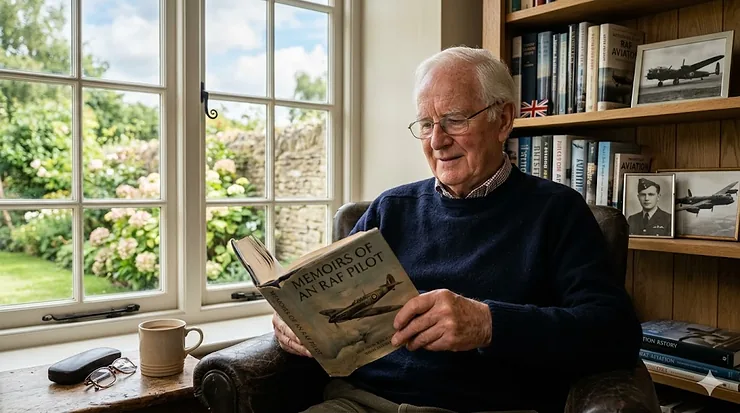
There’s something profoundly stirring about reading a firsthand account from someone who flew into combat at 20,000 feet, knowing a single miscalculation meant plummeting into the Channel. RAF pilot memoirs offer a window into courage that feels increasingly distant from our everyday lives—yet remains utterly relevant. These aren’t Hollywood scripts or sanitised history lessons; they’re raw, often understated accounts written by the very people who lived through the Battle of Britain, defended the Falklands, or patrolled no-fly zones over Iraq.
What makes these books particularly compelling for British readers is their authenticity. Unlike American fighter pilot narratives, which often lean into triumphalism, RAF memoirs carry that distinctly British quality of understatement. Pilots describe life-or-death dogfights with the same measured tone they might use for recounting a Sunday roast gone wrong. It’s this restraint—this refusal to dramatise—that makes the extraordinary feats all the more powerful. The Royal Air Force has produced some of the finest aviators in history, and their stories deserve a place on your bookshelf, whether you’re an aviation enthusiast, a military history buff, or simply someone who appreciates exceptional storytelling.
The current selection on Amazon.co.uk spans from wartime classics to contemporary accounts, with prices ranging from around £10 for paperbacks to £35 for collectors’ editions. What most buyers overlook is that these memoirs often include rare photographs, tactical diagrams, and squadron histories you won’t find in standard history books—making them excellent value for anyone serious about understanding British aviation heritage.
Quick Comparison: Top RAF Pilot Memoirs at a Glance
| Book Title | Author | Era Covered | Price Range (£) | Best For |
|---|---|---|---|---|
| Enemy Coast Ahead | Guy Gibson VC | WWII/Dambuster Raids | £12-£18 | Classic wartime narrative |
| First Light | Geoffrey Wellum | Battle of Britain | £10-£16 | Youngest Spitfire pilot perspective |
| Spitfire Pilot | David Crook | Battle of Britain | £11-£17 | Authentic combat diary |
| Tornado Down | John Peters & John Nichol | Gulf War 1991 | £9-£15 | Modern jet warfare |
| Fighter Pilot | Paul Richey | France 1939-1940 | £13-£19 | Pre-Dunkirk aerial combat |
| The Last Enemy | Richard Hillary | WWII/Battle of Britain | £10-£14 | Philosophical wartime reflection |
| Harrier Boys | Compiled by Richard Pike | Cold War to present | £15-£25 | Multi-pilot anthology |
💬 Just one click — help others make better buying decisions too! 😊
Top 7 RAF Pilot Memoirs: Expert Analysis
1. Enemy Coast Ahead by Guy Gibson VC
Wing Commander Guy Gibson’s account of the legendary Dambusters raid remains the gold standard for RAF pilot memoirs. Written shortly after Operation Chastise in 1943, Gibson chronicles not just the famous bouncing bomb attack, but his entire wartime career from early Bomber Command operations through to 617 Squadron’s precision strikes. The book carries particular weight because Gibson didn’t survive the war—he was killed in September 1944—making this a genuine wartime document rather than a retrospective reconstruction.
What sets this apart from other aviation war memoirs is Gibson’s unflinching honesty about the psychological toll of repeated bomber missions. He describes the arithmetic of survival with chilling clarity: calculate your odds after each sortie, watch your squadron mates vanish from the mess hall one by one, and somehow convince yourself to climb back into the cockpit for the next raid. The Dambusters section itself spans only three chapters, but Gibson’s tactical descriptions of low-level night flying over German reservoirs—at precisely 60 feet whilst being shot at—read like controlled chaos rendered in measured prose.
British readers particularly appreciate the lack of sensationalism. Gibson presents the Barnes Wallis engineering challenges, the intense low-level training over Derwent Reservoir in the Peak District, and the final attack runs with factual precision. The 2012 Crecy Publishing edition includes previously censored material and photographic plates showing bomb damage assessment, making it substantially more complete than the original 1946 version available in most libraries.
Customer feedback: Consistently rated 4.7+ stars on Amazon.co.uk, with UK readers praising the “unvarnished truth” and historical significance. Some note the 1940s prose style feels dated, but most agree this adds authenticity rather than detracting from readability.
✅ Definitive Dambuster firsthand account
✅ Honest psychological insights rarely seen in wartime memoirs
✅ Enhanced modern editions with restored content
❌ Writing style reflects 1940s sensibilities (occasionally stilted)
❌ Limited personal background (Gibson focuses on operations)
Price & Value: Around £15-£18 for the Crecy edition on Amazon.co.uk—absolutely justified given the historical significance and additional material. This isn’t just a memoir; it’s a primary source document for one of WWII’s most audacious operations.
2. First Light by Geoffrey Wellum
Geoffrey Wellum’s First Light captures something most Battle of Britain accounts miss entirely: the sheer terror and exhilaration of being an 18-year-old thrown into aerial combat with barely 200 flying hours. Wellum joined 92 Squadron at RAF Biggin Hill in August 1940, making him one of the youngest Spitfire pilots in Fighter Command. His memoir, written decades later but drawing from wartime diaries and letters, reconstructs the sensory overload of dogfighting at 400 mph whilst simultaneously managing oxygen supply, ammunition count, and the very real possibility of being shot down over the Channel.
What makes this essential reading amongst fighter pilot books is Wellum’s ability to articulate the psychological fracture points. He describes the moment fear becomes manageable not through bravery, but through exhaustion—when you’re simply too tired to process terror anymore. The book chronicles his gradual transformation from wide-eyed boy to combat-hardened pilot, then follows his posting to Malta in 1942 where he flew Spitfires against overwhelming Axis air superiority. By the time Wellum was invalided out in 1943 aged just 21, he’d completed 50 combat sorties and was utterly spent.
For UK readers, First Light offers particular resonance because Wellum remained a familiar figure until his death in 2018—many saw him at RAF commemorations or read his later Guardian columns about veterans’ affairs. The prose carries that understated British quality: Wellum describes being shot down and bailing out over the Thames Estuary with the same dry wit he uses for recounting mess hall pranks. The 2002 Penguin edition includes a helpful foreword contextualising 92 Squadron’s role in the Battle of Britain, plus Wellum’s own postscript reflecting on memory and trauma.
Customer feedback: Readers consistently highlight the emotional authenticity, with several UK reviewers noting they purchased copies for teenage grandchildren studying WWII. A few mention the Malta chapters feel rushed compared to the detailed Battle of Britain coverage.
✅ Rare teenage pilot perspective on Battle of Britain
✅ Exceptional psychological insight into combat stress
✅ Beautifully written without sentimentality
❌ Later chapters less detailed than early sections
❌ Some readers find the introspective tone slower-paced
Price & Value: Typically £10-£12 for paperback, £7-£9 on Kindle via Amazon.co.uk. Exceptional value considering the literary quality—this transcends military history and functions as genuine literature. Worth noting the audiobook narrated by Dan Stevens is particularly well-executed if you prefer listening during commutes.
3. Spitfire Pilot by David Crook
Flight Lieutenant David Crook’s Spitfire Pilot occupies a unique position amongst royal air force biographies: it’s simultaneously a wartime diary and a posthumous publication. Crook kept meticulous notes during his time with 609 Squadron throughout the Battle of Britain, intending to write a proper memoir after the war. He was killed in December 1944, and his father compiled the existing notes into this volume, first published in 1942.
The result reads less like a polished narrative and more like immediate testimony. Crook documents the operational tempo of summer 1940 with clinical precision—scrambles at dawn, refuelling between sorties, watching parachutes blossom as both friends and enemies abandon stricken aircraft. What most strikes contemporary readers is the sheer ordinariness interspersed with violence. One entry describes shooting down a Dornier over Kent, the next discusses finding decent beer in the local village. This tonal whiplash isn’t authorial choice; it’s authentic representation of how humans process extraordinary circumstances by clinging to mundane normality.
For anyone researching Spitfire pilot stories specifically, Crook provides technical details often absent from more literary memoirs. He discusses deflection shooting techniques, the challenges of attacking bombers in tight formation, and the Spitfire Mk I’s tendency to freeze at altitude—practical insights that aviation enthusiasts and military historians equally value. The book also captures 609 Squadron’s evolution from an Auxiliary Air Force unit (essentially weekend flyers) into one of Fighter Command’s most effective squadrons.
Customer feedback: UK readers appreciate the unvarnished authenticity, though some note the diary format means less narrative cohesion than structured memoirs. Several reviewers mention using this as a primary source for academic research on Battle of Britain tactics.
✅ Genuine wartime diary rather than retrospective account
✅ Detailed tactical and technical Spitfire information
✅ Captures daily rhythm of squadron life authentically
❌ Diary format means less narrative flow
❌ Abrupt ending due to author’s death
Price & Value: Generally £11-£14 on Amazon.co.uk for the Greenhill Books edition. The lack of editorial polish is precisely what makes this valuable—you’re reading Crook’s unfiltered observations from 1940, which is increasingly rare amongst battle of britain pilots memoirs still in print.
4. Tornado Down by John Peters and John Nichol
Squadron Leaders John Peters and John Nichol’s Tornado Down shifts the timeline dramatically forward to the Gulf War, offering a gripping account of being shot down over Iraq on the first day of Operation Desert Storm, 17th January 1991. Their Tornado GR1 was hit by a surface-to-air missile during a low-level bombing run on an Iraqi airfield, forcing both to eject into hostile territory. What follows is a harrowing chronicle of capture, interrogation, torture, and eventual release after the ceasefire.
This belongs on any list of aviation war memoirs because it captures modern jet warfare with uncomfortable clarity. Peters and Nichol alternate chapters, providing dual perspectives on the same events—particularly effective during the POW sections where their experiences diverged. Peters, whose bruised face appeared on Iraqi television and became an iconic image of the conflict, describes the psychological games employed by interrogators with chilling detail. Nichol, held separately, recounts the isolation and uncertainty of not knowing whether your fellow crew survived.
What British readers find particularly compelling is the contrast between cutting-edge military technology and the medieval brutality of captivity. These men flew £8 million aircraft equipped with terrain-following radar and precision munitions, yet ended up beaten in Baghdad police cells. The book doesn’t shy from criticising the RAF’s inadequate survival training or the political decisions that sent Tornado crews on suicidal low-level missions in the war’s opening days—missions that were quickly abandoned after multiple aircraft were lost.
Customer feedback: Consistently 4.5+ stars on Amazon.co.uk, with readers praising the honest portrayal of fear and vulnerability. Some veterans note the interrogation details are difficult reading, whilst aviation enthusiasts appreciate the technical Tornado operational information woven throughout.
✅ Dual perspective from both crew members
✅ Unflinching account of POW experience
✅ Excellent modern combat aviation detail
❌ Interrogation scenes genuinely disturbing
❌ Limited combat flying before shootdown
Price & Value: Around £9-£13 for paperback, often under £5 on Kindle during Amazon promotions. Given the historical significance and readability, this represents outstanding value amongst modern raf squadron memoirs. The 2011 revised edition includes a retrospective afterword discussing Gulf War Syndrome and the authors’ subsequent careers.
5. Fighter Pilot: A Personal Record of the Campaign in France by Paul Richey
Wing Commander Paul Richey’s Fighter Pilot covers a period often overshadowed by the Battle of Britain: the desperate air battles over France between September 1939 and June 1940. Richey flew Hurricanes with 1 Squadron during the Phoney War and the subsequent Blitzkrieg, experiencing firsthand the collapse of French resistance and the chaotic evacuation period. Published in 1941 whilst Richey was still on operations, this carries immediate wartime urgency missing from many retrospective accounts.
What distinguishes this amongst fighter pilot books is the operational evolution it documents. Richey describes the early months of “gentlemanly” warfare—returning downed German pilots’ personal effects, observing informal truces—before the Wehrmacht’s May 1940 offensive shattered any pretence of chivalry. Within weeks, 1 Squadron was flying four or five sorties daily against overwhelming Luftwaffe numbers, watching French airfields burn, and operating from muddy fields as they retreated towards the Channel ports.
For British readers interested in tactical aviation history, Richey provides fascinating insights into pre-radar operations and the Hurricane’s strengths against Messerschmitt 109s in different combat scenarios. He’s refreshingly honest about fear, describing the stomach-churning moment when tracer rounds start walking towards your cockpit. The book also captures the squadron camaraderie and the particular grief of losing close friends in combat—emotions Richey processes through typically British understatement.
Customer feedback: UK readers consistently praise the historical value, with several noting this fills a gap in popular understanding of the 1940 French campaign. Some find the 1940s prose style takes adjustment, though most agree Richey writes with considerable literary skill for a serving officer.
✅ Rare detailed account of France 1939-1940 air campaign
✅ Tactical Hurricane vs Me109 combat analysis
✅ Genuine wartime publication (written 1940-1941)
❌ 1940s prose conventions may feel dated
❌ Less well-known than later Battle of Britain accounts
Price & Value: Typically £13-£17 for the Grub Street edition on Amazon.co.uk. This represents fair value for a historically significant primary source that complements the more famous Battle of Britain narratives. According to the Imperial War Museum’s collections, Richey’s manuscript drafts are preserved in their archives, underlining the historical importance.
6. The Last Enemy by Richard Hillary
Flight Lieutenant Richard Hillary’s The Last Enemy stands apart from other Spitfire pilot stories through its philosophical depth and tragic circumstances. Hillary was shot down in September 1940, suffering catastrophic burns that left him barely recognisable. He spent months undergoing pioneering plastic surgery at East Grinstead Hospital under surgeon Archibald McIndoe, eventually rejoining operations before being killed in a night flying accident in January 1943. The memoir, written during his convalescence, grapples with mortality, disfigurement, and finding meaning in suffering.
What makes this essential reading is Hillary’s intellectual approach to war. Educated at Oxford, he brings a philosophical framework to experiences most pilots simply endured without analysing. He questions the cult of the fighter ace, examines survivor guilt, and wrestles with whether his scarred face makes him more or less human. The hospital sections—where Hillary befriends other burned aircrew in McIndoe’s “Guinea Pig Club”—are simultaneously devastating and uplifting, showing men rebuilding identity when their physical appearance has been destroyed.
British readers often find this the most emotionally demanding of battle of britain pilots memoirs because Hillary refuses to offer easy comfort. He died before seeing the book published, and knowledge of his death haunts the text—particularly passages where he contemplates returning to flying despite his injuries. The prose is markedly more literary than typical military memoirs, reflecting Hillary’s pre-war aspirations towards writing. Some find this pretentious; most recognise it as a young man trying to impose intellectual order on chaos.
Customer feedback: Reviews are polarised between those who find this profound and moving, and those who consider Hillary’s introspection self-indulgent. UK readers familiar with the Guinea Pig Club’s legacy particularly value the detailed hospital sequences.
✅ Unique philosophical exploration of combat trauma
✅ Powerful account of burns treatment and recovery
✅ Literary quality exceeds typical military memoirs
❌ Introspective style slower-paced than action narratives
❌ Can feel heavy due to author’s known fate
Price & Value: Around £10-£14 for the current Vintage Classics edition on Amazon.co.uk. The literary merit and historical significance justify the price—this transcends aviation memoir and functions as war literature comparable to Sassoon or Owen’s WWI poetry. The introduction by historian Max Arthur provides helpful context about Hillary’s short life and the book’s enduring impact.
7. Harrier Boys: Volume One compiled by Air Commodore Richard Pike
Air Commodore Richard Pike’s Harrier Boys anthology takes a different approach, compiling accounts from multiple RAF Harrier pilots spanning the aircraft’s service from Cold War Germany through the Falklands conflict and into recent operations. Volume One covers 1969-2005, with contributions from over 30 pilots describing everything from learning to hover in the revolutionary jump jet to providing close air support in Bosnia and Iraq.
What makes this invaluable amongst contemporary raf squadron memoirs is the diversity of perspective. You get the test pilot’s view of early Harrier development, the junior officer’s experience during the Falklands where Sea Harriers proved decisive, and the squadron commander’s operational challenges during the Gulf War. This multi-voice approach prevents the narrative monotony that sometimes afflicts single-author memoirs, whilst the editorial framework ensures coherent chronological flow.
For UK readers interested in post-WWII military aviation, this provides comprehensive coverage of one of Britain’s most distinctive aircraft. The Harrier’s unique capabilities—vertical takeoff, forward basing in austere locations, rapid response—created operational doctrines that influenced NATO thinking. Pike includes technical explanations accessible to non-pilots, plus photographs and diagrams showing Harrier evolution across marks. The Falklands chapters are particularly gripping, describing pilots operating from improvised deck platforms in South Atlantic weather that would ground conventional jets.
Customer feedback: Aviation enthusiasts rate this highly for comprehensive coverage and authentic pilot voices, though some readers find the anthology format occasionally fragmented. Several UK reviewers mention purchasing all three volumes in the series for complete Harrier service history.
✅ Multiple pilot perspectives prevent monotony
✅ Comprehensive coverage of Harrier operations 1969-2005
✅ Excellent technical detail presented accessibly
❌ Anthology format less cohesive than single narrative
❌ Some chapters stronger than others
Price & Value: Generally £18-£23 for hardback, £12-£15 for paperback on Amazon.co.uk. The higher price reflects the compilation’s scope—this is effectively 30+ memoirs in one volume. For anyone wanting comprehensive understanding of modern RAF operations rather than a single pilot’s story, the value proposition is solid. Grub Street Publishing’s production quality is excellent, with good reproduction of photographs and squadron insignia.
How RAF Memoirs Shaped Public Understanding of Air Warfare
The publication of RAF pilot memoirs, particularly those from WWII, fundamentally altered how the British public understood aerial combat. Before these books reached civilian readers, air warfare existed as propaganda newsreels and official dispatches—sanitised versions emphasising heroism whilst omitting the terror, exhaustion, and moral ambiguity. When pilots like Geoffrey Wellum and Richard Hillary began writing honest accounts in their own voices, the narrative shifted from abstract national glory to individual human experience.
What’s particularly significant is the timing. Many foundational RAF memoirs appeared during or immediately after WWII, when censorship still operated and authors faced pressure to maintain morale. Guy Gibson’s Enemy Coast Ahead walked a careful line between operational security and authentic testimony—he couldn’t reveal certain technical details about the bouncing bomb, yet managed to convey the psychological weight of commanding men you knew might not return. This tension between duty and truth-telling creates a distinctive quality in wartime memoirs that later retrospective accounts sometimes lack.
The literary tradition these books established influenced how subsequent generations of pilots approached memoir writing. Modern authors like John Peters and John Nichol explicitly reference reading Battle of Britain accounts during their own RAF training, understanding their experiences through that established framework. This creates an interesting continuity: today’s Typhoon pilots are partly shaped by narratives written by Spitfire pilots who’ve been dead for decades. According to research from King’s College London’s Defence Studies Department, this literary lineage significantly impacts how RAF culture processes combat trauma and unit identity.
The commercial success of these memoirs also deserves examination. In the UK market, RAF pilot books consistently outsell equivalent American or Commonwealth air force accounts—a pattern Amazon.co.uk sales data reflects. This isn’t mere nostalgia; it represents genuine public appetite for understanding how ordinary British citizens performed extraordinary acts under impossible pressure. The fact that publishers like Grub Street, Crecy, and Greenhill Books maintain dedicated aviation memoir lists demonstrates sustained demand that shows no sign of diminishing.
Battle of Britain vs Modern Combat: How Memoirs Reflect Changing Warfare
Comparing Battle of Britain memoirs with contemporary accounts like Tornado Down reveals how fundamentally air warfare transformed across eight decades. David Crook’s 1940 diary entries describe visual dogfights where pilots identified enemy aircraft by silhouette and fired guns at ranges measured in hundreds of yards. John Peters’ Gulf War experience involved flying at 540 mph just 100 feet above Iraqi desert, relying on terrain-following radar whilst evading radar-guided missiles he’d never see until impact.
The technological gulf manifests in how pilots describe spatial awareness. Wellum and Crook wrote about scanning the sky for specks that might resolve into Me109s, the physical act of twisting in the cockpit to check your six o’clock. Modern Tornado and Typhoon pilots describe scanning multiple digital displays simultaneously—radar warnings, infrared signatures, datalink information from AWACS—processing threats that exist only as electronic symbols. This creates different types of stress: WWII pilots faced the immediate terror of seeing an enemy closing on your tail; modern pilots manage the abstract anxiety of knowing a SAM battery 30 miles away just achieved lock.
What both eras share, however, is the fundamental human element. Whether flying a Spitfire or a Typhoon, pilots describe the same stomach-dropping moment when you realise you’re being shot at, the same surreal disconnection from normality that combat creates, and the same dark humour that helps process trauma. Geoffrey Wellum’s description of suppressing fear through exhaustion finds direct parallel in modern pilots’ accounts of maintaining focus through twelve-hour combat air patrol missions. The technology changes; the psychological experience shows remarkable continuity.
For British readers, this comparison offers insight into the RAF’s institutional evolution. The service that sent teenage Spitfire pilots into combat with 200 flying hours now requires extensive simulator training, psychological screening, and sophisticated crew resource management before pilots fly operational missions. Memoirs document this professionalisation—not as official policy, but through individual experiences showing how training, doctrine, and culture adapted to increasingly complex warfare.
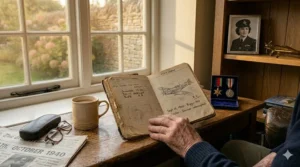
What Makes a Great RAF Memoir: Beyond the Aerial Combat
Exceptional RAF pilot memoirs transcend simple action narratives by addressing the spaces between combat: the waiting, the grief, the odd normality that persists alongside war. This distinction separates truly valuable books from forgettable ghost-written accounts rushed to market. Guy Gibson’s Enemy Coast Ahead dedicates substantial chapters to the administrative burden of squadron command, the bureaucratic battles to secure adequate aircraft and crew, and his complicated relationship with Air Chief Marshal Harris—details that reveal how military organisations actually function under pressure.
The best memoirs also demonstrate narrative self-awareness without descending into navel-gazing. Richard Hillary’s The Last Enemy works because he interrogates his own motivations and reactions rather than presenting himself as straightforward hero. When he describes returning to flying despite devastating injuries, he doesn’t claim courage—he questions whether it’s courage, death wish, or inability to imagine civilian life. This intellectual honesty creates far more compelling reading than sanitised heroics.
Technical detail, when properly integrated, substantially enhances memoir quality. Paul Richey’s tactical analysis of Hurricane vs Me109 performance envelopes teaches readers about energy management in combat whilst advancing his narrative. Conversely, memoirs that simply list specifications without context quickly become tedious. The skill lies in weaving technical information through human experience—explaining how a Spitfire’s turning radius affected your decision-making in a specific combat situation, not reciting wingspan and engine horsepower divorced from operational use.
Photographs, maps, and appendices significantly impact value for British readers researching specific squadrons or operations. The enhanced edition of Enemy Coast Ahead includes previously restricted aerial reconnaissance photos of the dams Gibson attacked—invaluable primary source material you won’t find elsewhere. Several memoirs include squadron rosters and loss records, allowing readers to cross-reference with Commonwealth War Graves Commission data or RAF Museum archives. This supplementary material transforms good memoirs into genuine historical resources.
Common Mistakes When Buying RAF Aviation Memoirs
The single biggest error readers make is purchasing memoirs based purely on dramatic cover copy without checking publication details. Amazon.co.uk carries numerous “RAF ace” accounts that are actually repackaged public domain content or unauthorised compilations of multiple sources presented as single narratives. Always verify the publisher—established aviation houses like Grub Street, Crecy Publishing, and Greenhill Books maintain editorial standards, whilst obscure digital publishers often produce poorly researched material riddled with factual errors.
Another frequent mistake involves assuming all Battle of Britain memoirs offer equivalent quality. The reality is several famous titles are actually ghostwritten decades after events by professional authors interviewing elderly pilots whose memories may have blurred or mythologised over time. This doesn’t automatically invalidate such books, but readers should understand the difference between Geoffrey Wellum’s First Light (written from contemporaneous diaries and letters) and an account constructed sixty years later from oral interviews. Check publication dates and author biographies to assess authenticity.
British buyers sometimes overlook regional availability and UK edition differences. Several important RAF memoirs exist in multiple editions with varying content—American publishers occasionally edit out British cultural references or technical details deemed too specialised for US audiences. Always purchase from Amazon.co.uk rather than parallel importing from Amazon.com, as you’ll receive the UK edition with proper context, metric units, and often superior editorial apparatus. Additionally, UK copyright extensions sometimes mean books available as free Project Gutenberg downloads in America remain in copyright here, making legitimate paid editions your only legal option.
Price comparison pitfalls catch many buyers. That £3.99 Kindle edition of Enemy Coast Ahead may be the stripped-down 1946 original missing the restored material in the £16 Crecy edition. For serious research or deep interest, the premium edition almost always justifies the higher price through additional content, better annotation, and quality reproduction of photographs. Conversely, if you’re simply exploring the genre to determine your interest level, starting with affordable classics like First Light in paperback makes perfect sense before investing in collector’s editions or complete sets.
RAF Memoirs for Different Reader Types: Matching Books to Interests
For Military History Students and Researchers: Prioritise memoirs with strong editorial apparatus—footnotes, appendices, bibliography, and photographic documentation. Guy Gibson’s Enemy Coast Ahead (Crecy edition), Paul Richey’s Fighter Pilot, and the Harrier Boys anthology all provide this scholarly infrastructure. Cross-reference these accounts with official histories from the Air Historical Branch to build comprehensive understanding of specific operations. Budget around £15-£20 per book for quality editions that will withstand repeated consultation.
For Aviation Enthusiasts and Pilots: Seek memoirs with detailed technical content and tactical analysis. David Crook’s Spitfire Pilot offers exceptional detail on deflection shooting and formation tactics, whilst Tornado Down provides modern jet systems explanation accessible to civilian pilots. Consider supplementing with technical manuals and squadron histories from specialist publishers. If you’re working towards your PPL or already fly light aircraft, the decision-making processes described in combat memoirs offer surprisingly relevant lessons about situational awareness and threat assessment, albeit in rather more dramatic contexts than most Sunday afternoon circuits.
For General Readers Seeking Compelling Narratives: Start with the most literary accounts that transcend pure military history. Geoffrey Wellum’s First Light and Richard Hillary’s The Last Enemy both function as excellent literature independent of aviation interest. These books explore universal themes—confronting mortality, finding courage, maintaining humanity under pressure—through the specific lens of RAF experience. They’re equally suitable for book clubs or personal reading, and both are available in affordable paperback editions on Amazon.co.uk that won’t break your budget.
For Younger Readers and Teenagers: Wellum’s First Light works particularly well because the author was himself a teenager during his Battle of Britain service—that generational proximity creates natural identification. Many UK teachers assign this for GCSE history coursework. Parents and grandparents purchasing for younger family members should note that several memoirs contain graphic violence and, in Hillary’s case, detailed description of severe burns and reconstructive surgery. This isn’t gratuitous, but mature themes warrant consideration for readers under 14. The Harrier Boys anthology offers more contemporary context that may resonate better with teenagers accustomed to seeing RAF Typhoons at air shows rather than Spitfires in museums.
Preserving RAF Heritage: Why These Memoirs Matter in 2026
As the last WWII RAF veterans pass into history—Squadron Leader Geoffrey Wellum died in 2018 aged 96—published memoirs become increasingly vital primary sources. Within a decade, no living person will have flown combat operations in WWII, making books like Enemy Coast Ahead and Spitfire Pilot irreplaceable testimony. Digital preservation efforts by the RAF Museum and Imperial War Museum ensure these texts remain accessible, but physical book ownership creates a different relationship with historical memory.
There’s particular urgency around memoirs from less-famous campaigns and aircraft types. Whilst Battle of Britain accounts receive sustained attention, equally significant operations risk fading from public consciousness. The Harrier Boys anthology preserves institutional knowledge about an aircraft that revolutionised close air support doctrine but was controversially retired in 2011. Without these compiled memories, future generations studying RAF capability development would lack crucial operational context that official reports often omit—the informal innovations, the workarounds when equipment failed, the real decision-making under pressure.
For British readers concerned about historical literacy and national memory, purchasing and reading these memoirs represents active engagement with heritage. The RAF played decisive roles in WWII victory, Cold War containment, and numerous subsequent conflicts that shaped Britain’s international position. Understanding how individual pilots experienced these broader strategic realities creates more nuanced historical perspective than simplified narratives of triumph or decline. According to education researchers, firsthand accounts are significantly more effective at engaging young people with history than textbook summaries—making these memoirs valuable educational resources as well as compelling reading.
The commercial viability of RAF memoir publishing also matters. Small specialist presses like Grub Street and Crecy rely on consistent sales to justify producing carefully edited, properly researched editions with appropriate supplementary material. When readers purchase these books rather than pirating PDFs or waiting for charity shop copies, they directly enable continued preservation and presentation of military aviation heritage. It’s a modest but tangible way to support historical scholarship and ensure future generations can access these remarkable firsthand accounts.
How to Get Maximum Value from Your RAF Memoir Collection
Building a coherent RAF memoir collection requires strategic thinking rather than random acquisition. Start by identifying your primary interest—specific aircraft types, particular conflicts, or individual squadrons—then seek memoirs that provide depth in that area. If Battle of Britain fascinates you, acquire the “big three” (Wellum, Hillary, Crook) for complementary perspectives, then branch into squadron histories and technical analyses. If modern fast jet operations intrigue you more, Tornado Down provides Gulf War context, whilst the Harrier Boys series covers multiple recent conflicts.
Cross-referencing significantly enhances understanding. When reading Guy Gibson on the Dambuster raids, simultaneously consult histories of 617 Squadron and Bomber Command to contextualise his account within broader strategic bombing campaigns. The National Archives holds Gibson’s operational records and squadron diaries that can verify or complicate memoir claims—not because pilots deliberately mislead, but because memory naturally reconstructs events. This detective work transforms passive reading into active historical investigation, substantially deepening appreciation.
For serious collectors, condition and edition matter considerably. First editions of classics like Enemy Coast Ahead (1946) and The Last Enemy (1942) have become genuinely valuable—clean copies with dust jackets now fetch £200-£500 from specialist dealers like Peter Harrington or Maggs Bros. If collecting appeals, focus on signed copies, limited editions, or association copies with interesting provenance. However, reading copies rather than investment pieces serve most readers better. A £12 Penguin paperback of First Light contains the identical text as a £300 first edition, just in less prestigious format.
Practical organisation improves long-term value. Maintain a simple spreadsheet logging title, author, edition, purchase price, and brief notes on content focus. This prevents accidentally re-buying the same book in different cover designs (easily done with frequently reissued titles) and helps identify gaps in your coverage. If you’re building a research collection, note cross-references between books—when Paul Richey mentions meeting pilots from other squadrons, you can track whether those same incidents appear in their memoirs, creating triangulated accounts of specific events.
FAQ: RAF Pilot Memoirs
❓ Are RAF pilot memoirs historically accurate?
❓ Which RAF memoir is best for someone new to military aviation history?
❓ Do modern RAF pilot memoirs compare in quality to WWII accounts?
❓ Can I find RAF memoirs covering lesser-known campaigns?
❓ Are RAF memoirs suitable for gifting to military history enthusiasts?
Finding Your Next Great Read: Beyond the Classics
Whilst the canonical memoirs discussed above form the essential core of any RAF collection, several less-famous accounts deserve attention from readers seeking fresh perspectives. Nine Lives by Group Captain Alan Deere provides a New Zealand pilot’s view of flying Spitfires through the Battle of Britain and into 1941, offering Commonwealth perspective often overshadowed by British accounts. Similarly, Wing Leader by Group Captain J.E. “Johnnie” Johnson chronicles his progression from junior pilot to top-scoring RAF fighter ace, with tactical insights highly valued by aviation enthusiasts.
For readers interested in women’s contributions, Spitfire Women of World War II by Giles Whittell documents the Air Transport Auxiliary pilots who ferried aircraft from factories to operational squadrons—flying Spitfires, Hurricanes, and heavy bombers without combat training or military rank. Whilst technically civilian rather than RAF, their memoirs illuminate aviation culture from a different angle and challenge traditional narratives focused exclusively on male combat pilots. These accounts often surprise readers who weren’t aware women flew high-performance military aircraft throughout WWII.
Post-war operations also deserve exploration. Vulcan 607 by Rowland White reconstructs the extraordinary 1982 Black Buck raids during the Falklands War, when elderly Vulcan bombers flew 8,000-mile missions to bomb Port Stanley runway—the longest-range bombing raids in history at the time. Although not strictly memoir format, White’s account draws heavily on pilot interviews and provides gripping insight into RAF operations under extreme pressure. Modern counter-insurgency operations appear in accounts from Afghanistan and Iraq, though operational security restrictions mean these often can’t be as detailed as historical memoirs.
Exploring squadron histories published by units themselves often uncovers memoir excerpts and firsthand accounts not available elsewhere. The RAF Museum and Air Historical Branch both maintain research libraries with unpublished memoirs, diaries, and oral histories—worth investigating for serious researchers willing to travel to London or request specific documents. Digital archives are expanding, though most valuable material remains physical-only requiring in-person consultation.
Conclusion: Why RAF Pilot Memoirs Endure
The sustained popularity of RAF pilot memoirs reflects something more profound than nostalgia for Britain’s “finest hour.” These books endure because they address timeless human questions through the specific lens of aerial combat: How do ordinary people find courage under extraordinary pressure? How do you maintain humanity whilst participating in industrial-scale violence? What happens to identity when your entire world view gets compressed into the moment-by-moment survival of combat? The fact that these questions arose at 20,000 feet over Kent in 1940 or at 100 feet over Iraqi desert in 1991 doesn’t diminish their universal relevance.
For British readers in 2026, these memoirs also provide connection to national heritage that feels increasingly distant. The WWII generation has passed, taking their lived memory with them. Books like First Light and Enemy Coast Ahead preserve not just facts about specific battles, but the emotional texture of that era—how people thought, what they valued, their particular combination of duty and humour and fear. This isn’t ancestor worship; it’s maintaining continuity with a pivotal period that fundamentally shaped modern Britain.
The best RAF memoirs transcend their specific subject matter to function as literature. Geoffrey Wellum writing about fear before dawn patrols creates prose that resonates with anyone who’s faced daunting challenges. Richard Hillary’s philosophical wrestling with mortality and meaning speaks to universal human experience. Even technical accounts like David Crook’s combat diary reveal how people impose order on chaos through routine and documentation—a very human impulse that transcends aviation specifics.
Whether you’re an aviation enthusiast seeking tactical knowledge, a history student researching WWII, or simply someone who appreciates well-crafted firsthand narratives, the seven memoirs examined here offer exceptional value. Available on Amazon.co.uk at prices ranging from £9 to £25, they represent accessible entry points to understanding how RAF pilots experienced the conflicts that defined British military history. Start with First Light for literary quality, Enemy Coast Ahead for historical significance, or Tornado Down for modern combat perspective—you genuinely can’t go wrong with any of these choices.
Recommended for You
- 7 Best SAS Soldier Autobiography Books UK 2026 | Elite Forces Stories
- 7 Best Alex Ferguson Autobiography Books UK 2026 | Winning Manager
- 7 Best Football Biography Books UK 2026: Premier League Legends
Disclaimer: This article contains affiliate links. As an Amazon Associate, I earn from qualifying purchases. If you purchase products through these links, we may earn a small commission at no additional cost to you.
✨ Found this helpful? Share it with your mates! 💬🤗
