

In This Article
What is it about the Tudors that keeps us utterly transfixed, five centuries after their dynasty ended? Perhaps it’s Henry VIII’s spectacular matrimonial carnage, or Elizabeth I’s refusal to marry despite every crowned head in Europe queuing up. More likely, it’s because the Tudor period represents one of those rare historical moments when individual personality genuinely shifted the course of a nation — and these books bring those personalities roaring back to life.
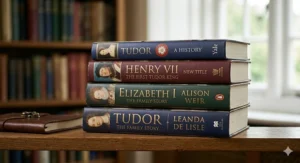
Whether you’re a devoted fan seeking fresh perspectives or taking your first tentative steps into sixteenth century England, the challenge isn’t finding Tudor history books — it’s navigating the absolutely vast selection available on Amazon.co.uk. From weighty academic tomes to gripping narrative histories, from specialist studies to accessible introductions, the range can feel rather overwhelming. I’ve spent the past fortnight immersed in Tudor literature, cross-referencing Amazon UK availability, checking current pricing, and reading through hundreds of verified buyer reviews to assemble this definitive guide.
What makes Tudor history particularly compelling for British readers is that these aren’t just fascinating stories — they’re our stories. The religious upheaval, the political machinations, the cultural transformation: all of it happened on British soil, shaped British institutions, and continues to echo through our national character today. From Hampton Court Palace to the Tower of London, from the Church of England to our constitutional monarchy, Tudor fingerprints are everywhere you look.
This guide presents seven exceptional Tudor history books currently available on Amazon.co.uk, spanning price points from around £10 to £35, each offering something distinctly valuable. I’ve prioritised works by established British historians who understand the period’s nuances, selected editions with confirmed UK availability and Prime delivery, and focused on books that balance scholarly rigour with genuine readability. Whether you’re buying for yourself or searching for the perfect gift for a history enthusiast, you’ll find your ideal match here.
Quick Comparison Table
| Book Title | Author | Best For | Price Range | Amazon UK Rating |
|---|---|---|---|---|
| Tudor England: A History | Lucy Wooding | Comprehensive overview | £20-£25 | 4.6/5 |
| The Private Lives of the Tudors | Tracy Borman | Everyday court life | £10-£15 | 4.5/5 |
| Tudors: The History of England | Peter Ackroyd | Narrative storytelling | £12-£18 | 4.7/5 |
| The Six Tudor Queens Collection | Alison Weir | Historical fiction | £25-£35 | 4.8/5 |
| The House of Dudley | Joanne Paul | Family dynasty focus | £15-£20 | 4.6/5 |
| Anne Boleyn & Elizabeth I | Tracy Borman | Mother-daughter analysis | £18-£22 | 4.7/5 |
| The Stolen Crown | Tracy Borman | Tudor-Stuart transition | £16-£20 | 4.5/5 |
From the comparison above, Lucy Wooding’s comprehensive history delivers the most complete scholarly treatment for serious students, whilst Tracy Borman’s works offer accessible entry points focusing on the human details that make the period come alive. For fiction enthusiasts, Alison Weir’s collection represents exceptional value — six novels exploring each of Henry VIII’s wives for roughly the price of two individual hardbacks. Budget-conscious readers should note that paperback editions typically arrive £5-£8 cheaper than hardbacks, whilst Kindle versions often sit in the £8-£12 range with immediate availability.
💬 Just one click — help others make better buying decisions too!😊
Top 7 Tudor History Books: Expert Analysis
1. Tudor England: A History by Lucy Wooding
This magisterial work from Oxford historian Lucy Wooding represents Tudor scholarship at its contemporary peak. Rather than recycling the familiar tales of Henry’s marital adventures, Wooding reconstructs the period from the ground up, drawing on decades of archival research to present a Tudor England that feels simultaneously familiar and startlingly fresh. The book spans 1485 to 1603, encompassing all five Tudor monarchs whilst maintaining relentless focus on how ordinary people experienced this tumultuous century.
What distinguishes Wooding’s approach is her refusal to treat the Tudors as an inevitable success story. She explores the dynasty’s profound fragility — how close England came to catastrophic civil war, religious disintegration, and Spanish conquest. The 118-year Tudor reign emerged not from destiny but from a series of near-miraculous escapes and shrewd political calculations. Wooding excels at explaining how religious conviction drove political action; her chapters on the English Reformation avoid the usual Protestant triumphalism, instead presenting a wrenching societal transformation that destroyed communities, families, and certainties.
For UK readers, Wooding’s European contextualisation proves particularly valuable. She demonstrates how England’s break from Rome positioned the nation within larger continental conflicts, how Tudor foreign policy responded to Habsburg-Valois rivalry, and how English Protestantism developed differently from German or Swiss varieties. The book’s 672 pages might seem daunting, but Wooding writes with remarkable clarity — academic without being academic-sounding, if that makes sense. Expect around 200-250 words per chapter section, maintaining momentum whilst delivering depth.
Amazon.co.uk reviewers consistently praise the book’s narrative drive despite its scholarly apparatus. One verified UK buyer noted that Wooding “rehabilitates Henry VII’s reputation” and “provides plausible explanations for myths that persist about the Tudors.” The hardback edition, priced in the £20-£25 range, represents serious value given the scope and quality of research. Available with free delivery for Prime members, with dispatch typically within 24 hours from Amazon UK warehouses.
Pros:
✅ Unparalleled scholarly depth combined with accessible prose
✅ Fresh interpretations challenge conventional Tudor narratives
✅ Excellent European context often missing from English-focused histories
Cons:
❌ Substantial length requires commitment (not a weekend read)
❌ Assumes some baseline historical knowledge
Expert verdict: For anyone seeking the definitive modern Tudor history, this is it. The £20-£25 investment delivers extraordinary value per page, particularly if you’re building a reference library. Students, serious enthusiasts, and anyone tired of recycled Henry VIII anecdotes will find Wooding’s reappraisal revelatory.
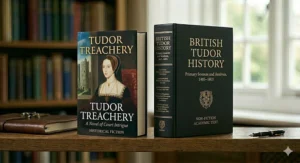
2. The Private Lives of the Tudors: Uncovering the Secrets of Britain’s Greatest Dynasty by Tracy Borman
Tracy Borman, Chief Curator at Historic Royal Palaces, brings an curator’s eye for material culture to Tudor domestic life. Rather than rehashing political machinations, The Private Lives explores what the Tudors ate, wore, smelled like, and did when they weren’t beheading people or reforming churches. The result reads like an intimate backstage pass to Hampton Court, revealing the unglamorous realities behind the gilt-edged portraits.
Borman’s access to Historic Royal Palaces’ collections enriches every chapter. She describes surviving items that belonged to Tudor monarchs — Elizabeth I’s locket ring containing miniature portraits of herself and her mother Anne Boleyn, Edward VI’s poignant letters referencing Jane Seymour, Henry VII’s surprisingly extravagant clothing purchases that demolish the “miserly monarch” stereotype. These physical objects anchor abstract historical figures in tangible reality, transforming them from two-dimensional caricatures into recognisable humans who fretted about appearances, mourned loved ones, and occasionally got roaring drunk at banquets.
The book excels at debunking persistent myths. Mary I emerges not as the “dried up spinster” of popular imagination but as a woman capable of joy and warmth, betrayed by phantom pregnancies and political impossibilities. Edward VI appears not as a puppet king but as a fiercely intelligent teenager whose religious convictions drove policy. Even Henry VIII’s descent into tyranny receives fresh context when Borman examines his chronic pain from festering leg ulcers and the likely effects of repeated head trauma from jousting accidents — not excuses, but explanations for behavioural changes that baffled contemporaries.
For British readers interested in everyday Tudor existence — the elaborate rituals surrounding royal bedding ceremonies, the staggering number of dishes served at court banquets (explored in detail at Hampton Court’s Great Kitchens), the cosmetics Elizabeth used to disguise ageing — this book delivers endlessly fascinating detail. The writing style suits readers who find traditional academic histories rather dry; Borman writes like a knowledgeable friend sharing gossip rather than a lecturer delivering facts. Amazon.co.uk pricing typically sits around £10-£15 for paperback, with Prime delivery available.
Pros:
✅ Humanises historical figures through material culture and daily routines
✅ Highly readable style suits Tudor newcomers
✅ Excellent value for money in the £10-£15 range
Cons:
❌ Limited political/military analysis
❌ Assumes reader familiarity with basic Tudor chronology
Expert verdict: Perfect for readers who’ve absorbed the Wikipedia-level Tudor narrative and want to understand what life felt like. The relatively modest £10-£15 price point makes this an ideal gift for history enthusiasts or a gentle introduction before tackling weightier academic works.
3. Tudors: The History of England from Henry VIII to Elizabeth I by Peter Ackroyd
Peter Ackroyd — novelist, biographer, and one of Britain’s most acclaimed literary stylists — brings his distinctive narrative flair to the Tudor century in this volume from his ambitious History of England series. Unlike conventional chronological histories, Ackroyd writes in vivid present tense, creating an almost cinematic immediacy that pulls readers directly into sixteenth-century England. When Henry VIII stalks through these pages, you can practically hear his footsteps echoing down Hampton Court’s galleries.
What Ackroyd does brilliantly is capture the sheer strangeness of Tudor England — a world where educated men genuinely believed the Pope was Antichrist, where torture remained standard judicial procedure, where a king’s failure to produce a male heir genuinely threatened national catastrophe. As English Heritage explains, this period witnessed England’s transformation from a medieval Catholic nation into a Renaissance Protestant power. He doesn’t explain away this alien worldview but immerses readers in its logic, making Tudor decisions comprehensible on their own terms rather than judging them by modern standards. The result feels less like reading history and more like experiencing it.
The book’s structure follows the traditional narrative arc from Henry VIII’s break with Rome through Elizabeth I’s long reign, but Ackroyd’s genius lies in his selection of telling details. Rather than exhaustively cataloguing every political development, he focuses on moments that illuminate character or capture zeitgeist shifts. His description of the Reformation’s impact on ordinary parish life — the whitewashing of church murals, the melting down of beloved saints’ statues, the bewildering succession of religious reversals — conveys the period’s psychological trauma more effectively than abstract theological analysis.
For readers who appreciate literary quality alongside historical accuracy, Ackroyd’s prose delivers consistent pleasure. His sentences possess a rhythm and precision that elevate the material beyond mere information-delivery. That said, his present-tense approach and tendency toward atmospheric scene-setting occasionally frustrate readers seeking systematic analysis. The Sunday Express praised his “fluent and colourful” writing, whilst The Telegraph noted his “lightly worn erudition and deceptive ease.” Amazon.co.uk pricing ranges £12-£18 depending on format, with the paperback representing excellent value.
Pros:
✅ Exceptional literary quality — history that reads like compelling fiction
✅ Present-tense narrative creates immediate, vivid sense of period
✅ Accessible to general readers whilst satisfying knowledgeable enthusiasts
Cons:
❌ Impressionistic approach may frustrate readers seeking comprehensive coverage
❌ Limited footnotes/citations compared to academic histories
Expert verdict: For anyone who found school history textbooks insufferably dull, Ackroyd demonstrates that rigorous historical writing needn’t sacrifice beauty or excitement. The £12-£18 price delivers not just information but genuine reading pleasure — rather good value for a book you’ll actually enjoy rather than merely endure.
4. The Six Tudor Queens Collection by Alison Weir
Alison Weir’s monumental six-novel series represents over a decade’s work bringing Henry VIII’s wives to vivid fictional life, with each volume grounded in meticulous historical research. The collection, available on Amazon.co.uk in various formats, delivers exceptional value — six substantial novels for roughly £25-£35, working out to barely £5 per book. What distinguishes Weir’s approach from typical historical fiction is her determination to rehabilitate these women’s reputations, presenting them as complex individuals rather than the simplified caricatures of popular memory.
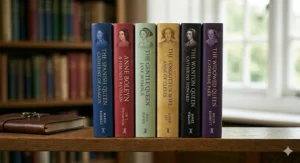
The series begins with Katharine of Aragon, The True Queen, following the Spanish princess from her childhood betrothal through her devastating abandonment by Henry. Weir’s Katharine emerges dignified and resilient, her Catholic faith providing strength during years of humiliation. Anne Boleyn, A King’s Obsession tackles perhaps the most controversial queen, presenting Anne as intellectually formidable and politically astute rather than the scheming temptress of legend. Jane Seymour, The Haunted Queen explores the woman who finally gave Henry his male heir, haunted by her predecessor’s fate.
The later volumes grow progressively more experimental. Anna of Kleve, Queen of Secrets reveals the German princess as shrewder than Henry realised, whilst Katheryn Howard, The Tainted Queen presents the teenage fifth wife with genuine sympathy for her impossible situation. The series concludes with Katharine Parr, The Sixth Wife, celebrating the scholarly queen who survived Henry and nearly changed English history through her Protestant convictions.
For UK readers, Weir’s British perspective matters. She understands the geographical and social landscape these women navigated — the Thames journey from Greenwich to Tower wharf, the significance of different royal residences, the class tensions between established aristocracy and Tudor-elevated families. Her prose balances accessibility with period flavour, avoiding both anachronistic modernisation and impenetrable archaic language. Amazon.co.uk reviewers consistently rate the collection 4.8/5, with verified buyers praising the “immersive research” and “compelling narratives.”
Pros:
✅ Extraordinary value — six full-length novels for £25-£35
✅ Meticulous historical research grounds fictional elements
✅ Progressive focus on women’s perspectives and agency
Cons:
❌ Substantial time commitment to complete entire series
❌ Fiction format won’t suit readers preferring pure historical analysis
Expert verdict: For anyone intrigued by Henry’s wives but exhausted by recycled narratives, Weir’s series offers fresh perspectives rooted in serious scholarship. The collection price represents remarkable value, particularly for gift-giving — this is several months’ engrossing reading for under £35. Prime delivery typically arrives next day from UK warehouses.
5. The House of Dudley: A New History of Tudor England by Joanne Paul
Every Tudor monarch made their name with a Dudley by their side — or by crushing one beneath their feet. Joanne Paul’s brilliant debut reimagines the entire Tudor period through the lens of England’s most audacious, ambitious, and repeatedly destroyed noble family. Rather than another biography of Henry or Elizabeth, The House of Dudley traces three generations who rose spectacularly high, fell catastrophically low, and somehow kept clawing their way back to power.
The Dudleys thrived under Henry VII, orchestrating the young dynasty’s early consolidation. They were sacrificed to popular fury under Henry VIII when the king needed scapegoats. They dominated Edward VI’s brief reign, only to lose everything by advancing Lady Jane Grey to the throne over Mary I. Then, astonishingly, they resurged under Elizabeth I, with Robert Dudley becoming the queen’s closest confidant and probable lover. What drove this family’s relentless pursuit of proximity to power, knowing full well the likely consequences?
Paul’s research is formidable — she’s mined archives across England and Europe to reconstruct Dudley machinations with thriller-like detail. But what elevates the book beyond academic biography is her novelistic eye for character and dramatic pacing. The trial scenes crackle with tension, the court intrigues read like espionage, the family dynamics reveal Shakespearean complexity. The Spectator noted that “Game of Thrones looks tame compared with the real-life machinations of the Dudleys” — hyperbolic perhaps, but not entirely wrong.
For British readers, Paul’s work illuminates how Tudor power actually functioned beyond the monarch’s personality. The Dudleys embodied the new meritocratic nobility that the Tudors created and destroyed at will, replacing medieval bloodlines with ruthless competence rewarded by royal favour. Their story demonstrates that proximity to power brought not security but existential danger — one miscalculation, one shift in royal mood, and entire families faced execution. Amazon.co.uk pricing sits around £15-£20 for hardback, with excellent UK warehouse availability ensuring rapid Prime delivery.
Pros:
✅ Fresh perspective examining Tudor period through one family’s arc
✅ Gripping narrative style makes serious scholarship genuinely unputdownable
✅ Illuminates power dynamics beyond conventional monarch-focused histories
Cons:
❌ Assumes reader familiarity with basic Tudor chronology
❌ Focus on one family means some events receive limited coverage
Expert verdict: For readers who’ve absorbed the standard Tudor narrative and crave fresh angles, Paul’s Dudley-centric approach delivers revelatory insights. The £15-£20 price point represents fair value for a substantial, well-researched work that genuinely adds to Tudor scholarship rather than recycling familiar material.
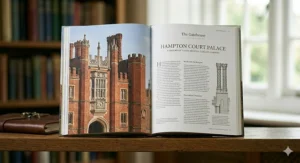
6. Anne Boleyn & Elizabeth I: The Revelatory True Story of the Mother and Daughter Who Changed History by Tracy Borman
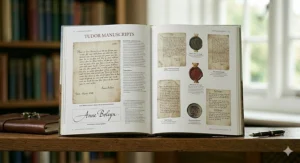
Tracy Borman’s dual biography tackles one of Tudor history’s most poignant relationships: a mother and daughter who spent barely three years together yet remained profoundly connected across Elizabeth’s forty-five-year reign. The conventional narrative suggests Elizabeth rarely mentioned her disgraced, executed mother. Borman’s meticulous research reveals something far more complex — a queen who kept her mother’s memory alive through coded symbols, strategic appointments, and deliberate choices that honoured Anne’s legacy without openly acknowledging it.
The evidence Borman marshals is compelling. Elizabeth surrounded herself with Boleyn relatives whilst systematically excluding Howard family members (Anne’s enemies who testified against her). She wore jewellery featuring Anne’s falcon badge, displayed portraits that referenced her mother’s iconography, and kept that remarkable locket ring containing miniature images of both women — worn daily, discovered only after Elizabeth’s death. These weren’t coincidences but calculated acts of remembrance from a daughter who understood that openly defending Anne would undermine her own legitimacy.
Borman excels at separating documented fact from romantic speculation. When discussing Elizabeth’s possible visit to Hever Castle (the Boleyn family seat), she carefully notes that whilst Elizabeth travelled near Hever multiple times, no surviving records confirm an actual visit despite later artists painting such a scene. This scrupulous distinction between “verified,” “plausible,” and “imagined” elevates the book above Tudor mythology into serious biographical scholarship.
The UK perspective proves particularly valuable here. Borman understands the landscape Elizabeth navigated — both geographical and political. She explains how Anne’s religious conviction shaped Elizabeth’s Protestant settlement, how Anne’s trial and execution influenced Elizabeth’s approach to Parliament, how the daughter learned from her mother’s fatal mistakes about managing male power. For British readers interested in how Tudor women exercised agency within patriarchal constraints, this analysis is revelatory. Amazon.co.uk pricing around £18-£22 with Prime delivery.
Pros:
✅ Groundbreaking dual-biography approach reveals hidden connections
✅ Scrupulous distinction between evidence and speculation
✅ Excellent analysis of how Elizabeth honoured Anne whilst protecting legitimacy
Cons:
❌ Assumes reader knowledge of both women’s basic biographies
❌ Necessarily speculative in places given documentary gaps
Expert verdict: For anyone fascinated by Elizabeth I or Anne Boleyn, Borman’s relational analysis adds crucial dimension to understanding both women. The £18-£22 price delivers original scholarship that genuinely advances Tudor studies — well worth the investment for serious enthusiasts.
7. The Stolen Crown: Treachery, Deceit, and the Death of the Tudor Dynasty by Tracy Borman
History books typically present the Tudor-to-Stuart succession as inevitable: Elizabeth I died in 1603, named James VI of Scotland her heir, and the crown transferred peacefully. Tracy Borman’s explosive research demolishes this comfortable narrative, revealing a succession crisis so profound it could have plunged Britain into civil war. Drawing on recently discovered revisions to William Camden’s contemporary history — the seventeenth-century equivalent of redacting official documents — Borman reconstructs what actually happened in March 1603.
The revelations are staggering. Elizabeth never formally named James her successor. The famous deathbed scene where she supposedly whispered “I will have none but him” was fabricated, literally pasted into Camden’s manuscript after the fact to legitimise James’s claim. Without Elizabeth’s endorsement, James’s succession was profoundly uncertain — England and Scotland had been bitter enemies for centuries, and many English nobles viewed the Scottish king with deep suspicion. Borman even uncovers evidence that James, desperate and paranoid, may have sent an assassin to London to eliminate Elizabeth and seize the throne by force.
What makes The Stolen Crown particularly gripping is Borman’s reconstruction of the conspiracy that successfully installed James whilst erasing evidence of the crisis. Robert Cecil, Elizabeth’s chief minister, orchestrated a masterful political operation — controlling information, intimidating rivals, and rewriting official history to make James’s accession appear foreordained. The speed and efficiency of this cover-up meant that within a generation, the revised narrative had become accepted fact, persisting for over 400 years until Borman’s archival detective work exposed it.
For British readers, the implications extend beyond Tudor history into fundamental questions about succession, legitimacy, and how official histories get constructed. The book demonstrates that even seemingly secure historical “facts” may conceal manipulation and revision. Borman writes with thriller-like pacing — the succession crisis reads like espionage because it essentially was espionage. Smithsonian Magazine listed it among 2025’s ten best history books, whilst Alison Weir called it “compelling and brilliant.” Amazon.co.uk pricing around £16-£20.
Pros:
✅ Genuinely revelatory research overturns 400-year-old narrative
✅ Gripping narrative pacing makes complex political intrigue accessible
✅ Important implications for understanding how official histories are constructed
Cons:
❌ Focuses narrowly on succession crisis (not comprehensive Tudor history)
❌ Requires some baseline knowledge of Elizabethan period
Expert verdict: For readers who think they know Tudor history, Borman delivers a genuine shock. The £16-£20 price seems modest given the research breakthrough it represents — this isn’t recycled material but original scholarship that fundamentally revises our understanding of the Tudor-Stuart transition.
How to Choose the Right Tudor History Book for Your Needs
Selecting your ideal Tudor history book depends primarily on what you’re hoping to gain from the experience. Are you building foundational knowledge or seeking specialist perspectives? Do you prefer narrative drive or analytical depth? Would you rather absorb academic rigour or enjoy storytelling flair? Let’s work through the key considerations that’ll point you toward the right match.
Consider Your Existing Knowledge Level
Complete beginners should start with Tracy Borman’s The Private Lives of the Tudors or Peter Ackroyd’s Tudors. Both assume minimal prior knowledge and focus on making the period accessible and engaging rather than demonstrating scholarly sophistication. Borman’s domestic focus helps readers understand Tudor daily life before tackling political complexities, whilst Ackroyd’s narrative approach creates memorable context for later, denser reading.
Intermediate readers who’ve absorbed the basic narrative will find Lucy Wooding’s Tudor England or Joanne Paul’s The House of Dudley more satisfying. These works assume familiarity with major events and characters, allowing the authors to focus on interpretation, analysis, and fresh perspectives rather than establishing fundamentals. You’ll get substantially more from these books if you already know that Anne Boleyn was executed in 1536 rather than learning that fact for the first time whilst trying to follow complex arguments about factional politics.
Advanced enthusiasts seeking specialist scholarship should gravitate toward Borman’s focused studies (Anne Boleyn & Elizabeth I, The Stolen Crown). These books assume confident knowledge of Tudor chronology and dive deep into specific questions, offering original research and argumentation that advances scholarly understanding rather than synthesising existing knowledge for general audiences.
Fiction vs Non-Fiction Preferences
The history-versus-fiction divide matters enormously for reader satisfaction. Pure historians often find historical fiction frustrating because invented dialogue and speculative motivations blur the line between documented fact and creative interpretation. Conversely, readers who struggled through academic histories at school may find Weir’s fictional approach far more engaging and memorable despite its imaginative elements.
Alison Weir’s Six Tudor Queens series occupies interesting middle ground. Each novel includes extensive author’s notes explaining which elements are documented and which are fictional extrapolation. This transparency allows readers to enjoy narrative immersion whilst understanding the evidential basis (or lack thereof) for particular scenes. If you’re genuinely uncertain whether fiction or non-fiction suits you better, Weir’s approach offers a useful test case.
Specialist vs Comprehensive Scope
Comprehensive histories like Wooding’s Tudor England or Ackroyd’s Tudors attempt to cover the entire period systematically, providing balanced treatment across all five Tudor monarchs. This approach delivers excellent foundation and reference value but inevitably means skimming past events that specialist studies explore in depth. You’ll understand the broad arc but miss nuanced details.
Specialist studies like Borman’s Anne Boleyn & Elizabeth I or Paul’s The House of Dudley sacrifice breadth for depth, exploring specific people, families, or questions with forensic detail. This approach suits readers who already understand the overall narrative and want to explore particular aspects more thoroughly. The danger is developing detailed knowledge of specific topics whilst remaining fuzzy on surrounding context.
Common Mistakes When Buying Tudor History Books
Mistake #1: Assuming American and British Editions Are Identical
Many popular Tudor histories publish simultaneously in the UK and US with different ISBNs, pagination, and occasionally even editorial content. When buying through Amazon.co.uk, verify you’re purchasing the UK edition rather than imported American copies. The latter often arrive weeks later via transatlantic shipping, carry different pricing, and may use American spelling conventions that jar British readers. Always check the “Sold by Amazon” or “Dispatched from UK warehouse” indicators.
Mistake #2: Overlooking Paperback Publication Dates
Tudor history publishing follows predictable patterns: hardbacks arrive first at premium prices (£20-£25), followed 12-18 months later by paperbacks (£10-£15). If you’re not desperate for immediate reading, checking a book’s original publication date can save substantial money. That £22 hardback from 2024 will likely appear in £12 paperback by late 2025 or early 2026. Patient readers who maintain wishlists can grab paperbacks as they release, building excellent libraries at half the cost.
Mistake #3: Confusing Popular History with Academic Scholarship
Publishers market both popular histories and academic monographs to general readers, but these serve fundamentally different purposes. Popular histories (Ackroyd, Borman’s general titles) aim for narrative engagement and accessibility, often sacrificing footnotes and extended scholarly debate. Academic works (Wooding) prioritise evidential rigour and historiographical intervention, sometimes at readability’s expense. Neither approach is superior, but buying the wrong type for your needs guarantees frustration. Check reviews for phrases like “very readable” (popular) versus “thoroughly researched” (academic) to gauge which category a book occupies.
Mistake #4: Ignoring Format Implications for Dense Historical Works
Kindle editions suit light reading perfectly but create challenges for reference-heavy historical works. Trying to check footnotes, consult maps, or cross-reference between chapters on a 6-inch screen proves genuinely frustrating. For serious Tudor scholarship like Wooding’s Tudor England, physical books deliver substantially better experience despite higher prices and storage requirements. Save Kindle for narrative histories; invest in physical copies for works you’ll reference repeatedly.
Mistake #5: Underestimating the Importance of UK-Specific Perspective
American Tudor historians sometimes unconsciously centre American cultural assumptions or lack nuance about British geography, class structures, and religious history. British historians writing for British audiences assume shared cultural context that enriches analysis without requiring extensive explanation. For UK readers, prioritising British authors (Borman, Wooding, Ackroyd, Weir, Paul) generally delivers more satisfying reading experiences than importing American perspectives, however excellent those might be in other contexts.
What Makes Tudor History Books Perfect Gifts
Tudor history books solve multiple gift-giving challenges simultaneously, making them remarkably versatile presents for various occasions and recipients. The period’s inherent drama — beheadings, religious upheaval, royal romance gone spectacularly wrong — ensures even reluctant readers find something gripping. Meanwhile, the serious scholarship available means you’re not gifting frivolous entertainment but genuine intellectual enrichment.
For the History Enthusiast Who Has Everything
Established history readers likely own the classic Tudor texts already (Starkey, Lipscomb, perhaps earlier Weir biographies). Gifting them yet another Henry VIII biography risks duplication and disappointment. Instead, target specialist studies exploring fresh angles: Borman’s mother-daughter analysis in Anne Boleyn & Elizabeth I or Paul’s family-dynasty approach in The House of Dudley. These books complement rather than duplicate existing libraries whilst demonstrating that you’ve thought carefully about what they don’t yet own.
For Younger Readers Discovering Historical Interest
Teenagers and university students often encounter Tudor history through simplified textbooks or sensationalised television series. Gifting accessible but rigorous histories helps deepen that interest whilst developing critical reading skills. Ackroyd’s narrative approach or Borman’s Private Lives work particularly well here — substantial enough to respect emerging intelligence, readable enough to compete with other demands on student attention. Pair with a gift receipt; if they’re genuinely not interested, they can exchange without awkwardness.
For Readers Who “Don’t Like History Books”
Many people who claim to dislike history actually dislike dry, poorly-written history. They’d happily read compelling narratives that happen to be true rather than fictional. For these recipients, Weir’s historical fiction series offers ideal gateway texts. The novel format feels familiar and comfortable, the extensively-researched content delivers genuine historical education, and the engaging storytelling might shift their entire perception of historical reading. This represents genuinely thoughtful gift-giving — addressing underlying resistance whilst respecting stated preferences.
Practical Gift Considerations for UK Buyers
When ordering from Amazon.co.uk as gifts, several practical factors enhance the experience. Prime members enjoy free next-day delivery on most Tudor titles, eliminating last-minute panic about whether presents will arrive in time. Gift-wrapping services (usually £2-£3 additional) save effort whilst presenting books more impressively than homemade attempts. Gift receipts allow recipients to exchange duplicates without seeing prices, avoiding potential embarrassment.
Consider box sets and collections for major occasions (birthdays, Christmas, retirement). Weir’s Six Tudor Queens collection, priced around £25-£35, delivers extraordinary perceived value — six substantial books feel far more generous than a single title despite similar pricing. The packaging often includes attractive slip-cases that enhance shelf display, making the gift look purposefully curated rather than hastily selected.
Understanding Tudor Period Books: What Beginners Need to Know
What Makes the Tudor Period Historically Significant?
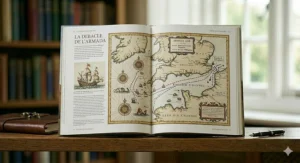
The Tudor dynasty (1485-1603) transformed England from a minor European kingdom into an emerging Protestant power with global ambitions. Henry VII ended the Wars of the Roses and established stable monarchy after decades of civil war. His son Henry VIII broke with Rome, creating the Church of England and dissolving the monasteries — the most dramatic religious upheaval in English history, as documented in The National Archives’ extensive collection of Reformation records. Edward VI’s brief reign saw radical Protestant reformation before Mary I’s violent Catholic restoration. Finally, Elizabeth I’s forty-five-year reign established England’s international stature, defeated the Spanish Armada, and created the cultural flowering we call the English Renaissance.
These 118 years fundamentally shaped modern Britain. The Church of England still exists. The constitutional balance between Crown and Parliament emerged from Tudor innovations, particularly through Henry VIII’s Reformation Parliament which sat from 1529 to 1536. English replaced Latin as the language of power and culture. The foundations for British Empire were laid. Understanding this period means understanding how contemporary Britain came to exist in its present form — rather important context for anyone living here.
Key Figures You’ll Encounter Repeatedly
Certain personalities dominate Tudor literature because they dominated the period itself. Henry VIII appears in virtually every book, either as main subject or looming background presence. His six wives (Catherine of Aragon, Anne Boleyn, Jane Seymour, Anne of Cleves, Catherine Howard, Katherine Parr) each merit substantial attention. Elizabeth I commands her own extensive literature. Thomas Cromwell, Henry’s chief minister who orchestrated the break with Rome, has enjoyed scholarly rehabilitation particularly since Hilary Mantel’s novels. Thomas More, the Catholic martyr who opposed the Reformation, appears frequently as Cromwell’s antagonist.
Understanding these figures’ basic biographies before reading specialist studies significantly enhances comprehension. Otherwise you’ll constantly pause to check who people are, disrupting narrative flow. Wikipedia’s Tudor period pages provide excellent quick reference for establishing fundamental chronology and relationships, whilst English Heritage’s Tudor overview offers accessible context about daily life and cultural developments during this transformative era.
Regional Variations Within the UK Tudor Experience
When Tudor books discuss “England,” they typically mean specifically England rather than Britain. Scotland remained independent until 1603 (and even then maintained separate identity after union). Wales was forcibly incorporated into England through Acts of Union in 1536 and 1543, bringing Welsh gentry into English power structures whilst suppressing Welsh language and customs. Ireland experienced brutal Tudor conquest, with Henry VIII declared King of Ireland in 1541 and Elizabeth I conducting vicious campaigns to suppress Irish rebellion.
For readers in Scotland, Wales, or Northern Ireland, remember that Tudor “triumphs” often meant conquest, suppression, or forced assimilation of your ancestors. English historians don’t always acknowledge these perspectives, creating narratives where Tudor expansion appears natural or inevitable rather than violently contested. Seeking out histories that explicitly address Welsh, Scottish, or Irish Tudor experiences provides necessary balance.
Tudor History Books vs Renaissance England Studies
The terms “Tudor period” and “Renaissance England” often appear interchangeable but actually emphasise different aspects of the same chronological span. Understanding this distinction helps readers select books matching their actual interests rather than making assumptions based on titles.
Dynasty-Focused vs Cultural-Focused Approaches
Tudor period books centre monarchy, politics, and high-level decision-making. They explore how individual monarchs’ personalities, marriages, and policies shaped national trajectory. The focus remains firmly on power — who held it, how they used it, what happened when it transferred. This approach delivers compelling character-driven narrative because the Tudors themselves were such extraordinary personalities.
Renaissance England studies emphasise cultural, intellectual, and social developments during the same period. They explore how English literature flourished (Shakespeare, Marlowe, Spenser), how scientific thinking evolved, how daily life changed for various classes. The monarchy provides context but doesn’t monopolise attention. This approach reveals broader societal transformation beyond royal courts.
Most books in this guide adopt the dynasty-focused Tudor approach because that’s what most readers seek when searching for “Tudor history books.” If you’re actually more interested in Shakespeare’s theatre, the development of English humanism, or changing agricultural practices, you’ll find more satisfaction in Renaissance studies — despite temporal overlap with Tudor political history.
Overlapping Themes and Crossover Works
The best Tudor histories acknowledge Renaissance cultural developments whilst maintaining political focus. Wooding’s Tudor England, for instance, integrates discussion of Protestant theology, printing press technology, and changing literacy rates alongside conventional political narrative. Ackroyd’s literary background ensures he attends carefully to how language and literature evolved during the period.
Conversely, pure Renaissance studies can’t entirely ignore Tudor politics because monarchs patronised artists, suppressed or encouraged different religious expressions, and created the stable conditions (or instability) within which culture developed. The two approaches complement rather than contradict, offering different lenses on the same historical moment.
FAQ
❓ Are Tudor history books suitable for complete beginners with no historical background?
❓ Which Tudor history books are available with next-day delivery from Amazon UK warehouses?
❓ How do I know if a Tudor book is historically accurate or filled with speculation?
❓ Can I gift Tudor history books to someone who prefers modern history or isn't specifically interested in royalty?
❓ Do Tudor history books require understanding of British geography and locations to follow properly?
Conclusion
The Tudor period’s enduring fascination rests not merely on spectacular personalities or dramatic events but on how profoundly these 118 years shaped the Britain we inhabit today. Every Sunday church service, every Parliamentary debate, every assumption about English national character traces roots back to Tudor transformations. These books don’t offer escapism into irrelevant past but engagement with the forces that created modern British identity.
The seven works examined here represent Tudor scholarship at its contemporary best — rigorous research married to accessible presentation, fresh perspectives grounded in archival evidence, and genuine respect for both historical truth and reader intelligence. Whether you’re seeking Lucy Wooding’s comprehensive analysis, Tracy Borman’s intimate portraits, Peter Ackroyd’s literary flair, or Alison Weir’s fictional immersion, you’ll find Tudor England rendered with authority and engagement.
For British readers particularly, these books offer something beyond historical education. They explain us — how we came to speak English rather than Latin or French, why we’re Protestant rather than Catholic, how our constitutional monarchy emerged, why we simultaneously revere and suspect royal power. The Tudors weren’t just dramatic historical figures; they were the architects of modern Britain, for better and worse.
Start anywhere that intrigues you. Perhaps Borman’s accessible Private Lives if you’re testing whether Tudor history interests you at all. Maybe Wooding’s magisterial Tudor England if you’re ready for serious scholarship. Possibly Weir’s fiction if narrative immersion suits you better than academic prose. Whichever you choose, you’re embarking on a journey through England’s most transformative century — one that continues shaping our present five hundred years later.
Recommended for You
- 7 Best Solo Travel Memoir Books UK: Transform Your Wanderlust 2026
- 7 Best Travel Memoir Books That Inspire Wanderlust | UK 2026
- 7 Best Music Legend Biography Books UK 2026
Disclaimer: This article contains affiliate links. As an Amazon Associate, I earn from qualifying purchases. If you purchase products through these links, we may earn a small commission at no additional cost to you.
✨ Found this helpful? Share it with your mates! 💬🤗
