

In This Article
There’s something irresistible about the age of sail — a period stretching roughly from the mid-16th century to the mid-19th, when wooden warships ruled the oceans and empires were won or lost on the strength of a broadside. Whether you’re an armchair admiral who can’t get enough of Trafalgar, a fan of Patrick O’Brian’s magnificent Aubrey–Maturin novels, or simply someone who picked up a battered copy of Hornblower on holiday and never quite recovered, the right age of sail books can absolutely transform the way you see British history.
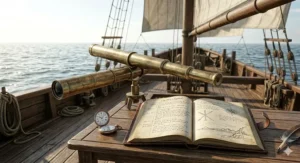
So what exactly counts as an age of sail book? In the broadest sense, it’s any work — fiction or non-fiction — set during the great era of wooden warships and fighting sail, typically from the defeat of the Spanish Armada to the widespread adoption of steam propulsion around the 1850s. The golden heart of the period, at least from a British perspective, is the long wars against France: the Revolutionary Wars, the Napoleonic campaigns, and that extraordinary climax at Cape Trafalgar in October 1805.
Britain, more than any other nation, has a deep cultural relationship with this era. The National Maritime Museum in Greenwich — the world’s largest — is testament to just how seriously we take our naval heritage. And the publishing industry has responded in kind, with a gloriously varied catalogue of age of sail books covering everything from scholarly history to rousing fiction.
This guide cuts through the noise and gives you the seven best titles currently available on Amazon.co.uk, whether you’re a first-time reader or someone who’s already got a shelf groaning under the weight of quarterdeck memoirs.
Quick Comparison: Best Age of Sail Books at a Glance
| Book | Author | Type | Best For | Price Range |
|---|---|---|---|---|
| Master and Commander | Patrick O’Brian | Literary Fiction | The definitive experience | Under £10 |
| Nelson’s Navy | Brian Lavery | Non-Fiction Reference | Deep-dive into the real navy | £15–£25 |
| The Wooden World | N. A. M. Rodger | Scholarly History | Serious historians | £10–£18 |
| Mr Midshipman Hornblower | C. S. Forester | Adventure Fiction | Perfect gateway novel | Under £10 |
| Kydd (Thomas Kydd Series) | Julian Stockwin | Naval Fiction | Authentic action | Under £10 |
| Naval Warfare in the Age of Sail | Bernard Ireland | Illustrated History | Visual learners | £15–£30 |
| British Warships in the Age of Sail 1793–1817 | Rif Winfield | Technical Reference | Researchers & modellers | £25–£45 |
The table above shows something interesting: there’s a clean split between literary fiction (O’Brian, Forester, Stockwin) and serious reference works (Lavery, Rodger, Winfield). Most readers begin with the fiction and migrate toward the history books as they crave more context — a perfectly natural progression. Budget readers are wonderfully served in this genre: the fiction titles are almost all available for under a tenner in paperback, while the specialist reference volumes command a premium that, frankly, they earn.
💬 Just one click — help others make better buying decisions too! 😊
✨ Don’t Miss These Exclusive Deals!
🔍 Take your naval history library to the next level with these carefully selected age of sail books. Click on any highlighted title to check current pricing and availability on Amazon.co.uk. Whether you want swashbuckling fiction or authoritative history, there’s something here for every reader.
Top 7 Age of Sail Books UK 2026 — Expert Analysis
1. Master and Commander by Patrick O’Brian
If age of sail books had a patron saint, it would be Patrick O’Brian. Master and Commander is the first entry in the 20-novel Aubrey–Maturin series, and it begins with one of the great opening gambits in historical fiction: two strangers — naval lieutenant Jack Aubrey and Irish-Catalan physician Stephen Maturin — nearly come to blows at a concert in Minorca over a disagreement about Corelli, then promptly become the most famous friendship in maritime literature.
Set in 1800–1801 against the backdrop of the Napoleonic Wars, the novel places Aubrey in command of HMS Sophie, a tiny 14-gun brig, and proceeds to render shipboard life with extraordinary fidelity: the food, the jargon, the brutal hierarchy, the mathematics of gunnery, the smell of bilgewater in heavy weather. What the spec sheet won’t tell you is that O’Brian writes prose of genuine literary quality — this isn’t pulp adventure dressed up in period costume. It’s proper literature that happens to involve cannons.
Who is this for? Anyone coming fresh to the genre, and anyone who’s been told they “should” read O’Brian and kept putting it off. It’s also the ideal entry point for readers who already love Jane Austen — the social observation is remarkably similar, just with considerably more gunpowder.
British readers will find a particular resonance here: the series is saturated with Royal Navy history that feels genuinely part of our national story, rather than something filtered through an American lens.
UK readers on Amazon.co.uk note that paperback copies are widely available, and the Kindle edition is priced in the very accessible range.
Pros:
✅ Unmatched literary quality for the genre
✅ Historically authentic to a remarkable degree
✅ The gateway to 20 magnificent novels
Cons:
❌ The dense naval jargon in the early chapters can be initially daunting
❌ The unhurried pace won’t suit readers wanting constant action
Price range: Under £10 in paperback; excellent value given what you’re getting.
2. Nelson’s Navy: The Ships, Men and Organisation, 1793–1815 by Brian Lavery
Brian Lavery is Curator Emeritus at the National Maritime Museum in Greenwich — which is roughly the equivalent of being chief librarian at the Vatican, except the books are about cannons and scurvy. Nelson’s Navy is his masterwork: a single-volume reference that covers everything from the rate and construction of ships of the line to the daily rations of ordinary seamen.
This is the non-fiction companion that O’Brian’s readers eventually discover and cannot put down. Lavery explains the difference between a first-rate and a 74-gun ship of the line; he tells you what sailors actually ate (the answer involves a great deal of biscuit and salt pork, neither of which sounds particularly appetising); he deconstructs the officer promotion system in ways that suddenly make every Hornblower plot twist three times more meaningful. The spec sheet reads like scholarship, but the experience is something closer to revelation.
Who is this for? Anyone who’s finished a naval novel and thought, but how did any of it actually work? Also invaluable for writers, model-ship builders, wargamers, and anyone planning a visit to HMS Victory in Portsmouth.
Patrick O’Brian himself called it “the most nearly regal” naval history he had encountered in years of reading on the subject — which, given that O’Brian was himself a meticulous researcher, is about as good an endorsement as the genre offers.
Pros:
✅ The definitive single-volume guide to Nelson’s Royal Navy
✅ Equally useful as both a read-through and a reference work
✅ Beautifully illustrated with period prints and diagrams
Cons:
❌ Dense in places — not beach reading
❌ Focus is specifically on 1793–1815, not the broader age of sail
Price range: £15–£25 in paperback; well worth every penny.
3. The Wooden World: An Anatomy of the Georgian Navy by N. A. M. Rodger
Here’s a book that does something genuinely unusual: it argues, with enormous scholarly authority, that almost everything you think you know about life in the 18th-century Royal Navy is wrong. The popular image — press-ganged wretches, constant flogging, floating concentration camps — turns out to be largely a myth. N. A. M. Rodger, Emeritus Fellow of All Souls College, Oxford and Professor of Naval History at the University of Exeter, demonstrates that Georgian sailors were actually reasonably well paid by the standards of the era, that flogging was far less common than legend suggests, and that the Navy functioned as a surprisingly sophisticated social organism.
The book focuses primarily on the Seven Years’ War period (1754–63), but its insights apply across the broader age of sail. What Rodger does brilliantly is to treat the navy not as a series of battles and admirals, but as a society — with its own politics, its own economy, its own culture. It’s the kind of history that makes you feel slightly embarrassed for every rum-and-the-lash cliché you’ve ever absorbed from popular culture.
Who is this for? Readers who want to move beyond the romantic myths and into the genuine complexity of maritime history. It’s an intellectually demanding read, but not impenetrably academic — Rodger writes with wit and clarity.
UK readers with a particular interest in social history will find this especially rewarding, as it connects naval life to the broader context of Georgian Britain.
Pros:
✅ Overturns conventional wisdom with rigorous scholarship
✅ Readable despite its academic credentials
✅ Essential for understanding how the navy actually functioned
Cons:
❌ Not narrative history — it’s analytical, which won’t suit everyone
❌ Focused on a specific 18th-century window rather than the full era
Price range: £10–£18; the paperback edition is widely available on Amazon.co.uk.
4. Mr Midshipman Hornblower by C. S. Forester
Before O’Brian, there was Forester. Mr Midshipman Hornblower is the chronological beginning of the Hornblower Saga, following the young Horatio Hornblower from his first terrified steps aboard a naval vessel to his emergence as a promising officer — all rendered with Forester’s characteristic economy and pace. Where O’Brian is a feast, Forester is a perfectly cooked steak: direct, satisfying, and impossible to put down.
Hornblower himself is one of the great characters in British fiction: deeply insecure, brilliantly tactical, prone to seasickness, and permanently convinced he’s about to be found out as a fraud. He’s relatable in a way that feels almost anachronistic for an early 19th-century naval officer. The novel is structured as a series of linked episodes, which makes it both accessible for new readers and endlessly re-readable for those who already know how things turn out.
Who is this for? The perfect starting point for readers who want adventure and action rather than literary complexity. Younger readers (teenagers upwards), history enthusiasts new to the period, and anyone who enjoyed the Hornblower television adaptations starring Ioan Gruffudd will find this utterly compelling. It’s also worth noting that the Hornblower series has been credited by multiple authors as the inspiration that led them to write their own age of sail fiction.
Pros:
✅ Fast-paced and immediately gripping — no slow burns here
✅ A perfect standalone introduction to the broader series
✅ Cheap, widely available, and thoroughly re-readable
Cons:
❌ Less literary depth than O’Brian
❌ The chronology of the Hornblower series can be confusing — you’ll want a reading guide
Price range: Under £10 in paperback; some omnibus editions available in the £12–£18 range.
5. Kydd by Julian Stockwin (Thomas Kydd Series, Book 1)
Julian Stockwin brings a credential that neither Forester nor O’Brian possessed: actual naval experience. Stockwin was sent to a tough sea-training school at fourteen and subsequently joined the Royal Navy before transferring to the Royal Australian Navy, serving for eight years across the Far East and Antarctic waters. He retired with the rank of Lieutenant Commander and an MBE. This is a man who knows what a ship smells like in a gale.
Kydd opens in 1793, with young Thomas Kydd pressed into naval service from his work as a wig-maker in Guildford — a detail that is both historically plausible and quietly amusing. The series follows Kydd’s transformation from bewildered landlubber to seasoned officer across 24 novels, and what distinguishes Stockwin from the competition is his granular, lived-in authenticity. The dialogue, the shipboard routine, the social dynamics between officers and ratings — all of it has the texture of someone who’s actually stood a watch.
Who is this for? Readers who want their age of sail fiction grounded in rigorous, first-hand-informed detail. A Devon-based author writing about the Royal Navy — it doesn’t get much more British than that. Amazon.co.uk reviewers frequently note that the Kydd series is “more historically accurate than the Patrick O’Brian series” — a bold claim, but not an empty one.
Pros:
✅ 24 novels means exceptional value if you get hooked
✅ Naval authenticity informed by real service
✅ Excellent at depicting the experience of the ordinary sailor
Cons:
❌ The early novels have a slightly rougher narrative edge than O’Brian
❌ A 24-book commitment is not nothing
Price range: Individual titles under £10; look for box sets in the £20–£35 range on Amazon.co.uk.
6. Naval Warfare in the Age of Sail: War at Sea 1756–1815 by Bernard Ireland, illustrated by Tony Gibbons
Some people want to read about the age of sail. Others want to see it — the rigging diagrams, the cross-sections of ships of the line, the illustrated depictions of fleet engagements. Bernard Ireland’s book serves the second group magnificently. Covering the era from the Seven Years’ War to the Napoleonic Wars, it explains how wooden warships were constructed, sailed, and fought, with Tony Gibbons’ acclaimed naval artwork illustrating everything from a 100-gun first-rate to a privateer’s schooner.
What Ireland does particularly well is translate technical complexity into readable narrative. The difference between a ship of the line and a frigate isn’t just a matter of guns — it’s a different tactical role, a different kind of crew, a different relationship to the fleet. Understanding these distinctions makes both the historical battles and the fictional ones dramatically more comprehensible. After reading this, you’ll never again watch a period naval drama without noticing what the director got wrong.
Who is this for? Visual learners, model ship builders, wargamers, and anyone who wants a comprehensive illustrated reference to the period. It’s also an excellent companion volume to the fiction titles — read O’Brian or Hornblower first, then reach for Ireland when you want to understand exactly what they’re describing.
Pros:
✅ Superb illustrations throughout
✅ Clear, jargon-free explanations of complex naval concepts
✅ Covers tactics, construction, and daily life
Cons:
❌ Less depth per topic than specialist volumes like Lavery
❌ Harder to find in print — check Amazon.co.uk for current availability
Price range: £15–£30 depending on edition; hardback copies command a premium.
7. British Warships in the Age of Sail, 1793–1817 by Rif Winfield
This is the obsessive’s volume. Rif Winfield’s series — of which this is the third instalment, covering the French Revolutionary and Napoleonic Wars — details more than 2,000 individual vessels that served in the Royal Navy during the period. Every ship: whether purpose-built, captured from the enemy, purchased, or hired. Their dimensions, their armament, their captains, their stations of service, their fates.
It’s not a book you read from cover to cover on the sofa. It’s a book you consult the way a surgeon consults an anatomy atlas — with intense, focused purpose. Want to know the exact specifications of the 74-gun ship that appears in your favourite O’Brian novel? It’s in here. Researching an ancestor who served in the Napoleonic Wars and want to know every ship they might have encountered? This is your source. When the book was first published in 2005, it was described as “a major contribution to naval history” — which, given the competition, is saying something.
Who is this for? Dedicated researchers, serious naval history enthusiasts, model-makers requiring accurate specifications, and writers seeking primary-source-level detail. Not for the casual reader — but for the right reader, utterly invaluable. Available in both hardback and Kindle editions on Amazon.co.uk.
Pros:
✅ Unmatched reference depth — 2,000+ ships documented
✅ Includes contemporary prints and specially commissioned drawings
✅ Available as a Kindle edition for those with limited shelf space
Cons:
❌ Reference book, not narrative — requires specific intent to use effectively
❌ Premium price reflects its specialist nature
Price range: £25–£45 in hardback; the Kindle edition offers considerably better value.
How to Choose Age of Sail Books in the UK: A Practical Framework
The age of sail books market is genuinely rich and varied, which means a bit of navigation is required. Here’s how to approach it:
1. Start with your appetite, not your ambition. Many enthusiasts buy Rodger’s scholarly Command of the Ocean first because it looks impressively authoritative, then find they can’t get through it because they haven’t yet built the context. If you’re new to the period, start with a novel — Hornblower or Kydd — then move to the history.
2. Decide between fiction and non-fiction as your primary mode. The fiction gives you emotional immersion; the non-fiction gives you structural understanding. The best approach, honestly, is to alternate — one novel, one history book, repeat until the shelf collapses.
3. Consider your specific interest within the period. The age of sail spans roughly 300 years and encompasses everything from Elizabethan privateering to Trafalgar. If you’re specifically fascinated by Nelson’s era, Lavery’s Nelson’s Navy is the single book you need. If you want the full sweep, Rodger’s trilogy (beginning with The Safeguard of the Sea) is the long-game investment.
4. Think about format. If you travel frequently, Kindle editions of these titles offer excellent value and mean you can carry your entire naval library in your pocket. Heavy illustrated volumes like Ireland’s work are better enjoyed in hardback — they’re designed to be looked at, not squinted at on a screen.
5. For UK buyers: check Prime eligibility. Many of these titles are Prime-eligible on Amazon.co.uk, meaning next-day delivery for members. The paperback fiction titles almost universally qualify for free standard delivery over £25 if you’re buying a couple at once.

The Case for Starting with Fiction — Then Going Deeper
Here’s something that gets lost in the earnest world of naval history: the fiction came first. Or rather, the fiction makes you want the history.
C. S. Forester invented Hornblower in 1937 — and for decades, he was effectively the only gateway into this world for most British readers. Then O’Brian arrived, and a whole new generation discovered that age of sail fiction could be genuinely literary. Then the television adaptations came along. Then Master and Commander: The Far Side of the World — the 2003 film for which Brian Lavery himself served as historical consultant — introduced the period to millions more.
The pattern is consistent: reader discovers fiction, reader becomes curious about the reality, reader discovers Lavery and Rodger, reader spends a year reading nothing else and becomes frankly insufferable at dinner parties. This is not a warning. This is a promise.
The National Museum of the Royal Navy in Portsmouth — home of HMS Victory, Nelson’s flagship at Trafalgar — makes for an extraordinary companion to any reading of these books. Standing on Victory’s gun deck, where sailors fought in conditions of near-absolute darkness and noise, transforms the printed page into something visceral. If you’re planning a visit after working through this reading list, I’d recommend combining it with a read of Lavery’s Nelson’s Navy beforehand: the book and the ship are in constant conversation.
Fiction vs Non-Fiction Age of Sail Books: Which Should You Buy?
This is the question most new readers ask, and it’s slightly the wrong question — but worth addressing properly.
| Fiction (O’Brian, Forester, Stockwin) | Non-Fiction (Lavery, Rodger, Winfield) | |
|---|---|---|
| Emotional engagement | Very high | Low to moderate |
| Historical accuracy | High (especially O’Brian) | Authoritative |
| Accessibility | High | Variable — Rodger is readable; Winfield is reference |
| Price (paperback) | Under £10 | £15–£45 |
| Best for beginners | ✅ Yes | ❌ Not as a starting point |
| Shelf life | Enormous re-read value | Permanent reference |
The honest answer is this: if you’re not sure, start with Mr Midshipman Hornblower at under a tenner. If you finish it and feel nothing, the genre probably isn’t for you. If you finish it and immediately want to know more, Lavery’s Nelson’s Navy is your next purchase.
✨ Don’t Miss These Exclusive Deals!
🔍 Ready to build your age of sail library? Click on any highlighted title to check current pricing and availability on Amazon.co.uk — and remember, Prime members get free next-day delivery on eligible titles.
What to Expect: Real-World Reading Experience
A word of practical guidance for UK readers approaching this genre for the first time: the nautical terminology is dense, and it’s deliberately so. O’Brian in particular refuses to hold your hand through words like “larboard” and “weather-gauge” — he simply uses them, as his characters would have, and trusts the reader to absorb the context. This is actually the correct approach.
Don’t stop to look up every term in the first chapter. You’ll lose momentum and miss the story. Instead, trust that comprehension arrives gradually — by chapter three of Master and Commander, you’ll understand “bear away” not because you’ve consulted a glossary, but because the narrative has shown you what it means three times over.
For readers who do want a glossary, Lavery’s Nelson’s Navy includes one, and the Royal Museums Greenwich website offers excellent free resources on naval terminology and ship types.
There’s also a pacing adjustment required for readers accustomed to modern thrillers. O’Brian writes at the speed of the sea — which is to say, much of the drama is interspersed with long, richly observed stretches of ordinary life. This is not a flaw. It’s precisely what makes the action sequences, when they arrive, so extraordinarily effective.
Common Mistakes When Buying Age of Sail Books
Buying the wrong book in a series first. Hornblower’s internal chronology (beginning with Midshipman Hornblower) differs from publication order — and reading them out of sequence diminishes the experience considerably. O’Brian’s Aubrey–Maturin series must be read in order, full stop. Check publication and internal chronology before buying.
Expecting consistent tones across the genre. Stockwin writes propulsive action-adventure; O’Brian writes literary fiction with a nautical setting; Rodger writes academic social history. All three are excellent, but they are not interchangeable. Know what you’re buying before you click.
Overlooking illustrated editions. Several of these titles — particularly Ireland’s Naval Warfare in the Age of Sail — are significantly diminished in the Kindle format because the illustrations are central to the experience. For visual reference works, always buy the physical edition.
Ignoring the Kindle editions for fiction. Conversely, for the novels — especially if you’re working through a 20-book series — Kindle editions are excellent value and save considerable shelf space. O’Brian’s complete Aubrey–Maturin series in Kindle format is a genuinely cost-effective option for UK buyers.
Buying from non-UK Amazon. Several of these titles have UK-specific editions with different ISBNs, forewords by British naval historians, and prices in GBP that reflect UK VAT. Always buy from Amazon.co.uk to ensure correct edition and UK warranty on physical goods.
Age of Sail Books for Specific UK Readers
The genre covers such varied ground that different readers need different entry points:
🧑🏫 The history teacher or student: Rodger’s The Wooden World is the academic gold standard. Alternatively, Lavery’s Nelson’s Navy works beautifully as a teaching companion to the Napoleonic Wars curriculum.
🏡 The retired reader with time for a long series: O’Brian’s 20 Aubrey–Maturin novels represent one of the great literary projects of the 20th century. Clear the diary.
⚓ The former naval or merchant mariner: Stockwin’s Kydd series, written by someone who actually served, will feel most authentic. Amazon.co.uk reviewers with naval backgrounds consistently rate it as the most technically credible of the fiction options.
🎨 The model-maker or illustrator: Winfield’s British Warships in the Age of Sail and Ireland’s illustrated volume are both essential. The plans, specifications, and period artwork are genuinely indispensable.
🧒 The teenager just getting into history: Start with Forester. Full stop. Mr Midshipman Hornblower is pacey, heroic, and historically grounded without being overwhelming.
FAQ: Age of Sail Books UK
❓ What is an age of sail book, exactly?
❓ Which age of sail book should an absolute beginner read first?
❓ Are Patrick O'Brian's Aubrey–Maturin novels historically accurate?
❓ Are these age of sail books available for Kindle on Amazon.co.uk?
❓ Can I visit any UK locations related to the age of sail before or after reading these books?
Conclusion: Set Sail — Your Library Awaits
The age of sail books market is one of the most rewarding in British publishing — generous in its breadth, consistent in its quality, and remarkably accessible at every price point. From the under-a-tenner paperback fiction that introduces you to the period, to the heavyweight scholarly references that keep serious enthusiasts occupied for years, there’s a title here for every reader and every budget.
The seven books in this guide represent a deliberately curated range: O’Brian for the literary experience, Forester and Stockwin for pure adventure, Lavery and Rodger for history that genuinely illuminates, Ireland for the visual learner, and Winfield for those who want to go as deep as it’s possible to go. You don’t need all seven at once. Start with one — probably Hornblower, probably under a fiver — and see where the current takes you.
These were the ships that built Britain’s empire, protected these islands from Napoleon, and gave us a maritime culture that still shapes how we see ourselves. The books that describe them deserve a place on every serious British reader’s shelf.
✨ Don’t Miss These Exclusive Deals!
🔍 Ready to start your age of sail reading journey? Click on any highlighted title to check current pricing and availability on Amazon.co.uk. Prime members enjoy free next-day delivery — so you could be reading by tomorrow evening.
Recommended for You
- Best Nelson Trafalgar Books 2026: 7 Must-Read UK Picks
- Best Royal Navy Books 2026: 7 Essential UK Reads You Can’t Miss
- Best Bomber Command Books 2026: 7 Essential UK Reads
Disclaimer: This article contains affiliate links. As an Amazon Associate, I earn from qualifying purchases. If you purchase products through these links, we may earn a small commission at no additional cost to you.
✨ Found this helpful? Share it with your mates! 💬🤗
