
In This Article
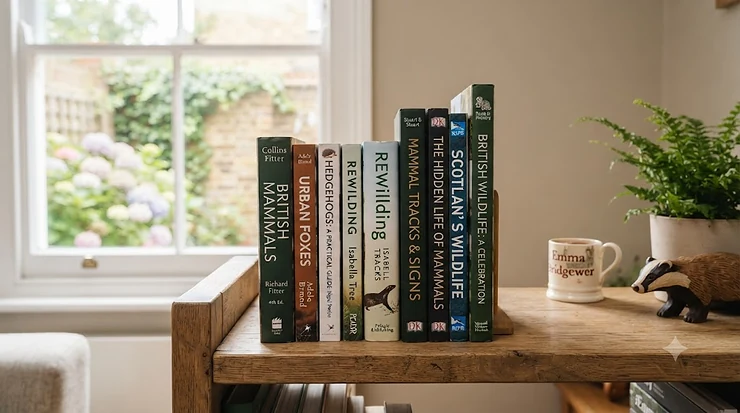
There’s a particular kind of person who hears a rustle in the hedge at dusk and doesn’t jump — they crouch down, hold their breath, and hope. If that’s you, or if you’re trying to raise one of those people from scratch in your own household, you already know that a good pile of mammals books does more for a wet Saturday than any screen ever could. This isn’t really about ticking off species on a list, although plenty of these books will have you doing exactly that with a pencil stub and a torch. It’s about the slow-burn thrill of finally understanding why a badger snuffles the way it does, or why your garden hedgehog vanished for six months and then reappeared looking thoroughly unbothered by the whole affair.
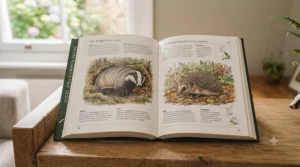
Britain, in case you’d forgotten during the last badger-related news cycle, is home to a surprisingly compact but fiercely charismatic cast of native mammals — otters, red squirrels, pine martens, and yes, that badger and hedgehog double act that keeps popping up in every conversation about the British countryside. According to the Mammal Society’s landmark review, almost one in five British mammal species now faces a high risk of extinction, with hedgehogs among those that have seen the steepest declines. Which makes the timing rather good, honestly, because the books below don’t just help you identify what’s out there — several of them explain exactly why it’s disappearing, and what a normal person with a garden and some curiosity can actually do about it.
Below are seven real, currently available books covering the full spread of what “mammals books” can mean: hardcore photographic field guides you’ll want muddy and dog-eared, narrative nature writing that reads like a very good pub story, and a couple of things specifically built for small hands and shorter attention spans. Whatever kind of wildlife obsessive you’re shopping for — including, quite possibly, yourself — there’s something here that earns its spot on the shelf.
Quick Comparison Table
| Book | Format | Best For | Price Range |
|---|---|---|---|
| Britain’s Mammals (WILDGuides) | Photographic field guide | Serious identification, all 126 species | £20-£28 |
| Collins Complete Guide to British Wildlife | Photographic wildlife guide | Broad countryside ID, mammals plus everything else | £14-£20 |
| A Prickly Affair by Hugh Warwick | Narrative nonfiction | Hedgehog obsessives and gift buyers | £8-£12 |
| Badgerlands by Patrick Barkham | Narrative nonfiction | Badger lore, culture, and the cull debate | £8-£13 |
| RSPB First Book of Mammals | Children’s spotter’s guide | Ages 4-7, first steps in wildlife ID | £5-£8 |
| Where to Watch Mammals in Britain and Ireland | Site-by-site guide | Planning actual mammal-watching trips | £12-£18 |
| Mammal Tracks and Signs (FSC) | Fold-out laminated chart | Muddy-boots detective work, kids and adults alike | £3-£6 |
Look at that price spread for a second — you can build a genuinely useful home mammal library for less than the cost of a round of pub drinks, or you can go the whole hog (sorry) with the full WILDGuides field guide and still spend less than a single takeaway for two. Format matters as much as price here: a laminated fold-out chart survives a soggy Sunday walk in a way that a beautifully bound hardback simply won’t, so match the book to where you actually intend to use it, not just to how nice it’ll look on the shelf.
💬 Just one click — help others make better buying decisions too!😊
Top 7 Mammals Books: Expert Analysis
1. Britain’s Mammals (WILDGuides) — the field guide that earns a permanent spot in your rucksack
If you only ever buy one identification guide for British wildlife, the honest answer is that it should probably be this one. Britain’s Mammals covers all 126 mammal species recorded in Britain and Ireland, backed by roughly 500 carefully chosen colour photographs, and it doesn’t just show you what an otter looks like — it teaches you to recognise the things an otter leaves behind, from its distinctive five-toed tracks to its famously fish-scented droppings, known rather charmingly as spraint.
What most buyers overlook about a guide this comprehensive is that the tracks-and-signs chapter often gets more actual use in the field than the photograph pages themselves, simply because you’re far more likely to stumble across a burrow or a set of prints than the animal itself standing patiently for inspection. One reviewer for BBC Wildlife called it “the perfect field guide for old hands and newcomers alike,” and that dual appeal is genuinely the point — a total beginner can flick to a photo and get a confident ID, while someone who’s been mammal-watching for decades will still find the population and conservation sections genuinely useful for understanding what they’re seeing and why it matters.
This suits anyone serious about wildlife walks, families wanting one authoritative book rather than a shelf of half-decent ones, and gift buyers looking for something that won’t feel outgrown in a year. Aggregated reader sentiment consistently praises the sheer density of usable information packed into a format that still survives being lobbed into a rucksack pocket alongside a flask and a soggy sandwich.
Pros:
- ✅ Covers all 126 British and Irish mammal species in one volume
- ✅ Tracks-and-signs chapter is genuinely field-tested and practical
- ✅ Written to work for total beginners and lifelong enthusiasts alike
Cons:
- ❌ Comprehensive scope means it’s noticeably heavier than a pocket guide
- ❌ Photographic identification alone won’t help with every genuinely tricky small-mammal case
At around £20-£28, this sits comfortably in the “buy once, use for decades” category rather than an impulse purchase. Here’s what to weigh: cheaper pocket guides will save you a few pounds up front, but if you’re going to own exactly one mammal book for the rest of your life, the completeness here means you’ll never find yourself needing a second.
2. Collins Complete Guide to British Wildlife — the one book that covers absolutely everything
Sometimes you don’t want a book that’s only about mammals — you want a book that identifies whatever you happen to find, whether that’s a fox print in the mud, a fern you can’t name, or a beetle that’s wandered into the kitchen. That’s the Collins Complete Guide’s entire reason for existing, and it does the job with a genuinely impressive breadth: mammals, birds, fish, reptiles, amphibians, invertebrates, and common plants, all illustrated with clear photographs rather than illustrations.
Based on the spec comparison against dedicated single-group field guides, the trade-off here is depth for breadth — you get fewer pages per mammal species than a specialist guide, but in exchange you get a book that answers almost any “what on earth is that” question your countryside walk throws at you. One long-term owner summed it up simply: they’d had the book for years and found it invaluable for identifying pretty much anything, plants included, with their grandson now getting equal use out of it. That’s the kind of longevity you want from a reference book that’s going to live on the hallway shelf by the wellies.
This is the pick for households that want one all-purpose wildlife book rather than a specialist library, and for anyone teaching kids that nature doesn’t arrive neatly sorted into categories. Aggregated customer feedback consistently highlights the clear photography and the fact that restricting coverage to Britain and Ireland, rather than all of Europe, actually makes identification faster rather than more limited.
Pros:
- ✅ Covers mammals alongside birds, plants, insects and more in one book
- ✅ Photographic ID is genuinely clear and beginner-friendly
- ✅ Britain-and-Ireland-only scope speeds up identification
Cons:
- ❌ Mammal coverage is broader but shallower than a dedicated mammal guide
- ❌ Some readers note the bird section feels less detailed than the rest
Priced around £14-£20, this is genuinely strong value for the sheer range on offer. What the spec sheet won’t tell you, but years of dog-eared family copies suggest, is that this is the book people actually reach for first, precisely because it doesn’t require you to already know what category of creature you’re looking at before you open it.
3. A Prickly Affair by Hugh Warwick — the hedgehog book that makes you laugh before it makes you care
Hugh Warwick has spent over two decades radio-tracking hedgehogs across Devon, campaigning against a hedgehog cull in the Scottish islands, and — by his own admission — getting rather too invested in the International Hedgehog Olympics. A Prickly Affair is what happens when that much genuine obsession gets funnelled into 280 pages, and the result reads less like a field guide and more like the best possible pub story told by the funniest, most well-informed friend you have.
What most buyers overlook about narrative nature writing like this is that it smuggles in a remarkable amount of hard biology and conservation fact while you’re busy laughing at the anecdotes — Warwick’s Guardian review called it “learned… thoughtful, ecologically minded” alongside being properly funny, and that combination is exactly why it works as an introduction to hedgehog conservation for people who’d never pick up a straight science book. The three-part structure — Them and Us, Obsession, and Save the Hedgehog, Save the World — takes you from cultural history through to Warwick’s own fieldwork and finally to the genuinely urgent conservation message underneath all the jokes.
This suits anyone with a soft spot for hedgehogs specifically, gift buyers hunting for something warmer than a straight reference book, and readers who want conservation messaging that doesn’t feel like homework. Aggregated reader sentiment repeatedly describes the book as a gift-worthy delight for “hoggie lovers,” with several reviewers noting they picked up genuine hedgehog-friendly gardening tips almost by accident along the way. If you’d like to support the actual charity Warwick has been a life member of, the British Hedgehog Preservation Society runs the UK’s national rehabilitator network and first-aid helpline for sick or injured hedgehogs.
Pros:
- ✅ Genuinely funny writing that still delivers real conservation substance
- ✅ Written by a life member of the British Hedgehog Preservation Society
- ✅ Works equally well as a personal read or a thoughtful gift
Cons:
- ❌ Not an identification guide — pair it with a field guide if you need one
- ❌ Occasional detours into hedgehog subculture won’t appeal to every reader
At roughly £8-£12, this is an easy, low-risk addition to any wildlife-lover’s shelf. On paper this means you’re buying entertainment as much as information, but reviewers consistently note that the facts stick precisely because the storytelling around them is so genuinely enjoyable.
4. Badgerlands by Patrick Barkham — badgers, culls, and the strangest corners of rural Britain
Britain has more badgers per square kilometre than any other country on earth, and yet, as Patrick Barkham points out early in Badgerlands, most of us have never actually seen one alive and wild. Barkham — a Guardian nature writer and self-confessed inheritor of his badger-loving grandmother’s obsession — sets out to fix that, tracking down the feeders, farmers, scientists, and eccentrics who make up what he calls “Badgerlands,” while weighing up the deeply contentious badger cull debate from every angle he can find.
Here’s what to weigh with a book like this: it’s not a neutral field guide, and it doesn’t pretend to be. The Sunday Times called Barkham “a determinedly fair-minded writer” who “approaches the creature from all sorts of angles,” and that fair-mindedness is genuinely the book’s strength — rather than telling you what to think about culling, it gives you the history, the science, and the raw human stories on both sides, from badger-baiting’s grim persistence to Kenneth Grahame’s gentler fictional badger in The Wind in the Willows. It’s rich, occasionally dark, occasionally very funny nature writing that treats its subject with real seriousness.
This is the pick for readers who want cultural and political context alongside natural history, anyone following the ongoing bovine TB and badger cull debate, and fans of narrative nonfiction generally. Aggregated reviews consistently praise the vivid, witty writing style, though some readers note the book leans more heavily into the cull debate in its second half than the opening chapters suggest it will. For the current state of that debate, the Badger Trust maintains detailed, regularly updated information on badger ecology, behaviour, and the ongoing conservation and cull situation.
Pros:
- ✅ Fair-minded exploration of the badger cull from multiple perspectives
- ✅ Rich cultural history, from prehistoric arrivals to Wind in the Willows
- ✅ Vivid, witty nature writing praised across major UK reviews
Cons:
- ❌ Deliberately doesn’t take a firm side on the cull, which frustrates some readers
- ❌ Second half leans heavily into policy debate rather than pure natural history
Priced around £8-£13, Badgerlands sits comfortably alongside A Prickly Affair as an accessible, story-driven entry point. Reviewers consistently note that even after nearly 400 pages, Barkham’s affection for his subject never curdles into sentimentality — which, for a genuinely divisive animal, is no small achievement.
5. RSPB First Book of Mammals — the spotter’s guide built for tiny wildlife detectives
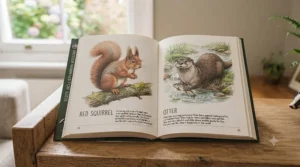
Some books need to work for a reader who can’t yet tie their own shoelaces, and the RSPB First Book of Mammals is built entirely around that brief. Aimed at four-to-seven-year-olds, it covers 35 common British mammals — badger, hedgehog, red fox, grey squirrel, otter and more — each given a full-page illustration alongside simple, digestible facts pitched exactly right for a child just starting to notice the natural world around them.
What most parents overlook about this age-specific approach is that the built-in spotter’s chart at the back does more heavy lifting than it looks like it should — turning a walk into a genuine, trackable mission rather than a vague instruction to “look at nature” gives young children a concrete goal, and ticking boxes is, frankly, satisfying at any age. One parent reviewer put it plainly: very clear colour pictures, brief but genuinely useful information, and a tick-box page that made it “excellent” for a three-year-old grandson, with repeat use clearly baked into the design.
This suits parents and grandparents wanting a first proper wildlife book rather than a generic animal picture book, and anyone building a nature-table habit into weekend routines. Aggregated feedback consistently praises the illustration quality and the fact that children seem to genuinely retain the facts, rather than the book being flicked through once and abandoned.
Pros:
- ✅ Pitched precisely at 4-7 year-olds without talking down to them
- ✅ Spotter’s chart turns walks into an actual game
- ✅ Published in partnership with the RSPB, Europe’s largest wildlife charity
Cons:
- ❌ Too simple for children already confident with basic wildlife ID
- ❌ Covers only 35 species, so older kids will outgrow it quickly
At £5-£8, this is an easy, low-stakes way to introduce a child to British wildlife without a big financial commitment. Reviewers consistently note that the tick-box element specifically is what keeps children coming back to it, rather than it becoming another book gathering dust after a single read-through.
6. Where to Watch Mammals in Britain and Ireland — the guide that turns “I’d love to see an otter” into an actual plan
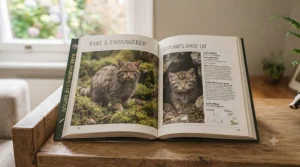
Knowing what a pine marten looks like is one thing; knowing which specific patch of Scottish woodland gives you a realistic chance of seeing one is an entirely different, far more useful kind of knowledge. This site-by-site guide takes a species-by-species approach, giving background on range, population, and behaviour before listing genuine locations where you can realistically expect to find that animal, complete with maps and field-craft advice for the notoriously camera-shy species.
One naturalist who counts this among his favourite books put it simply: it “truly opened my eyes to the mammal-watching possibilities available in Britain and Ireland,” directly informing research trips for his own later books. That’s the kind of endorsement that matters more than a star rating — this is a book written by and for people who actually go out and try to see these animals, not just read about them from an armchair. The introductory chapters covering field-craft, equipment, and relevant legislation are worth the cover price alone if you’re planning your first serious mammal-watching trip.
This is the pick for anyone planning actual wildlife-watching excursions rather than casual back-garden identification, families planning a nature-focused holiday, and enthusiasts working through a personal checklist of British species. Aggregated reader feedback is honest that Ireland’s coverage is considerably thinner than Britain’s within the book, so factor that in if Irish sites are your specific priority.
Pros:
- ✅ Genuine, mapped locations rather than vague habitat descriptions
- ✅ Field-craft and equipment chapters add real practical value
- ✅ Trusted and cited by professional nature writers researching their own books
Cons:
- ❌ Ireland receives noticeably thinner coverage than Britain
- ❌ Best used alongside a proper ID guide rather than as a standalone reference
At around £12-£18, this is a smart complementary purchase alongside a photographic field guide rather than a replacement for one. Here’s what to weigh: pairing this with Britain’s Mammals gives you both the “what is it” and the “where do I actually go” halves of the mammal-watching puzzle in one shelf.
7. Mammal Tracks and Signs (FSC fold-out chart) — proof you don’t need to see the animal to know it was there
Most British mammals are shy, nocturnal, or both, which means the animal itself is often the least reliable evidence of its own existence. This Field Studies Council chart, produced in partnership with the Mammal Society, sidesteps that problem entirely by teaching you to read footprints, droppings, burrows, and feeding signs instead — a completely different, arguably more detective-like way of engaging with wildlife.
What most buyers overlook about a laminated fold-out chart is how genuinely durable the format is for actual field use: this thing survives being shoved in a coat pocket, rained on, and dropped in mud in a way that no hardback ever will. The second edition has been completely rewritten with new drawings and photographs, and — a detail that matters more than it sounds — includes guidance on which identifying features are most reliable, since perfect, textbook-clean footprints are genuinely rare in the actual muddy world. It covers everything from otter and badger prints through to the more obscure evidence left by water voles, hazel dormice, and even beavers.
This suits families doing “nature detective” walks, anyone serious about citizen-science mammal recording, and people who simply find scat and burrows more fascinating than they’d like to admit. Aggregated feedback consistently highlights how much children specifically enjoy this format, precisely because it turns a walk into an active investigation rather than a passive spot-and-name exercise.
Pros:
- ✅ Laminated, shower-proof format built for genuine outdoor use
- ✅ Covers tracks, droppings, burrows and feeding signs, not just footprints
- ✅ Produced in partnership with the Mammal Society for genuine accuracy
Cons:
- ❌ Not a substitute for a full field guide if you need species biology detail
- ❌ Some faint or partial prints will still stump complete beginners
At just £3-£6, this is genuinely one of the cheapest, highest-value items on this entire list. Reviewers consistently note that pairing it with a proper photographic guide gives you a complete toolkit — one book to identify what you see, one chart to identify what you can’t.
Practical Usage Guide: Building a Wildlife-Watching Habit Around Your Books
Buying the books is the easy part — actually using them regularly is where most good intentions quietly die on a shelf. Start small: keep whichever field guide or fold-out chart you’ve chosen somewhere genuinely accessible, like a coat pocket or the car door, rather than a bookshelf you have to remember to visit before heading out. The single biggest mistake people make in their first month is treating a mammal-watching walk as a special occasion requiring planning and a clear evening, when the far more productive approach is simply carrying the book on every ordinary dog walk or school run and glancing down whenever something looks promising.
Dawn and dusk are when most British mammals are genuinely active, so if you’re serious about actual sightings rather than just tracks, a short walk in that window beats an hour at midday every time. Keep a simple diary alongside your book — date, location, species, and any signs found — since flicking back through even a few months of entries turns individual sightings into a genuinely satisfying record of your own local patch, and gives children in particular a real sense of progress. If you want your observations to do more than sit in a personal notebook, the Mammal Society runs citizen-science recording schemes that turn ordinary sightings into genuinely useful conservation data.
Real-World Scenarios: Matching the Book to the Reader
Sophie, 34, has just moved to a village with a garden backing onto woodland and has started noticing things she can’t name. She doesn’t need the full depth of a specialist field guide yet — she needs one broad, reliable reference that covers whatever crosses her path, mammal or otherwise. The Collins Complete Guide to British Wildlife gives her exactly that single, do-everything reference for her first year of proper noticing.
Tom, 8, has just discovered that hedgehogs exist and now talks about nothing else at dinner. He’s too young for dense field-guide text but old enough to want a real book rather than a picture book. The RSPB First Book of Mammals, paired with the FSC tracks and signs chart for weekend “detective” walks, gives him both the facts and the hands-on activity to keep the obsession genuinely productive.
Margaret, 61, has been birdwatching for years and wants to expand seriously into mammal-watching before an upcoming trip to Scotland. She needs genuine identification depth and, crucially, to know where to actually go. Britain’s Mammals for identification, paired with Where to Watch Mammals in Britain and Ireland for the site-specific planning, gives her exactly the one-two combination that experienced naturalists reach for.
How to Choose a Mammals Book
- Decide whether you want identification or narrative first. Field guides teach you to name what you see; narrative nature writing like A Prickly Affair or Badgerlands teaches you to care about it. Most serious wildlife lovers eventually want both.
- Match the format to where you’ll actually use it. A hardback field guide is glorious on a coffee table but a laminated fold-out chart survives an actual muddy walk considerably better.
- Check the age and reading level honestly, especially for children’s books. A guide pitched too far above a child’s level gets abandoned; one pitched too low gets outgrown within a season.
- Consider breadth versus depth. A single-mammal book like A Prickly Affair goes deep on one species; a Collins-style complete guide goes broad across everything, mammal or otherwise.
- Look for books produced with or endorsed by recognised conservation bodies — the Mammal Society, the RSPB, and the British Hedgehog Preservation Society all lend genuine credibility to the guides they’re associated with.
- Buy the tracks-and-signs chart even if you already own a full field guide. Most mammals leave far more evidence than direct sightings, and a dedicated signs guide teaches a genuinely different, complementary skill.
- Read aggregated review sentiment for your specific use case — gift, child’s first book, or serious identification reference — since a book can be excellent overall while being the wrong fit for your particular reader.
Field Guides vs Narrative Nature Writing: Which Do You Actually Want?
There’s a meaningful difference between a book that helps you identify a badger and a book that makes you actually care what happens to it, and it’s worth being honest with yourself about which one you’re really shopping for. Field guides like Britain’s Mammals are reference tools — you consult them, you close them, you go back outside. Narrative nature writing like Badgerlands or A Prickly Affair is designed to be read cover to cover, and it works by building genuine emotional investment through storytelling rather than simply cataloguing facts.
The two formats aren’t in competition, though — they’re complementary in a way that a lot of buyers don’t realise until they own both. A field guide tells you a hedgehog’s average weight and hibernation pattern; A Prickly Affair tells you why a grown adult has spent twenty years of weekends crawling through Devon hedgerows at midnight to understand one better. Most genuinely committed wildlife enthusiasts end up owning both types eventually, precisely because the facts stick better once you’ve got a story to hang them on.
Books for Different Age Groups and Reading Levels
Getting the reading level right matters more for mammals books than almost any other genre, since a book that talks down to a curious ten-year-old gets shelved just as fast as one that overwhelms a genuine beginner adult. For ages four to seven, something built specifically for that bracket, like the RSPB First Book of Mammals, with its spotter’s chart and single-page-per-animal format, works far better than a scaled-down adult guide. For ages eight to twelve, children are often ready for real field guides with proper photographs, particularly when paired with a hands-on tool like the FSC tracks and signs chart that turns reading into an active game.
For adult beginners, a broad reference like the Collins Complete Guide to British Wildlife avoids the intimidation factor of a specialist text while still teaching genuine identification skills. For genuinely serious enthusiasts and those planning dedicated wildlife trips, Britain’s Mammals and Where to Watch Mammals in Britain and Ireland together form the backbone of a proper reference library, with narrative titles like Badgerlands and A Prickly Affair adding depth and context once the basics are comfortably in place.
Why Britain’s Mammals Need More Attention Than They Get
It’s a slightly uncomfortable truth that mammals are, according to the Mammal Society’s own research, among the most under-recorded wildlife in the country, despite being some of Britain’s most instantly recognisable and best-loved animals. Part of the problem is simply that most native mammals are nocturnal, secretive, or both — you’re far more likely to notice a bird singing at 7am than a pine marten passing silently through your garden at 2am. This is precisely why a good mammals book matters more than it might first appear: it’s often the only reliable way most people ever properly learn what shares their local landscape, since direct sightings alone will always be frustratingly rare.
Reading about British mammals also tends to naturally lead toward doing something practical for them, whether that’s leaving a hedgehog-sized gap in a garden fence after finishing A Prickly Affair or submitting a genuine sighting to a citizen-science database after a successful tracks-and-signs walk. Given that a startling proportion of British mammal species are currently in decline, that quiet shift from curious reader to active recorder is, in its own small way, genuinely part of the conservation solution rather than just a pleasant hobby.
FAQ
❓ What is the best all-round mammals book for a UK beginner?
❓ Are hedgehog books suitable for children, or are they written for adults?
❓ How is a badger book like Badgerlands different from a field guide?
❓ Do I need a separate tracks and signs guide if I already own a full field guide?
❓ What's a reasonable budget for building a basic British mammals book collection?
Conclusion
A good mammals book doesn’t just sit on a shelf looking clever — it changes how you walk through a park, a wood, or your own back garden, turning ordinary background scenery into something worth actually paying attention to. Whether that’s the comprehensive authority of Britain’s Mammals, the laugh-out-loud devotion of A Prickly Affair, or a laminated tracks chart that survives being dropped in a puddle by an enthusiastic eight-year-old, the seven books covered here represent genuinely useful, currently available starting points for anyone who wants British wildlife to feel a little less like background noise and a little more like neighbours worth knowing.
If there’s one thing worth taking from all this, it’s that the right book for you depends entirely on whether you want facts, stories, or a genuine excuse to spend more time outside looking properly — and, happily, there’s absolutely nothing stopping you from wanting all three.
Recommended for You
- British Birds Books: 7 Best UK Guides to Buy in 2026
- British Wildlife Books: 7 Best UK Guides Worth Buying in 2026
- Best Sustainability Books Bestsellers 2026: 7 Must-Reads for UK Eco Thinkers
Disclaimer: This article contains affiliate links. As an Amazon Associate, I earn from qualifying purchases. If you purchase products through these links, we may earn a small commission at no additional cost to you.
✨ Found this helpful? Share it with your friends! 💬🤗
