
In This Article
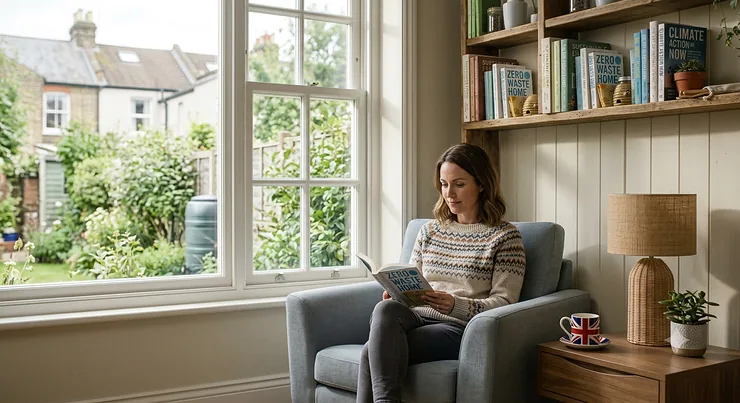
Something has shifted. You can feel it at the library, in the bookshop, on the train between Birmingham New Street and London Euston — someone always seems to have a dog-eared copy of something green and urgent in their hands. Sustainability books bestsellers aren’t a niche curiosity anymore; they’re the books your colleagues recommend, the ones your book club argues about, the ones your teenager nicks off the shelf and doesn’t return. In 2026, they’re as mainstream as anything you’d find in a Waterstones window display.
But here’s the honest truth: not all sustainability books are created equal. Some will sharpen your thinking like a well-honed argument. Others will leave you feeling vaguely guilty and slightly bored — which is, frankly, the last thing anyone needs when they’re already anxious about the planet.
This guide cuts through the noise. These are the sustainability books bestsellers that actually deserve your time, your shelf space, and your money. We’ve selected seven titles available on Amazon.co.uk that span the full spectrum — from data-driven optimism to radical economic theory to the quietly astonishing world under your feet — with honest commentary on who each book is really for. Because reading about sustainability should feel like gaining superpowers, not sitting through a very long lecture.
Prices fluctuate on Amazon.co.uk, but most of these titles are available in paperback for well under £15, with Prime members enjoying next-day delivery.
Quick Comparison Table: 7 Top Sustainability Books Bestsellers at a Glance
| Book | Author | Best For | Format Available | Price Range (GBP) | Readability |
|---|---|---|---|---|---|
| Not the End of the World | Hannah Ritchie | Data-curious optimists | Paperback, Kindle | Under £10 | ⭐⭐⭐⭐⭐ |
| The Climate Book | Greta Thunberg | Comprehensive overview seekers | Hardcover, Paperback, Kindle | £10–£20 | ⭐⭐⭐⭐ |
| How to Avoid a Climate Disaster | Bill Gates | Tech & policy-minded readers | Paperback, Kindle | Under £10 | ⭐⭐⭐⭐ |
| Drawdown | Paul Hawken (ed.) | Solution-focused professionals | Paperback | £12–£18 | ⭐⭐⭐⭐ |
| Braiding Sweetgrass | Robin Wall Kimmerer | Nature lovers & reflective readers | Paperback, Hardcover | £10–£16 | ⭐⭐⭐⭐⭐ |
| Doughnut Economics | Kate Raworth | Economics & policy thinkers | Paperback, Kindle | Under £12 | ⭐⭐⭐⭐ |
| Entangled Life | Merlin Sheldrake | Science enthusiasts & curious minds | Paperback, Hardcover | £9–£15 | ⭐⭐⭐⭐⭐ |
What this table makes immediately clear is the remarkable range on offer. For under £10 to around £20, you can build a genuinely formidable home sustainability library — considerably cheaper than most weekend workshops on the same topics. Hannah Ritchie and Merlin Sheldrake represent excellent entry points if you’re new to the genre; their prose is warm and accessible without ever dumbing things down. Thunberg’s volume is the one to reach for if you want the full picture in a single (admittedly substantial) tome, though be warned: it is not a casual Sunday afternoon read. It’s more of a sustained commitment.
💬 Just one click — help others make better buying decisions too! 😊
✨ Don’t Miss These Exclusive Deals!
🔍 Take your sustainability reading to the next level with these carefully selected titles. Click on any highlighted book below to check current pricing and availability on Amazon.co.uk. These picks will help you find exactly the right read for where you are in your eco journey!
Top 7 Sustainability Books Bestsellers: Expert Analysis
1. Not the End of the World — Hannah Ritchie (2024)
Hannah Ritchie is Head of Research at Our World in Data and, refreshingly, one of the few voices in sustainability writing who doesn’t want you to lie awake staring at the ceiling at 3am. This book’s central argument — that things are bad, but genuinely improvable — is backed by the kind of careful data analysis that’s increasingly rare in climate discourse.
The book covers seven key environmental challenges: air pollution, biodiversity loss, climate change, deforestation, food, ocean plastics, and overfishing. What makes it stand apart is Ritchie’s habit of puncturing myths that even well-meaning environmentalists hold dear. The chapter on food, for instance, challenges common assumptions about which dietary choices actually move the needle on emissions — essential reading in a country where “going vegan” is often treated as a moral get-out-of-jail-free card.
For UK readers, this is particularly valuable. Britain’s Department for Environment, Food & Rural Affairs (DEFRA) publishes detailed environmental statistics, and Ritchie’s framework gives you the tools to actually interpret them, rather than drown in them.
In my view, this is the single best starting point in the sustainability books bestsellers category if you want rigour without despair. UK reviewers consistently praise it as “the most honest book on the environment I’ve read.”
✅ Pros: Exceptionally clear prose; data-driven and myth-busting; genuinely hopeful without being naive
✅ Pros: Compact paperback, ideal for commuting (fits in a coat pocket, which matters on a rainy Manchester morning)
✅ Pros: Excellent Kindle edition available
❌ Cons: Some readers want more emotional resonance alongside the statistics
❌ Cons: UK-specific data isn’t always foregrounded
Available on Amazon.co.uk in paperback and Kindle. Under £10 for paperback — outstanding value for what you get.

2. The Climate Book — Greta Thunberg (ed.) (2022, updated paperback 2024)
This is not, strictly speaking, a book you read in one sitting. It’s more like a library in a single volume — over 100 contributors including geophysicists, oceanographers, economists, historians, and indigenous leaders, curated and connected by Thunberg’s own commentary throughout. The Independent called it “spectacular… planetary in scale,” and that’s about right.
The scope is genuinely impressive. You get the latest climate science, the economics of transition, the politics of the Paris Agreement, and — crucially — the stories of communities already living inside the consequences of a warming world. This breadth is its greatest strength and, for some readers, its only weakness: it resists the single narrative thread that makes for easy, cover-to-cover reading.
For UK readers who want to become genuinely conversant in climate policy — the kind of person who can hold their own in a conversation about carbon budgets, loss and damage, or nature-based solutions — this is the reference you’ll return to repeatedly. The Climate Change Committee, the UK’s independent advisory body on climate action, publishes annual progress reports that pair well with this book’s policy chapters, giving you both the global framework and the domestic picture.
The 2024 updated paperback edition is available on Amazon.co.uk and is Prime-eligible for next-day delivery.
✅ Pros: Unmatched in breadth; beautifully produced; updated with latest research
✅ Pros: Diverse range of expert voices including those from the Global South
✅ Pros: Essential for anyone in policy, journalism, education, or activism
❌ Cons: At nearly 500 pages, it demands commitment
❌ Cons: Not a narrative book — better dipped into than read linearly
Price range: £10–£20 depending on format. Worth every penny as a long-term reference.
3. How to Avoid a Climate Disaster — Bill Gates (2021, Penguin paperback)
Say what you like about Bill Gates — and plenty of people do — this book is a genuinely useful piece of work. It asks a deceptively simple question: what does it actually take to get to zero carbon emissions, globally, by 2050? Then it answers it with the methodical enthusiasm of someone who has spent decades thinking about hard, systems-level problems.
Gates breaks emissions down by sector (electricity, manufacturing, agriculture, transport, buildings) and assesses the state of the solutions — existing and emerging — for each. The “green premium” concept, which quantifies how much more expensive the clean option currently is compared to the dirty one, is one of the most practically useful analytical tools in recent environmental science books.
Where this book really earns its place on British bookshelves is in its treatment of industrial decarbonisation — the kind of challenge facing steel plants in South Wales or cement producers in the East Midlands. This isn’t territory that gets much coverage in the more consumer-focused green living books genre, and Gates handles it with clear-eyed specificity.
UK reviewers found it “the most refreshing mix of realism and optimism” in the category, and that’s fair. The London Review of Books praised its patient, simple prose.
✅ Pros: Exceptional clarity on complex topics; strong on technology and policy
✅ Pros: Widely available in paperback on Amazon.co.uk, under £10
✅ Pros: Excellent for professional and business readers
❌ Cons: Gates’s optimism about technology occasionally outpaces the evidence
❌ Cons: Some critics note a Silicon Valley bias in the solutions presented
4. Drawdown: The Most Comprehensive Plan Ever Proposed to Reverse Global Warming — Paul Hawken (ed.) (2017, Penguin Books)
A few years old now, but still the gold standard for solution-focused environmental science books. Hawken assembled a team of researchers to identify, model, and rank the 100 most effective solutions to climate change — from wind turbines and solar panels to educating girls, reducing food waste, and restoring tropical forests. The results are ranked by their potential to reduce or sequester carbon dioxide.
The genius of Drawdown is that it moves the conversation from “what’s wrong” to “what works” — and it does so with credible numbers. For sustainability professionals in the UK, whether working in local government, NGOs, or corporate ESG teams, this is a handbook as much as a book. The sections on food and land use are particularly relevant given Britain’s ongoing debates about agricultural policy post-Brexit and the UK’s legally binding net zero targets under the Climate Change Act 2008.
One word of caution: some of the figures have been updated in subsequent research, so it’s worth cross-referencing with more recent sources on specific solutions. That said, the framework and the breadth remain unmatched.
✅ Pros: Quantitative, rigorous, and actionable; the best single resource on climate solutions
✅ Pros: Paperback edition well under £18 on Amazon.co.uk
✅ Pros: Ideal for book clubs, study groups, or professional development
❌ Cons: Some data is slightly dated; a companion website updates figures
❌ Cons: Dense in places — this is a reference work, not a thriller
5. Braiding Sweetgrass: Indigenous Wisdom, Scientific Knowledge and the Teachings of Plants — Robin Wall Kimmerer (2013, Penguin Books)
Here’s the book that keeps showing up on sustainability reading lists and genuinely deserves every mention. Kimmerer is a botanist and member of the Citizen Potawatomi Nation, and she writes with a luminosity that most environmental books can only dream of. This is green living books territory that transcends the category entirely.
The central argument — that we need to recover a relationship of reciprocity with the natural world, not merely a relationship of extraction — sounds simple. In Kimmerer’s hands, it becomes genuinely transformative. She moves between rigorous botany and Indigenous story with a grace that makes you wonder why science writing ever chose the clinical register in the first place.
For British readers, there’s something particularly resonant here. We live in a landscape that has been shaped and re-shaped by human hands for millennia — the Cotswold hills, the Yorkshire Dales, the ancient oak woodlands of Dartmoor. Kimmerer gives you a framework for thinking about that relationship with fresh eyes. The Woodland Trust, which campaigns for the protection of Britain’s ancient trees and woods, holds positions that echo many of Kimmerer’s ideas about long-term stewardship.
Consistently rated 4.5 stars on Amazon.co.uk, with UK readers frequently describing it as “life-changing” — a phrase usually deployed far too casually, but which this book arguably earns.
✅ Pros: Extraordinarily beautiful prose; scientifically grounded; genuinely perspective-shifting
✅ Pros: Equally good as an audiobook for long commutes or walking
✅ Pros: Paperback typically available in the £10–£16 range
❌ Cons: US-focused in its specific plant references (though universally applicable in its ideas)
❌ Cons: Not a how-to guide — those seeking practical eco tips should pair it with something more prescriptive
6. Doughnut Economics: Seven Ways to Think Like a 21st-Century Economist — Kate Raworth (2017, Random House Business)
Kate Raworth is an Oxford-based economist who looked at the standard growth-obsessed economic models and said, essentially: this isn’t working, and here’s a better picture. That picture — the famous “doughnut” that balances social foundations against planetary boundaries — has since been adopted by cities including Amsterdam and Copenhagen as a genuine planning framework.
The book is that rare thing: an economics text that reads like an argument you want to join. Raworth’s seven ways to “think like a 21st-century economist” include redesigning economic goals, regenerative design, and distributing wealth more equitably — ideas that feel abstract until she grounds them with real-world examples, including several from British context.
For UK readers navigating the aftermath of austerity, Brexit, and the ongoing cost-of-living squeeze, Doughnut Economics offers something useful: a coherent intellectual framework for understanding why growth alone can’t solve the problems growth created. Highly recommended for anyone working in public policy, sustainable finance, or local government — or anyone who’s simply wondered whether there’s a better way to organise things.
Rating of 4.5 stars from over 3,700 reviews on Amazon globally. UK readers find it “essential” for rethinking the economy. Paperback typically available for under £12 on Amazon.co.uk — Prime-eligible.
✅ Pros: Genuinely original framework; rigorous yet accessible; highly influential
✅ Pros: Relevant to UK policy debates on inequality and environmental limits
✅ Pros: Excellent Kindle edition available
❌ Cons: Less prescriptive than some readers want — strong on diagnosis, lighter on step-by-step solutions
❌ Cons: Some economic concepts require prior familiarity; not a total beginner’s book
7. Entangled Life: How Fungi Make Our Worlds, Change Our Minds and Shape Our Futures — Merlin Sheldrake (2020, Bodley Head)
The unexpected joy of the sustainability books bestsellers genre in recent years. Sheldrake — a British scientist and author — writes about fungi with an infectious wonder that manages to be simultaneously rigorous and mind-expanding. The central revelation: fungi don’t just sit quietly beneath forest floors. They form the networks through which trees communicate and share resources; they can digest oil spills and degrade plastic; they are, in many ways, the connective tissue of life on Earth.
What makes this a sustainability essential rather than merely a brilliant nature book is the implication running through every chapter: we have catastrophically underestimated the organisms we depend on. For British readers, this lands with particular force — the mycorrhizal networks beneath our temperate oak forests, our peat bogs, our urban parks are all part of a living infrastructure that standard environmental accounting barely acknowledges.
The book has sold over a million copies globally and carries a 4.3-star rating on Goodreads from nearly 46,000 readers. UK reviewers consistently praise Sheldrake’s ability to make the invisible world legible and urgent. And because this is a Bodley Head title (a Penguin Random House imprint), it’s reliably stocked on Amazon.co.uk in both paperback and hardcover.
✅ Pros: Beautifully written; scientifically impeccable; opens entirely new ways of seeing the natural world
✅ Pros: Ideal companion to Braiding Sweetgrass — the two books speak to each other wonderfully
✅ Pros: Paperback in the £9–£15 range; hardcover edition makes an excellent gift
❌ Cons: Niche subject matter — those seeking climate action frameworks may find it tangential
❌ Cons: The science occasionally runs deep; prepare to read slowly and with attention
How to Build Your Sustainability Reading Journey in the UK
Choosing a sustainability book can feel oddly overwhelming — the category has exploded, and the stakes feel higher than picking a thriller you end up not finishing. Here’s a practical framework for UK readers.
1. Start with your current knowledge level. If you’re relatively new to environmental issues, begin with Not the End of the World — it corrects misconceptions gently and efficiently. If you already know your Paris Agreement from your planetary boundaries, jump straight to Drawdown or Doughnut Economics for the depth you’re craving.
2. Consider your purpose. Reading for personal enrichment? Braiding Sweetgrass or Entangled Life will nourish you. Reading for professional development or policy work? Drawdown, Doughnut Economics, or The Climate Book are the career-adjacent choices.
3. Match the format to your life. British commuters will find compact paperbacks preferable to heavyweight hardcovers. Many of these titles have excellent Kindle editions — useful on a crowded Tube or the 7:42 from Bristol Parkway. Braiding Sweetgrass is particularly good as an audiobook if you’d rather listen on a walk.
4. Think about reading in pairs. The books on this list weren’t written to be read in isolation, and they reward being read alongside each other. Entangled Life and Braiding Sweetgrass together form a remarkable meditation on non-human intelligence. How to Avoid a Climate Disaster and Drawdown complement each other’s approaches to solutions perfectly.
5. Factor in price and delivery. All seven titles are available on Amazon.co.uk for under £20 in paperback, most under £15. Prime members get next-day delivery; non-Prime orders above £25 qualify for free standard delivery — so ordering two or three together makes sense on both counts.
✨ Don’t Miss These Exclusive Deals!
🔍 These seven titles represent the very best the sustainability books bestsellers genre has to offer. Click any highlighted title to check current pricing and availability on Amazon.co.uk — and consider building your reading list before the next delivery arrives.
Real UK Reader Profiles: Which Book Is Right for You?
The Manchester professional working in renewable energy — You already know the technical landscape, but you want the bigger systemic picture. Start with Drawdown for the solutions overview, then move to Doughnut Economics for the economic framework. You’ll find yourself annotating both.
The Edinburgh student studying environmental science — The Climate Book is your most comprehensive foundation. Pair it with Not the End of the World to temper any creeping eco-anxiety with data, and you’ll enter any seminar well-armed.
The retired teacher in the Cotswolds who tends a garden and worries about the hedgerows — Braiding Sweetgrass is your book, without question. Then Entangled Life, which will transform the way you look at the soil under your feet every single morning.
The London policy analyst wanting to brief ministers credibly — How to Avoid a Climate Disaster and Doughnut Economics, read together, cover the technology and economic dimensions of decarbonisation with enough rigour to hold up under questioning. Both have robust reference sections.
The book club in Bristol that usually reads literary fiction — Braiding Sweetgrass is the bridge title — it reads like literature, discusses science, and will generate three hours of conversation. Entangled Life is a close second.
Common Mistakes When Buying Sustainability Books in the UK
The category has grown fast enough that a few pitfalls have appeared alongside the genuinely excellent titles. Worth knowing before you part with your money.
Buying based on the author’s celebrity rather than the book’s substance. Not every well-known environmentalist produces a well-structured book. The best sustainability books bestsellers on this list earn their place through argument and evidence, not name recognition alone. Check a few UK reviews on Amazon.co.uk or the Guardian books section before buying.
Choosing the most alarming title on the shelf. Eco-anxiety is real, and a diet of catastrophe-focused reading without any counterbalancing solutions-focused material is genuinely bad for your mental health and your effectiveness as a citizen. Balance The Climate Book with Not the End of the World. Alarm is warranted; paralysis isn’t.
Ignoring older publication dates. Drawdown (2017) and Braiding Sweetgrass (2013) are sometimes skipped by readers hunting for the newest thing. Don’t. Both remain essential, and their core arguments haven’t dated. For the most current data on specific environmental metrics, cross-reference with the UK Office for National Statistics Environmental Accounts, which publishes annual updates.
Buying hardcovers when paperbacks are available. Environmental irony aside (more paper, more resources), the price difference on Amazon.co.uk between hardcover and paperback editions can be £5–£8. Unless you’re buying as a gift, paperback serves perfectly well.
Reading in isolation. Sustainability is an interconnected topic, and reading only one book gives you one lens. The real insight comes from reading across perspectives — the scientific, the economic, the ecological, the philosophical. This list is designed to cover all four.
Sustainability Books vs Documentaries and Podcasts: What Books Do That Nothing Else Can
Streaming a David Attenborough documentary about the state of our oceans is genuinely moving. A podcast episode on carbon capture is convenient and well-produced. But there’s something books do that neither of those formats can quite manage.
Depth, for a start. The argument in Doughnut Economics requires 200 pages of careful development to land properly — a 45-minute podcast can gesture at it, but it can’t build it. The same is true of Drawdown, where the value lies not in any single solution but in the cumulative weight of 100 rigorously assessed answers.
Then there’s the reading experience itself. There’s good evidence from researchers at the University of Sussex that reading — particularly sustained, focused reading — reduces stress more effectively than almost any other leisure activity. Which is worth something, given that most of us approach climate reading from a baseline of moderate anxiety. The slower pace of a book, the marginalia you accumulate, the way an argument has time to settle and develop — these aren’t small things.
Books also travel. Braiding Sweetgrass has accompanied readers from London to Edinburgh to rural Wales, read on trains, in parks, in the quiet hour before the house wakes up. That portability, that intimacy, is still something the printed page does rather well.
FAQ ❓
❓ Which sustainability books bestsellers are best for complete beginners?
❓ Are these sustainability books available on Amazon.co.uk with free delivery?
❓ Do any of these books focus specifically on UK environmental policy and green living?
❓ Are Kindle editions available for these sustainability books bestsellers?
❓ Which of these books is best for a professional working in sustainability or ESG in the UK?
Conclusion: The Books Worth Making Time For 📚
The best thing you can do with £30 and a week of commutes is buy two or three of these titles and read them thoughtfully. Not because they’ll tell you exactly what to do — no book can — but because they’ll give you the intellectual tools to think clearly about one of the defining challenges of our time. And in a world full of hot takes, greenwashing, and performative virtue, clear thinking is genuinely radical.
Start where your curiosity pulls you. If you want data, begin with Ritchie. If you want scope, reach for Thunberg. If you want beauty, open Kimmerer. All roads eventually lead to the same place: a sharper, more grounded, more capable version of yourself — which is, ultimately, what the best books have always been for.
All seven titles are available now on Amazon.co.uk. Prime members can have them by tomorrow. Non-Prime orders over £25 qualify for free delivery, so building a small reading bundle makes good practical sense.
✨ Don’t Miss These Exclusive Deals!
🔍 Ready to start? Click on any highlighted title in this article to check current pricing on Amazon.co.uk and add to your basket. Happy reading — and remember: the planet doesn’t need perfect environmentalists. It needs informed ones.
Recommended for You 📖
- 7 Best Climate Change Books UK 2026: Essential Reads for a Warming World
- 7 Best Brain Function Books UK 2026: Unlock Your Mind’s Full Power
- Best Neuroscience Books for Beginners: 7 Expert UK Picks (2026)
Disclaimer: This article contains affiliate links. As an Amazon Associate, I earn from qualifying purchases. If you purchase products through these links, we may earn a small commission at no additional cost to you.
✨ Found this helpful? Share it with your mates! 💬🤗
