In This Article
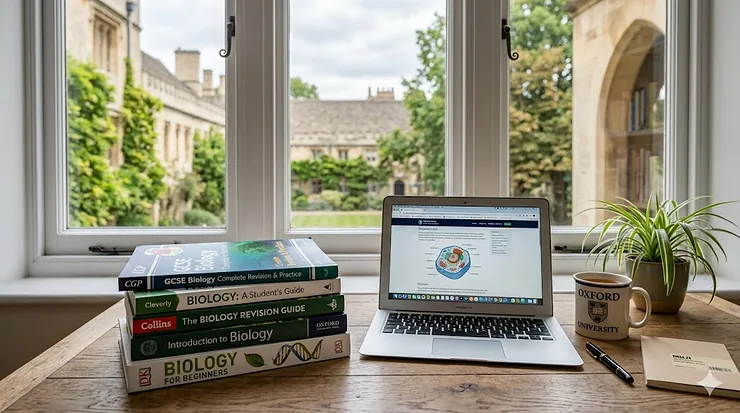
Biology books for beginners are, in theory, a simple thing: books that explain how life works without assuming you already have a chemistry set in your loft. In practice, walking into that section of Amazon.co.uk feels a bit like wandering into a packed lecture theatre by accident — there’s a 900-page textbook glaring at you from one shelf and a breezy paperback about fungi grinning at you from the other, and nobody’s told you which queue you’re meant to be in.
I’ve spent more hours than I’d like to admit reading, re-reading, and occasionally abandoning books that try to explain how life actually works, and the truth is that “beginner-friendly” means wildly different things depending on who’s selling the book to you. Some readers want a proper foundation they can build on for A-levels or a late-life career change. Others just want to understand why their sourdough starter is technically a small ecosystem. Both are valid, and — handily — both are covered below.
This list focuses on titles genuinely available to UK shoppers, weighted towards what works for a British reader: damp commutes, small bookshelves, and a healthy suspicion of anything that shouts “AMAZING!!” on the cover. Let’s get into it. 🇬🇧
Quick Comparison Table
| Book | Best For | Format | Price Range (GBP) |
|---|---|---|---|
| Biology for Dummies | Total beginners wanting structure | Paperback | £14–£18 range |
| The Biology Book (DK) | Visual learners, dip-in reading | Hardback | £12–£18 range |
| A Short History of Nearly Everything | Story-led readers, commuters | Paperback | £8–£12 range |
| Your Inner Fish | Evolution curiosity | Paperback | £9–£13 range |
| I Contain Multitudes | Microbiome/health-curious readers | Paperback | £9–£12 range |
| Entangled Life | Nature lovers, gift buyers | Paperback | £10–£14 range |
| Essential Cell Biology | Serious self-study, exam prep | Paperback/Hardback | £45–£60 range |
A glance at that table tells its own story: there’s roughly a £50 gap between the cheapest and most expensive entries, and that gap maps almost exactly onto intent. If you want a relaxed introduction you’ll lean left; if you’re laying groundwork for a biology degree or career change, the Alberts textbook earns its higher price through sheer scope. Worth noting — paperback popular-science titles rarely justify their RRP once you check the used market on Amazon.co.uk, where previous editions can knock 30–40% off without losing any relevance, since core biology hasn’t changed nearly as fast as the cover designs have.
💬 Just one click — help others make better buying decisions too! 😊
✨ Don’t Miss These Exclusive Deals!
🔍 Take your reading list to the next level with these carefully selected biology books for beginners. Click through to check current pricing and availability on Amazon.co.uk — stock and prices shift constantly, so it’s worth a quick look before you commit.
Top 7 Biology Books for Beginners: Expert Analysis
1. Biology for Dummies
Biology for Dummies does exactly what the cover promises, which is rarer than it should be. Structured like a proper course — cells, genetics, evolution, ecology — it reads less like a textbook and more like a patient tutor who’s explained mitosis four hundred times and has finally found the right analogies. Around 400 pages, with diagrams that earn their keep rather than padding word count.
What most buyers overlook is that this isn’t a “dip in and out” book — it’s sequential, and skipping chapters genuinely costs you. For a UK reader brushing up before a GCSE retake, an Open University access course, or simply trying to keep up with a science-mad child, that structure is the whole point.
UK reviewers consistently flag the clear chapter summaries as the standout feature, with the occasional gripe that the American spelling and units sneak through in places.
✅ Logical, course-like structure
✅ Genuinely beginner-paced
✅ Good glossary for quick reference
❌ Dry in places — not a “story” read
❌ Some US spelling/units in older printings
Price range: £14–£18 — solid value for a book you’ll actually finish.
2. The Biology Book: Big Ideas Simply Explained
This DK title is the visual learner’s answer to Biology for Dummies. Each spread tackles one big idea — photosynthesis, natural selection, the discovery of DNA — with bold infographics doing half the explaining before you’ve read a word. At roughly 350 pages, it’s chunky but never dense, since you’re never expected to read it cover to cover in order.
The real-world value here is flexibility: leave it on the coffee table, and it works as a “biology gift book” as easily as a study aid. I’ve found it particularly good for commuters, since each topic is self-contained enough to finish between stops on the Tube or a delayed train somewhere north of Crewe.
Amazon.co.uk reviewers regularly praise the illustrations as the best in the genre, though a few note the bite-sized format means depth occasionally gets sacrificed for clarity.
✅ Strong visual explanations
✅ Read in any order
✅ Great as a gift
❌ Limited depth on any single topic
❌ Hardback adds bulk for travel
Price range: £12–£18 — among the more giftable options on this list.
3. A Short History of Nearly Everything
Bill Bryson’s A Short History of Nearly Everything isn’t a biology book exactly — it’s a science book that happens to spend a glorious second half on evolution, genetics, and the sheer improbability of you existing at all. At over 600 pages it sounds intimidating, but Bryson’s conversational style means it reads roughly twice as fast as its page count suggests.
What this book does that a textbook can’t is give you narrative momentum. You’re not memorising the Krebs cycle; you’re following a story about how we figured any of this out, complete with the feuds, accidents, and lucky guesses along the way. For someone who tried biology at school and found it lifeless, this is often the book that reignites it — practical reading for damp British evenings when a dense textbook feels like homework.
UK readers frequently cite it as a gateway book — the one that got them reading science seriously for the first time.
✅ Genuinely funny and readable
✅ Covers evolution and genetics in depth
✅ Widely available secondhand
❌ Not biology-only — broader science scope
❌ Some details slightly dated since first publication
Price range: £8–£12 — arguably the best value entry on this list.
4. Your Inner Fish
Neil Shubin’s Your Inner Fish takes one idea — that your hands, jaw, and even hiccups trace back to fish — and builds a genuinely gripping 240-odd pages around it. Shubin is a working palaeontologist, and it shows: the fossil-hunting passages have the texture of someone who’s actually frozen half to death in the Canadian Arctic looking for transitional species.
The practical value for beginners is that it teaches evolutionary thinking through one continuous thread rather than scattering it across unrelated examples, which makes the logic far easier to hold onto. It’s a strong choice for anyone who wants depth without textbook density — accessible biology guides rarely manage both at once, but this one does.
Reviewers tend to single out the final chapters on the human body’s “leftover” anatomy as the most memorable part of the book.
✅ Tight, focused narrative
✅ Written by a working scientist
✅ Short enough to finish in a week
❌ Narrower scope than other entries
❌ Light on diagrams for visual learners
Price range: £9–£13.
5. I Contain Multitudes
Ed Yong’s I Contain Multitudes turns the human microbiome into genuinely compelling reading — not an easy trick when the subject is, fundamentally, the trillions of bacteria living in and on you. At around 370 pages, it balances solid science journalism with enough wit to keep momentum.
What stands out for UK readers specifically is how directly it connects to current health conversations — gut health, probiotics, antibiotic resistance — topics that show up regularly in British news coverage and NHS guidance. It’s one of the more immediately useful biology books for beginners on this list, in the sense that you’ll be quoting it at dinner within a week.
Customer feedback frequently mentions it changing how people think about hygiene and diet, alongside the occasional comment that the science gets fairly detailed in the middle chapters.
✅ Highly relevant to everyday health
✅ Engaging, magazine-style writing
✅ Strong further-reading notes
❌ Middle section gets technical
❌ Not a structured “course” book
Price range: £9–£12.
6. Entangled Life
Merlin Sheldrake’s Entangled Life is the book that made fungi cool, which is no small feat. Across roughly 370 pages, it covers everything from psilocybin to the underground fungal networks that effectively let trees “talk” to each other — a genuinely strange corner of biology for beginners that most courses skip entirely.
This is the standout biology gift book on the list: it’s prize-winning — it picked up the Royal Society Science Book Prize in 2021 — and it’s conversation-starting in a way most popular science manages once a decade. An illustrated edition also exists if you want something properly shelf-worthy, though it sits at the upper end of the price range below.
UK reviewers regularly describe it as the book that changed how they look at woodland walks — handy, given how much of the country is covered in exactly that.
✅ Genuinely original subject matter
✅ Prize-winning, well-reviewed
✅ Excellent as a gift
❌ Illustrated edition costs more
❌ Occasionally meanders into philosophy
Price range: £10–£14 (standard paperback); illustrated edition runs higher.
7. Essential Cell Biology
The premium pick. Essential Cell Biology, from the team behind the legendary Molecular Biology of the Cell, is a proper textbook — around 800 pages, full colour, built for people who want an actual foundation rather than a fireside chat. If you’re serious about a biology degree, nursing course, or career change into life sciences, this is the book the popular-science titles above are, frankly, building towards.
What most buyers don’t realise is that this isn’t overkill for a beginner — it’s specifically written as an introductory text, distinct from its denser sibling. The spec sheet won’t tell you this, but the chapter-end questions are what actually make the content stick, far more than passive reading does.
UK students often mention buying an older edition secondhand to save money, since core cell biology hasn’t shifted dramatically between recent editions.
✅ Genuinely comprehensive foundation
✅ Used by real university courses
✅ Strong diagrams and chapter questions
❌ Significant investment
❌ Heavy — not a commute book
Price range: £45–£60 new; considerably less secondhand.
How to Actually Read a Biology Book When You’re Starting From Zero
Buying the book is the easy part. Here’s what the listing won’t tell you: most beginners abandon biology books not because the content is too hard, but because they try to read a reference book like a novel, or a novel like a reference book.
For structured titles (Biology for Dummies, Essential Cell Biology), read in order and keep a small notebook nearby — even ten minutes jotting down unfamiliar terms after each chapter beats re-reading the whole thing later. For narrative titles (Bryson, Shubin, Yong, Sheldrake), give yourself permission to read out of sequence if a chapter title grabs you; the momentum matters more than the order.
A genuinely useful trick for grey British weather: pair an evening of reading with a short walk the next day looking for whatever you just read about — fungi, leaf structures, bird behaviour. It sounds twee, but it’s the single best way to make life science basics actually stick rather than evaporate by Thursday.

Three UK Readers, Three Very Different Biology Books
The commuter in Manchester squeezing in 25 minutes each way on the train wants something that survives interruption — The Biology Book or A Short History of Nearly Everything, both built (deliberately or not) for stop-start reading.
The parent in a semi-detached in Birmingham trying to keep pace with a GCSE-age child’s homework benefits most from Biology for Dummies, since its structure roughly mirrors the GCSE science curriculum, making it easier to help with revision rather than just nodding along. For homework-specific revision rather than general reading, BBC Bitesize is also worth bookmarking — it’s free, and it maps directly onto exam specifications in a way no book quite does.
The retiree pottering in an allotment in the Cotswolds, newly curious about why the soil under the compost heap seems to glow faintly with fungal threads, is the exact reader Entangled Life was written for — and frankly, the exact reader who’ll enjoy it most.
None of these are hard rules. But matching the book to how you’ll actually read it — not just what you’re interested in — solves most of the “I never finished it” problem before it starts.
✨ Don’t Miss These Exclusive Deals!
🔍 Whichever reader you recognise yourself in above, these picks are worth a closer look on Amazon.co.uk — Prime members get next-day delivery, and orders over £25 typically qualify for free standard delivery anyway.
How to Choose a Biology Book for Beginners in the UK
- Decide if you want narrative or reference. Story-driven books build momentum; reference books build structure. Most beginners need one, not both, to start.
- Check the edition date for fast-moving topics. Genetics and microbiome science move quickly; classic evolution and ecology content ages far more slowly.
- Match the page count to your actual reading habits, not your aspirational ones. A 600-page Bryson finishes faster than a 200-page book you never open.
- Consider format for UK living. Smaller homes mean a hardback coffee-table book competes for shelf space differently than a paperback that lives in a bag.
- Look at secondhand availability on Amazon.co.uk before paying full price, especially for textbooks like Essential Cell Biology where older editions remain largely valid.
- Read the first chapter sample, if available, rather than relying purely on the cover blurb — tone matters more than topic for whether you’ll finish it.
Popular Science vs Proper Textbook: Which Should You Start With?
This is the question that trips up most first-time buyers. Popular science books (Bryson, Yong, Shubin, Sheldrake) are built to be read, prioritising story and curiosity over completeness. Textbooks (Essential Cell Biology, and to a lesser extent Biology for Dummies) are built to be studied, prioritising structure and completeness over pace.
Neither is objectively better — they solve different problems. If your goal is “understand biology well enough to follow science news and hold a decent conversation about it,” popular science wins easily. If your goal is “pass an exam” or “prepare for further study,” you need the structured option eventually, even if you warm up with a narrative book first.
A sensible middle path many UK readers take: start with one narrative title to build genuine interest, then move to a structured one once the subject has actually grabbed you. Going textbook-first is the single most common reason people give up on biology fundamentals within a fortnight.
Common Mistakes When Buying Biology Books for Beginners
The most frequent error is buying for the topic, not the tone — choosing a book because “fungi” or “genetics” sounds interesting, without checking whether the writing style suits you. Read a sample page before committing where possible.
A close second is assuming newer always means better. For core concepts like cell structure or natural selection, a well-reviewed older edition bought secondhand on Amazon.co.uk often serves a beginner just as well as the latest print run, at a fraction of the price.
Finally, many buyers underestimate textbook weight and bulk in a UK home — Essential Cell Biology is not a book you casually toss in a tote bag for the bus. If portability matters to you, weigh that against depth before adding it to your basket.
Buying Confidence: Returns, Delivery and Consumer Rights on Amazon.co.uk
Buying books online in the UK comes with stronger protections than many shoppers realise. Under the Consumer Contracts Regulations, most online purchases — including books bought via Amazon.co.uk — carry a 14-day cooling-off period, so an impulse buy that turns out to be the wrong reading level isn’t a disaster.
The Consumer Rights Act 2015 also covers faulty or misdescribed items, and Amazon.co.uk’s own returns process is generally faster than relying on statutory rights alone. On delivery: orders over roughly £25 typically qualify for free standard delivery, with Prime members getting next-day delivery as standard and same-day in some postcodes — handy if you’ve decided at 9pm that you need Entangled Life by the weekend.
Features That Actually Matter (And the Ones That Don’t)
For a true beginner, three features matter far more than marketing copy suggests: a genuine glossary (not just an index), chapter summaries you can skim before committing to a full read, and illustrations that explain rather than decorate. Books with all three — Biology for Dummies, The Biology Book, Essential Cell Biology — tend to get finished more often than books without them.
What matters far less than the cover suggests: claims of being “for everyone” or “no science background required.” Almost every book on this list makes that claim. The accurate test isn’t the blurb — it’s whether the first chapter still makes sense after a long day, which is exactly why sampling before buying beats trusting the marketing.

FAQ
❓ What is the best biology book for an absolute beginner?
❓ Do I need a science background to understand biology books for beginners?
❓ Is free delivery available for biology books on Amazon.co.uk?
❓ Can I return a biology book if it's too advanced or too basic for me?
❓ Are these good as biology gift books for students or curious adults?
Conclusion
If there’s one thing worth taking from all this, it’s that “best” depends entirely on who’s asking. The best biology books for beginners aren’t necessarily the most comprehensive ones — they’re the ones you’ll actually finish. A brilliant 800-page textbook gathering dust on a shelf teaches you precisely nothing.
Start with where your curiosity already lives. If you want a story, Bryson or Shubin will pull you in within a chapter. If you want structure, Biology for Dummies will hold your hand without patronising you. If you want to impress dinner guests with fungal trivia, you already know which book to buy. And if it turns out biology really has hooked you, the Royal Society of Biology — the UK’s professional body for the subject — runs events, careers resources, and an annual Biology Week that’s open to the curious, not just people with letters after their name. Whatever you choose, the worst outcome isn’t picking the “wrong” book — it’s not opening any of them at all.
✨ Don’t Miss These Exclusive Deals!
🔍 Ready to pick your starting point? Check current availability and pricing for these biology books for beginners on Amazon.co.uk — stock and offers change regularly, so it’s worth a final look before you decide.
Recommended for You
- Evolution Books Richard Dawkins: 7 Must-Reads for UK Fans 2026
- Brian Cox Science Books: 7 Best Picks for UK Readers in 2026
- 7 Best Cosmology Books Popular Science UK 2026 – Mind-Blowing Reads
Disclaimer: This article contains affiliate links. As an Amazon Associate, I earn from qualifying purchases. If you purchase products through these links, we may earn a small commission at no additional cost to you.
✨ Found this helpful? Share it with your mates! 💬🤗
