
In This Article
The Cotswolds has a signal problem. I mean that literally. Drop into a wooded valley near Slad or a sunken lane above Stanton and your phone sulks, the blue dot wobbles, and the “must-see” café you screenshotted turns out to have closed in the spring. Good cotswolds travel guide books don’t have that problem. They live in your coat pocket, shrug off drizzle, and tell you things a ten-second search never will.
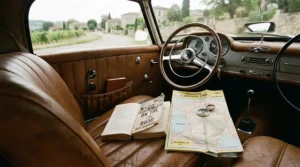
The region is also bigger than most people expect. According to Wikipedia’s Cotswolds entry, the protected landscape covers 787 square miles and is the largest of its kind in England, stretching from near Stratford-upon-Avon to just south of Bath. That scale is why your choice of book matters. A village-spotter’s handbook, a long-distance walking manual and a driving-tour guide are three very different animals, and buying the wrong one is how people end up lugging 530 grams of glossy paper up a muddy escarpment.
This article compares seven real titles, all verified against publisher and retailer listings at the time of research (November 2026). I haven’t road-tested them, so you won’t find invented anecdotes here. What you will find is honest analysis of what each spec means in practice. Where I couldn’t verify independent reader reviews, I say so rather than inventing any.
What Are Cotswolds Travel Guide Books?
Cotswolds travel guide books are printed (and sometimes digital) guides that help visitors plan trips to the Cotswolds, the limestone hill country of central England. They typically combine village profiles, maps, walking and driving itineraries, places to eat and stay, and background on history and landscape, from general overviews to single-route walking manuals.
Quick Comparison: Cotswolds Travel Guide Books at a Glance
Before the deep dive, here’s the shortlist. Prices are indicative bands only, so check current price on Amazon UK before buying.
| Book | Best For | Format | Price Range |
|---|---|---|---|
| Exploring the Cotswolds | Curated stays, dining and photo-led planning | 240-page paperback with touring maps | Around £17-£20 |
| Bradt Cotswolds (Slow Travel) | Slower, in-depth trips of four nights or more | 376-page paperback | Mid-£10s to low £20s |
| The Rough Guide to the Cotswolds, Stratford-upon-Avon and Oxford | Longer trips that also take in Oxford and Stratford | Paperback with free eBook | Around £15-£17 |
| The Cotswold Way (Cicerone) | First-time Cotswold Way walkers | Pocket guide plus OS map booklet | Around £18 |
| Cotswold Way (Trailblazer) | Walkers wanting maps and town plans in one book | Route guide with in-book maps | Mid-£10s to around £20 |
| The Cotswolds Town and Village Guide | Village-hopping by car | 172-page paperback | Low-to-mid £10s |
| Touring the Cotswolds | Relaxed driving loops on a budget | 128-page paperback | Around £10 |
Looking at the table, Exploring the Cotswolds is the best fit for couples who want someone with taste to make the decisions, while Touring the Cotswolds is the cheapest way to get a ready-made driving plan. Walkers should ignore the general guides entirely and choose between the two Cotswold Way titles. If you can only buy one book for a mixed trip, The Rough Guide to the Cotswolds, Stratford-upon-Avon and Oxford has the widest net.
💬 Just one click — help others make better buying decisions too!😊
Top 7 Cotswolds Travel Guide Books: Expert Analysis
1. Exploring the Cotswolds — the photo-led premium pick
William Fricker’s guide is the one you leave on the cottage coffee table and end up reading over breakfast. The 7th edition (May 2025) packs more than 340 colour photographs and 26 pages of touring maps into 240 pages. That ratio of pictures to text tells you what it’s for: inspiration first, logistics second.
The physical specs matter here. At roughly 220 x 130 x 24 mm and 530 g, with a sewn matt-laminated cover, it’s built to survive being cracked open on a car bonnet but it won’t slip into a jacket pocket. Think glovebox, not hip.
Fricker is a Cotswold specialist, and the book’s selling point is curation. Eateries, B&Bs, country houses and galleries are picked on merit rather than listed exhaustively. Based on those specs, it suits couples planning a short break who want a trusted shortlist rather than 200 options to wade through.
Reader sentiment: I couldn’t find enough independent reviews of this specific edition to summarise responsibly, so check the current Amazon UK reviews.
Pros:
- ✅ Over 340 photos make trip-planning genuinely enjoyable
- ✅ Dedicated touring maps for driving routes
- ✅ Opinionated, curated picks save decision fatigue
Cons:
- ❌ Heavy and bulky for walking days
- ❌ Curated approach means less budget-end coverage
Price: roughly £17-£20 range. A fair deal if you value a curated shortlist over exhaustive listings.

2. Bradt Cotswolds (Slow Travel) — local-writer depth for unhurried trips
Bradt’s Slow Travel series is aimed at people who’d rather know one valley well than tick off ten. This 3rd edition (June 2024) runs to 376 pages and is written by Caroline Mills, a local resident and experienced travel writer.
That page count is the headline spec. It’s well over a third longer than Exploring the Cotswolds, which in practice means more room for lesser-known villages, heritage, riding, walking and food rather than the same five honeypots. The publisher’s own positioning covers city and country, historic houses and gastronomy alike, so it’s a generalist with a leisurely pace.
On paper, this is the best fit for travellers staying four nights or more who want to wander off the obvious loop. A resident author also tends to mean fewer tourist-board clichés, though that’s inference from the series’ approach rather than something I can prove.
Reader sentiment: I couldn’t verify a robust pool of independent reviews for this edition. Check current ratings before you commit.
Pros:
- ✅ Longest text of any general guide here
- ✅ Written by a Cotswolds local
- ✅ Recent 2024 edition
Cons:
- ❌ Bulkier than pocket-sized alternatives
- ❌ Prices and hours inevitably date after printing
Price: mid-£10s to low £20s, so check current price. Good value for longer stays.
3. The Rough Guide to the Cotswolds, Stratford-upon-Avon and Oxford — the widest regional net
This is the “everything in one place” option. The 2024 edition (ISBN 9781839059728) covers Cheltenham and the South Cotswolds, the central Cotswolds, Stratford-upon-Avon, the Oxfordshire Cotswolds, Banbury and Oxford. It also comes with colour-coded maps and a free eBook after you buy the print copy.
The free eBook is more useful than it sounds. You can carry the print edition in the car and read the digital copy on the train, so you aren’t choosing between weight and convenience. The “Contexts” chapter, with history, wildlife and a books section, is handy for the curious.
The trade-off is focus. Because Oxford and Stratford share the spine, fewer pages go to the Cotswolds proper than in a Cotswolds-only guide. Based on that, this suits independent travellers combining a city break with village time, and works less well if you’re settling into one hamlet for a week.
Reader sentiment: I couldn’t verify aggregated reviews for this edition. Check the current Amazon UK rating.
Pros:
- ✅ Free eBook with print purchase
- ✅ Covers Oxford and Stratford too
- ✅ Colour-coded maps and “Contexts” chapter
Cons:
- ❌ Split coverage dilutes Cotswolds depth
- ❌ Less village detail than specialist guides
Price: around £15-£17 range. Strong value if you’ll use the eBook.
4. The Cotswold Way (Cicerone) — pocket trail companion with OS maps
For Cotswold Way guides, Cicerone is the name most walkers reach for. The 5th edition (February 2024) is by Kev Reynolds, Lesley Williams and Jonathan Williams. It’s a compact 176 pages at about 116 x 172 mm and 240 g, small enough for a trouser pocket.
The key spec is the separate Ordnance Survey map booklet at 1:25,000. A split guide-plus-map means you can fold the map to the page you need without exposing the whole book to rain. Stages are generally in the 10-16 km region, and the trail itself is 102 miles from Chipping Campden to Bath, usually about two weeks of walking.
It’s described in both directions, which matters more than it sounds: if your trains or hotel bookings favour starting at Bath, you aren’t fighting the text. Retail listings disagree on whether it’s 13 or 14 stages, so check the contents before you plan daily mileage.
Reader sentiment: I couldn’t verify independent review data, so check the current rating.
Pros:
- ✅ Separate 1:25,000 OS map booklet
- ✅ Described in both directions
- ✅ Light enough for daily carrying
Cons:
- ❌ Trail-only, so little sightseeing beyond the route
- ❌ Stage counts vary between listings
Price: around £18. Fair value for a walk you’ll plan around for weeks.
5. Cotswold Way (Trailblazer) — all-in-one route guide with town plans
Trailblazer takes a different approach: maps live inside the book, so there’s one object to carry. The listing I found for this guide describes the 102-mile trail in twelve main stages and adds town guides for Chipping Campden, Broadway, Winchcombe, Cheltenham, Painswick, Dursley and Bath, plus around forty other towns and villages. The edition I could verify was the 4th (ISBN 9781912716043).
Twelve stages versus Cicerone’s thirteen or fourteen isn’t trivial. Longer average days suit confident walkers, while shorter ones suit anyone with sore feet or a leisurely itinerary. The town plans are the quiet advantage: knowing where the pub, bus stop and B&B are relative to each other beats a map that stops at the footpath.
Compared with The Cotswold Way (Cicerone), this suits planners who want everything in a single cover and like the logistics support. It doesn’t give you a separate map booklet to fold.
Reader sentiment: I couldn’t verify independent reviews, so check the current Amazon UK rating.
Pros:
- ✅ Maps and town plans in one book
- ✅ Detailed coverage of stopover towns
- ✅ Twelve main stages suits stronger walkers
Cons:
- ❌ Stage counts differ from rival guides
- ❌ Edition date harder to confirm across retailers
Price: I couldn’t confirm a current price, so expect the mid-£10s to around £20 range and check current price.

6. The Cotswolds Town and Village Guide — the village decoder
Peter Titchmarsh’s guide is a 172-page paperback from Reardon Publishing, the Cotswold specialist publisher. The listing I found was the 2014 edition (ISBN 9781874192787). It deliberately stretches beyond the “classic” Cotswolds but stays within true limestone country.
Its strength is the town-and-village format. Instead of itineraries, you get places, which suits anyone who likes to arrive, stroll and decide. For readers hunting Cotswolds villages books, this is the closest thing to a field guide to the stone.
Reader sentiment I could verify: a bookshop reader praised it as lovingly researched, packed with photographs and information. An eBay buyer called it a good size for the car glovebox, though a little pricey. That’s a small sample, but the themes are consistent.
The 2014 date is the main caveat. Treat it as a guide to what’s there, not to opening hours.
Pros:
- ✅ Focused on towns and villages
- ✅ Glovebox-friendly 172-page size
- ✅ Positive verified reader feedback
Cons:
- ❌ Edition dates from 2014
- ❌ Stock is patchy across retailers
Price: low-to-mid £10s new, cheaper second-hand. Good value for browsing.
7. Touring the Cotswolds — eight driving loops for lazy-day explorers
Jim Watson’s 128-page City Books guide (2019) is built around eight 20-mile tours. That distance is a deliberate choice: each loop is roughly a half-day with stops, rather than a full day of motorway-style driving. It mixes famous towns with lesser-known villages.
For cotswolds touring guides, this is the most direct fit here: pick a loop, follow it, stop at pubs. It’s a smart match for travellers who don’t want to build an itinerary from scratch.
Its limits are obvious. It’s a 2019 book, so verify details like opening times, and some retailers list it as out of stock. It also doesn’t do accommodation curation the way Exploring the Cotswolds does.
Reader sentiment: I couldn’t verify independent reviews, so check current Amazon UK ratings.
Pros:
- ✅ Eight ready-made 20-mile tours
- ✅ Mixes honeypots with hidden villages
- ✅ Most affordable guide in this list
Cons:
- ❌ 2019 publication date
- ❌ Some retailers show it out of stock
Price: around £10. Excellent value for a ready-made driving plan.
How to Choose Cotswolds Travel Guide Books
The right book depends on how you’ll travel, not on how pretty the cover is. Here’s the reasoning I’d apply:
- Decide how you’ll move. Walkers need route guides; drivers need touring loops; everyone else benefits from a general guide.
- Check the edition date. A 2024 or 2025 edition is far safer for opening hours and prices than a 2014 one.
- Weigh the weight. At 530 g, Exploring the Cotswolds is a car book; at 240 g, The Cotswold Way (Cicerone) is a pocket book.
- Match coverage to trip length. A weekend needs curation, whereas a week rewards the depth of Bradt Cotswolds (Slow Travel).
- Look for bonuses. The free eBook with The Rough Guide to the Cotswolds, Stratford-upon-Avon and Oxford is genuine added value.
- Pair, don’t replace. Most trips are best served by one general guide plus one specialist book.

Cotswolds Travel Guide Books Compared: Specs, Size and Value
| Book | Edition Checked | Size / Pages (as listed) | Standout Feature |
|---|---|---|---|
| Exploring the Cotswolds | 7th ed, May 2025 | 240 pp, 220 x 130 x 24 mm, 530 g | 340+ photos, 26 pp touring maps |
| Bradt Cotswolds (Slow Travel) | 3rd ed, June 2024 | 376 pp | Local-author depth |
| The Rough Guide to the Cotswolds, Stratford-upon-Avon and Oxford | 2024 edition | Varies by listing | Free eBook, colour-coded maps |
| The Cotswold Way (Cicerone) | 5th ed, Feb 2024 | 176 pp, 116 x 172 mm, 240 g | Separate OS 1:25,000 booklet |
| Cotswold Way (Trailblazer) | 4th ed listing | Check retailer | Maps and town plans in one |
| The Cotswolds Town and Village Guide | 2014 | 172 pp | Town and village profiles |
| Touring the Cotswolds | 2019 | 128 pp | Eight 20-mile tours |
Reading across the rows, the two recent walking guides and Exploring the Cotswolds are the freshest, which matters if you rely on practical details. The Cotswolds Town and Village Guide and Touring the Cotswolds are older, so treat them as route and place inspiration rather than a source of current opening hours. Page counts also tell a story: Bradt Cotswolds (Slow Travel) gives you the most text, while Touring the Cotswolds is the quickest to digest.
On value, a book around £18 used across a three-day break works out at roughly £6 per day of planning help. Stretch that over several trips and the cost per use drops fast.
Cotswolds Villages Books: Finding the Honey-Stone Hamlets
If you’re hunting cotswolds villages books, the first question is whether you want a catalogue or a curation. The Cotswolds Town and Village Guide is the catalogue. It treats the area as a map of places, and its coverage stretches beyond the classic core while staying in limestone country.
For a curated take, the pocket-sized Cotswolds Top 10 (also by William Fricker) is a short list of the prettiest villages and best activities, with listings I found showing a 2024 paperback printing. It’s too slim to run a whole trip, but it’s a good second book for a day when you want a quick answer.
The practical trick is to cross-reference. Pick the three or four famous names you can’t skip, such as Bibury, Burford, Bourton-on-the-Water or Stow-on-the-Wold, then use a village guide to find a quieter neighbour for lunch. The listings I found for souvenir guides tend to focus on those headline names, which is exactly why a fuller village book earns its keep.
Finally, pair a village book with a map. Villages sit close together, and a good touring map from Exploring the Cotswolds turns a pile of names into a sensible route.
Cotswold Way Guides: Choosing Between Cicerone and Trailblazer
Cotswold Way guides come down to two questions: do you want separate maps, and how long do you want each day to be?
The official trail description on gov.uk confirms the basics: 102 miles (164 km) from Chipping Campden to Bath, open all year, running along the Cotswold Edge through the Cotswolds National Landscape. All National Trails use an acorn symbol or the trail name on gates and signposts, so you won’t be lost without a book. What a guide adds is stage planning, accommodation, and context.
The Cotswold Way (Cicerone) wins on weight and mapping. The separate OS booklet is easy to handle in wind, and the book is light enough that you won’t notice it. Cotswold Way (Trailblazer) wins on logistics: the town plans and the one-book format help if you’re booking a string of B&Bs and want to see the whole picture.
My practical advice: if this is your first long-distance walk, choose Cicerone for its beginner-friendly framing. If you’re a planner who likes to know where the nearest pub is, Trailblazer’s town coverage earns its place.
Cotswolds Touring Guides: Driving, Cycling and Slow Loops
Cotswolds touring guides solve a particular problem: the region has no single route, only a thousand possible ones. A good touring book picks for you.
Touring the Cotswolds does this with eight tours of around 20 miles. Short loops are a smart format because they leave room for the things you can’t plan, like a church you spot from the road or a farm shop with a queue. Exploring the Cotswolds takes a different approach, with 26 pages of touring maps that you can use to build your own route around its curated picks.
If you’re travelling by car, the sweet spot is one touring guide plus one general guide. Use the touring book for structure and the general guide for restaurants and places to stay. It’s an approach that suits a long weekend, when you don’t want to spend your Friday evening on logistics.
One caution: touring routes date quickly because they depend on roads, parking and opening times. Treat Touring the Cotswolds as a skeleton and verify the details before you set off.
Cotswolds Holiday Books: What to Pack Beyond the Guidebook
Cotswolds holiday books are about more than logistics. They set the mood before you leave and keep it going once you’re home.
The sensible kit is two books: one practical, one atmospheric. For practical, The Rough Guide to the Cotswolds, Stratford-upon-Avon and Oxford gives you the broad overview with a free eBook for the journey. For a lighter option, the Pocket Rough Guide Staycations Cotswolds (2021) is a smaller book of eight walks and tours, aimed at people holidaying at home in the UK. I couldn’t verify its current availability, so check before you rely on it.
For atmosphere, add something to read in the evenings. Slow-travel prose, like Bradt Cotswolds (Slow Travel), works well because it reads like a conversation with someone who lives there.
Staycation timing matters too. Books bought early give you time to plan. Last-minute buyers tend to grab whichever guide is in stock, and that’s how people end up with a 2014 edition when they wanted a 2025 one.
Cotswold Countryside: Reading the Landscape Before You Walk It
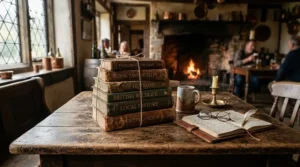
The Cotswold countryside isn’t a backdrop; it’s the main attraction. The Cotswolds National Landscape has been a designated Area of Outstanding Natural Beauty since 1966, and its own material describes a living, working landscape rather than a museum piece.
The numbers help explain why a good guide matters. Wikipedia notes that roughly 80 per cent of the area is farmland, with more than 3,000 miles of footpaths and bridleways and about 4,000 miles of historic stone walls. That means public footpaths cross working land, so a map and a sense of etiquette are as important as the scenery.
The Cotswold countryside also has a story written in its buildings. The old “wool churches,” like St James in Chipping Campden, reflect the medieval wool trade that built the region’s wealth. A guide like Bradt Cotswolds (Slow Travel) or the “Contexts” chapter in The Rough Guide to the Cotswolds, Stratford-upon-Avon and Oxford turns those buildings from pretty backdrops into explanations.
If you plan to walk, The Cotswold Way (Cicerone) also provides background on geology, wildlife and land use, which makes a long walk more than a long walk.
Quintessential England Books: Reading Your Way Into the Cotswolds
Quintessential England books are the ones that capture a particular idea of the country: stone cottages, village lanes, church bells, hedgerows. The Cotswolds are where many of those images live.
The standout is Cider with Rosie by Laurie Lee. Published in 1959, it’s a memoir of growing up in Slad, a Cotswold village in Gloucestershire. Britannica describes it as an account of a happy childhood in a secluded village that nostalgically evokes a vanished rural world. It has sold more than six million copies worldwide, which tells you how strongly it has shaped the popular image of the area.
Another title that turned up in my research is A Cotswold Village by Joseph Arthur Gibbs, an older portrait of rural life that suits readers who want a deeper historical flavour.
These books aren’t guidebooks, but they make guidebooks better. Read Cider with Rosie before you go, then use The Cotswolds Town and Village Guide or Exploring the Cotswolds to find Slad and its neighbours. You’ll arrive with context rather than just coordinates.
How to Use Cotswolds Travel Guide Books on the Ground: A Practical Guide
Buying the right book is half the job. Using it well is the other half.
Before you go:
- Download the free eBook if you have one, as The Rough Guide to the Cotswolds, Stratford-upon-Avon and Oxford offers.
- Flag your must-see places with sticky tabs, and mark one “plan B” for each day in case of rain.
- Check the edition date and verify opening hours online for anything you’ve pencilled in.
On the road:
- Keep the heavier book (Exploring the Cotswolds) in the car and carry the lighter one (The Cotswold Way (Cicerone)) on foot.
- Use touring maps to plan the sequence, then let the village guide fill in lunch.
Common mistakes in the first 30 days of owning a guide:
- Buying a walking guide for a driving trip.
- Trusting a 2014 edition for opening hours.
- Planning too many villages in a day. The Cotswolds reward slow travel, which is exactly what Bradt Cotswolds (Slow Travel) advocates.
A simple routine works: plan the night before, flex in the morning, and leave a gap for the unplanned.
Real-World Scenarios: Matching Cotswolds Travel Guide Books to Your Trip
Scenario 1: The long-weekend couple (car, around £20 budget). You have three nights, a hire car and a taste for good dinners. Exploring the Cotswolds is the natural pick, because its curated hotels, restaurants and touring maps cut the research down. Add Touring the Cotswolds if you want ready-made loops.
Scenario 2: The two-week walker (on foot, around £35 budget). You’re tackling the Cotswold Way from Chipping Campden to Bath. Choose The Cotswold Way (Cicerone) for its light weight and OS map booklet. If you’re booking B&Bs in advance, consider Cotswold Way (Trailblazer) as a second book for its town plans, though two guides for one trail is only worth it if you love planning.
Scenario 3: The family staycation week (mixed transport, around £25 budget). You’re renting a cottage, with Oxford and Stratford as possible day trips. The Rough Guide to the Cotswolds, Stratford-upon-Avon and Oxford fits, with its wide coverage and free eBook for the car journey. Pair it with The Cotswolds Town and Village Guide for village-hopping on quiet days.
✨ Don’t Miss These Hand-Picked Guides!
🔍 Take your Cotswolds trip to the next level with these carefully selected books. Click on any highlighted title to check current pricing and availability. They’ll help you plan a break you’ll remember long after the stone-wall photos have been sorted.
Printed Guides vs Apps: Do Cotswolds Travel Guide Books Still Earn Their Place?
Apps and websites are brilliant for live information, but they have gaps in the places the Cotswolds does best: valleys, lanes and long footpaths.
| Factor | Printed Guide | Phone App / Website |
|---|---|---|
| Signal dependence | Works anywhere | Can be patchy in rural valleys |
| Freshness | Fixed at printing | Updated live |
| Browsing and inspiration | Excellent for flicking through | Better for searching |
| Battery and weather | No battery, tolerates drizzle | Needs charge, risky in rain |
| Best For | Planning, walking, inspiration | Live opening times, bookings |
The table shows the two aren’t really rivals. Printed guides win on reliability and inspiration, while apps win on freshness. For a walk such as the Cotswold Way, a book like The Cotswold Way (Cicerone) is a safer primary tool, with your phone as backup.
The smart play is a hybrid: use a book to decide, an app to check. Cost matters too. A guide around £15-£20 is a small slice of a holiday budget, and it won’t run out of battery halfway up Cleeve Hill.

FAQ
❓ Which cotswolds travel guide books suit first-time visitors best?
❓ Do I need Cotswold Way guides if the trail is waymarked?
❓ Do any cotswolds holiday books include a free eBook?
❓ How long are the routes in cotswolds touring guides?
❓ Which quintessential England books are set in the Cotswolds?
Conclusion
The best of the cotswolds travel guide books are the ones that match how you’ll actually travel. For curated, photo-led planning, Exploring the Cotswolds is the premium pick. For slow, in-depth trips, Bradt Cotswolds (Slow Travel) gives you the most text and a local voice. If your plans include Oxford or Stratford, The Rough Guide to the Cotswolds, Stratford-upon-Avon and Oxford and its free eBook are hard to beat.
Walkers have a clear choice. The Cotswold Way (Cicerone) is the lightweight, map-booklet option, and Cotswold Way (Trailblazer) is the all-in-one planner’s pick. Drivers and villagers can lean on Touring the Cotswolds and The Cotswolds Town and Village Guide for inspiration at a friendly price, as long as they verify the details.
One honest caveat: I couldn’t verify robust independent review data for most of these titles, so use the current Amazon UK ratings as your final check. And whichever book you choose, add Cider with Rosie to the bag for the evenings.
Recommended for You
- Lake District Guide Books: 7 Best Picks To Avoid Wrong Turns (2026)
- Cornwall Travel Guide Books: 7 Brilliant Picks For 2026
- Wales Travel Guide Books: 7 Best Picks Worth Buying (2026)
Disclaimer: This article contains affiliate links. As an Amazon Associate, I earn from qualifying purchases. If you purchase products through these links, we may earn a small commission at no additional cost to you.
✨ Found this helpful? Share it with your friends! 💬🤗
