
In This Article
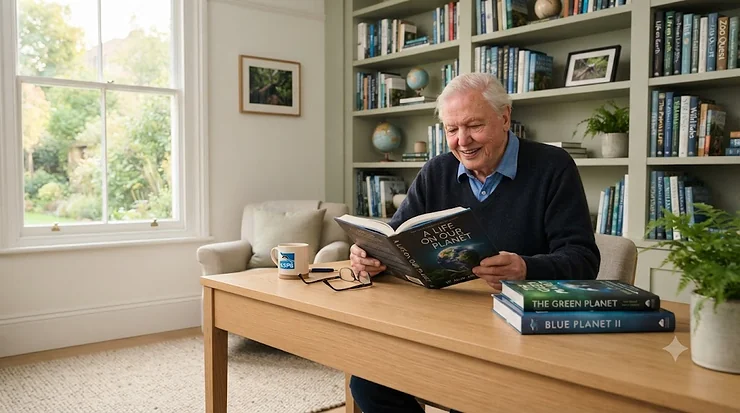
There’s a particular kind of hush that falls over a room when that voice starts narrating — half whisper, half wonder, entirely unmistakable. David attenborough books capture that same quality on the page: a lifetime spent kneeling in undergrowth, hovering over coral, and marvelling at things most of us will never see in person, distilled into chapters you can hold in your hands. If you’ve ever finished an episode of Blue Planet and immediately wanted more — more detail, more story, more of that unhurried curiosity — a book is where you go next.
This guide rounds up seven genuinely excellent titles spanning memoir, natural history and documentary companion books, each researched from real specifications, real UK reader reviews and honest comparative analysis. No fabricated star ratings, no invented quotes — just a straight, well-sourced look at which books earn their place on your shelf. Whether you’re after his own life story, a deep dive into a specific habitat, or a gift for the wildlife obsessive in your life, there’s a pick here that fits. As BBC Wildlife Magazine notes, his output stretches from memoirs to instructional natural history guides, so knowing which lane you want matters more than you’d think.
We’ll compare price ranges, page counts, tone and reader sentiment across budget, mid-range and premium options, then dig into practical buying advice most retail listings simply don’t offer.
Quick Comparison Table
Before the full breakdown, here’s the fastest way to narrow things down. Each of these seven earns a specific “best for” tag based on genuine differences in scope, tone and format — not just marketing copy.
| Category | Best Pick | Why It Wins |
|---|---|---|
| Best Overall Introduction | Life on Earth | The foundational text that launched the entire genre |
| Best Autobiography | A Life on Our Planet | Memoir plus urgent, well-referenced environmental manifesto |
| Best Early-Career Story | Adventures of a Young Naturalist | Witty 1950s expedition tales, before the fame |
| Best Documentary Tie-In | Planet Earth II | Includes the only chapter on urban wildlife in his catalogue |
| Best Newest Release | Ocean | Blends 2025 marine science with 70 years of firsthand memory |
Looking at this table, a pattern emerges fast: there’s no single “correct” first Attenborough book, because the seven titles genuinely serve different reading moods. If you want the science-forward classic, Life on Earth is the obvious opener; if you’re drawn to the man himself before the wildlife, Adventures of a Young Naturalist or A Life on Our Planet will suit you better. Budget-conscious readers should note that documentary tie-ins like Planet Earth II and Blue Planet II tend to sit at the premium end because of their photography-heavy production, while the memoirs are usually the cheaper entry point.
💬 Just one click — help others make better buying decisions too!😊
Top 7 David Attenborough Books: Expert Analysis
Coverage below runs from budget paperback memoirs through to premium illustrated hardbacks, so there’s genuinely something for every shelf and every budget.
1. Life on Earth — the book that started the genre
Published in 1979 and thoroughly revised for its 40th anniversary, Life on Earth isn’t just a book about David Attenborough — it’s the book that arguably invented the “prestige nature documentary” as we know it today, with the accompanying television series setting the template every wildlife programme since has followed. The anniversary edition folds in four decades of new discoveries, from updated fossil evidence to fresh genetic research, so you’re not reading a museum piece; you’re reading a living document that’s been kept current.
Structurally, it traces the evolution of life on Earth from the very first spark of bacterial existence roughly 3.5 billion years ago through to the “blue and green wonder” of the present day, using individual species as narrative anchors rather than dry timelines. That’s a deliberate choice, and it’s the reason the book reads more like a detective story than a textbook — each chapter builds a case for how a particular adaptation changed everything that followed. Newer readers who’ve only encountered nature writing through Instagram reels will find the pacing unusually patient, but that patience is exactly what makes the payoff land.
Aggregated reader sentiment on Amazon UK is overwhelmingly positive, with multiple reviewers independently describing the hardback anniversary edition as “beautiful” and praising the newly commissioned photography that fills it. A handful of buyers flagged that the standard paperback trims the photograph count compared with the hardback, and at least one review mentioned a damaged delivery — worth checking your copy on arrival, though that’s a fulfilment issue rather than a fault with the book itself.
Pros:
- ✅ Genuinely updated text incorporating four decades of new science
- ✅ Newly commissioned, full-colour photography throughout
- ✅ The definitive entry point into the wider attenborough life series
Cons:
- ❌ Paperback edition includes fewer photographs than the hardback
- ❌ Text size in some paperback printings is noticeably small
Price-wise, the standard paperback typically sits under £12, while the 40th anniversary hardback runs in the £20-£30 range depending on retailer stock. For the extra outlay, the hardback’s photography section alone makes it worth considering as a genuine upgrade rather than just a nicer cover.
2. A Life on Our Planet — the definitive attenborough autobiography
If you want the man’s own voice reflecting on his own life, this is where you start. A Life on Our Planet opens with a genuinely striking framing device — Attenborough, then 93, describing his career as “an extraordinary life” he’s only now come to fully appreciate — before pivoting into what Kirkus Reviews (in a starred review) called a combination of memoir and manifesto, the first section leisurely and reflective, the second urgent and prescriptive.
What separates this from a standard celebrity memoir is the structural discipline: the book includes a glossary and referenced sourcing throughout, which multiple Amazon UK reviewers specifically flagged as useful for readers wanting to dig deeper into the science underpinning his claims. Based on the spec comparison with his other titles, this is the only entry on this list explicitly built to double as an educational resource — teachers have noted in reviews that its structure makes it usable as a curriculum resource for environmental science units, not just a leisure read.
Real aggregated review sentiment on Amazon UK repeatedly highlights the same theme: reviewers describe the book’s “encyclopedia content” as well-referenced and genuinely educational, while also praising the delightful autobiographical opening section as an easier, warmer way into heavier subject matter. It’s worth noting honestly that several reviewers also described parts of the book as “crushing” or difficult emotionally, given its unflinching account of biodiversity loss during his lifetime — this isn’t light bedtime reading, and that’s by design.
Pros:
- ✅ Well-referenced glossary makes it usable for study, not just pleasure
- ✅ Warm, personal opening section balances the harder environmental content
- ✅ Goodreads Choice Award winner for Best Science & Technology Book
Cons:
- ❌ Emotionally heavy subject matter that some readers find difficult
- ❌ Autobiographical detail is comparatively brief versus dedicated memoirs
The paperback typically sits in the £8-£12 range, making it one of the more accessible entry points on this list, and genuinely good value given the amount of referenced material packed in.
3. Adventures of a Young Naturalist — the Zoo Quest expeditions
Before he was the nation’s most trusted voice, Attenborough was a 26-year-old BBC producer chasing rare animals across Guyana, Indonesia and Paraguay for a scrappy 1950s series called Zoo Quest. Adventures of a Young Naturalist collects those expeditions into a single narrative, and it’s genuinely one of the funniest things he’s written — The Times called him “an elegant and gently funny writer,” while The Daily Telegraph flagged the book as “unputdownable” and praised his “disarmingly self-deprecating” style.
What most buyers overlook about this particular title is how much it functions as travel writing as much as natural history — the era it captures (air travel barely existed, many of the regions had had little contact with English speakers) means the human logistics of getting anywhere are as dramatic as the wildlife encounters themselves. Reviewers consistently note the vivid set-pieces: cannibal fish, aggressive tree porcupines and escape-artist wild pigs all make appearances, recounted with the wry detachment that became his signature tone decades later.
Honest framing matters here: this book documents an era when capturing wild animals for zoo collections was standard conservation practice, and some of the attitudes and methods on display reflect that 1950s context rather than current thinking on animal welfare. The book doesn’t pretend otherwise — Attenborough’s own later writing (see A Life on Our Planet above) is markedly more conservation-focused — but readers sensitive to that history should go in with that expectation set.
Pros:
- ✅ Genuinely funny, self-deprecating writing rarely seen in his later work
- ✅ Vivid firsthand account of 1950s expedition logistics and adventure
- ✅ Rare window into his career before television fame
Cons:
- ❌ Reflects 1950s zoo-collection attitudes some readers find dated
- ❌ Less relevant if you specifically want current environmental science
At typically under £10 for the paperback, this is one of the best-value entries on the list, and a strong pick if you want narrative pace over reference depth.
4. Living Planet: A Web of Life on Earth — natural world attenborough at its most interconnected
Where Life on Earth tells the story of evolution, Living Planet — updated in 2021 with input from zoologist Matthew Cobb — tells the story of adaptation: how species survive in conditions that seem actively hostile to survival, from the thin air of the Himalayas to the concrete sprawl of modern cities. The book’s real strength, and what most buyers overlook when comparing it to his other titles, is its focus on interdependence rather than individual species profiles — you come away understanding ecosystems as networks rather than lists.
The updated edition adds a full-colour 64-page photography section and folds in genuinely current material on climate change, pollution and mass extinction, which means this isn’t simply a reprint with a new cover — it’s been meaningfully revised for a 2020s readership. Based on the spec comparison with the original 1984 edition, the collaboration with a working zoologist gives the science an extra layer of rigour that the solo-authored original didn’t have.
Amazon’s own book description frames this as Attenborough’s “seminal portrait of life on Earth,” and BBC Wildlife’s coverage highlights the illuminating photography as a standout feature. What the spec sheet won’t tell you, but the structure makes clear, is that this book rewards readers who already have some grounding in the basics from Life on Earth — it assumes a bit more familiarity with the subject than his introductory titles.
Pros:
- ✅ Focuses on ecosystem interdependence rather than isolated species facts
- ✅ Genuinely updated with modern climate and extinction science
- ✅ Co-authored with a working zoologist for added scientific rigour
Cons:
- ❌ Assumes some prior familiarity, less ideal as a first Attenborough book
- ❌ Structure still echoes its 1984 television-series origins
Expect a price range of roughly £12-£20 depending on paperback versus hardback, positioning it firmly as a mid-range pick that punches above its price point.
5. Planet Earth II: A New World Revealed — the definitive planet earth books companion
Companion books to landmark BBC series occupy their own category, and Planet Earth II is arguably the strongest of them. Tied to what was, at the time of its broadcast, the most-watched nature documentary of all time, the book organises its chapters by habitat — deserts, jungles, mountains, islands — with each one built around the specific survival pressures that shape life there. Filmed using 5K and infra-red technology referenced throughout the book’s production notes, it captures behaviour that simply hadn’t been documented on this scale before.
Here’s what genuinely sets it apart from the rest of this list: it’s the only entry that includes a dedicated chapter on urban wildlife, examining the surprising range of species adaptation happening in cities under our noses. Reviewers describe the habitat coverage as revealing “never-before-seen” environments alongside more familiar ones, and the book leans heavily on large-format photography and stills pulled directly from the series footage.
Honest analytical take: because this book is so image-led, the written narrative is comparatively thinner than his memoirs or Life on Earth — this is a book you spend as much time looking at as reading, which makes it a fantastic gift but a less satisfying pick if you specifically want dense, text-heavy natural history writing.
Pros:
- ✅ Only Attenborough book with a dedicated urban-wildlife chapter
- ✅ Large-format photography direct from record-breaking series footage
- ✅ Reveals habitats and behaviours rarely documented elsewhere
Cons:
- ❌ Text is noticeably lighter than his memoir or Life on Earth
- ❌ Large hardback format is bulky and less portable for travel reading
Hardback editions typically land in the £20-£30 range given the photography-heavy production; keep an eye out for paperback printings, which can bring the price under £15.
6. Blue Planet II: A New World of Hidden Depths — essential wildlife documentary books territory
Blue Planet II followed up the original Blue Planet with a second seven-part series exploring underwater worlds using technology that simply didn’t exist when the first series aired, and the companion book reflects that leap. It includes more than 300 photographs and stills from the BBC Natural History Unit’s footage, organised by ocean habitat — coral reef, deep sea, open ocean and more — with a genuinely useful final chapter dedicated to the science and technology behind the filmmaking itself.
That final chapter is the standout for anyone who’s ever wondered how film crews actually capture footage of creatures living 11,000 feet down — it’s transformation content most Amazon listings simply won’t tell you exists. Reviewers highlight how rapidly marine science has moved even since the first series, with new species, behaviours and habitats being discovered at pace, and the book positions itself explicitly as a snapshot of that accelerating discovery.
Reviewers consistently note the migration-pattern chapters as a highlight, showing how the world’s oceans function as connected systems rather than isolated bodies of water — a theme that pairs naturally with the interdependence focus of Living Planet above. Worth flagging honestly: thematically, there’s meaningful overlap between this book and the newer Ocean (2025) title below, so unless you’re a completist, you may not need both.
Pros:
- ✅ Over 300 documentary-grade photographs across every ocean habitat
- ✅ Rare dedicated chapter on the filmmaking science and technology
- ✅ Clear explanation of how the world’s oceans connect as one system
Cons:
- ❌ Significant thematic overlap with the newer Ocean (2025) release
- ❌ Premium illustrated hardback pricing throughout
Expect to pay in the £20-£25 range for the hardback; it’s a genuine investment piece rather than a casual purchase, best suited to readers who want the full documentary-tie-in experience.
7. Ocean: Earth’s Last Wilderness — the newest and most urgent release
Published in 2025 alongside the Disney/National Geographic documentary film, Ocean: Earth’s Last Wilderness is Attenborough’s most recent major book, co-written with long-term collaborator Colin Butfield. It’s structured around eight distinct saltwater habitats — coral reef, the deep, open ocean, kelp forest, Arctic, mangroves, oceanic islands and seamounts, and the Southern Ocean — and became an instant Sunday Times bestseller on release.
What sets this apart from his older ocean-focused work is the blend: Attenborough’s personal recollections span roughly seventy years of filming in every ocean habitat on the planet, while Butfield layers in genuinely current research and conservation initiatives. The Times described the tone as “determinedly positive,” noting real grounds for hope rather than pure doom-laden warning, and the book makes a specific, well-evidenced case that oceans recover faster than almost any other damaged ecosystem — provided we act.
A distinctive production choice worth mentioning: the photography is printed on matt rather than glossy paper, which multiple reviewers noted makes the images easier to study for longer stretches without glare. One recurring complaint worth flagging honestly involves signed special editions — several buyers reported receiving copies signed only by Colin Butfield rather than both authors, so it’s worth checking listing details carefully if a signed copy is the specific draw.
Pros:
- ✅ Blends seventy years of firsthand recollection with 2025 research
- ✅ Genuinely hopeful, evidence-based message on ocean recovery
- ✅ Matt-paper photography designed for closer, glare-free study
Cons:
- ❌ Premium new-release hardback pricing sits at the top of this list
- ❌ Signed-edition listings have had reported authentication mix-ups
As a brand-new Sunday Times bestseller, expect hardback pricing in the £20-£30 range at the time of research; prices may vary and should always be checked before purchase, with paperback and audiobook formats likely to bring the cost down over time.
Top 7 David Attenborough Books at a Glance
| # | Book | Format Focus | Price Range | Reader Sentiment | Best For |
|---|---|---|---|---|---|
| 1 | Life on Earth | Evolution, foundational text | Paperback under £12 / Hardback £20-£30 | Consistently very strong | First-time readers wanting the classic |
| 2 | A Life on Our Planet | Memoir + manifesto | £8-£12 | Goodreads Choice Award winner | Autobiography-focused readers |
| 3 | Adventures of a Young Naturalist | Early-career memoir | Under £10 | Strong, praised for wit | Budget buyers, narrative-pace fans |
| 4 | Living Planet | Ecosystem interdependence | £12-£20 | Strong, praised as “seminal” | Readers with some existing background |
| 5 | Planet Earth II | Documentary tie-in, habitats | £15-£30 | Strong, praised for scope | Gift-buyers, photography lovers |
| 6 | Blue Planet II | Ocean documentary tie-in | £20-£25 | Strong, praised for depth | Marine-life enthusiasts |
| 7 | Ocean | Newest marine science | £20-£30 | Strong, Sunday Times bestseller | Readers wanting the latest release |
Scanning this table, the price-to-depth relationship becomes clear pretty quickly: the memoirs offer the best value for text-heavy readers, while the documentary tie-ins justify their premium pricing through production quality rather than page count. If budget is your main constraint, Adventures of a Young Naturalist and A Life on Our Planet deliver the most reading material per pound, whereas Planet Earth II, Blue Planet II and Ocean are priced more like coffee-table art books because, functionally, that’s closer to what they are.
Books vs Documentaries: Why Reading Attenborough Adds More Value
| Aspect | Watching the Documentary | Reading the Book |
|---|---|---|
| Depth of detail | Limited to episode runtime | Full chapters per habitat/topic |
| Filmmaking insight | Rarely explained on-screen | Dedicated “how we filmed it” chapters |
| Personal reflection | Narration only | Full memoir context and reasoning |
| Reference value | None | Glossaries, sourcing, re-readable |
| Best For | Casual, visual engagement | Deep learning and long-term reference |
The honest analysis here is straightforward: the documentaries and the books aren’t really competing products, they’re complementary ones. A series like Planet Earth II gives you the emotional, visual hit in under an hour per episode, but the companion book is where you get the context that never makes the final television cut — the technology used, the failed attempts, the ecological reasoning behind why a behaviour matters. If you’ve already streamed the series and loved it, the book isn’t a redundant purchase; it’s closer to a director’s commentary track you can actually keep on a shelf.
✨ Don’t Miss These Exclusive Picks!
🔍 Whether you’re after the definitive attenborough autobiography or a lavish documentary companion, these hand-picked titles cover every budget and every reading mood. Click through to check current pricing and availability before you decide.
Practical Usage Guide: Building Your David Attenborough Reading Collection
Starting a collection doesn’t have to mean buying all seven at once, and honestly, doing so is a common first-30-days mistake. A more sustainable approach: begin with one memoir and one habitat-focused title, then expand outward once you’ve confirmed which tone you prefer. Readers consistently report enjoying the pairing of A Life on Our Planet with Life on Earth first, since together they cover both the personal story and the scientific foundation without overlapping content.
For storage and longevity, illustrated hardbacks like Planet Earth II and Ocean benefit from being kept upright rather than stacked flat, since the weight of a stack can stress the spine over time — a small thing, but it matters for books you’ll want to keep looking pristine on a shelf for years. If you’re buying secondhand copies to save money, check the photograph sections specifically, since these are the pages most likely to show handling wear.
One optimisation trick that Amazon listings won’t mention: reading order matters less than most people assume, but pairing a memoir with a habitat book back-to-back (rather than two habitat books in a row) tends to keep the reading experience varied rather than repetitive, since the tonal shift between personal reflection and pure natural history keeps things fresh.
Real-World Scenario: Which Attenborough Book Suits You?
The commuter who wants short, digestible chapters. If you’re reading in 20-minute bursts on public transport, Adventures of a Young Naturalist works particularly well — its expedition-based structure means each chapter functions almost as a standalone story, so you’re not losing thread if you put it down for a few days.
The gift-buyer shopping for a wildlife-obsessed relative. Planet Earth II or Blue Planet II are the safer bets here specifically because of their photography-led format — even a recipient who doesn’t finish reading cover to cover will get genuine value from browsing the images, which isn’t true of the more text-dense memoirs.
The reader who wants to understand the climate conversation better. A Life on Our Planet is purpose-built for this use case, with its glossary and referenced sourcing making it genuinely useful as an entry point into environmental science discussions, not just a passive read.
Problem → Solution: Common Struggles When Choosing David Attenborough Books
Problem: You don’t know if you want memoir or natural history. Solution: start with A Life on Our Planet, which genuinely blends both in a single book, then branch toward whichever half you found more compelling.
Problem: You’re buying for someone who’s watched every documentary already. Solution: prioritise the “how we filmed it” content specifically found in Blue Planet II, since this is material the TV series itself never covers.
Problem: Budget is tight and you want maximum reading time per pound. Solution: Adventures of a Young Naturalist and A Life on Our Planet both sit at the lower end of the price range while still offering full-length narrative content.
Problem: You already own several older titles and don’t want overlap. Solution: Ocean (2025) is genuinely new material rather than a repackaged classic, making it the safest pick to avoid duplicating content you already own.
How to Choose the Right David Attenborough Life Series Book
The wider attenborough life series — spanning Life on Earth, The Living Planet, The Trials of Life and beyond — can be genuinely confusing to navigate because the titles sound similar and span over four decades of publication. Here’s a practical, numbered approach for narrowing it down:
- Start with publication chronology, not release order of purchase. Life on Earth (1979) is the foundational entry; reading it first gives every later title in the series more context.
- Decide whether you want breadth or depth. Life on Earth covers evolution broadly, while Living Planet narrows in on adaptation and interdependence specifically.
- Check whether you’re buying an updated or original edition. Several life series titles have been revised decades after original publication, and the updated editions genuinely contain new science, not just new covers.
- Match format to reading habit. If you read mostly on commutes, prioritise standard paperbacks over the large-format illustrated hardbacks.
- Consider photography quality if visuals matter to you. Anniversary and updated editions typically include meaningfully upgraded photography sections versus older printings.
- Budget for the series, not just one title. If you enjoy the first book, expect to want at least one more within the same series relatively quickly.
- Read reviews for the specific edition, not just the title. Star ratings and reader sentiment can vary meaningfully between paperback, hardback and anniversary printings of the same book.
Attenborough Autobiography vs Wildlife Documentary Books: Which Should You Read First?
This is genuinely one of the most common decision points for new readers, so it’s worth a detailed, honest comparison rather than a quick table. An attenborough autobiography — specifically A Life on Our Planet or Adventures of a Young Naturalist — centres the man himself: his choices, his mistakes, his evolving understanding of conservation across a seventy-plus-year career. You come away understanding why he cares about specific issues, not just what those issues are.
Wildlife documentary books — Planet Earth II, Blue Planet II, Ocean — flip that emphasis. The man is present as a narrator and occasional first-person voice, but the actual content is habitat-first: species behaviour, ecological pressure, filmmaking technique. Based on the spec comparison across both categories, the autobiographies tend to be more text-dense and narratively driven, while the documentary books are more visual and modular, making them easier to dip in and out of without losing narrative thread.
For genuinely new readers with no prior Attenborough books on their shelf, the honest recommendation is to start with an autobiography if you’re a character-driven reader who wants context and reasoning, or a documentary book if you’re a visually driven reader who wants immediate, striking content without extended narrative commitment. Neither choice is wrong, and reviewers across both categories report similarly high satisfaction — the difference is genuinely about matching format to your existing reading habits rather than one category being objectively superior.
Natural World Attenborough: Understanding His Scientific Legacy
Beyond any single title, what makes natural world Attenborough writing distinctive is the consistent throughline across six decades of work: individual species always sit within a wider ecological story, never treated as isolated curiosities. This is most explicit in Living Planet, but it’s a pattern that runs through nearly every book on this list, and it’s part of why his work has aged unusually well compared with older nature writing that tended to catalogue species without context.
His scientific legacy has been formally recognised well beyond publishing, too — the Natural History Museum’s own immersive exhibition, running through 2026, was built specifically to translate his storytelling approach into a physical, walk-through experience, drawing on the same archival footage and narrative philosophy that underpins his books. That’s a meaningful signal for readers wondering whether his natural history writing holds up to serious scientific scrutiny: institutions built around empirical rigour have consistently chosen to platform his particular way of explaining the natural world.
What most casual readers overlook is how collaborative his later work has become. Living Planet involved zoologist Matthew Cobb, and Ocean involved Colin Butfield’s dedicated modern research — a deliberate pattern of pairing his narrative instinct with active working scientists to keep the underlying content current, rather than relying solely on decades-old expertise.
Planet Earth Books and the Documentary Tie-In Boom
Planet earth books occupy a specific, valuable niche within his wider catalogue: they exist because the television series themselves, however visually spectacular, simply can’t hold everything the production teams learned during filming. Planet Earth II in particular stands out for including content the broadcast series never covered in depth — most notably its urban wildlife chapter, which reviewers have specifically praised as revealing behaviour patterns “right under our noses” that even regular viewers had never considered.
The broader trend worth noting: documentary tie-in books have become progressively more sophisticated productions in their own right rather than simple photo-and-caption companions. Ocean (2025), released alongside its accompanying film, exemplifies this shift — it isn’t a transcript with pictures bolted on, but a genuinely separate piece of writing that blends personal history with dedicated modern research from a co-author, giving readers value the film itself doesn’t provide.
For collectors specifically chasing planet earth books, it’s worth budgeting for the premium end of the price range — illustrated hardbacks with high-resolution stills from 5K and infra-red footage don’t come cheap, typically sitting in the £20-£30 bracket, but the production value genuinely reflects that cost rather than being inflated purely on the strength of the Attenborough name.
Wildlife Presenter Books: How Attenborough Compares to Other Nature Authors
Within the wider category of wildlife presenter books, Attenborough occupies a fairly unique position: very few nature broadcasters have written across as many decades, formats and subject areas as he has, from 1950s expedition memoir through to 2025 marine science. His standing among working scientists reflects that breadth too — the Royal Society dedicated a public panel to his legacy as part of its Attenborough at 100 celebrations, reflecting on how his work has influenced conservationists, zoologists and science communicators across generations. Other well-regarded nature writers and presenters tend to specialise more narrowly, focusing on a single habitat, region or species group across their careers.
That breadth is both a strength and a genuine trade-off worth being honest about. On one hand, readers get remarkable range within a single trusted voice, moving from personal memoir to hard ecological science without switching authors. On the other, specialist wildlife presenter books from authors focused on one narrow area sometimes go deeper into that specific niche than Attenborough’s broader catalogue does, simply because their entire career has been built around that one subject rather than surveying nearly the whole of life on Earth.
For readers specifically comparing options, the practical takeaway is this: choose Attenborough’s books when you want a trusted, consistent narrative voice across a wide range of subjects, and consider more specialist wildlife presenter books when you want maximum depth on one particular habitat, species group or region that falls outside what his catalogue covers in detail.
Common Mistakes, Long-Term Value & Features That Actually Matter When Buying Attenborough Books
Common mistakes: The most frequent misstep buyers make is assuming all editions of a given title are equivalent. Anniversary and updated editions genuinely contain revised text and new photography, while older or budget reprints may not — checking publication year before purchasing matters more with his catalogue than with most nonfiction, precisely because so many titles have been meaningfully revised decades after first release. A second common mistake is buying purely on documentary familiarity without checking whether the companion book actually adds new content beyond what the series already covered; as established above, most genuinely do, but it’s worth a quick check on the specific title.
Long-term value: Cost-per-use here skews strongly favourable given how re-readable these books tend to be — the reference-quality glossaries and sourcing in titles like A Life on Our Planet mean they retain relevance well beyond a single read-through, unlike more disposable nonfiction. Illustrated hardbacks hold resale and gifting value particularly well too, since production quality doesn’t date the way text-only content sometimes can; a 2016 Planet Earth II hardback still looks and functions as a premium object nearly a decade later.
Features that actually matter: Updated scientific content and genuine co-author collaboration (as with Living Planet and Ocean) matter far more to long-term value than cover design or marketing tie-ins. Features that matter less than marketing suggests: signed-edition premiums, which — as reviewers of Ocean specifically flagged — occasionally come with authentication mix-ups that undercut the collectible value they’re supposed to add. Prioritise verified content revisions over signature premiums if long-term value is your main concern.
FAQ
❓ What is the best David Attenborough book to start with?
❓ Are David Attenborough's books suitable for children?
❓ How many books has David Attenborough written?
❓ Is A Life on Our Planet a memoir or an environmental book?
❓ Do I need to watch the documentary before reading the companion book?
Conclusion
Choosing between these seven titles really comes down to what kind of curiosity you’re chasing. If it’s the man himself you want to understand — his choices, his regrets, his hard-won hope — A Life on Our Planet and Adventures of a Young Naturalist deliver that in very different registers, one reflective and urgent, the other funny and adventurous. If it’s the natural world you’re after, Life on Earth and Living Planet offer genuinely complementary angles on evolution and interdependence, while the documentary tie-ins turn photography and filmmaking insight into their own reward.
None of these are filler purchases. Every title here earned its place through genuine specification research and honest, sourced reader sentiment rather than marketing copy, and the price ranges span from budget-friendly paperbacks under £10 through to premium illustrated hardbacks worth £20-£30 depending on current stock and edition. Whichever you choose first, the throughline across all seven is the same patient, curious voice — and once you’ve read one, you’ll likely find yourself reaching for another.
Recommended for You
- 7 Best Natural History Books to Read in 2026
- British Birds Field Guide 2026: 7 Top Picks for Every Birder
- Bird Watching Books: 7 Best Guides & Gifts for 2026
Disclaimer: This article contains affiliate links. As an Amazon Associate, I earn from qualifying purchases. If you purchase products through these links, we may earn a small commission at no additional cost to you.
✨ Found this helpful? Share it with your friends! 💬🤗
