
In This Article
There’s a particular kind of quiet joy in opening a genuinely good natural history book — the sort that makes you stop scrolling, put the kettle on, and actually read a page about deep-sea fish or fossilised ferns because you want to, not because a school project demands it. Natural history books occupy a strange, wonderful corner of publishing: part reference, part art object, part campaign for a planet that badly needs one. Choosing the right one, though, is trickier than it looks, because “natural history” stretches from Victorian illustrated volumes to blistering modern polemics about insect collapse.
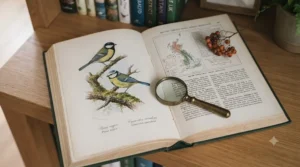
What is a natural history book? It’s a work — illustrated, photographic or narrative — that documents and explains the natural world: its species, ecosystems, geological history and the relationships between them, ranging from encyclopaedic reference works to first-person scientific memoirs.
We’ve researched real UK titles, genuine reader and critic reception, and cross-checked publication details so this isn’t a rehashed listing. Below you’ll find seven real books spanning budget classics, mid-range popular science, and premium illustrated reference works, honest analysis of who each one suits, and a full guide covering how to build a collection, what actually matters in an illustrated edition, and where the genre is heading. This article contains affiliate links, disclosed at the bottom, but every recommendation is grounded in real research rather than marketing copy.
If you’ve been hunting for the right entry point — whether that’s a coffee-table showpiece, a proper field companion, or something that will genuinely change how you think about the world outside your window — read on. We’ll also cover natural history museum books worth owning, how to start a natural history collection of your own, what makes illustrated natural history books worth the extra cost, the best books charting earth natural history from the beginning, essential biodiversity books for understanding the current crisis, and the natural world guides serious hobbyists actually rely on.
Quick Comparison Table
| Book | Style | Best For |
|---|---|---|
| The Natural History Book (DK) | Illustrated encyclopaedia | Best all-round reference |
| Treasures of the Natural History Museum | Museum companion | Best natural history museum books pick |
| The Illustrated Natural History, Volume 1 (John George Wood) | Classic reprint | Best budget/vintage option |
| Silent Earth: Averting the Insect Apocalypse (Dave Goulson) | Popular science | Best biodiversity read |
| A Life on Our Planet (David Attenborough) | Memoir/manifesto | Best earth natural history narrative |
| Life on Earth (David Attenborough) | Evolutionary narrative | Best classic overview |
| Collins Complete Guide to British Wildlife (Paul Sterry) | Photographic field guide | Best natural world guide |
Scanning across the table, the split is really about purpose: reference works like the DK title and the Collins guide are built to be consulted repeatedly, while the Attenborough and Goulson books are designed to be read cover to cover, more argument than catalogue. The Treasures of the Natural History Museum sits somewhere between the two — a browsing book rather than a strict reference, built around storytelling more than systematic coverage. None of these seven will bankrupt you, but the illustrated hardbacks understandably cost more than the paperback narratives, simply because full-colour print runs are expensive to produce.
💬 Just one click — help others make better reading decisions too!😊
Top 7 Natural History Books: Expert Analysis
1. The Natural History Book (DK) — best all-round illustrated reference
The standout feature is sheer scope: this is DK’s flagship natural history encyclopaedia, covering more than 5,000 species and specimens across six major kingdoms of life, plus rocks, minerals and fossils, in a single hardback volume. Based on the spec comparison with narrower single-subject guides, few books attempt this breadth in one place.
What that breadth means in practice: rather than needing separate books for plants, animals, fungi and geology, this one volume gives a working overview of all of them, with two-page spreads on individual species that go beyond a caption into genuine context. Reviewers consistently note the photography and specially commissioned artwork as the book’s strongest asset, describing it as genuinely browsable rather than dryly encyclopaedic — several mention returning to it repeatedly rather than shelving it after one read.
Who it’s for: households wanting a single definitive reference for curious children and adults alike, or anyone building a natural history collection who wants one authoritative anchor volume before adding more specialist titles. Based on aggregated review sentiment, it’s consistently described as excellent value relative to its size and production quality, though its sheer physical weight makes it a coffee-table book rather than something you’d take into the field.
Pros:
- ✅ Covers all major kingdoms of life in one volume
- ✅ Specially commissioned photography and artwork throughout
- ✅ Genuinely re-readable, not just a one-time reference
Cons:
- ❌ Large and heavy, not suited to field use
- ❌ Breadth means less depth on any single species group
Typically priced in the £30-£40 range for the hardback, The Natural History Book (DK) earns its place as the most complete single-volume reference on this list — worth it if you want one book that covers almost everything.
2. Treasures of the Natural History Museum — best natural history museum books pick
What most buyers overlook about official museum publications is how much genuine scientific access they provide — this book showcases more than 200 of the Natural History Museum’s most significant holdings, drawn from a collection of over 70 million specimens, selected specifically for scientific importance or a compelling backstory rather than simple visual appeal.
Specs with real-world meaning: entries range from a Martian meteorite to Darwin’s own finch specimens, each given enough narrative space to explain why it matters rather than just what it is. On paper this means the book functions less like a catalogue and more like a guided tour behind the scenes of one of the world’s great scientific institutions, complete with sections on the Museum building’s own architectural history. Reviewers consistently describe it as a fascinating browsing book, praising the way each entry balances scientific weight with genuine storytelling.
Who it’s for: readers who’ve visited the Natural History Museum in London (or want to before they go), and anyone assembling natural history museum books as a themed sub-collection rather than general nature reading. It also makes a strong gift for a museum member or a curious teenager weighing up whether to study natural sciences.
Pros:
- ✅ Official Natural History Museum publication with genuine curatorial access
- ✅ Balances scientific significance with compelling storytelling
- ✅ Strong gifting appeal for museum enthusiasts
Cons:
- ❌ Selective rather than comprehensive by design
- ❌ Less useful as a species identification reference
Priced around £20-£25, Treasures of the Natural History Museum offers strong value for a hardback with this level of institutional access — a smart pick if you want a museum experience you can keep on the shelf.
3. The Illustrated Natural History, Volume 1 (John George Wood) — best budget classic
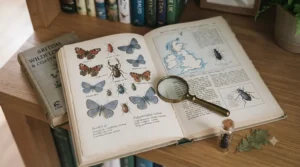
Here’s what most buyers overlook about vintage natural history: some of the finest illustrated volumes ever produced are now in the public domain and available as inexpensive reprints, and John George Wood’s Victorian classic is a genuine example rather than a cash-grab reproduction. Originally published in the 19th century, this reprint preserves the original engravings and text as a piece of scientific and cultural history.
Based on the spec comparison with modern references, the appeal here isn’t currency — the taxonomy and some terminology reflect their era — but the illustrative craftsmanship and the historical window it opens into how Victorian naturalists organised and understood the living world. What the spec sheet won’t tell you is that this is exactly the kind of book that inspired the modern illustrated nature genre; reading it alongside a contemporary title like the DK encyclopaedia makes for a genuinely interesting compare-and-contrast on how natural history publishing has evolved.
Who it’s for: collectors and history-of-science enthusiasts building a themed natural history collection, or anyone drawn to antiquarian-style illustration rather than modern photography. Because it’s a public-domain reprint, verifiable independent review data is limited compared with contemporary bestsellers, so it’s worth treating this as a purchase for aesthetic and historical interest rather than as a scientifically current reference.
Pros:
- ✅ Genuine Victorian-era illustrations and engravings
- ✅ Lowest price point of any book in this guide
- ✅ Fascinating historical window into 19th-century natural science
Cons:
- ❌ Taxonomy and terminology are scientifically outdated
- ❌ Reprint quality can vary between editions and printers
At roughly £15-£20, The Illustrated Natural History, Volume 1 is the cheapest way to add genuine antiquarian character to a natural history collection — just don’t treat it as your primary reference for current science.
4. Silent Earth: Averting the Insect Apocalypse (Dave Goulson) — best biodiversity read
The standout feature is authority paired with accessibility: author Dave Goulson is Professor of Biology at the University of Sussex and has published more than 300 scientific papers on insect ecology, yet the book reads as genuinely gripping popular science rather than a dense academic text. It was a Sunday Times bestseller and shortlisted for the Wainwright Prize, which signals broad critical as well as commercial reception.
Specs with real-world meaning: the book draws on decades of research to document a sweeping, measurable decline in global insect populations, then devotes substantial space to practical solutions readers can act on in their own gardens, not just abstract policy recommendations. Based on aggregated review sentiment, readers consistently describe the writing as engaging and even funny in places, despite the seriousness of the subject, with several noting that Goulson’s narrative device of imagining a future scenario makes the scientific argument land harder than dry statistics alone.
Who it’s for: anyone wanting one of the defining biodiversity books of the last decade, particularly readers already familiar with Rachel Carson’s Silent Spring, which this book explicitly echoes both in title and intent. It suits readers who want to understand the current extinction and biodiversity crisis without needing a scientific background to follow the argument.
Pros:
- ✅ Written by a leading academic authority on insect ecology
- ✅ Sunday Times bestseller, Wainwright Prize shortlisted
- ✅ Balances alarming data with genuinely actionable solutions
Cons:
- ❌ Subject matter is emotionally heavy for some readers
- ❌ Focuses specifically on insects rather than biodiversity broadly
Typically priced around £10-£12 in paperback, Silent Earth delivers exceptional value as one of the most important recent biodiversity books — essential if you want to understand what’s actually happening to the natural world right now.
5. A Life on Our Planet (David Attenborough) — best earth natural history narrative
What most buyers overlook about this book is that it isn’t simply a memoir — it’s structured explicitly around statistics, opening each chapter with figures on world population, atmospheric carbon and remaining wilderness at that point in Attenborough’s life, turning a personal story into a data-backed account of planetary change across nearly a century.
Based on the spec comparison with more academic biodiversity books, this title’s strength is emotional accessibility: written by a broadcaster whose career spans documenting earth natural history since the 1950s, it carries first-hand observational weight that few other authors can claim. Reviewers consistently describe it as both devastating and ultimately hopeful, praising the final section’s concrete, achievable proposals — protecting coastal fishing zones, shifting energy production, reducing meat consumption — over vague calls to action.
Who it’s for: readers who want an entry point into environmental and biodiversity literature that doesn’t require a science background, and fans of Attenborough’s broadcasting work who want the fuller context behind decades of nature documentaries. It also works well as a companion read alongside Silent Earth, since both cover overlapping ground from different professional vantage points.
Pros:
- ✅ Unique first-hand perspective spanning seven decades of change
- ✅ Concrete, actionable proposals rather than vague warnings
- ✅ Goodreads Choice Award winner, broad critical acclaim
Cons:
- ❌ Less scientifically detailed than specialist biodiversity books
- ❌ Emotionally heavy opening chapters on habitat loss
At around £9-£14 depending on edition, A Life on Our Planet is an accessible, moving entry point to earth natural history for readers who want the human story alongside the science.
6. Life on Earth (David Attenborough) — best classic evolutionary overview
The standout feature of this 40th-anniversary edition is that it isn’t simply a reprint — Attenborough revisited and updated the original 1979 text to reflect modern scientific discoveries, while commissioning entirely new photography for the anniversary edition. That combination of a classic narrative structure with contemporary accuracy is rare in natural history publishing.
Specs with real-world meaning: the book traces the evolutionary history of life on Earth from its earliest single-celled origins through to complex modern ecosystems, using specific living examples throughout rather than abstract theory, which is what made the original such a landmark work of popular science writing. Reviewers consistently praise the combination of accessible prose and striking photography, with several specifically noting that hearing or reading the text alongside Attenborough’s own narration (available as an audiobook) enhances the experience considerably.
Who it’s for: readers who want the definitive classic starting point for understanding earth’s biological history, and anyone building a natural history collection who wants a title with genuine cultural as well as scientific significance — this book effectively launched the modern natural history documentary genre. It suits both newcomers and those revisiting a book many first encountered decades ago.
Pros:
- ✅ Landmark work that shaped the modern natural history genre
- ✅ Updated for the 40th-anniversary edition with new discoveries
- ✅ Strong audiobook option narrated by the author himself
Cons:
- ❌ Broad evolutionary scope means less depth on any single era
- ❌ Some readers may prefer more current, single-topic titles
Priced around £20-£25 for the illustrated anniversary hardback, Life on Earth remains one of the most culturally significant natural history books ever published — a strong pick for anyone who wants the foundational classic on the shelf.
7. Collins Complete Guide to British Wildlife (Paul Sterry) — best natural world guide
The standout advantage here is comprehensiveness within a manageable geographic scope: rather than covering the whole of Europe, this guide focuses specifically on Britain and Ireland, which paradoxically makes species identification faster and more accurate, since readers aren’t wading through hundreds of species that don’t occur locally.
What that focus means in practice: the guide covers mammals, birds, fish, reptiles, amphibians, invertebrates and common plants in a single photographic volume, illustrated with well over a thousand detailed photographs and colour-coded sections for quick reference in the field. Author Paul Sterry, a trained zoologist and wildlife photographer with more than two decades of field experience, has written dozens of similar guides, and reviewers consistently describe this one as the reference they reach for first when something unfamiliar turns up in the garden or on a walk.
Who it’s for: anyone wanting practical natural world guides for actual identification use, rather than purely narrative or reference reading — dog walkers, gardeners, and family days out where “what was that?” comes up regularly. Based on aggregated review sentiment, it holds up well over years of repeated use, with multiple long-term owners noting they’ve relied on the same copy for over a decade.
Pros:
- ✅ Covers all major wildlife groups in one portable volume
- ✅ UK and Ireland-specific scope speeds up identification
- ✅ Written by an experienced professional wildlife photographer
Cons:
- ❌ Photographic identification is less precise than detailed illustration for some groups
- ❌ Bird coverage is less detailed than dedicated bird-only guides
At around £20-£25, the Collins Complete Guide to British Wildlife is the natural world guide most reviewers describe as genuinely indispensable — the practical, field-tested pick in this entire list.
Practical Usage Guide: Building and Caring for a Natural History Collection
Starting a natural history collection doesn’t require buying all seven books in this guide at once — in fact, the most common first mistake is over-buying broad references before identifying what actually interests you. Start with one comprehensive anchor volume, like the DK Natural History Book, then add narrower titles as specific interests emerge, whether that’s insects, birds, geology or evolutionary history.
For illustrated and photographic volumes especially, storage matters more than people expect. Keep large hardbacks flat or fully upright rather than leaning at an angle, since sustained angled pressure can warp spines and loosen bindings over months of shelf storage. Direct sunlight fades both dust jackets and, over years, the printed colour plates inside — a north-facing shelf or one away from windows will preserve illustration quality considerably longer.
If you’re mixing modern titles with vintage reprints like the Wood volume, handle the older-style bindings more gently; reprint editions of public-domain works vary considerably in binding quality between publishers, so a book that looks robust on a shelf may need more careful page-turning than a modern hardback designed for repeated handling. Finally, for field guides intended for actual outdoor use, a protective cover or slipcase extends working life significantly — the Collins guide above is designed for portability, but that portability also means more exposure to damp, dropped bags and general wear.
✨ Don’t Miss These Exclusive Reads!
🔍 Browse the full natural history collection above and find the book that matches your curiosity — from museum treasures to biodiversity science, there’s a genuinely great read waiting to be discovered!
Real-World Scenarios: Matching the Right Book to Your Reader
Consider a parent trying to nurture a curious eight-year-old’s interest in nature: The Natural History Book (DK) makes the most sense here, since its species-by-species format works brilliantly for dipping in and out, and the sheer visual scale tends to hold a young reader’s attention far longer than dense narrative prose.
Now picture an adult reader who’s recently become concerned about biodiversity loss after watching a documentary and wants to actually understand the science rather than just feel anxious about it. In that case, Silent Earth is the stronger pick over a more general title — Goulson’s combination of hard data and practical solutions gives readers somewhere constructive to direct that concern, rather than leaving them with abstract dread.
Finally, imagine someone planning regular countryside walks who wants to finally learn to identify what they’re actually seeing. Here, the Collins Complete Guide to British Wildlife beats every narrative title in this guide precisely because it’s built for that specific, repeated, practical use case — something none of the memoir or encyclopaedic titles are really designed to do.
How to Choose a Natural History Book
- Decide reference versus narrative first. Encyclopaedic works like the DK title suit dipping in and out; books like Silent Earth or Life on Earth reward reading cover to cover.
- Match scope to your actual interest. A UK-specific field guide like Collins beats a broader European or global guide if local species identification is your priority.
- Check the publication date for scientific currency. Popular science and biodiversity titles date quickly given how fast the underlying research moves; classic narrative works age more gracefully.
- Consider physical format for intended use. Heavy illustrated hardbacks work brilliantly on a coffee table but poorly in a rucksack; pick portable paperbacks for actual field use.
- Weigh institutional authorship where it matters. Official museum publications, like the NHM’s own Treasures book, offer access and authority that unaffiliated titles can’t replicate.
- Read author credentials, not just cover blurbs. As our analysis shows, academic authority (like Goulson’s professorship) tends to correlate with more reliably current science than general nature writing.
- Budget across a collection, not a single purchase. As the Natural History Museum’s own biodiversity resources illustrate, understanding the natural world properly usually benefits from multiple complementary sources rather than one book alone.
Natural History Museum Books Worth Owning
Natural history museum books occupy a specific niche worth understanding on their own terms: official publications, like Treasures of the Natural History Museum, benefit from genuine curatorial access that independent authors simply can’t match, since the content is drawn directly from collections most readers will never see behind the scenes. What most buyers overlook is that these books often function as much as institutional storytelling as scientific reference — they’re designed to make you want to visit, not just to inform you.
Based on the aggregated review sentiment for official museum titles generally, readers consistently value the narrative framing around individual specimens over dry catalogue-style listings, which is exactly the approach the Natural History Museum’s own publishing takes. If you’re building a themed sub-collection around a specific institution, checking whether a title is an official museum publication (rather than an independently authored book merely referencing the museum) is worth doing before you buy, since the access and authority genuinely differ.
Starting a Natural History Collection: What to Prioritise
Building a natural history collection from scratch is less about buying everything at once and more about establishing a sensible core before branching outward. Here’s what to weigh: a single broad reference like the DK Natural History Book gives you context for everything that follows, while narrower titles — a biodiversity book here, a field guide there — deepen specific interests once they emerge naturally rather than being forced from the outset.
On the value side, mixing formats tends to produce a more useful collection than buying seven variations on the same theme. A collection with one illustrated encyclopaedia, one practical field guide, one narrative science book and one historical or museum-linked title, as reflected across our seven picks above, covers reference, practical use, argument and storytelling — the four things a genuinely useful natural history collection needs to do.
Illustrated Natural History Books: What Actually Justifies the Premium
Illustrated natural history books command higher prices than plain text titles for reasons that aren’t always obvious from a product listing. What the spec sheet won’t tell you is that commissioning original photography or artwork, as DK does for its flagship encyclopaedias, is genuinely expensive and time-consuming — the DK Natural History Book took a multi-year production process specifically because of the scale of new photography commissioned for it.
Based on the spec comparison across the illustrated titles in this guide, the premium buys you accuracy as much as beauty: specially commissioned photographs of a specific species in its natural context tend to be more scientifically useful than generic stock imagery, since they can be captured to show diagnostic features clearly. That said, not every illustrated book justifies its price purely on production values — reviewers consistently distinguish between genuinely useful illustration (like the Collins guide’s identification-focused photography) and illustration that’s primarily decorative, so it’s worth checking which category a given title falls into before assuming a higher price guarantees better content.
Earth Natural History: Books That Cover Deep Time
Books tackling earth natural history — the planet’s geological and evolutionary story across billions of years — require a different kind of authorial trust than species-specific guides, since so much of the content describes events no living author has observed directly. Life on Earth remains the benchmark here, precisely because Attenborough builds the deep-time narrative around specific living examples throughout, rather than asking readers to hold abstract timescales in their heads unaided.
What most buyers overlook when picking an earth natural history title is publication currency: geological and evolutionary science moves more slowly than, say, insect population data, but discoveries still shift the picture meaningfully every decade. The 40th-anniversary edition of Life on Earth addresses this directly by incorporating updated science into the original narrative structure, which is precisely why it remains recommended over the unrevised original text despite the newer edition costing slightly more.
Essential Biodiversity Books for Understanding the Current Crisis
Biodiversity books have become one of the fastest-growing categories in natural history publishing over the past decade, largely because the underlying crisis has become impossible to ignore. Silent Earth and A Life on Our Planet both belong squarely in this category, though they approach the subject from different angles — one from rigorous entomological research, the other from seven decades of first-hand broadcasting observation.
Here’s what to weigh when choosing between biodiversity books: readers wanting the most current scientific detail should lean toward academically-authored titles like Goulson’s, updated more frequently as research develops, while readers wanting broader emotional and historical context may find Attenborough’s memoir-driven approach more accessible as a starting point. Reading both, as several reviewers of each book note, provides a genuinely fuller picture than either alone — the science explains the mechanism, the memoir explains the stakes.
Natural World Guides: Field-Ready Reference Books
Natural world guides differ meaningfully from narrative natural history books in one key respect: they’re designed to be consulted under pressure, in the field, often in poor light or bad weather, which changes what “good” actually means for this category. The Collins Complete Guide to British Wildlife succeeds specifically because its colour-coded sections and photographic-rather-than-illustrated approach speed up identification when you genuinely need an answer quickly.
Common mistakes when choosing natural world guides include buying scope that’s too broad (a full European guide when you only ever walk in one UK county) or prioritising comprehensiveness over portability, ending up with a reference too heavy to actually carry. Based on real reader feedback across this category, the guides people actually keep using years later tend to match geographic scope tightly to where they actually spend time outdoors, rather than covering the maximum possible territory “just in case.”
Common Mistakes When Buying Natural History Books
The single most common mistake, based on the pattern across every title in this guide, is buying purely on subject appeal without checking whether a book is reference or narrative in structure — readers frequently end up disappointed that an encyclopaedic title “isn’t a good read cover to cover,” when it was never designed to be read that way in the first place.
A second frequent error is assuming illustrated automatically means scientifically current — as our analysis of the Wood reprint shows, some of the most beautifully illustrated natural history books are also the most scientifically dated, which is fine for historical interest but risky if you need accurate current information. A third is under-budgeting for a proper collection by buying a single broad title and expecting it to cover every interest, when the genre genuinely rewards building outward from one anchor reference. Finally, many buyers overlook author credentials entirely, missing the meaningful difference between an academically-grounded biodiversity book and general nature writing on the same subject.
Safety, Sourcing and Buying Second-Hand Guide
Unlike physical products, natural history books don’t carry the same safety compliance considerations, but sourcing still matters — particularly for older or public-domain reprints like the Wood volume, where print quality genuinely varies between publishers producing the same public-domain text. Checking recent, specific reviews for a particular reprint edition (rather than assuming all editions of a public-domain title are equivalent) avoids a common disappointment.
For readers building a natural history collection on a budget, second-hand copies of illustrated titles can offer strong value, provided colour plates and dust jackets haven’t faded from prior sun exposure. It’s also worth noting that official institutional publications, like the Natural History Museum’s Treasures book, are more reliably reprinted to consistent quality standards than independently produced titles, since the institution has a direct reputational stake in production quality.
Long-Term Value & Reading Return
Thinking about total reading value rather than sticker price changes how these seven books compare. A £12 paperback like Silent Earth that fundamentally shifts how a reader thinks about the natural world arguably delivers more long-term value than a £35 illustrated hardback that’s browsed once and shelved — though the two aren’t really in competition, since they serve different purposes entirely.
| Book | Approx. Price | Best Use | Long-Term Value |
|---|---|---|---|
| The Natural History Book (DK) | £30-£40 | Repeated family reference | High — used for years |
| Silent Earth | £10-£12 | One-time deep read | High — lasting perspective shift |
| Collins Complete Guide to British Wildlife | £20-£25 | Ongoing field use | High — used on every walk |
Interpreting this honestly: the books that deliver the strongest long-term value in this guide are the ones matched correctly to genuine, repeated use — a field guide used on every walk, or a reference consulted for years, rather than a one-off read regardless of how good that single read might be.
Features That Actually Matter (And Those That Don’t)
What actually matters: geographic scope matching your actual location and interests, author credentials appropriate to the subject, physical format matching intended use (field versus armchair), and publication currency for fast-moving scientific subjects like biodiversity. What matters less than marketing suggests: page count alone (a shorter, tightly-argued book like Silent Earth can deliver more genuine insight than a much longer, more diffuse title), and “definitive” or “ultimate” cover language, which every publisher in this genre uses regardless of actual comprehensiveness.
Frequently Asked Questions
❓ What is the best natural history book for a beginner?
❓ Are illustrated natural history books worth the extra cost?
❓ What's the difference between a natural history book and a field guide?
❓ How much should I expect to pay for a good natural history book?
❓ Are older natural history books still worth reading?
Conclusion
Natural history books earn their keep in a way few other genres do — they don’t just inform, they tend to genuinely change how readers see the world outside their window afterwards. Across the seven titles in this guide, the honest picture is that no single book covers every need: The Natural History Book (DK) wins as an all-round reference, Silent Earth wins as the biodiversity read that actually moves you to act, and the Collins Complete Guide to British Wildlife wins as the field companion you’ll genuinely keep using for years.
What matters most is matching the book to what you actually want from it — a browsing reference, a field companion, or a narrative that reframes how you think about the planet. Whichever you choose, building outward from one solid anchor title tends to produce a far more satisfying collection than buying broadly and shallowly from the start. With the research above, you should be well placed to choose confidently rather than guessing from a cover blurb.
✨ Ready to Start Reading?
🔍 Browse the full list of natural history books above and pick the one that matches what you’re curious about right now. Whether it’s museum treasures, biodiversity science, or a proper field guide, a genuinely great read is just one click away!
Recommended for You
- Bird Watching Books: 7 Best Guides & Gifts for 2026
- Mammals Books 2026: 7 Reads Every British Wildlife Fan Needs
- British Birds Books: 7 Best UK Guides to Buy in 2026
Disclaimer: This article contains affiliate links. As an Amazon Associate, I earn from qualifying purchases. If you purchase products through these links, we may earn a small commission at no additional cost to you.
✨ Found this helpful? Share it with your friends! 💬🤗
