
In This Article
What makes victorian history books so endlessly fascinating to modern British readers? Perhaps it’s because we’re still living in the world the Victorians built. From our railway networks to our social welfare systems, from industrial capitalism to our peculiar relationship with afternoon tea, the Victorian age history casts a remarkably long shadow over contemporary British life.
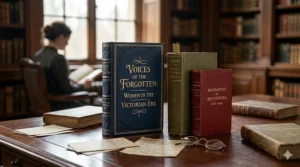
The Victorian period — Queen Victoria’s 63-year reign from 1837 to 1901 — witnessed Britain’s transformation into the world’s first industrial superpower. It was an era of staggering contradictions: breathtaking innovation alongside brutal exploitation, moral rigidity masking secret indulgences, imperial grandeur concealing domestic squalor. Understanding this complex century isn’t just about satisfying historical curiosity. It’s about comprehending the very foundations of modern Britain.
I’ve spent years researching victorian era books, and what strikes me most is how drastically our understanding of the period has evolved. Gone are the romanticised images of elegant ladies with parasols and gentlemen in top hats. Today’s best victorian society books reveal the gritty reality: the coal dust on workers’ faces, the omnipresent stench of horse manure and open sewers, the devastating infant mortality rates, and yes, the remarkable resilience of ordinary people navigating unprecedented social change. The British Library’s Victorian collections contain thousands of original sources — from parliamentary papers to personal diaries — that illuminate these forgotten lives.
Whether you’re a student tackling A-Level history, a family history enthusiast tracing Victorian ancestors, or simply someone who devoured Downton Abbey and wants the real story behind the spectacle, this guide will help you find the perfect book. I’ve researched dozens of titles available on Amazon.co.uk, from comprehensive surveys of nineteenth century britain to intimate accounts of daily Victorian life, to bring you the definitive selection for 2026.
Quick Comparison: Top Victorian History Books at a Glance
| Book Title | Best For | Price Range (£) | Pages | Reader Rating |
|---|---|---|---|---|
| The Victorians (A.N. Wilson) | Comprehensive overview | £12-£45 | 700+ | 4.4/5 |
| How to Be a Victorian (Ruth Goodman) | Daily life immersion | £10-£20 | 464 | 4.6/5 |
| A Brief History of Life in Victorian Britain (Michael Paterson) | Accessible introduction | £8-£16 | 384 | 4.4/5 |
| Victorian London (Liza Picard) | London-focused history | £10-£22 | 400+ | 4.3/5 |
| The Rise of Respectable Society (F.M.L. Thompson) | Academic depth | £15-£35 | 382 | 4.2/5 |
| The Victorian Era: A Captivating Guide | Beginners | £8-£15 | 132 | 4.2/5 |
| Victorian Factory (Colin Stott) | Industrial history | £6-£12 | 48 | 4.0/5 |
From this comparison, three clear tiers emerge. Budget-conscious readers can explore the Victorian period collection starting around £8-£12 with titles like The Victorian Era guide or Victorian Factory. Mid-range options (£12-£22) offer substantially more depth — Ruth Goodman and Liza Picard excel here, providing engaging narratives backed by serious research. At the premium end (£25-£45), A.N. Wilson’s magisterial work and F.M.L. Thompson’s scholarly analysis deliver comprehensive coverage that justifies the investment for serious enthusiasts. What most buyers overlook is that physical condition matters: used copies in “very good” condition from third-party sellers often represent excellent value, though Prime delivery may not apply.
💬 Just one click — help others make better buying decisions too!😊
Top 7 Victorian History Books: Expert Analysis and UK Buyer’s Guide
1. The Victorians by A.N. Wilson
A.N. Wilson’s The Victorians stands as perhaps the most comprehensive single-volume survey of the Victorian age available to British readers. This isn’t your typical dry academic tome — Wilson writes with the flair of a novelist whilst maintaining rigorous historical standards.
What sets this book apart is Wilson’s ability to weave together biography, social history, political developments, and cultural movements into a coherent narrative. The book explores figures ranging from Queen Victoria and Prince Albert to Charles Dickens, Florence Nightingale, and less celebrated individuals who shaped the era. Wilson doesn’t shy from controversy: his assessments of Victorian politicians like Disraeli and Palmerston are refreshingly critical, and he challenges many comfortable assumptions about Victorian morality.
For UK readers, this book offers invaluable context for understanding Britain’s industrial transformation. Wilson examines the Great Exhibition of 1851, the Irish Famine, the Crimean War, and the Indian Mutiny with particular attention to how these events shaped British identity. One aspect rarely covered elsewhere: his discussion of how Victorian Britain created the template for modern consumer culture — department stores, advertising, branded products — that still defines our high streets.
At 700+ pages, this requires commitment, but Wilson’s engaging prose makes it remarkably readable. Expect to spend several evenings absorbed in 19th-century Britain. Available in both hardback and paperback on Amazon.co.uk, with used copies offering excellent value.
Customer Feedback: British readers consistently praise Wilson’s “acerbic wit” and “unflinching honesty” about Victorian hypocrisies. Some note his obvious preferences (he adores Peel, dislikes Disraeli intensely), but most agree this passion makes the history more engaging rather than less reliable.
✅ Comprehensive coverage of political, social, and cultural history
✅ Engaging narrative style despite academic rigour
✅ Excellent treatment of British Empire and industrialisation
❌ Dense at 700+ pages — not for casual readers
❌ Author’s strong opinions occasionally overshadow objectivity
Price range: Around £12-£45 depending on edition and condition. The paperback editions typically fall in the £12-£20 range, whilst first edition hardbacks command premium prices. Given the book’s scope and quality, anything under £20 represents solid value.
2. How to Be a Victorian by Ruth Goodman
Ruth Goodman’s How to Be a Victorian revolutionised Victorian social history when it appeared, and it remains the gold standard for understanding everyday Victorian life. This isn’t armchair history — Goodman actually lived in Victorian conditions for a year whilst filming the BBC series Victorian Farm, and her firsthand experiences inform every page.
The book proceeds chronologically through a Victorian day, from waking at dawn to nighttime activities (Goodman handles Victorian sexuality with admirable frankness). What makes this indispensable for UK readers is its focus on practical details that other histories gloss over. How did Victorians wash without running water? What did working-class breakfasts actually consist of? How did people navigate London streets ankle-deep in horse manure? Goodman answers these questions with authority, drawing on contemporary diaries, household manuals, and her own experiments.
The most revelatory sections cover topics like Victorian personal hygiene (far more sophisticated than myth suggests), the evolution of British fashion (heavily influenced by industrial textile production), and working-class survival strategies during the “hungry forties.” For anyone interested in British family history, this book is essential — it explains the daily realities your Victorian ancestors faced, from corset-lacing to coal delivery to the omnibus commute.
What Goodman does brilliantly is connect Victorian practices to modern British life. She shows how our contemporary obsession with convenience food, coffee shops, and window shopping all originated in Victorian Britain. You’ll never view a British high street the same way again.
Customer Feedback: UK readers love Goodman’s “hands-on approach” and her ability to make history “tangible and visceral.” The book resonates particularly with readers who remember grandparents’ stories of pre-war Britain — many note surprising continuities between Victorian life and 1940s-50s childhoods.
✅ Unmatched detail on daily Victorian life from dawn to dusk
✅ Based on author’s firsthand living history experiments
✅ Exceptionally well-researched with extensive source citations
❌ Focus primarily on working and middle classes (less on aristocracy)
❌ Some readers find certain chapters (especially hygiene) confronting
Price range: Typically £10-£20 on Amazon.co.uk. Both hardback and paperback editions are readily available, often with Prime delivery. The book’s 464 pages offer tremendous value at this price point — you’re essentially getting a comprehensive guide to an entire century’s domestic life for less than the cost of a cinema trip.
3. A Brief History of Life in Victorian Britain by Michael Paterson
Michael Paterson’s A Brief History of Life in Victorian Britain serves as the perfect entry point for readers new to the Victorian period. Don’t be fooled by “brief” in the title — at 384 pages, this book covers substantial ground, but Paterson’s accessible writing style makes it remarkably digestible.
The book adopts a thematic rather than chronological approach, with chapters devoted to transport, clothing, housing, work, and leisure. This structure works brilliantly for readers interested in specific aspects of Victorian life. Researching Victorian housing for a renovation project? Paterson’s chapter on Victorian domestic architecture covers everything from terraced workers’ cottages to suburban villas. Curious about Victorian entertainment? His coverage of music halls, seaside holidays, and early football matches brings Victorian leisure to life.
What particularly distinguishes this title for British readers is Paterson’s attention to class differences. He doesn’t pretend all Victorians lived the same way — the gap between aristocratic mansions and East End slums was vast, and Paterson illuminates both extremes and everything between. His treatment of Victorian poverty is particularly moving, showing how the “deserving poor” navigated workhouses, charitable organisations, and the precarious casual labour market.
The book includes numerous contemporary quotations and illustrations that ground abstract historical concepts in vivid detail. You’ll find everything from Queen Victoria’s diary entries to descriptions of Victorian working conditions by social reformers like Charles Booth. For anyone teaching Victorian history or studying it at A-Level, this provides an ideal overview that contextualises more specialised reading.
Customer Feedback: Reviewers consistently describe this as “readable without being simplistic” and “informative without being overwhelming.” British readers appreciate Paterson’s balanced approach — he neither romanticises nor demonises the Victorians, presenting them as complex humans navigating rapidly changing circumstances.
✅ Highly accessible writing style suitable for all readers
✅ Thematic organisation makes specific topics easy to locate
✅ Excellent balance between different social classes
❌ Less depth than Wilson’s comprehensive survey
❌ Published 2008 — lacks some recent historical scholarship
Price range: Around £8-£16 on Amazon.co.uk, making it one of the most affordable quality Victorian histories available. Used copies in good condition often appear under £10, representing exceptional value. The 2008 publication date means copies are readily available at various price points.
4.Victorian London: The Life of a City 1840-1870 by Liza Picard
Liza Picard’s Victorian London focuses brilliantly on Britain’s capital during its Victorian transformation. If you’re specifically interested in London history — whether you’re a Londoner yourself, planning to visit, or simply fascinated by the world’s first truly modern metropolis — this is the definitive account.
Picard covers the middle Victorian decades (1840-1870) when London underwent staggering changes. The city was literally ripped apart to build railways, sewers, and the world’s first underground transport system. The Thames stank so badly during the “Great Stink” of 1858 that Parliament couldn’t function. Cholera epidemics killed thousands. Yet simultaneously, London was building Paddington Station, hosting the Great Exhibition, and establishing institutions like the Victoria and Albert Museum that remain iconic today.
What makes Picard’s approach distinctive is her focus on sensory details. She opens with a chapter literally titled “Smells” — and after reading it, you’ll understand that Victorian London assaulted the nose with an intensity we can scarcely imagine. From there, she explores the physical reality of Victorian life: the streets, the buildings, the transport, the shops, the entertainments. Her coverage of Victorian London’s underworld — prostitution, crime, gin palaces, “penny gaffs” (cheap theatres) — offers a corrective to sanitised historical accounts.
For anyone interested in family history with London connections, this book contextualises what your ancestors’ daily lives would have been like. Picard explains everything from the costermongers selling food in the streets to the middle-class families moving to new suburbs like Clapham and Islington. Her account of Victorian London’s Jewish, Irish, and other immigrant communities is particularly valuable, showing how the capital was always a cosmopolitan city.
Customer Feedback: Readers praise Picard’s “evocative” and “atmospheric” writing, noting she makes you feel as if you’re walking Victorian streets. Some criticise her occasional tangents, but most agree these add colour rather than detraction. UK readers with ties to London find this especially resonant — many report recognising family stories reflected in Picard’s research.
✅ Unparalleled focus on London specifically during peak Victorian era
✅ Sensory, immersive writing brings the city vividly to life
✅ Excellent coverage of all classes from slums to Belgravia
❌ Limited to 1840-1870 period (excludes late Victorian developments)
❌ Focus on London means other British cities get short shrift
Price range: Typically £10-£22 on Amazon.co.uk depending on edition. Paperback versions usually fall in the £10-£15 range, whilst hardback first editions command higher prices. Given this book’s 400+ pages of meticulously researched content, it offers solid value at any price point under £20.
5. The Rise of Respectable Society: A Social History of Victorian Britain, 1830-1900 by F.M.L. Thompson
F.M.L. Thompson’s The Rise of Respectable Society represents the academic gold standard for Victorian social history. This isn’t light reading — Thompson wrote for scholars and serious students — but for readers wanting authoritative, evidence-based analysis of Victorian society, nothing surpasses it.
Thompson examines the social structures underpinning Victorian Britain: marriage and the family, housing and domestic life, work and social mobility, authority and power. What distinguishes this book is its integration of quantitative evidence (census data, wage statistics, demographic information) with qualitative sources (diaries, letters, contemporary accounts). The result is a nuanced picture of how “respectable society” developed — and Thompson’s argument is fascinating: Victorian respectability wasn’t imposed from above but emerged from multiple social groups creating their own standards of acceptable behaviour.
For British readers interested in understanding the origins of modern social attitudes, this book is essential. Thompson traces how Victorian notions of respectability shaped everything from suburbanisation to working-class friendly societies to middle-class philanthropy. His analysis of the “servant-keeping classes” reveals the economic foundations of Victorian social distinctions. His chapter on Victorian childhood demolishes myths whilst acknowledging genuine horrors of child labour.
What makes this especially valuable in 2026 is Thompson’s prescient understanding that Victorian society created templates for modern life. The rise of professional careers, the separation of home and workplace, the cult of domesticity, patterns of social mobility — all fundamentally Victorian innovations that still structure British society today.
Customer Feedback: Academic readers praise Thompson’s “rigorous methodology” and “sophisticated analysis.” General readers find it challenging but rewarding — several reviewers note reading one chapter at a time works best, treating it as a reference work rather than a continuous narrative. British historians consider this an indispensable text.
✅ Most authoritative academic treatment of Victorian social history
✅ Sophisticated integration of quantitative and qualitative evidence
✅ Challenges conventional assumptions with evidence-based arguments
❌ Dense academic prose not suitable for casual readers
❌ Published 1990 — predates some recent historical debates
Price range: Around £15-£35 on Amazon.co.uk, depending on condition and seller. This academic title commands higher prices due to its specialist nature, but used copies in good condition often appear around £18-£25. For serious students or researchers, this represents essential investment despite the premium cost.
6. The Victorian Era: A Captivating Guide to the Life of Queen Victoria and an Era in the History of the United Kingdom by Captivating History
The Victorian Era: A Captivating Guide serves a specific niche: readers wanting a concise, accessible introduction to the period without commitment to a 500-page tome. At 132 pages, this delivers a swift survey of Victorian Britain from Queen Victoria’s accession in 1837 to her death in 1901.
This book adopts a biographical approach, using Victoria’s life as the narrative thread whilst exploring broader developments. You’ll learn about the queen’s childhood, her marriage to Prince Albert, her children’s marriages creating a web of European royal connections, and her long widowhood after Albert’s death in 1861. Interwoven with Victoria’s personal story are chapters on industrial development, social reforms, imperial expansion, and cultural achievements.
The Captivating History series prioritises readability over academic depth, making this ideal for several specific audiences: GCSE or early A-Level students wanting an overview before tackling more detailed texts, general readers curious about the Victorian period but uncertain whether to commit to longer books, or anyone seeking a quick refresher on Victorian history. The writing is straightforward without being simplistic, and the book includes helpful context about how Victorian Britain shaped the modern world.
For UK readers, the book’s focus on Britain rather than the broader British Empire makes it particularly relevant. The coverage of Victoria as a constitutional monarch who learned to navigate parliamentary democracy whilst maintaining influence provides useful civics lessons alongside history. That said, this brevity necessarily sacrifices depth — complex topics like the Irish Famine or the Indian Mutiny receive only cursory treatment.
Customer Feedback: Readers describe this as “engaging and easy to read” with “good pacing that maintains interest.” Students find it helpful for exam revision. More advanced readers note it works well as a starting point but recommend supplementing with more detailed sources. Some British readers wish for more critical analysis of Victorian colonialism.
✅ Concise and highly readable — perfect for busy readers
✅ Good biographical focus on Queen Victoria herself
✅ Affordable entry point to Victorian history
❌ Limited depth on complex social and economic issues
❌ Focuses heavily on royalty rather than ordinary Britons
Price range: Usually £8-£15 on Amazon.co.uk in paperback, with Kindle editions often slightly cheaper. At 132 pages, you’re paying roughly £0.06-£0.11 per page — reasonable for an introductory text, though longer books offer better per-page value. Prime delivery typically available.
7. Victorian Factory by Colin Stott (The History Detective Investigates series)
Colin Stott’s Victorian Factory might surprise readers as my seventh recommendation — it’s a 48-page book designed for educational use, often found in school libraries. Yet for readers specifically interested in industrial Victorian England and working conditions, this concise volume offers remarkable value.
The book examines Victorian factories through accessible text, contemporary illustrations, and thought-provoking questions that encourage critical thinking. Stott covers the transition from cottage industries to factory production, the rise of textile mills in Lancashire and Yorkshire, the working and living conditions of factory workers (including extensive child labour), workplace hazards, and the reform movements that eventually improved conditions. The “History Detective Sherlock Bones” framing device — a cartoon dog investigating historical mysteries — makes potentially dry economic history engaging.
Don’t let the educational format fool you. This book contains substantive historical content drawn from primary sources, including factory inspection reports, workers’ testimonies, and contemporary photographs. For British readers interested in family history, especially those with ancestors who worked in textile mills, coal mines, or other industrial occupations, this provides valuable context. The coverage of the Factory Acts (1802, 1833, 1844, 1847) explains the gradual legislative response to industrial exploitation.
The book works brilliantly as a quick reference for specific information about Victorian industry, and at under 50 pages, you can read it in an hour. It also serves as an excellent gift for younger readers (ages 8-14) developing interest in history, or as supplementary reading for GCSE History students studying the Industrial Revolution.
Customer Feedback: Teachers and parents praise this as an “excellent educational resource” that “makes Victorian industry accessible without sugarcoating the harsh realities.” Readers appreciate the visual elements and the way Stott balances factual information with human stories of workers’ experiences.
✅ Highly focused on industrial working conditions and reforms
✅ Accessible format suitable for younger readers and quick reference
✅ Excellent use of primary sources and contemporary illustrations
❌ Very short (48 pages) — limited scope
❌ Educational format may not suit all adult readers
Price range: Around £6-£12 on Amazon.co.uk. Given the specialised educational nature and shorter length, prices occasionally fluctuate based on availability. At this price point, it represents excellent value for its specific purpose — a focused examination of Victorian industrial life in a digestible format.
Understanding Victorian Britain: What Your Victorian Ancestors Actually Experienced
The reality of Victorian life differed dramatically depending on which decade, social class, region, and even which city neighbourhood you inhabited. When we talk about victorian society books revealing “what life was really like,” we must recognise there wasn’t one Victorian experience — there were thousands.
The Urban-Rural Divide
In 1837, roughly half of Britons lived in rural areas. By 1901, Britain had become the world’s first predominantly urban nation, with over 70% living in towns and cities. This transformation happened within a single lifetime, meaning many Victorians experienced both worlds. A child born in a Devon farming village might spend adult life in a Manchester factory or a Birmingham workshop. This movement wasn’t just geographical — it represented a wholesale change in lifestyle, work patterns, social relationships, and even diet.
Rural Victorian life retained pre-industrial rhythms longer than histories sometimes acknowledge. In agricultural areas, work still followed seasonal patterns, communities remained tight-knit, and traditions persisted. Yet even countryside couldn’t escape change: railways brought new goods and ideas, agricultural mechanisation reduced labour requirements, and the “flight from the land” drained villages of young people seeking urban opportunities. The romanticised “Merry England” of rural tradition was already nostalgic fiction by Victoria’s reign.
Urban Victorian life, conversely, was utterly unprecedented. Cities grew at rates that overwhelmed infrastructure. Imagine moving to a city where new streets appeared monthly, where thousands arrived weekly seeking work, where building sites transformed familiar landmarks into unrecognisable districts within years. Victorian Londoners witnessed this constantly. The railways alone — building lines from Paddington, King’s Cross, St Pancras, Victoria, Waterloo, Liverpool Street — demolished vast swathes of housing, displacing thousands whilst connecting Britain in revolutionary ways.
Social Class Realities
Victorian Britain’s class system wasn’t a simple three-tier structure (upper, middle, working) but a complex hierarchy with infinite gradations. Understanding these distinctions matters for appreciating victorian era books that explore social dynamics.
The Working Classes (roughly 70-80% of the population) encompassed extraordinary variety. Skilled craftsmen — carpenters, printers, engineers — earned decent wages, owned respectable clothing, perhaps rented comfortable housing, and might employ a single servant. Semi-skilled factory workers earned less but had steadier employment than casual labourers. Unskilled workers — dock labourers, building navvies, street sellers — lived precariously, their income fluctuating wildly based on weather, economic conditions, and sheer luck. Then came the “residuum” — people unable to maintain steady work due to age, disability, illness, or circumstances. For them, the workhouse loomed.
The lived experience varied enormously. A Lancashire cotton spinner’s household differed vastly from a London costermonger’s. Regional pay rates varied significantly: northern industrial workers often earned more than southern agricultural labourers, yet cost of living differences complicated comparisons. What united working-class Victorians was insecurity: illness, injury, economic downturns, or simply ageing could plunge families into destitution with terrifying speed.
The Middle Classes (perhaps 15-25% by late Victorian period) formed the era’s growth sector. This category ranged from struggling clerks earning £50 annually to prosperous merchants or doctors earning £1,000+. The Victorian middle class created modern professional identities: accountants, engineers, journalists, teachers, civil servants. Middle-class life centred on respectability, manifested through specific markers: living in appropriate suburbs (not city centres), employing at least one servant, maintaining parlour furniture, observing elaborate social codes.
What’s less discussed is middle-class anxiety. Achieving and maintaining respectability required constant financial strain. A clerk earning £100 annually faced pressure to rent a £25-£30 house, employ a £12-£15 maid, dress appropriately, educate children, and maintain appearances — all whilst lacking working-class community support or upper-class wealth cushions. Many middle-class Victorians lived one economic setback from disaster, explaining the era’s obsession with insurance, savings, and respectability.
The Upper Classes (under 5%) possessed wealth from land, inherited fortunes, or industrial empires. They lived in different worlds from other Britons, with country estates, London townhouses, elaborate social seasons, multiple servants, and political influence. Yet even aristocracy faced Victorian disruptions: agricultural depression reduced land values, industrial wealth created new elites, and reform legislation gradually reduced hereditary political privileges.
Daily Life Details That Histories Overlook
The best victorian history books include sensory details that transport readers. Here are aspects your ancestors faced:
Smell: Victorian Britain stank. Horse manure blanketed streets (a single horse produces 15-35 pounds daily; Victorian London had hundreds of thousands). Open sewers, privies emptying into cesspits, unwashed bodies in crowded spaces, coal smoke, industrial pollution — the olfactory assault was overwhelming. The Great Stink of 1858 wasn’t an aberration but an extreme version of normal London summer atmosphere.
Noise: Victorian cities were extraordinarily loud. Iron horseshoes on cobblestones, railway engines, factory machinery, street vendors shouting, barrel organs, hurdy-gurdies, church bells — continuous cacophony. No double-glazing, little sound insulation. The “knocker-upper” (person paid to wake workers by tapping windows with long poles) worked because industrial cities never truly slept.
Cold: Most Victorian homes had minimal heating. Middle-class families might heat one or two rooms; working-class families often heated none except when cooking. Bedrooms remained unheated even in wealthier homes. Victorians wore multiple layers constantly, and winter mortality rates spiked as cold, damp, and respiratory diseases combined lethally.
Darkness: British winters meant darkness by 4pm. Before widespread gas lighting (and certainly before electricity), evenings meant candlelight or nothing. Working-class families might afford only minimal lighting. Streets were poorly lit, making navigation treacherous and crime easier. The Victorian romance with long dark evenings by the fire partly reflected necessity — what else could you do?
Food: Victorian diet varied enormously by class and region. Working-class families subsisted largely on bread, potatoes, tea (heavily sweetened), and occasional meat or cheese. “Meat” often meant offal or the cheapest cuts. Fresh vegetables were seasonal luxuries. Adulteration was rampant — bread contaminated with chalk or alum, tea mixed with dried leaves, milk watered down. Middle-class diets improved substantially, yet even wealthy Victorians lacked year-round fresh produce we take for granted. Tinned foods (like Heinz baked beans, introduced 1886) represented Victorian innovation.
Work: The Victorian workday typically lasted 10-12 hours, six days weekly, with only Sunday off (and social pressure to spend that attending church). Skilled workers might have some negotiating power, but most labourers faced “take it or leave it” conditions. No paid holidays, no sick leave, no pensions. Workplace safety barely existed — industrial accidents were horrifyingly common, and workers bore the consequences. Women and children worked under identical harsh conditions for lower pay.
Regional Variations Within Britain
Victorian history often defaults to London, but regional experiences differed markedly:
Industrial North: Cities like Manchester, Liverpool, Sheffield, Leeds, and Birmingham epitomised industrial capitalism. Cotton mills, steel foundries, engineering works, shipyards — these cities built Britain’s industrial might whilst creating distinctive working-class cultures. Northern industrial workers often earned higher wages than southern counterparts but endured grim environmental conditions. The regional pride, cooperative movements, and trade unionism emerging here shaped modern British identity.
Scotland: Scottish Victorians experienced industrialisation (Glasgow became “Second City of the Empire”), Highland Clearances, and distinct religious culture (Presbyterian rather than Anglican). Edinburgh maintained professional and intellectual prestige whilst Glasgow industrialised rapidly. Scottish education systems differed from English, and Scotland retained separate legal and administrative structures.
Wales: Welsh Victorian experience combined industrialisation (South Wales coal mining and iron working) with rural persistence (North Wales agriculture) and distinctive linguistic and cultural identity. Nonconformist Protestantism (Methodist and Baptist chapels) dominated Welsh religious life, creating different social structures than Anglican England.
Ireland: Irish Victorian experience was traumatic. The Great Famine (1845-1852) killed roughly one million and prompted another million to emigrate. British rule, land ownership conflicts, religious tensions between Catholic majority and Protestant minority, and eventual Home Rule agitation dominated Irish Victorian politics. For Irish people, the Victorian era meant colonial oppression, not prosperity.
How to Choose the Right Victorian History Books for Your Interests
Selecting from the vast array of victorian period collection titles available requires matching books to your specific interests and reading level. Here’s my framework for making the right choice.
Define Your Purpose
Academic Study: If you’re researching for university essays, dissertations, or serious historical projects, prioritise scholarly works like F.M.L. Thompson’s The Rise of Respectable Society. Look for books with extensive footnotes, bibliographies, and engagement with historiographical debates. Be prepared for dense prose and theoretical frameworks. The Historical Association’s Victorian Britain guide provides helpful context for structuring academic research.
Family History Research: For understanding ancestors’ lives, prioritise social history focusing on everyday experiences. Ruth Goodman’s How to Be a Victorian excels here, as does Liza Picard’s Victorian London if your ancestors lived in the capital. Look for books covering specific occupations, regions, or social classes matching your family’s circumstances.
General Interest: If you’re reading for pleasure or general knowledge, accessibility matters most. Michael Paterson’s A Brief History of Life in Victorian Britain or The Victorian Era: A Captivating Guide provide excellent starting points. Once you’ve grasped the basics, progress to more comprehensive works like A.N. Wilson’s The Victorians.
Specific Interests: If particular aspects fascinate you — Victorian medicine, railways, crime, women’s lives, empire, literature — seek specialised books after reading general surveys. The general titles reviewed here provide essential context before diving deeper.
Consider Your Reading Level and Time Commitment
Beginner-Friendly (under 200 pages, accessible prose): The Victorian Era: A Captivating Guide, Victorian Factory. These work brilliantly for younger readers, busy adults, or anyone uncertain about committing to longer books.
Intermediate (200-450 pages, engaging narrative): How to Be a Victorian, A Brief History of Life in Victorian Britain, Victorian London. These balance accessibility with substance, offering genuine depth whilst maintaining readability.
Advanced (450+ pages, academic or comprehensive): The Victorians, The Rise of Respectable Society. These require significant time investment but reward dedicated readers with comprehensive understanding.
Match Books to Specific Victorian Periods
The Victorian era spanned 63 years — nearly as long as Elizabeth II’s reign. Different periods had distinct character:
Early Victorian (1837-1850s): Characterised by Chartism, Irish Famine, railway mania, early industrialisation’s social disruption. Books covering this period explore how Britons grappled with unprecedented change.
Mid-Victorian (1850s-1870s): Often called Victorian Britain’s “golden age” — relative prosperity, political stability, cultural confidence, Great Exhibition, Crimean War, Indian Mutiny. Liza Picard’s Victorian London focuses on this period specifically.
Late Victorian (1880s-1901): Marked by new imperialism, social reform legislation, rise of socialism and Labour movement, fin-de-siècle culture. A.N. Wilson covers the entire span, showing evolution from one period to next.
Budget Considerations for UK Buyers
Under £15: Look for paperback editions, used books in good condition, or shorter introductory texts. Amazon.co.uk’s used book marketplace often offers significant savings. Watch for occasional Kindle deals, though many prefer physical books for history reading.
£15-£25: This range accesses most quality Victorian histories in paperback or good-condition used hardbacks. Prime delivery typically available, and you’ll qualify for free delivery on orders over £25 if you bundle multiple purchases.
£25+: Reserved for premium editions, academic texts, or collectible first editions. F.M.L. Thompson’s scholarly work falls here, as do pristine hardback editions of A.N. Wilson. For serious collectors or researchers, the investment proves worthwhile.
Money-Saving Tips: Watch for Amazon’s frequent book promotions, particularly around World Book Day (early March) and during Prime Day (July). University students can access significant discounts through Amazon Student/Prime Student. Consider joining a local library — many maintain strong history collections, and inter-library loan programmes can source specialised titles. For expensive academic texts, check whether university libraries provide public reference access.
Assess Book Quality Indicators
Reviews: On Amazon.co.uk, prioritise books with 50+ reviews and 4+ star ratings. Read both positive and critical reviews to understand books’ strengths and limitations. For Victorian histories, UK reviewer feedback proves more relevant than American reviews, as British readers better judge books’ accuracy regarding British context.
Publisher Reputation: Established academic presses (Oxford University Press, Cambridge University Press, Harvard University Press) and quality trade publishers (Penguin, HarperCollins) maintain high standards. The “Captivating History” series, whilst more commercial, produces reliable introductory texts.
Author Credentials: Check author backgrounds. Professional historians (like F.M.L. Thompson), experienced popular historians (like A.N. Wilson), or specialists with demonstrated expertise (like Ruth Goodman) offer greater reliability than authors without relevant qualifications.
Publication Date: For general Victorian history, publication date matters less than for specialist topics. A.N. Wilson’s 2002 publication remains current because Victorian history’s broad outlines don’t change. However, for specific topics (Victorian gender relations, empire studies, environmental history), recent scholarship offers significantly updated interpretations.
Common Mistakes When Buying Victorian History Books
After researching victorian age history extensively, I’ve identified common pitfalls British readers encounter when selecting books. Avoid these errors to ensure satisfying reading experiences.
Mistake 1: Assuming All Victorian Books Cover the Entire Era
Many books focus on specific decades. Liza Picard’s Victorian London concentrates on 1840-1870, omitting late Victorian developments like the Boer War, Labour Party emergence, or fin-de-siècle culture. Before purchasing, check the temporal scope to ensure it matches your interests.
Mistake 2: Overlooking Regional Focus
Books about “Victorian Britain” often mean “Victorian England” or even “Victorian London.” Scottish, Welsh, and Irish Victorian experiences receive inadequate coverage in many general histories. If you’re interested in regional history, seek specialist titles or verify that your chosen book provides adequate regional coverage.
Mistake 3: Expecting Neutrality from Popular Historians
Popular historians like A.N. Wilson write engagingly but bring strong opinions. Wilson doesn’t pretend objectivity — he openly admires some Victorian figures whilst scorning others. This makes for entertaining reading but requires critical awareness. If you want dispassionate analysis, academic histories prove more suitable.
Mistake 4: Buying Books Pitched at Wrong Level
University reading lists sometimes recommend accessible popular histories for context, but you’ll need scholarly works for serious academic engagement. Conversely, buying dense academic texts when you want engaging leisure reading guarantees frustration. Honestly assess your purpose and reading preferences before purchasing.
Mistake 5: Ignoring Condition When Buying Used
Amazon.co.uk’s used book marketplace offers excellent value, but condition matters. “Acceptable” condition books might be heavily annotated, water-damaged, or missing covers. “Very Good” should mean minimal wear, but standards vary among sellers. Read condition descriptions carefully, check seller ratings, and remember that Prime delivery rarely applies to third-party used books.
Mistake 6: Assuming Victorian History Equals Victorian Literature
Reading Dickens, Brontës, or George Eliot provides cultural insight but isn’t historical study. Victorian novels reflect Victorian concerns but aren’t reliable sources for factual information about the period. Combine literary reading with proper historical texts for balanced understanding.
Mistake 7: Neglecting Books’ UK Availability
Some American Victorian histories appear in Amazon.co.uk search results but ship from US, incurring delays and potential customs charges post-Brexit. Verify that books ship from UK warehouses or authorised UK sellers. The “Sent from and sold by Amazon” designation ensures UK stock.
Mistake 8: Overlooking Supplementary Materials
Some Victorian histories include maps, illustrations, timelines, and genealogical charts that significantly enhance understanding. These features particularly matter for complex topics like Victorian politics or imperial expansion. Check book descriptions for mentions of visual materials, and favour editions that include them.
Victorian History Books for Different Types of Readers
For Students (GCSE and A-Level)
Students preparing for history examinations need books balancing accessibility with curriculum relevance. A Brief History of Life in Victorian Britain provides excellent overview suitable for both GCSE and A-Level contexts. The thematic organisation helps students locate specific information quickly — essential when revising. The Victorian Era: A Captivating Guide works well for GCSE students wanting concise coverage, whilst A-Level students benefit from progressing to The Victorians by A.N. Wilson for greater depth.
Examination boards increasingly expect students to engage with historical interpretations and evaluate evidence. F.M.L. Thompson’s The Rise of Respectable Society, whilst challenging, introduces students to academic historical methodology. Even reading selected chapters demonstrates how professional historians construct arguments from evidence.
For Family History Enthusiasts
Genealogy researchers need books illuminating ancestors’ daily lives and socio-economic contexts. How to Be a Victorian proves invaluable for this purpose, explaining the practicalities your Victorian ancestors navigated. If your ancestors lived in London, add Liza Picard’s Victorian London. For industrial workers, Victorian Factory provides focused coverage. The National Archives holds extensive Victorian records including census data, parish registers, and employment documents that complement these published histories.
Combine these general histories with occupation-specific research. If your ancestor was a railway worker, seek books about Victorian railways. If they worked in domestic service, find books about Victorian households. Census records provide bare facts; social histories provide meaning.
For Anglophiles and History Enthusiasts
Readers fascinated by British history for its own sake should start with A.N. Wilson’s The Victorians for comprehensive coverage. Wilson’s engaging style maintains interest across 700+ pages, and his integration of biography, politics, social change, and cultural development creates satisfying narrative coherence.
Follow Wilson with Ruth Goodman’s How to Be a Victorian to ground abstract historical concepts in physical reality. Goodman shows what Wilson’s grand narrative meant for ordinary people. Together, these books provide both forest and trees perspectives.
For Academic Researchers
University students and professional historians require scholarly rigour. F.M.L. Thompson’s The Rise of Respectable Society remains essential reading for Victorian social history. Its integration of quantitative data with qualitative evidence and sophisticated analysis of class formation make it foundational.
Remember that academic research requires engaging with current scholarly debates. Books published in the 1990s-2000s, whilst still valuable, don’t reflect 2020s historiographical developments. Supplement older texts with recent journal articles and monographs addressing specific research questions.
For Literary Enthusiasts
Readers who love Victorian novels — Dickens, Eliot, the Brontës, Trollope — benefit enormously from historical context. A.N. Wilson’s The Victorians includes substantial literary discussion, showing how writers responded to their era’s social and political developments. Liza Picard’s Victorian London illuminates the capital Dickens portrayed in novels like Oliver Twist and Bleak House.
Understanding Victorian realities enriches literary appreciation. When you read about Victorian characters’ social anxieties, knowing actual class structures and economic pressures makes motivations comprehensible. Historical knowledge transforms literary texts from puzzling artifacts into windows onto lived experiences.
Building Your Victorian History Books Collection: A Strategic Approach
Rather than purchasing randomly, consider building a balanced collection strategically. Here’s my recommended approach for UK readers:
Foundation (£25-£40 budget):
Start with: The Victorians by A.N. Wilson (£12-£20) plus How to Be a Victorian by Ruth Goodman (£10-£20). These two books complement each other perfectly — Wilson provides political, cultural, and intellectual history whilst Goodman supplies social and material context. Together, they cover the Victorian era comprehensively from both elite and popular perspectives.
Expansion (additional £20-£30):
Add: A Brief History of Life in Victorian Britain by Michael Paterson (£8-£16) for a different organisational approach and additional detail on specific topics. If your interests lean towards London specifically, substitute Liza Picard’s Victorian London (£10-£22).
Specialisation (additional £20-£40):
Add: Books targeting your particular interests. Academic readers should invest in F.M.L. Thompson’s The Rise of Respectable Society (£15-£35). Those interested in industrial history should acquire Victorian Factory (£6-£12) plus specialised titles about railways, technology, or labour history. Readers fascinated by Victorian culture might explore books about Victorian art, architecture, or literature.
Long-Term Collection Building:
Continue adding specialised titles as interests develop. Victorian history encompasses vast territory — women’s history, medical history, imperial history, technological history, regional histories, biography, political history, economic history. No single collection covers everything, so let your curiosity guide acquisitions.
Consider balancing physical books with digital resources. Many Victorian primary sources — contemporary newspapers, magazines, books, government reports — are digitised and freely available through resources like British Newspaper Archive, Internet Archive, and Google Books. These primary sources complement secondary histories brilliantly, allowing you to read Victorians’ own words.
FAQ: Your Victorian History Books Questions Answered
❓ What's the single best book to start learning about the Victorian era if I'm a complete beginner?
❓ Are Victorian history books on Amazon.co.uk actually written by British historians who understand UK context?
❓ How much should I budget for building a decent Victorian history collection in 2026?
❓ Do I need different books for different parts of Victorian Britain, or do general histories cover Scotland, Wales, and Ireland adequately?
❓ Can I learn about Victorian working-class life from these books, or do they focus mainly on the middle and upper classes?
Conclusion: Your Journey Into Victorian Britain Starts Here
The Victorian era shaped modern Britain more profoundly than any period before or since. Every time you board a train, visit a museum, walk through a terraced street, or debate social policy, you encounter Victorian legacies. Understanding this transformative century isn’t merely academic exercise — it’s comprehending the foundations of contemporary British life.
The seven victorian history books reviewed here offer multiple pathways into this fascinating period. Whether you’re drawn to A.N. Wilson’s comprehensive political and cultural narrative, Ruth Goodman’s immersive social history, Michael Paterson’s accessible overview, or Liza Picard’s vivid London focus, you’ll find books matching your interests and reading level.
What makes 2026 an excellent time to explore Victorian history is the wealth of resources now available. Alongside these published histories, digitised Victorian sources bring nineteenth-century voices directly to modern readers. Combine books from this guide with online archives, museum collections, and local history resources to develop rich understanding of Victorian Britain.
My recommendation for most readers: start with Michael Paterson’s A Brief History of Life in Victorian Britain to grasp the basics, then progress to Ruth Goodman’s How to Be a Victorian for immersive detail and A.N. Wilson’s The Victorians for comprehensive coverage. This three-book foundation, costing roughly £30-£50 total on Amazon.co.uk, provides solid grounding for any further exploration.
The Victorian period’s complexity, contradictions, and continuing influence make it endlessly rewarding to study. These books will transport you to gas-lit streets, smoky factories, elegant drawing rooms, and chaotic railway stations. You’ll encounter visionaries and villains, reformers and reactionaries, ordinary people navigating extraordinary change. Welcome to Victorian Britain — your understanding of modern Britain will never be quite the same.
Recommended for You: Expand Your Historical Knowledge
- 7 Best Elizabeth I History Books UK: Virgin Queen Guide 2026
- 7 Best Henry VIII Biography Books UK 2026
- 7 Best Tudor History Books UK 2026: Expert Picks & Reviews
Disclaimer: This article contains affiliate links. As an Amazon Associate, I earn from qualifying purchases. If you purchase products through these links, we may earn a small commission at no additional cost to you.
✨ Found this helpful? Share it with your mates! 💬🤗
