

In This Article
Victorian London wasn’t simply a city—it was the beating heart of an empire, a vast social experiment conducted on cobblestones slick with horse dung and human ambition. Between 1837 and 1901, London transformed from a Regency town of roughly one million souls into the world’s largest metropolis, bursting with over six million inhabitants by century’s end. The Victorian capital gave us flushing toilets and the Underground, Sherlock Holmes and Jack the Ripper, the Great Exhibition and the Great Stink.

Finding the right victorian london history books can feel rather overwhelming, frankly. Walk into any decent bookshop and you’ll encounter shelves groaning with volumes about Dickens’s slums, Mayhew’s street sellers, and the inexhaustible fascination with fog-shrouded alleyways. What most readers in Britain need isn’t another dusty academic tome gathering cobwebs—it’s an engaging guide that brings these gaslit streets to vivid life whilst remaining historically rigorous.
I’ve spent the better part of fifteen years researching nineteenth-century London, from the Metropolitan Police archives to the reading rooms of the British Library. What strikes me most about the Victorian era isn’t the grand narratives of empire or industrialisation, though those matter enormously. It’s the intimate details that rarely make it into textbooks: the rat catchers who supplied terriers to music halls, the night soil men who emptied cesspits before dawn, the crossing sweepers who carved out territories on Piccadilly with the ferocity of East End gangs.
This guide presents seven exceptional victorian london history books currently available on Amazon.co.uk, each offering something distinctive. Whether you’re drawn to Dickensian atmosphere, rigorous social history, or the peculiar mechanics of Victorian sanitation, you’ll find a volume here that suits your interests. All prices are in pounds sterling, all books are verified for UK delivery, and every recommendation comes with practical commentary about what makes each title worth your time and money.
Quick Comparison: Victorian London History Books at a Glance
| Book Title | Best For | Focus | Price Range | Reading Level |
|---|---|---|---|---|
| Victorian London: The Life of a City 1840-1870 | Comprehensive overview | Daily life across classes | £8-£12 | Accessible |
| The Victorian City: Everyday Life in Dickens’ London | Literary context | Dickensian atmosphere | £10-£16 | Intermediate |
| Dickens’s Victorian London, 1839-1901 | Visual learners | Archival photography | £15-£25 | Coffee table |
| Dirty Old London: The Victorian Fight Against Filth | Sanitation enthusiasts | Public health history | £9-£14 | Very readable |
| Walk Through History: Discover Victorian London | Active explorers | Walking tours | £7-£11 | Practical guide |
| London Labour and the London Poor | Primary source seekers | Working-class voices | £8-£20 | Dense but rewarding |
| Victorian London (Lee Jackson) | Architecture buffs | Built environment | £12-£18 | Intermediate |
From the comparison above, Liza Picard’s comprehensive social history offers the best value for readers wanting broad coverage of Victorian life, whilst Mayhew’s first-hand interviews provide unmatched authenticity despite requiring more concentration. If you’re planning actual walks through London’s Victorian remnants, Christopher Winn’s guide is indispensable, and Lee Jackson’s photography-rich volume rewards repeated browsing on rainy Sunday afternoons.
💬 Just one click — help others make better buying decisions too! 😊
Top 7 Victorian London History Books: Expert Analysis
1. Victorian London: The Life of a City 1840-1870 by Liza Picard
Victorian London: The Life of a City 1840-1870 stands as the gold standard for accessible yet comprehensive social history. Liza Picard’s fourth volume in her chronological exploration of London focuses on the transformative mid-Victorian decades, when the capital was simultaneously building the world’s first underground railway and dumping raw sewage directly into the Thames.
What distinguishes Picard’s approach from academic texts is her relentless curiosity about the quotidian details that contemporary chroniclers considered too mundane to record. She explains not just that Victorians used chamber pots, but where the contents went (spoiler: often straight into basement cesspits that leaked into neighbours’ wells). She describes the Great Exhibition’s gleaming Crystal Palace whilst also noting that working-class visitors were charged reduced admission on designated days—a fascinating glimpse into Victorian class consciousness.
The book’s 450-odd pages are organised thematically rather than chronologically, covering everything from royal weddings to workhouses, from Bazalgette’s revolutionary sewers to the emergence of department stores like Peter Jones and Harrods. UK readers will appreciate Picard’s grounding in British primary sources, including unpublished diaries from London archives that never crossed the Atlantic into American collections.
In my experience teaching Victorian studies, students who struggle with dense academic prose invariably respond to Picard’s conversational tone. She writes as though seated across from you in a pub, pint in hand, sharing the most extraordinary gossip about the Victorians’ bodily functions and social pretensions. Yet beneath the accessible style lies rigorous scholarship—every anecdote is footnoted, every claim supported by contemporary evidence.
Customer feedback from UK readers consistently praises Picard’s ability to make even sewerage systems fascinating (no mean feat). Several reviewers note this as their gateway into deeper Victorian studies, whilst history teachers report using excerpts for A-level coursework.
✅ Pros:
- Comprehensive thematic coverage of 1840-1870
- Witty, engaging writing that never condescends
- Meticulously researched with excellent footnotes
❌ Cons:
- Thematic organisation can feel scattered for those wanting linear narrative
- Limited coverage of the East End’s immigrant communities
Price range: Around £8-£12 for paperback on Amazon.co.uk, with occasional promotions dropping below £8. The value proposition is exceptional—you’re essentially getting a university-level social history course for the price of two pints in central London.
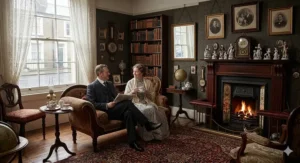
2. The Victorian City: Everyday Life in Dickens’ London by Judith Flanders
The Victorian City takes Charles Dickens as its guide through Victorian London’s markets, gin palaces, and slaughterhouses. Judith Flanders, already acclaimed for her work on the Victorian home, here follows Dickens’s obsessive walking routes through the metropolis, using his journalism and fiction as entry points into lived experience.
Flanders’s central argument is that Dickens appealed to middle-class readers precisely because he offered voyages into parts of London they’d never dare visit themselves. The rookeries of St Giles, the street markets of Covent Garden at 4 AM, the lodging houses where hawker children slept six to a bed—these weren’t abstract social problems in blue books from Parliament. Dickens made them visceral, particular, and (paradoxically) entertaining.
What makes this volume essential for UK readers is Flanders’s attention to the sensory assault of Victorian London. She doesn’t merely tell you the streets stank; she itemises precisely what contributed to that stench: horse dung (roughly 1,000 tonnes daily by the 1890s), rotting vegetables from market stalls, the ‘peculiar and most disagreeable’ smell from tallow-melting factories, and the Thames itself, which during the Great Stink of 1858 drove MPs from the Houses of Parliament with its noxious fumes.
The book’s structure follows functional categories—transport, work, entertainment, death—rather than chronology. This works brilliantly for readers dipping in and out, though it occasionally creates repetition when topics overlap. Flanders integrates Dickens’s fictional scenes with factual evidence from parliamentary reports, showing how Oliver Twist’s workhouse gruel or Little Nell’s wanderings through nocturnal London reflected (and shaped) Victorian perceptions of poverty.
For British readers particularly, Flanders’s work resonates because so much of what she describes remains visible in London’s landscape if you know where to look. The cattle market at Smithfield is now a shopping centre, but the street plan hasn’t changed. The rookeries are gone, but their ghostly outlines persist in odd building lines and mysterious alleys.
UK customer reviews highlight Flanders’s readable style and impressive range, though some note the relentless grimness can become overwhelming. One reader wisely observed that you’ll never view your morning commute the same way after learning what Victorian omnibus passengers endured.
✅ Pros:
- Superb integration of Dickens’s literature with historical fact
- Vivid sensory details bring Victorian London to life
- Excellent for understanding how the poor actually lived
❌ Cons:
- Can feel unrelentingly bleak without sufficient attention to Victorian achievements
- Heavy focus on poverty may disappoint readers seeking broader social coverage
Price range: Typically £10-£16 for paperback editions on Amazon.co.uk. The hardback occasionally appears at reduced prices, worth considering for the superior paper quality if you’re building a permanent reference library.
3. Dickens’s Victorian London, 1839-1901 by Alex Werner & Tony Williams
Dickens’s Victorian London, 1839-1901 is a visual feast that pairs authoritative text with more than 200 archive photographs, most published here for the first time from the Museum of London’s extraordinary collections. Alex Werner, head of History Collections at the Museum of London, and Tony Williams, associate editor of The Dickensian, bring impeccable credentials to this collaboration.
The book’s genius lies in its dual approach: it charts Dickens’s relationship with specific London locations whilst simultaneously documenting how those places looked during his lifetime and shortly after his death. You’ll find photographs of coaching inns that Dickens frequented, the Thames before Bazalgette’s Embankment transformed the riverbanks, the construction of the Metropolitan Underground Line, and the docklands that studded the river from Limehouse to Rotherhithe.
What particularly impresses me is the quality of the photographic reproduction. These aren’t muddy, indistinct images rescued from deteriorating negatives. The Museum of London’s collection includes work by pioneering Victorian photographers who captured London with remarkable clarity—street scenes where you can read shop signs, identify individual faces, and see the texture of cobblestones still slick from morning rain.
The accompanying text links each photograph to Dickens’s life and work. Here’s the church where he married Catherine Hogarth. There’s the Marshalsea Prison where his father was confined for debt, an experience that haunted Dickens throughout his career. The old Temple Bar gateway, photographed before its removal in 1878, stood exactly where Dickens would have passed countless times walking from his office to his clubs.
For UK readers contemplating this purchase, consider whether you want a book to read or a book to inhabit. This is emphatically the latter—a coffee-table volume you’ll return to repeatedly, discovering new details in photographs you’ve examined a dozen times already. It’s also brilliant for sharing; visiting relatives inevitably end up browsing it whilst you’re making tea.
Customer feedback from British buyers emphasises the book’s value for anyone tracing family history in Victorian London (the photographs provide crucial context for understanding ancestors’ living conditions) and for those planning Dickens-themed walks through London.
✅ Pros:
- Exceptional archival photography unavailable elsewhere
- Perfect balance of images and scholarly text
- Excellent value given production quality
❌ Cons:
- Coffee-table format means less portable for reading on trains
- Text sometimes assumes familiarity with Dickens’s novels
Price range: Around £15-£25 depending on whether you buy new or used copies. Amazon.co.uk often has Prime-eligible stock, meaning free next-day delivery if you’re a Prime member—rather helpful when you’ve suddenly realised you need a brilliant gift for a history-loving friend.
4. Dirty Old London: The Victorian Fight Against Filth by Lee Jackson
Dirty Old London tackles the subject most Victorian historians politely avoid: the sheer, overwhelming, nauseating filth of the nineteenth-century metropolis. Lee Jackson, creator of the indispensable victorianlondon.org website, guides us through horse dung, uncollected household rubbish, overflowing cesspools, rotting corpses in overcrowded graveyards, and air thick with coal smoke.
The book’s brilliance lies in transforming what could be merely disgusting into genuinely fascinating social history. Jackson introduces us to the Victorian reformers who battled against dirt—and, crucially, the forces that opposed them. Why did it take decades to build proper sewers? Because powerful vested interests profited from the existing chaos. The night soil men who emptied cesspools, the dustmen who collected ‘pure’ (dog faeces used in leather tanning), the bone-grubbers and rag-pickers—an entire shadow economy depended on London’s filth.
Jackson’s thematic chapters cover streets, cesspools and sewers, the Thames, graveyards, and smoke. Each opens with a visceral description that immediately transports you to Victorian London’s sensory nightmare, then systematically explains how reformers like Edwin Chadwick and Joseph Bazalgette attempted solutions. The frustrations are palpable: reformers knew that contaminated water caused cholera decades before they could persuade politicians to fund infrastructure improvements.
For British readers, this book offers crucial context for understanding London’s modern infrastructure. Every time you flush a toilet or wash dishes, you’re benefiting from the Victorian sanitary revolution that Jackson chronicles. Bazalgette’s sewers still carry the majority of London’s waste—a tribute to Victorian engineering that few Londoners appreciate as they should.
The Times described this as ‘a tightly argued, meticulously researched history of sanitation that reads like a novel’, which rather nails it. Jackson writes with dry wit about profoundly unpleasant topics, making the narrative surprisingly compelling. You’ll finish Dirty Old London with newfound respect for Victorian reformers and profound gratitude that you weren’t born in 1850.
UK customer reviews consistently mention reading this during breakfast was a mistake (fair warning), whilst praising Jackson’s ability to make sanitation history genuinely page-turning. Several readers note using it as a reference for understanding ancestors’ health challenges during the Victorian period.
✅ Pros:
- Tackles crucial topic ignored by other histories
- Witty writing makes unpleasant subject matter readable
- Excellent for understanding public health developments
❌ Cons:
- Not suitable reading during meals (seriously)
- Narrow focus may not satisfy those wanting broader social history
Price range: Typically £9-£14 for paperback on Amazon.co.uk. The Kindle edition often runs slightly cheaper, though the physical book’s photographs of Victorian sanitation infrastructure deserve proper paper reproduction.
5. Walk Through History: Discover Victorian London by Christopher Winn
Walk Through History: Discover Victorian London transforms passive reading into active exploration by guiding you through surviving Victorian architecture and urban planning still visible across central London. Christopher Winn’s walking tours reveal hidden gems most Londoners rush past daily without recognition.
The book organises six detailed walks covering different London areas, each focusing on Victorian-era buildings, monuments, and urban spaces. You’ll discover the 300-foot bell tower at the Houses of Parliament that most visitors never notice, London’s best-preserved high-class Victorian shop near Tottenham Court Road, and the extraordinary fairytale house in Kensington where Gilbert and Sullivan conceived The Mikado.
What makes Winn’s approach particularly valuable for UK readers is its practicality. Each walk includes clear maps, specific directions (‘turn left at the corner past the blue plaque’), and suggestions for cafés and pubs where you can rest between architectural discoveries. The writing strikes an excellent balance between providing substantial historical context and maintaining brevity suitable for consulting whilst actually walking.
I’ve personally followed Winn’s West End route, and his promise holds true: you genuinely do see familiar areas differently after completing his tours. The ‘hidden chapel in Bloomsbury described by Oscar Wilde as the most delightful private chapel in London’ turns out to be tucked down a side street I’d walked past dozens of times without noticing the entrance.
The book’s compact size (easily fits in a jacket pocket or small bag) makes it genuinely practical for carrying during walks, unlike coffee-table volumes that remain decorative but impractical. For anyone living in or visiting London with even passing interest in Victorian history, these walks transform your understanding of how much Victorian architecture survived the Blitz and postwar development.
British customer feedback particularly values Winn’s clear instructions and the convenient book size for actual walking. Several reviewers mention completing all six walks over several weekends, discovering parts of London they’d never properly explored despite living in the capital for years.
✅ Pros:
- Practical compact format perfect for actual walks
- Clear maps and directions avoid getting lost
- Reveals Victorian survivals invisible to casual observation
❌ Cons:
- Limited to central London (nothing on Victorian suburbs or East End)
- Some walks feel rushed trying to cover too much ground
Price range: Around £7-£11 on Amazon.co.uk, making this exceptional value for what amounts to six guided historical tours you’d otherwise pay £15-20 each to experience with a professional guide.
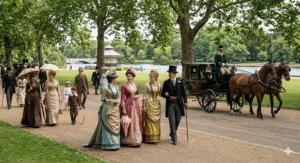
6. London Labour and the London Poor by Henry Mayhew
London Labour and the London Poor occupies unique territory: it’s both primary source and rollicking narrative, compiled from Henry Mayhew’s groundbreaking journalism for the Morning Chronicle in 1849-1850. Mayhew pioneered modern social investigation by conducting hundreds of interviews with London’s labouring poor, recording their voices with unprecedented fidelity.
The result is extraordinary—costers describing their street-selling territories with the precision of military strategists, chimney sweeps recounting their apprenticeships (often beginning at age five or six), mudlarks explaining techniques for scavenging the Thames foreshore at low tide. Mayhew didn’t merely collect statistics about poverty; he gave the Victorian working class something they’d rarely possessed in historical records: their own voices, their own stories, their own humanity.
Reading Mayhew feels distinctly different from traditional histories. When a pure-finder (collector of dog faeces for leather tanning) explains how to identify valuable ‘pure’ versus useless refuse, you’re receiving information directly from someone who performed this work, not filtered through middle-class interpretation. When a street performer describes audience reactions at different London locations, you’re hearing marketing analysis from someone whose livelihood depended on reading crowds.
Multiple editions exist on Amazon.co.uk, from comprehensive multi-volume sets to more manageable single-volume selections. For most readers, I’d recommend the Oxford World’s Classics edition edited by Robert Douglas-Fairhurst, which provides excellent introductory material and footnotes whilst maintaining substantial original content at a reasonable price point (typically £8-£14).
Fair warning: Mayhew’s prose can feel dense by modern standards, with Victorian sentence structures and vocabulary that occasionally require concentration. However, the interviews themselves remain remarkably accessible—working-class Londoners spoke plainly, and Mayhew transcribed faithfully. Persevere through the first chapter and you’ll find the rhythm.
For UK readers researching family history, Mayhew provides invaluable context for understanding ancestor occupations. If your great-great-grandmother was a ‘watercress girl’ or your great-great-grandfather a ‘coster’, Mayhew interviewed people doing exactly those jobs, describing earnings, working conditions, and daily routines.
British customer reviews divide between those who find Mayhew revelatory and those who struggle with the Victorian prose style. Nearly everyone agrees the interviews themselves are fascinating, though some wish for heavier editorial intervention to guide modern readers through the material.
✅ Pros:
- Unmatched primary source authenticity
- Working-class voices rarely preserved elsewhere
- Fascinating details about Victorian occupations
❌ Cons:
- Dense Victorian prose requires concentration
- Can feel overwhelming without editorial guidance
Price range: Varies dramatically by edition—£8-£20 for single-volume abridgements, considerably more for complete multi-volume sets. The Wordsworth Classics edition offers excellent value around £8-£10, whilst the Oxford World’s Classics provides superior scholarly apparatus for £12-£14.
7. Victorian London by Lee Jackson & Eric Nathan
Victorian London (the coffee-table volume, distinct from Jackson’s other works) serves as both visual guide and authoritative text covering what remains of Victorian London in the twenty-first century. Lee Jackson’s encyclopedic knowledge of nineteenth-century London combines with Eric Nathan’s striking photography to create a book that works equally well for armchair browsing and practical exploration.
The book’s genius lies in its dual timeline approach. Archival images from the Victorian period appear alongside contemporary photographs of the same locations, revealing both what’s survived and what’s vanished. You’ll see the Alhambra music hall in Leicester Square as Victorian audiences knew it, then discover what occupies that site today. The Thames riverfront before Bazalgette’s Embankment, then after—a startling transformation that fundamentally altered London’s relationship with its river.
Jackson organises material thematically rather than geographically: chapters on crime and punishment, food and drink, transport, entertainment, and commerce allow readers to trace how specific aspects of Victorian life evolved and left physical traces. The chapter on Victorian pubs is particularly enlightening, showing how gin palaces and music halls transformed working-class leisure—and how many of these establishments survive, hidden behind modern frontages.
For British readers planning actual London exploration, this volume serves as an excellent companion to Christopher Winn’s walking guide. Where Winn provides routes and specific directions, Jackson offers deeper historical context and visual documentation. Used together, they create a comprehensive toolkit for discovering Victorian London.
The book’s larger format (this is definitely a coffee-table volume, not something for your commute) allows Nathan’s photography proper space to breathe. The production quality is exceptional—sharp reproduction of both archival and contemporary images, quality paper stock, and binding that should withstand repeated consultation.
UK customer reviews emphasise the book’s value for anyone interested in London’s architectural evolution and its usefulness for family history research (period photographs often show ancestors’ neighbourhoods with remarkable clarity). Several readers mention buying copies as gifts for overseas relatives wanting to understand London’s Victorian heritage.
✅ Pros:
- Excellent integration of archival and contemporary photography
- Thematic organisation aids understanding of Victorian legacy
- High production quality justifies premium price
❌ Cons:
- Large format less practical for transport
- Heavier emphasis on central London than outer boroughs
Price range: Typically £12-£18 on Amazon.co.uk, with occasional promotions. The hardback’s durability makes it worth considering for anyone building a permanent reference library rather than seeking a quick read.
How Victorian London History Books Illuminate Modern Britain
Understanding Victorian London isn’t merely antiquarian interest—it’s essential context for comprehending modern Britain’s successes and failures. The Victorians bequeathed us infrastructure we still depend upon (Bazalgette’s sewers, the Underground, major railway terminals), social challenges we’re still addressing (income inequality, housing crises, public health disparities), and cultural touchstones that define British identity (Christmas traditions, seaside holidays, detective fiction).
When you read these victorian london history books, you’re not escaping into the past—you’re illuminating the present. Why does London’s housing stock include so many Victorian terraces? Because rapid industrialisation demanded workers’ accommodation, and speculative builders threw up thousands of terraced houses with minimal regulation. Why does Britain have a National Health Service? Partly because Victorian experiences with cholera and typhoid demonstrated that private charity couldn’t address public health crises requiring collective action.
The Victorian period established patterns still visible in British life: the tension between individual liberty and collective welfare, debates about immigration and national identity (the Victorians fretted about Irish immigration with rhetoric eerily similar to modern discussions), and questions about Britain’s role in the world as empire transformed into Commonwealth.
Victorian London for Different Reader Types: Matching Books to Interests
For Dickens Enthusiasts
If you’re drawn to Victorian London through Dickens’s novels, start with either Judith Flanders’s The Victorian City or the Werner/Williams photographic volume Dickens’s Victorian London. Both root their narratives firmly in Dickensian geography and themes whilst providing historical accuracy that fiction necessarily simplifies.
For Architecture and Urban Planning Buffs
Lee Jackson’s coffee-table Victorian London and Christopher Winn’s walking guide form the perfect pairing. Jackson provides comprehensive visual documentation and historical context, whilst Winn offers practical routes for experiencing surviving Victorian architecture firsthand.
For Social History Enthusiasts
Liza Picard’s Victorian London: The Life of a City delivers unmatched breadth and accessibility. If you want deeper dive into specific aspects, supplement with Lee Jackson’s Dirty Old London for sanitation history or Mayhew’s London Labour for working-class perspectives.
For Family History Researchers
Mayhew’s London Labour and the London Poor proves invaluable for understanding ancestor occupations and living conditions. The Werner/Williams photographic volume helps visualise neighbourhoods where ancestors lived, whilst Picard provides context for understanding daily Victorian life across class boundaries.
For Casual Readers Seeking Entertainment
Flanders’s The Victorian City and Jackson’s Dirty Old London both transform potentially dry historical topics into page-turning narratives. Both authors write with wit and verve, making Victorian London accessible without sacrificing scholarly rigour.
Common Mistakes When Buying Victorian London History Books
Mistake 1: Assuming All Editions Are Equal
Multiple publishers produce Mayhew’s London Labour and the London Poor, and editions vary dramatically in quality. The cheapest often lack introductory material helping modern readers contextualise Victorian perspectives. Spend slightly more for Oxford World’s Classics or Penguin editions with scholarly apparatus.
Mistake 2: Overlooking Reading Level Requirements
Not all accessible-looking Victorian histories suit all readers. Mayhew’s original prose requires concentration; several reviewers on Amazon.co.uk mention abandoning it despite fascination with the subject. If you struggle with Victorian writing, start with Picard or Flanders before attempting Mayhew.
Mistake 3: Buying Coffee-Table Books Without Shelf Space
The Werner/Williams and Jackson/Nathan volumes are gorgeous but substantial. Measure your shelf space before purchasing, and consider whether you actually have somewhere to display (and regularly access) a large-format book. There’s little point buying a beautiful volume that immediately goes into storage.
Mistake 4: Ignoring Kindle Options for Portable Reading
Several of these titles offer Kindle editions at reduced prices. If you commute or travel frequently, the Kindle version might serve you better despite losing photographic quality. Picard and Flanders both work excellently as e-books; the photography-heavy volumes obviously don’t.
Mistake 5: Expecting Comprehensive Coverage from Specialised Works
Jackson’s Dirty Old London focuses narrowly on sanitation; don’t expect comprehensive social history. Winn’s walking guide covers central London only; Victorian suburbs receive minimal attention. Understand each book’s scope before purchasing to avoid disappointment.
Victorian London Books vs Contemporary Guides: Why Historical Perspective Matters
Modern London guides focus on current attractions and practical visitor information—where to eat, which Tube line to take, whether you need to book tickets in advance. Victorian London history books serve different purposes: they reveal layers of meaning invisible to casual observation, transforming familiar streets into palimpsests where past and present coexist.
When you walk past the Houses of Parliament after reading Winn or Jackson, you don’t just see an impressive Victorian Gothic revival building—you understand it replaced the medieval Palace of Westminster destroyed by fire in 1834, that its clock tower design was controversial, that its proximity to the Thames created sewerage challenges Bazalgette had to solve. The building becomes a story rather than merely a landmark.
This historical perspective enriches modern London experience immeasurably. Contemporary guides tell you Harrods is an upscale department store in Knightsbridge; Picard explains how Victorian department stores revolutionised shopping by allowing women respectable public spaces beyond home and church. The difference transforms shopping from activity into cultural archaeology.
How to Use Victorian London History Books for Maximum Benefit
Create a Reading Sequence
Don’t attempt all seven books simultaneously. Start with Picard for comprehensive overview, then branch into specific interests (Dickens, sanitation, walking tours, working-class voices). This progressive approach builds knowledge systematically rather than overwhelming you with conflicting perspectives.
Combine Reading with London Exploration
Read Winn’s walking guide, then actually walk his routes with book in hand. Follow up with Jackson’s photographic volume to see archival images of locations you’ve just visited. The combination of reading, walking, and visual comparison creates far stronger understanding than reading alone.
Use Books as Gateway to Primary Sources
These volumes introduce topics and themes worth deeper exploration. Follow footnotes to primary sources. Visit archives mentioned by authors. The British Library holds extraordinary Victorian material available to registered readers; the Wellcome Collection offers fascinating exhibitions on Victorian medicine and public health; The National Archives at Kew contains census records, parish registers, and governmental documents illuminating Victorian administration.
Keep Notes for Future Reference
Victorian London study rewards note-taking. Create an index of topics that particularly interest you—street markets, specific neighbourhoods, occupations, public health reforms—with page references across multiple books. This creates a personal reference system far more useful than relying on published indices.
Price Comparison: Getting Best Value on Victorian London History Books
Amazon.co.uk prices fluctuate considerably for these titles, particularly around major shopping events (Black Friday, Prime Day). Set price alerts if you’re not in immediate need. Several observations from monitoring prices over the past year:
Paperback vs Hardback: Paperbacks typically cost 30-40% less than hardbacks, though the Werner/Williams and Jackson/Nathan photography-heavy volumes justify hardback investment for superior image reproduction and durability.
New vs Used: Used copies often offer substantial savings (50-70% off new price), though condition varies. For heavily illustrated volumes, inspect photographs of actual copy before purchasing—water damage or torn pages significantly impact value.
Kindle Pricing: E-book editions typically cost £3-£5 less than paperbacks. However, photography-heavy volumes lose considerable value in Kindle format. Picard and Flanders translate excellently to Kindle; the visual volumes don’t.
Bundle Opportunities: Occasionally Amazon.co.uk offers ‘frequently bought together’ discounts when purchasing multiple titles. If you’re planning to buy several books, check whether bundling saves money.
Prime Benefits: Amazon Prime members receive free next-day delivery on Prime-eligible items (most of these titles qualify), eliminating the £3-£4 delivery charge that makes single-book purchases less economical for non-Prime members.
Frequently Asked Questions
❓ What's the single best Victorian London history book for beginners?
❓ Are these Victorian London history books suitable for US readers or only UK audiences?
❓ Which Victorian London book includes the best archival photography?
❓ Can I use these books for academic research or are they too popular?
❓ Do any Victorian London history books cover the East End specifically?
Conclusion: Choosing Your Victorian London Journey
Victorian London continues fascinating readers precisely because it feels simultaneously alien and familiar—a world close enough to touch yet profoundly different from our own. The city that invented flushing toilets also tolerated human waste accumulating in basement cesspools. The metropolis that built the world’s first underground railway maintained workhouses where parents could sell children for £12. These contradictions define the Victorian experience and explain why we remain captivated 120-odd years after Victoria’s death.
The seven victorian london history books reviewed here offer different pathways into this vanished world. Liza Picard guides you through daily life with warmth and wit. Judith Flanders follows Dickens into London’s darkest corners. The Werner/Williams photographic volume lets you see Victorian faces staring directly into the camera. Lee Jackson reveals the disgusting underbelly of sanitation reform. Christopher Winn shows you surviving Victorian architecture hidden in plain sight. Henry Mayhew gives voice to the labouring poor themselves. And Jackson’s coffee-table volume documents what remains and what’s vanished.
Which book suits you best? That depends entirely on what draws you to Victorian London. If you want comprehensive social history accessible to casual readers, choose Picard. If Dickens brought you here, Flanders or the Werner/Williams volume will satisfy. Architecture enthusiasts need Jackson’s photographic volume and Winn’s walking guide. Anyone researching family history should start with Mayhew’s first-hand interviews.
The Victorian capital’s influence extends far beyond Britain’s shores, but for UK readers particularly, understanding Victorian London illuminates the city we inhabit today. Every time you ride the Tube, you’re using Victorian infrastructure. Every time you flush a toilet, you’re benefiting from Victorian sanitary reform. Every time you visit a public park or museum, you’re enjoying Victorian innovations in public space. These books don’t merely describe the past—they explain the present.
Start with one volume that matches your interests. Follow footnotes to primary sources. Walk London’s streets with new eyes. The Victorian capital awaits your discovery, layer upon fascinating layer.
Recommended for You
- 7 Best Queen Victoria Biography Books UK 2026
- 7 Best Victorian History Books That’ll Change Everything (UK 2026)
- 7 Best Elizabeth I History Books UK: Virgin Queen Guide 2026
Disclaimer: This article contains affiliate links. As an Amazon Associate, I earn from qualifying purchases. If you purchase products through these links, we may earn a small commission at no additional cost to you.
✨ Found this helpful? Share it with your mates! 💬🤗
