In This Article
The Second World War remains the most documented conflict in human history, yet fresh perspectives and gripping narratives continue to emerge. According to The Imperial War Museum, the conflict involved over 100 million personnel from more than 30 countries and resulted in approximately 70-85 million fatalities. Whether you’re building a ww2 history collection or searching for your first comprehensive guide to the 1939-1945 history books, the British market offers exceptional choices in 2026.
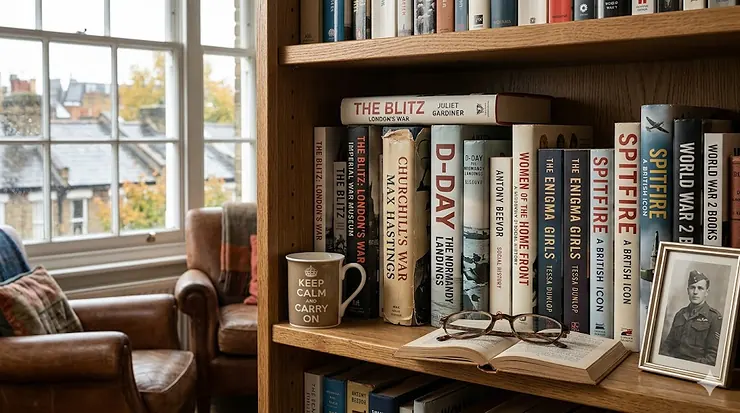
What most buyers overlook when assembling a world war 2 book collection is that not all comprehensive histories are created equal. Some excel at strategic overview whilst others dive deep into personal testimony. The key is understanding which approach suits your reading style—and crucially, which books are actually worth the shelf space in British homes where storage comes at a premium.
For UK readers, the challenge isn’t finding second world war books—it’s identifying which titles deliver genuine insight rather than rehashing familiar narratives. Having reviewed dozens of wwii comprehensive guides available on Amazon.co.uk, I’ve identified seven that stand head and shoulders above the rest, each offering something distinctive for different reader profiles.
Quick Comparison: Top 7 World War 2 Books at a Glance
| Book | Best For | Length | Price Range | UK Availability |
|---|---|---|---|---|
| The Second World War (Beevor) | Comprehensive overview | 880 pages | £15-£25 | Prime eligible |
| All Hell Let Loose (Hastings) | Human experience focus | 768 pages | £12-£20 | Prime eligible |
| The Second World War (Churchill) | Primary source insight | 6 volumes | £80-£150 | Special order |
| Stalingrad (Beevor) | Eastern Front detail | 544 pages | £10-£18 | Prime eligible |
| Bloodlands (Snyder) | Eastern European perspective | 544 pages | £10-£16 | Prime eligible |
| D-Day: The Battle for Normandy (Beevor) | Western Front focus | 608 pages | £12-£22 | Prime eligible |
| Band of Brothers (Ambrose) | Personal unit history | 336 pages | £8-£15 | Prime eligible |
From this comparison, readers seeking a single-volume overview should gravitate towards Beevor or Hastings, whilst those wanting unfiltered historical documentation will find Churchill’s six-volume set unparalleled. The price differential reflects this—Churchill’s complete set represents a significant investment (typically £100-£150 for decent condition hardbacks), but you’re essentially purchasing the war through the eyes of one of its principal architects. For British readers on a budget, starting with Hastings’ All Hell Let Loose at around £15 offers exceptional value, as his accessible prose style makes 768 pages feel considerably shorter.
💬 Just one click — help others make better buying decisions too!😊
Top 7 World War 2 Books: Expert Analysis
1. The Second World War by Antony Beevor
Beevor’s magnum opus delivers what its title promises—a genuinely global account of the entire conflict from 1939 to 1945. Unlike many British historians who focus disproportionately on the Western theatre, Beevor dedicates substantial coverage to the Eastern Front, Pacific campaigns, and the often-overlooked China-Burma-India operations. As noted by historians at King’s College London, understanding the war’s full scope requires examining all theatres equally—a principle Beevor follows meticulously. The 880-page hardback (or paperback at a lighter carry weight) synthesises decades of archival research across multiple languages.
What sets this apart for UK readers is Beevor’s balanced perspective on Britain’s role—neither jingoistic nor dismissive. He’s remarkably frank about British failures whilst celebrating genuine achievements. The coverage of the Soviet Union’s titanic struggle feels particularly prescient given recent geopolitics. Expect detailed maps (though Kindle users should note these don’t always render brilliantly on smaller screens) and extensive endnotes.
Customer feedback on Amazon.co.uk consistently highlights Beevor’s narrative drive. Rather than drowning readers in divisional movements, he intersperses strategic analysis with gut-wrenching personal accounts—the sort of detail that makes you pause and look out the window for a moment. UK buyers appreciate that British military operations receive proper context without nationalistic chest-beating.
Pros:
- Genuinely global scope covering all major theatres
- Accessible prose despite massive scale
- Extensive use of Soviet archives unavailable to previous generations
Cons:
- Maps occasionally lack clarity in paperback edition
- Some readers find the pace uneven between theatres
Price & Value: Around £18-£25 depending on format. For a single-volume overview of the entire war, the cost-per-insight ratio is frankly outstanding. This is the book to buy if you’re only buying one comprehensive second world war era account.
2. All Hell Let Loose: The World at War 1939-1945 by Max Hastings
Max Hastings brings something different—this isn’t primarily about generals and grand strategy. It’s about what the war felt like for the millions caught up in it. Hastings, a former war correspondent himself, understands that history is made by people, not abstract forces. As BBC History Magazine frequently highlights in their WW2 coverage, personal narratives often reveal truths that strategic overviews miss. The 768 pages draw heavily on diaries, letters, and firsthand accounts from combatants and civilians across every nation involved.
For British readers, this approach proves particularly illuminating when Hastings examines the home front. His coverage of rationing, the Blitz, and Britain’s evolving relationship with American forces brings fresh perspective to familiar territory. He’s equally strong on topics UK audiences often overlook—the Bengal famine of 1943, for instance, receives the serious treatment it deserves.
The book’s structure follows a roughly chronological path but frequently zooms in on individual experiences. You’ll read about a Japanese pilot preparing for a kamikaze mission, a British housewife queuing for tinned meat, and a German tank commander freezing on the Russian steppe—sometimes within the same chapter. This technique could feel disjointed, but Hastings’ prose is so assured that it flows naturally.
Amazon.co.uk reviewers frequently describe this as the ww2 history collection centrepiece they return to repeatedly. The hardback’s larger typeface makes it easier on the eyes for extended reading sessions—relevant for older readers or anyone who finds themselves reading by lamplight through British winter evenings.
Pros:
- Prioritises human experience without sacrificing historical rigour
- Excellent coverage of non-European theatres
- Highly readable prose accessible to non-specialists
Cons:
- Strategic military analysis takes backseat to personal narrative
- Some military history purists find it too “soft”
Price & Value: Typically £12-£20 across formats. Represents excellent value for a Sunday Times bestseller that’s won multiple awards. The Kindle edition is particularly good value at under £10 during sales.
3. The Second World War (Six Volumes) by Winston S. Churchill
Churchill’s six-volume memoir-history stands alone as a primary historical source. Written by the man who led Britain through its darkest hour, these books offer unparalleled insight into wartime decision-making. According to Wikipedia’s comprehensive entry, Churchill began writing these memoirs almost immediately after leaving office in 1945, and they earned him the Nobel Prize for Literature in 1953. The six volumes—The Gathering Storm, Their Finest Hour, The Grand Alliance, The Hinge of Fate, Closing the Ring, and Triumph and Tragedy—chronicle the conflict from Churchill’s unique vantage point.
What British readers must understand is that this isn’t purely objective history. Churchill wrote these books whilst serving as Leader of the Opposition in the late 1940s and early 1950s, with one eye on his legacy. He had privileged access to official documents but also axes to grind. The result is history that’s simultaneously invaluable and partisan—which makes it fascinating. You’re not just learning what happened; you’re understanding how Churchill wanted posterity to view it.
The prose is magnificent—this is Churchill at his literary best, the same pen that won him the Nobel Prize for Literature. Sentences roll with the rhythm of his famous speeches. Reading these volumes in a comfortable chair with a cup of tea becomes less about information absorption and more about experiencing history through one of its principal actors.
UK buyers should note that complete sets vary wildly in price and condition on Amazon.co.uk. Folio Society editions can exceed £300, whilst acceptable reading copies of older printings start around £80-£100. This is an investment purchase, often bought gradually volume-by-volume rather than as a complete set.
Pros:
- Unmatched primary source value
- Churchill’s magnificent prose style
- Extensive inclusion of original correspondence and minutes
Cons:
- Churchill’s bias colours the narrative
- Length can intimidate (over 4,000 pages total)
- Some information remains classified even in these volumes
Price & Value: £80-£150 for complete sets in decent condition. This isn’t casual reading—it’s a reference library centrepiece. For serious students of the second world war era, it’s indispensable despite the cost.
4. Stalingrad by Antony Beevor
Before Beevor wrote his comprehensive overview, he made his reputation with this unflinching account of history’s bloodiest battle. The siege of Stalingrad from August 1942 to February 1943 claimed over a million lives and marked the psychological turning point of the European war. As The Guardian’s history section has extensively documented, the Battle of Stalingrad represented a fundamental shift in the war’s momentum that reverberated across all theatres. Beevor’s 544-page masterwork draws extensively on Soviet archives opened in the 1990s, providing detail impossible for earlier historians.
What makes this essential for UK readers is its revelation of just how different the Eastern Front was from Western operations. British and American forces faced a formidable Wehrmacht, certainly—but they never encountered the apocalyptic conditions that characterised Stalingrad. Beevor doesn’t spare the reader: you’ll read about Soviet soldiers eating sawdust bread, German troops freezing to death in inadequate winter gear, and both sides committing atrocities that make comfortable reading impossible.
The book’s structure alternates between strategic overview and intimate detail. You’ll understand why Hitler’s obsession with capturing the city bearing Stalin’s name proved catastrophic, then immediately be thrust into a sniper duel in the ruins of a tractor factory. This oscillation between macro and micro perspectives is Beevor’s trademark technique, perfected in this breakthrough work.
Amazon.co.uk customers consistently rate this as Beevor’s finest book—praise indeed given his later successes. The paperback edition fits easily into a jacket pocket for commute reading, though be warned: Stalingrad makes for grim tube journeys.
Pros:
- Unprecedented access to Soviet archives
- Perfectly balanced between strategic and personal scales
- Essential for understanding the Eastern Front’s significance
Cons:
- Relentlessly harrowing—not light reading
- Western Front receives minimal coverage
- Maps essential but sometimes unclear in older editions
Price & Value: Around £10-£18 depending on format. For a Wolfson Prize-winning history, this represents exceptional value. Often available for under £10 in paperback during Amazon promotions.
5. Bloodlands: Europe Between Hitler and Stalin by Timothy Snyder
Timothy Snyder’s Bloodlands examines a geographic region and timeframe often overshadowed in British narratives—the lands between Germany and Russia where fourteen million civilians died between 1933 and 1945. According to The National Archives UK, British wartime documents increasingly acknowledge the scale of civilian suffering in Eastern Europe, though full understanding only emerged decades after the war. This isn’t a conventional war history; it’s a study of two murderous ideologies competing for control of the same territory, with civilians caught between them.
For UK readers, Snyder’s thesis proves eye-opening. British accounts typically focus on the Holocaust as primarily a German phenomenon, but Snyder demonstrates how Stalin’s policies of deliberate starvation and ethnic cleansing preceded and enabled Nazi atrocities. The Ukrainian Holodomor, the Great Terror, the mass shootings of Polish officers, the siege of Leningrad—Snyder connects events usually treated separately into one coherent, horrifying narrative.
The book demands engagement. Snyder writes with academic rigour but manages to convey the individual humanity of the victims. He includes haunting testimony—letters thrown from deportation trains, diary entries found on corpses. This isn’t gratuitous; it’s essential context for understanding Eastern Europe’s horrific mid-century experience.
British buyers should note that Bloodlands complements rather than replaces conventional war histories. It focuses on civilian mass murder rather than military operations. If you’re building a comprehensive 1939-1945 history books collection, this provides crucial perspective typically absent from British and American narratives.
Pros:
- Groundbreaking synthesis of Eastern European history
- Extensive use of sources in multiple Eastern European languages
- Essential for understanding current Eastern European geopolitics
Cons:
- Limited coverage of military operations
- Academically rigorous style less accessible than Beevor or Hastings
- Relentlessly grim—no lighter moments
Price & Value: Typically £10-£16 on Amazon.co.uk. For a Hannah Arendt Prize-winning work that fundamentally challenges conventional understanding, the price is more than justified.
6. D-Day: The Battle for Normandy by Antony Beevor
Beevor returns with his masterful account of Operation Overlord and the subsequent campaign that liberated France. Unlike his comprehensive overview, this 608-page volume focuses intensely on June to August 1944, from the landings to the liberation of Paris. The BBC’s extensive D-Day 80th anniversary coverage demonstrates the enduring British interest in this pivotal campaign. The depth of detail possible with this narrower focus is remarkable—Beevor draws on archives in six countries, including firsthand testimony from French civilians caught in the crossfire.
For British readers, this offers essential context often missing from patriotic narratives. Beevor doesn’t shy from British failures—Montgomery’s ego, the sluggish progress around Caen, the occasionally fraught Anglo-American relations. But he also celebrates genuine British achievements, particularly the contribution of specialised armour and the Royal Navy’s crucial role.
What distinguishes this from other D-Day histories is the attention given to French civilian suffering. Allied bombing killed thousands of French civilians, a fact often glossed over in triumphalist accounts. Beevor’s unflinching honesty about these “collateral” deaths adds moral weight to his narrative.
The book’s pace mirrors the campaign itself—the tension of D-Day, the grinding attrition of the Normandy bocage fighting, then the exhilarating breakout and race to Paris. Amazon.co.uk reviewers particularly appreciate the detailed maps, essential for following the complex manoeuvres through Normandy’s challenging terrain.
Pros:
- Unparalleled detail on the Normandy campaign
- Balanced treatment of all Allied nations’ contributions
- Excellent integration of French civilian perspective
Cons:
- Narrow timeframe means broader context sometimes lacking
- Montgomery enthusiasts may find assessment harsh
- Heavy focus on operational detail occasionally bogs down narrative
Price & Value: Around £12-£22 depending on edition. The hardback often appears in charity shops as gifts that went unread—worth checking before buying new. Represents solid value for 608 pages of meticulously researched history.
7. Band of Brothers by Stephen Ambrose
Stephen Ambrose’s account of Easy Company, 506th Parachute Infantry Regiment, 101st Airborne Division, takes a completely different approach from the comprehensive histories above. This is the Second World War through the eyes of 147 American paratroopers, from their brutal training in Georgia through D-Day, Market Garden, the Battle of the Bulge, and finally to Hitler’s Eagle’s Nest.
British readers should understand this isn’t remotely objective history—it’s intimate portraiture. Ambrose interviewed the survivors extensively, drawing on their journals and letters to create a narrative that often reads more like a novel than military history. The book inspired the acclaimed HBO miniseries, which followed the text remarkably faithfully.
What makes this valuable for UK audiences is its window into the American military experience. British and American forces fought alongside each other but experienced the war quite differently. The democratic (some might say indisciplined) nature of American units, the soldiers’ resourcefulness, their comfort with improvisation—these cultural characteristics emerge vividly. It’s also a useful corrective to narratives that downplay the American ground forces’ contribution compared to the Soviet Union’s.
The 336-page paperback reads quickly—you can knock it off in a weekend. That accessibility makes it perfect for readers intimidated by 800-page tomes. It’s also an excellent gift for younger readers (16+) interested in world war 2 book collection but unsure where to start.
Pros:
- Highly readable, narrative-driven approach
- Excellent insight into American military culture
- Short enough to maintain momentum throughout
Cons:
- Limited strategic context
- Focuses exclusively on American perspective
- Some historians question Ambrose’s scholarly rigour
Price & Value: Typically £8-£15 on Amazon.co.uk, often cheaper still in sales. At this price point, it’s impulse-purchase territory. Even readers who prefer more comprehensive histories often keep this for the human stories it tells so effectively.
How to Choose World War 2 Books for Your UK Collection
Building a worthwhile second world war books collection isn’t about accumulating titles—it’s about selecting works that complement each other whilst matching your reading preferences and available time. Here’s how to approach it strategically.
Start with your interest anchor. Most people come to WW2 history through a specific entry point: family stories, a particular battle, the Holocaust, the home front, technological developments, or political leadership. Identify yours, then buy one book that addresses it directly before branching out. If your grandfather fought at Monte Cassino, start with a book on the Italian campaign rather than a Pacific theatre history.
Consider reading pace versus comprehensiveness. Massive single-volume histories like Beevor’s 880-page opus deliver exceptional breadth but require sustained commitment. If you’ve got a two-hour daily commute via train, they’re perfect. If you’re snatching twenty minutes before bed whilst juggling work and family, shorter focused studies like Band of Brothers prove more satisfying. There’s no virtue in buying books you’ll never finish.
Factor in UK storage realities. British homes, particularly flats and terraced houses, don’t offer American-style basement storage. Churchill’s six-volume set requires nearly 30cm of shelf space and weighs several kilograms—lovely to own, but problematic if you’re living in a one-bedroom flat in Zone 3. Kindle editions solve this for purely reading purposes, though serious students will still want physical books for cross-referencing and annotation.
Mix perspectives and nationalities. A collection comprising only British authors’ accounts of British operations leaves massive gaps. Balance Hastings with Snyder to understand Eastern European experience. Read both Beevor (British) and Ambrose (American) on Normandy. As researchers at Oxford University’s Changing Character of War Centre emphasize, understanding modern conflict requires multiple national perspectives. Include at least one translation from a non-English original if possible, though finding these on Amazon.co.uk requires more searching.
Budget for quality over quantity. Three excellent books thoroughly read trump ten mediocre ones skimmed. The titles recommended above range from £8 to £150, but the expensive ones (Churchill’s set) are purchases you’ll own for life and possibly pass down. As Which? consumer guidance consistently advises for any significant purchase, investment in quality delivers better long-term value. If funds are limited, better to buy Hastings’ All Hell Let Loose now and save for Churchill later than to fill your shelf with £5 remaindered books you’ll never respect.
Consider companion memoirs. Once you’ve established foundational knowledge through comprehensive histories, individual memoirs add colour and depth. After reading about Stalingrad in Beevor’s account, for instance, Vasily Grossman’s A Writer at War provides the perspective of a Soviet war correspondent who witnessed it firsthand.
Check UK-specific requirements. Some American-published military histories use non-metric measurements and American military terminology that can jar British readers. Look for UK editions where available—publishers often make small adjustments for British audiences. Also verify that Amazon.co.uk has the book in stock; titles listed but “temporarily unavailable” often never reappear.
Building Your World War 2 History Collection: A Practical Framework
Here’s a structured approach for assembling a well-rounded wwii comprehensive guides library suitable for British homes and reading habits.
Foundation Level (1-2 books, £15-£40): Start with either Beevor’s The Second World War or Hastings’ All Hell Let Loose. Both provide comprehensive overview suitable for readers new to the subject. Beevor offers broader global scope; Hastings prioritises human experience. Can’t choose? Buy both—they complement rather than duplicate each other.
Expansion Level (3-5 books, additional £30-£60): Add focused studies on specific theatres or aspects that interest you most. Recommended combinations:
- Stalingrad + D-Day (both Beevor) for Eastern and Western Front depth
- Bloodlands (Snyder) for essential Eastern European civilian perspective
- Band of Brothers (Ambrose) for personal unit-level experience
Comprehensive Level (6-10 books, additional £60-£120): Now branch into specialised topics: air war, naval operations, intelligence, specific campaigns, individual biographies, or political leadership. Consider adding Churchill’s memoirs at this stage if shelf space permits.
Scholarly Level (10+ books): Once you’ve got solid foundation and specialisation, start collecting academic monographs on narrow topics: logistics, specific weapons systems, diplomatic relations, economic mobilisation, or comparative studies of military effectiveness.
For Each Purchase, Ask:
- Does this cover territory my existing books don’t?
- Will I actually read all 800 pages or am I buying it to feel accomplished?
- Do I have somewhere to store it long-term?
- Can I afford the hardback I’ll want to keep, or should I buy the paperback I’ll actually read?
Real-World Reading Scenarios: Matching Books to British Lifestyles
The London Commuter: You’ve got 45 minutes each way on the tube, but it’s crowded and you’re often standing. Solution: Kindle or paperback editions that can be read one-handed. Hastings’ All Hell Let Loose or Ambrose’s Band of Brothers work brilliantly. Avoid Churchill’s volumes—too heavy to hold whilst gripping a handrail at Waterloo.
The Northern Reader with Winter Evenings: Long dark nights from October through March mean serious reading time by the fire. Solution: This is when you tackle Beevor’s comprehensive history or Churchill’s six volumes. The Northern climate is perfect for disappearing into 1940s Europe for hours at a time.
The Midlands Family Historian: Your grandfather fought in the war but never spoke about it much. You’ve inherited his medals and want context. Solution: Start with the comprehensive history covering his theatre, then narrow down. If he was in North Africa, you’ll need Rick Atkinson’s Liberation Trilogy (not covered here but essential for that campaign). For Normandy, Beevor’s D-Day provides detail. Match the history to his service record.
The Scottish Academic: You’re doing postgraduate work touching on WW2’s Eastern European dimension. Solution: Snyder’s Bloodlands is non-negotiable. Follow with specialist academic monographs from university presses. The comprehensive popular histories, whilst excellent, won’t provide the historiographical rigour your thesis requires.
The Welsh Sixth-Former: You’re revising for A-Level History and need accessible supplementary reading beyond your textbook. Solution: Hastings or Ambrose. Both are readable enough to engage without extensive prior knowledge but substantial enough to deepen understanding. Avoid starting with Churchill—the prose is magnificent but the perspective too particular for exam purposes.
Common Mistakes When Buying World War 2 Books in the UK
Mistake 1: Buying American editions with £ to $ conversion confusion. Amazon.co.uk sometimes lists American editions of books available in UK editions. You’ll end up with a book where “the defense” grates every time you read it, measurements are in miles and yards, and military terminology differs. Always check for “UK edition” or verify the publisher is British.
Mistake 2: Impulse-buying every well-reviewed book. The algorithm bombards you with recommendations. Resist. Each new purchase should fill a specific gap in your collection. If you own Beevor’s comprehensive history, you don’t need three other single-volume overviews—you need focused studies that go deeper on particular aspects.
Mistake 3: Neglecting Eastern European perspectives. British and American authors dominate UK Amazon bestseller lists. This creates the false impression that the war was primarily a Western affair. Reality: according to Wikipedia’s detailed analysis of World War II casualties, approximately 90% of German military casualties occurred on the Eastern Front. Buy at least one book that centres Eastern European experience, even if it’s harder going.
Mistake 4: Choosing books by length rather than quality. Longer doesn’t mean better. Some 300-page focused studies deliver more insight than 900-page overwrought doorstoppers. Judge by reviews, author credentials, and whether the length matches the subject’s scope—not by pure page count.
Mistake 5: Buying books you “should” read rather than books you’ll actually read. Everyone acknowledges Churchill’s six volumes are important. But if dense political-military memoir isn’t your cup of tea, they’ll gather dust. Better to read Hastings cover-to-cover than to abandon Churchill halfway through Volume 2 and feel guilty about it.
Mistake 6: Ignoring the British climate’s effect on reading habits. Dark wet winters encourage hefty histories. Bright summer evenings don’t. If you’re buying in July, consider whether you’ll actually sit indoors with 800 pages of Stalingrad when you could be in the beer garden. Seasonal reading patterns are real—plan accordingly.
Mistake 7: Overlooking second-hand and charity shop options. Brand new books from Amazon.co.uk are convenient, but British charity shops overflow with military history donated by downsizing pensioners. You’ll find excellent hardback editions at £3-£5 that cost £25 new. Check your local Oxfam before clicking “buy now.”
Frequently Asked Questions
❓ What's the single best world war 2 books for beginners in the UK?
❓ Are Kindle editions of second world war books as good as physical copies?
❓ How long does it typically take to read a comprehensive ww2 history collection book like Beevor's?
❓ Do I need to read 1939-1945 history books in any particular order?
❓ Are Churchill's six-volume world war 2 book collection still relevant in 2026?
Conclusion: Building Your Essential World War 2 Books Collection
The Second World War’s complexity means no single book, however comprehensive, tells the complete story. As The Telegraph’s book reviews section regularly observes, the best historical understanding comes from reading multiple perspectives rather than relying on any single narrative. The seven titles reviewed here each contribute something distinctive to understanding history’s most cataclysmic conflict. For British readers in 2026, the sweet spot lies in owning 3-5 core texts that complement each other’s strengths.
My recommended starter collection for most UK readers: Hastings’ All Hell Let Loose for overall narrative, Beevor’s Stalingrad for Eastern Front depth, and Snyder’s Bloodlands for crucial civilian perspective. This trio costs around £35-£50 combined and provides solid foundation for understanding the war’s major dimensions. From there, expand based on your developing interests—whether that’s Churchill’s memoirs, specific campaign studies, or personal accounts like Band of Brothers.
Remember that British military history exists within broader European narratives. Our national story—from Dunkirk through the Blitz to D-Day—forms one thread in a tapestry that includes Soviet sacrifice, American industrial might, and the suffering of millions of Europeans caught between tyrannies. The best world war 2 books help us understand that larger picture whilst honouring the particular experiences of those who fought and died.
Whatever your starting point, Amazon.co.uk’s extensive selection ensures you’ll find these titles readily available, often with Prime next-day delivery to anywhere in the UK. Building a meaningful second world war era collection isn’t a race—take your time, read thoroughly, and let each book deepen your understanding before adding the next.
Recommended for You
- 7 Best Victorian London History Books That Transform Your Understanding (2026)
- 7 Best Queen Victoria Biography Books UK 2026
- 7 Best Victorian History Books That’ll Change Everything (UK 2026)
Disclaimer: This article contains affiliate links. As an Amazon Associate, I earn from qualifying purchases. If you purchase products through these links, we may earn a small commission at no additional cost to you.
✨ Found this helpful? Share it with your mates! 💬🤗
