

In This Article
More than eight decades after Allied forces stormed the beaches of Normandy, d day history books remain amongst the most compelling reads in military literature. The invasion of 6 June 1944 represents not merely a tactical victory but a turning point in human civilisation—the moment when free nations pushed back against tyranny with unprecedented coordination and sacrifice.

What draws British readers to these accounts isn’t just national pride, though our forces played a crucial role alongside American and Canadian troops. Rather, it’s the deeply human stories of ordinary people thrust into extraordinary circumstances. These normandy invasion books capture the terror of young soldiers wading through surf under withering fire, the meticulous planning by commanders gambling with history itself, and the resilience of French civilians caught in the crossfire.
The best d day history books available on Amazon.co.uk in 2026 offer something Amazon product listings cannot: context, analysis, and the ability to transport you to Omaha Beach or the cliffs of Pointe du Hoc. Whether you’re a history enthusiast seeking operation overlord books with forensic detail, or simply curious about one of the 20th century’s defining moments, the right book transforms dry facts into visceral experience. This guide evaluates seven standout titles, examining not just what they cover, but how they’ll enrich your understanding of the normandy landings history and the d-day veterans stories that shaped our world.
Quick Comparison: Top D-Day History Books at a Glance
| Book Title | Author | Best For | Approach | Price Range |
|---|---|---|---|---|
| D-Day: The Battle for Normandy | Antony Beevor | Comprehensive coverage | Archival research, all sides | £10-£15 |
| D-Day June 6, 1944 | Stephen E. Ambrose | Veteran perspectives | 1,400+ interviews | £9-£14 |
| The Longest Day | Cornelius Ryan | Classic narrative | Hour-by-hour account | £8-£12 |
| Normandy ’44 | James Holland | Strategic analysis | Logistics and planning | £12-£18 |
| D-Day: The Soldiers’ Story | Giles Milton | Personal testimonies | Individual experiences | £9-£13 |
| D-Day: A Photographic History | Martin Morgan | Visual learners | 450 photographs | £15-£22 |
| Voices from D-Day | Jon E. Lewis | Eyewitness accounts | First-person narratives | £10-£14 |
From this comparison, it’s clear that British readers benefit from exceptional variety. If you’re tackling the subject for the first time, Beevor’s comprehensive approach or Ryan’s classic narrative offer accessible entry points. For those who’ve already grasped the basics, Holland’s strategic focus or Milton’s intimate testimonies provide fresh angles. What’s particularly useful about these price ranges—all comfortably under £25 for free delivery on Amazon.co.uk—is that you can combine two or three complementary titles without breaking the bank, building a rounded perspective that no single volume can provide.
💬 Just one click — help others make better buying decisions too!😊
Top 7 D Day History Books: Expert Analysis
1. D-Day: The Battle for Normandy by Antony Beevor
Antony Beevor’s masterwork stands as perhaps the most complete single-volume account of the normandy invasion books currently available on Amazon.co.uk. This isn’t merely a retelling of the beaches; Beevor traces the campaign from the decision to launch in early June through to the liberation of Paris nearly three months later.
What sets this apart is Beevor’s archival work across thirty repositories in six countries. He excavates testimonies from not just Allied soldiers but Wehrmacht defenders and French civilians—the latter often overlooked in anglo-centric accounts. The result reads less like dry military history and more like witnessing the campaign unfold through a kaleidoscope of perspectives. You’ll encounter German commanders frantically requesting reinforcements that Hitler’s paranoia withholds, British tank crews cursing the inferior Cromwell compared to German Panthers, and Norman farmers watching their orchards become killing fields.
For UK readers specifically, Beevor doesn’t soft-pedal uncomfortable truths about Allied equipment deficiencies or command friction between Montgomery and his American counterparts. The British 50th Division at Gold Beach receives proper attention alongside the more famous American landings. Customer reviews on Amazon.co.uk consistently praise the book’s balance—neither glorifying war nor diminishing the achievement.
Pros:
✅ Unmatched archival depth drawing from six countries’ records
✅ Balances strategic overview with visceral combat detail
✅ Addresses French civilian suffering often ignored elsewhere
Cons:
❌ Dense at times—not ideal for casual bedtime reading
❌ Focus extends beyond D-Day itself, which may not suit readers wanting just 6 June detail
The book typically sits in the £10-£15 range on Amazon.co.uk, representing exceptional value given its 600-page heft and Beevor’s Pultizer-calibre research. If you’re buying just one d day history book, this is the safest bet for comprehensive understanding.
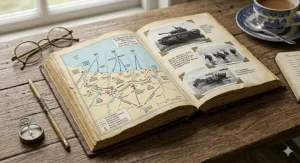
2. D-Day: June 6, 1944 by Stephen E. Ambrose
Stephen Ambrose’s classic demonstrates what happens when you combine academic rigour with a storyteller’s instinct. Based on over 1,400 veteran interviews conducted whilst memories remained fresh, this book reconstructs 6 June 1944 from midnight to midnight—a relentless 24-hour narrative that never lets you forget the human cost.
Ambrose’s genius lies in structure. Rather than simply following one unit or beach chronologically, he weaves between levels: one moment you’re in Eisenhower’s headquarters weighing impossible weather forecasts, the next you’re with a paratrooper dangling from a church steeple in Sainte-Mère-Église. This technique, which Ambrose would perfect in later works like Band of Brothers, creates remarkable momentum. The book reads almost like a thriller despite the outcome being known.
What British readers will appreciate is Ambrose’s attention to junior officers and enlisted men over generals. The democracy of his sources—treating a private’s recollection with the same weight as a field marshal’s—reveals how victory often hinged on split-second decisions by soldiers whose names history forgot. The 507th Parachute Infantry’s confused landing, isolated British glider troops securing Pegasus Bridge, the Rangers scaling Pointe du Hoc’s cliffs—these become intimate rather than abstract.
Pros:
✅ 1,400 veteran interviews provide unmatched first-person richness
✅ Tight 24-hour timeframe maintains narrative tension
✅ Democratic approach prioritises soldiers over commanders
Cons:
❌ Focuses primarily on the invasion day itself, less on aftermath
❌ Some critics note Ambrose’s occasional overstatement of American contributions
Available on Amazon.co.uk typically for £9-£14, Ambrose’s work pairs brilliantly with Beevor’s broader scope. Read Ambrose for the visceral experience of D-Day, then Beevor for understanding what that day unleashed.
3. The Longest Day by Cornelius Ryan
If you’ve only read one d day history book before, it was probably this one—or you’ve seen the 1962 film it inspired. Published in 1959 whilst many veterans still lived, Ryan’s account pioneered the multi-perspective approach that later historians adopted. Its enduring influence stems from Ryan’s journalism background; he grasped that ordinary readers craved human stories over operational maps.
Ryan interviewed participants from all sides and assembled their testimonies into hour-by-hour montage. You’ll meet German sentries spotting the invasion fleet at dawn, American paratroopers scattered across hedgerows miles from their drop zones, and British commandos fighting through Ouistreham. The technique creates urgency—even knowing the Allies ultimately prevailed, you’ll find yourself anxious whether Lieutenant Winters survives Easy Company’s assault on a German gun battery.
What makes this particularly valuable for UK readers in 2026 is its status as primary source. Many veterans Ryan interviewed are long deceased; their testimonies here represent irreplaceable historical records. The book also predates much Cold War revisionism, offering relatively unvarnished perspectives whilst memories remained sharp.
Pros:
✅ Classic status—influences virtually every subsequent D-Day book
✅ Accessible to readers without military history background
✅ Captures testimonies now lost to time
Cons:
❌ Some details superseded by declassified documents released post-1959
❌ Shorter than modern comprehensive accounts—under 300 pages
The various editions on Amazon.co.uk range from £8-£12 for standard paperbacks to £25+ for illustrated collector’s editions with facsimile documents. For beginners, the basic paperback provides everything you need.
4. Normandy ’44: D-Day and the Epic 77-Day Battle for France by James Holland
James Holland’s contribution distinguishes itself through strategic and logistical focus. Whilst other normandy invasion books emphasise battlefield heroics, Holland asks: how did the Allies actually assemble, transport, and sustain 156,000 troops across the Channel? His answer involves mind-boggling detail about artificial harbours, fuel pipelines, ammunition stockpiles, and the unglamorous but crucial work that transformed tactical success into strategic breakthrough.
This proves revelatory for understanding why D-Day succeeded when amphibious invasions typically fail. Holland demonstrates that whilst individual courage mattered enormously, the Allies won through superior logistics, air power, and industrial capacity. German defenders, regardless of tactical skill, simply couldn’t match the tonnage of supplies flowing across the Channel. The Mulberry harbours alone—temporary ports towed across from Britain—delivered more cargo in their first month than all French ports combined.
UK readers will particularly value Holland’s attention to British contributions beyond the beaches. The RAF’s suppression of the Luftwaffe, the Royal Navy’s bombardment support, British intelligence deception operations—these receive proper credit for creating conditions where the landings could succeed. Holland also addresses Montgomery’s controversial caution, presenting it as calculated rather than timid given German Panzer strength around Caen.
Pros:
✅ Unique logistics and planning perspective often overlooked
✅ Extends through Falaise Pocket breakout—complete campaign arc
✅ Detailed analysis of Allied industrial and air superiority
Cons:
❌ Less personal testimony than Ambrose or Milton
❌ Higher price point—typically £12-£18 on Amazon.co.uk
For readers who’ve absorbed the human drama from other titles, Holland provides the “how” that complements others’ “what” and “who.” It’s the book that answers your lingering questions about why the invasion worked.
5. D-Day: The Soldiers’ Story by Giles Milton
Giles Milton approaches D-Day through intimate portraiture rather than grand strategy. His technique resembles a documentary filmmaker collecting testimonies—Wehrmacht conscripts, French villagers, Allied paratroopers, Resistance fighters—and assembling them into narrative tapestry. The result feels less like reading history and more like sitting in a pub whilst veterans share memories over pints.
What makes Milton’s approach compelling is his inclusion of voices rarely heard. You’ll encounter the German teenager manning an Atlantic Wall bunker who’d never fired his rifle in anger, the French baker’s daughter who watched Allied bombs destroy her village, the Panzer commander’s wife receiving ominous letters from the front. These peripheral figures humanise both sides and remind readers that war touches everyone, not just combatants.
The book excels at conveying sheer terror. Milton doesn’t sanitise combat; his sources describe watching friends disintegrate, the smell of death on the beaches, the psychological toll of seeing teenagers—some barely 17—cut down in their first engagement. For UK readers seeking to understand not just what happened but what it felt like, Milton delivers that emotional truth.
Pros:
✅ Extraordinary range of testimonies from all combatant groups
✅ Humanises often-faceless German defenders
✅ Accessible prose suitable for readers new to military history
Cons:
❌ Less strategic analysis—focuses almost entirely on individual experience
❌ Some readers may find emotional intensity overwhelming
Available on Amazon.co.uk typically for £9-£13, Milton’s work pairs perfectly with Holland’s strategic focus. Together, they provide both the human cost and the military chess match.
6. D-Day: A Photographic History of the Normandy Invasion by Martin Morgan
For visual learners, Morgan’s photographic compilation offers something no text-heavy volume can match: the ability to see the invasion unfold through 450 meticulously curated images. These aren’t the handful of famous photos recycled everywhere; Morgan excavated archives for unpublished material and placed familiar images in proper context with detailed captions.
What distinguishes this from coffee-table books is Morgan’s expert commentary. Each photograph receives treatment that explains what you’re seeing, why it matters, and how it fits the larger narrative. A seemingly mundane image of shell casings on the USS Nevada’s deck becomes a lesson in naval gunfire support. Photos of landing craft approaching Omaha reveal details about wave timing and German defensive positions that text alone struggles to convey.
UK readers will appreciate the multinational coverage—British forces at Sword and Gold beaches receive equal attention to American sectors. The book also includes rarely seen colour photographs from the invasion, remarkable given the era and circumstances. Customer reviews on Amazon.co.uk note this as exceptional for understanding the physical geography and equipment, making it invaluable for anyone planning to visit the Normandy sites.
Pros:
✅ 450 photographs including many never previously published
✅ Expert captions provide context beyond pretty pictures
✅ Colour photographs rare for this era
Cons:
❌ Higher price point—typically £15-£22 given production quality
❌ Less narrative flow than text-focused histories
This works brilliantly as a supplementary purchase. Read Beevor or Ambrose for the story, then reinforce with Morgan’s visuals for deeper understanding. The combination creates almost immersive experience.
7. Voices from D-Day: Eyewitness Accounts from the Battle for Normandy by Jon E. Lewis
Lewis’s compilation takes the approach of pure primary sources—letters, diaries, combat reports, and post-action interviews arranged chronologically to tell the story through participants’ own words. This editorial restraint allows history to speak for itself rather than through a historian’s filter.
The value here lies in the source diversity. You’ll read Eisenhower’s message to the troops, a French housewife’s diary entry waking to invasion, German after-action reports describing the shock of Allied airborne landings, and British veterans’ letters home that survived the war. Lewis includes both famous accounts—the GI who led the breakout from Omaha—and obscure voices that never made it into mainstream histories.
For UK readers, this serves beautifully as either introduction or culmination. Beginners get the raw story without academic overhead, whilst those who’ve read comprehensive histories can finally hear sources cited elsewhere. The book also provides excellent research material for students, as each account is properly attributed with source documentation.
Pros:
✅ Pure primary sources without interpretive filtering
✅ Exceptional range from Supreme Commander to privates
✅ Properly sourced for academic use
Cons:
❌ Lacks connecting narrative—readers must provide their own context
❌ Quality varies depending on source eloquence
Priced typically at £10-£14 on Amazon.co.uk, this represents excellent value for the sheer volume of first-person testimony. It’s the book to read after mastering the basics from narrative histories.
How to Choose the Right D-Day History Book for You
Selecting from the wealth of normandy invasion books on Amazon.co.uk needn’t feel overwhelming once you identify what you’re actually seeking. The right book depends less on which is “best” and more on matching your interests to an author’s approach.
Consider Your Current Knowledge Level
If you’re approaching D-Day history for the first time, prioritise accessibility over comprehensiveness. Cornelius Ryan’s The Longest Day or Giles Milton’s The Soldiers’ Story provide engaging narratives that don’t assume prior military knowledge. Both authors excel at making complex operations understandable through human stories. You’ll finish these books with a solid grasp of what happened and why it mattered, without drowning in operational details better suited to second or third readings.
Conversely, if you’ve already absorbed basic D-Day knowledge—perhaps through documentaries or school history—then Antony Beevor’s comprehensive account or James Holland’s strategic analysis will reward you. These authors assume you know that Omaha was the bloodiest beach and can now handle questions like why German reserves arrived too late or how Allied air superiority shaped ground combat. Don’t make the mistake of buying an introductory book when you’re ready for deeper analysis; you’ll merely re-learn what you already know.
Match Format to Your Learning Style
Visual learners will find text-heavy accounts frustrating when Martin Morgan’s photographic history exists. If you remember faces, landscapes, and equipment better than prose descriptions, invest in Morgan’s volume first. The photographs provide reference points that make subsequent text-based reading more vivid—you’ll picture the actual beaches, uniforms, and weaponry rather than vague mental images.
Alternatively, if you prefer human voices to narration, Jon E. Lewis’s compilation of primary sources delivers unmediated testimony. You’re effectively reading over veterans’ shoulders as they wrote letters home or provided combat reports. This format suits readers who find academic histories dry but crave authenticity.
Define Your Interest: Tactics, Strategy, or Human Experience
The best operation overlord books tackle different aspects of the invasion. Stephen Ambrose and Giles Milton focus overwhelmingly on human experience—what it felt like to wade through surf under fire or command a Sherman tank. These books excel at emotional truth and individual courage but provide limited strategic analysis.
James Holland and Antony Beevor, conversely, balance personal testimony with operational detail. You’ll understand not just that the Allies landed successfully, but why their logistics, intelligence, and air superiority created conditions where success became possible. For UK readers particularly interested in military planning, these prove more satisfying.
Budget and Collection-Building Strategy
Here’s what most buyers overlook: you needn’t choose just one. The price ranges on Amazon.co.uk—most titles between £9-£15—mean you can combine two or three complementary books for under £40. A strategic approach might pair Ryan’s classic narrative (£8-£12) with Holland’s logistical analysis (£12-£18) and Morgan’s photographs (£15-£22) for a comprehensive home library totalling around £40-£50. This provides narrative flow, strategic understanding, and visual reference—far more valuable than any single title.
Alternatively, if budget permits only one purchase, Beevor’s D-Day: The Battle for Normandy delivers the best balance of narrative, analysis, and comprehensive coverage. You’ll sacrifice some of Ambrose’s intimate testimony and Holland’s logistical detail, but gain a complete picture of the campaign from planning through Paris liberation.

Understanding Operation Overlord: Beyond the Beaches
When most people encounter d day history books, they focus on the dramatic beach landings—understandable given those images dominate popular culture. Yet the invasion itself represented merely the opening act of a three-month campaign that decided the war’s outcome. Understanding what followed June 6th proves crucial to grasping why the day mattered.
The normandy landings history reveals that Allied planners harboured no illusions about quick victory. Eisenhower’s directive specified securing lodgement areas and building up forces sufficient to break out into France proper. The Imperial War Museums’ extensive D-Day archives detail how this required holding and expanding the beachhead against inevitable German counterattacks whilst constructing the logistics network to sustain offensive operations. The Allies estimated this phase would consume weeks, possibly months.
What British forces faced at Sword and Gold beaches differed markedly from the American experience at Omaha. German defenses varied by sector—some beaches encountered light resistance, whilst Omaha’s defenders enjoyed elevated positions creating a killing zone. The 50th Northumbrian Division at Gold Beach, for instance, achieved most objectives by day’s end with moderate casualties. Contrast this with Omaha’s near-disaster, where American troops barely established a toehold by nightfall.
The airborne operations that preceded beach landings showcased both Allied ingenuity and the chaos inherent to combat. British paratroopers securing bridges over the Caen Canal succeeded brilliantly through meticulous rehearsal. American drops into the Cotentin Peninsula, conversely, scattered units across miles of hedgerow country—initially disastrous, but ultimately advantageous as confused German commanders couldn’t identify main Allied axes of advance. What looked like failure by military planning standards turned out to confuse the enemy into paralysis.
Perhaps the campaign’s most overlooked aspect involves the artificial harbours—Mulberries—that UK readers should take particular pride in. British engineering created floating ports towed across the Channel, compensating for the Allies’ inability to capture an intact French harbour. When a violent storm destroyed the American Mulberry at Omaha on 19 June, British logistics kept the invasion supplied. Without this British innovation, the entire campaign might have stalled regardless of battlefield success.
The Allied air forces’ contribution often receives token acknowledgment in beach-focused accounts, yet proved absolutely decisive. The RAF and USAAF flew thousands of sorties on D-Day itself, suppressing German artillery, interdicting reinforcements, and maintaining air superiority. German pilots barely appeared—those who did faced overwhelming Allied numbers. This air umbrella allowed landing craft to approach beaches without aerial attack, a luxury denied to previous amphibious operations.
Common Mistakes When Buying D-Day History Books
The abundance of normandy invasion books on Amazon.co.uk creates choice paralysis for many buyers. Through observing customer reviews and returns data, several patterns emerge regarding purchases people later regret.
Buying Too Narrow or Too Broad
Perhaps the most frequent mistake involves mismatching scope to interest. Buyers seeking comprehensive understanding often purchase books focused tightly on the June 6th landings, then feel frustrated when the narrative ends without explaining what the invasion achieved. Conversely, readers wanting dramatic beach assault details sometimes choose campaign-length accounts that spend merely a chapter on the landings themselves before moving to the Falaise Pocket or Paris liberation.
The solution requires reading descriptions carefully. If an Amazon.co.uk listing promises “D-Day and the 77-day battle for France,” expect roughly one-third coverage of June 6th specifically. Books titled simply “D-Day” without broader qualifiers typically focus on that singular day. Match this to whether you want deep dive on 24 hours or broad understanding of the entire Normandy campaign.
Ignoring Publication Date and Source Access
Many classic d-day veterans stories come from books published decades ago—Ryan’s in 1959, Ambrose’s in 1994. Whilst these remain valuable for testimony from then-living veterans, they lack access to documents declassified since publication. German records, Ultra intelligence intercepts, and Allied after-action reports have emerged that earlier authors simply couldn’t consult.
This doesn’t invalidate older works—Ryan’s interviews are irreplaceable primary sources now that those veterans have passed. But it means pairing a classic like The Longest Day with a recent title like Beevor’s 2009 account creates fuller picture. The older book provides authentic voice; the newer incorporates archival material Ryan never saw.
British buyers sometimes overlook this dimension. Amazon.co.uk customer reviews occasionally complain that Ambrose or Ryan “missed” details about Montgomery’s planning or British airborne operations. In reality, those authors lacked documentary access or interviewed fewer British participants. Reading UK-published or UK-focused titles alongside American accounts corrects this imbalance.
Overlooking Author Perspective and Bias
Military history attracts authors with varying backgrounds—career military officers, academic historians, journalists, and amateur enthusiasts. Each brings strengths and blind spots. Former military authors excel at tactical detail and understanding combat stress but sometimes struggle with critical analysis of command decisions. Academic historians provide rigorous sourcing but occasionally lack feel for combat’s emotional reality. Journalists like Ryan craft compelling narratives but may oversimplify complex operational issues.
No author achieves perfect objectivity. Ambrose, for instance, wrote primarily from American veteran testimony and sometimes underplays British and Canadian contributions. Beevor, being British, gives Commonwealth forces fairer treatment but has faced criticism for his portrayal of French civilians’ collaboration with Germans. Understanding these perspectives helps you read critically rather than accepting any single account as complete truth.
Buying Duplicate Content Under Different Titles
Amazon.co.uk’s algorithm occasionally suggests books that substantially overlap. For example, some publishers release separate volumes covering D-Day and the subsequent Normandy campaign, whilst others combine this into single editions. You might unknowingly purchase what amounts to the first half of a book you already own.
Check Amazon’s “Look Inside” feature to preview chapter listings. If you already own Beevor’s D-Day and are considering his Second World War, verify how much content overlaps before purchasing. Similarly, some illustrated editions of classic texts repackage existing books with photographs—lovely if you want the pictures, but you’re not getting new text if you own the original.
Assuming Highest Price Equals Best Quality
The £8 paperback and £25 illustrated edition of The Longest Day contain identical text. The premium version adds photographs and facsimile documents—worthwhile for collectors but unnecessary if you simply want to read Ryan’s account. British buyers sometimes assume pricier means better when often it merely means different formatting.
Conversely, some genuinely comprehensive recent works command higher prices due to length and production costs. Holland’s Normandy ’44 typically costs £12-£18 versus £9-£14 for older titles, but delivers 600+ pages versus 300. Here the price reflects genuine additional content. Read customer reviews to distinguish genuine value from marketing presentation.
D-Day Books for Different Reader Types
Not everyone approaches normandy invasion books with the same goals. A teenager researching school coursework needs different content than a retiree planning a battlefield tour, whilst a military professional seeks analytical depth that would overwhelm casual readers. Here’s how to match titles to specific audiences.
For Students and Academic Researchers
If you’re writing essays or dissertations on operation overlord books, prioritise titles with robust sourcing and bibliography. Beevor’s D-Day: The Battle for Normandy excels here—he meticulously cites archival sources, allowing you to trace claims to original documents. Lewis’s Voices from D-Day provides properly attributed primary sources you can quote directly in academic work.
Avoid anecdote-heavy narratives lacking footnotes. Whilst Ryan’s The Longest Day offers compelling reading, its 1959 publication predates modern scholarly standards for citation. You’ll struggle to verify specific claims or follow up on sources. For sixth form or university work, modern academic histories prove more valuable despite being less engaging prose.
UK students should ensure at least one British-authored or British-focused title appears in their research. American accounts dominate the field numerically, but examboards increasingly expect awareness of British historiography and perspective. Beevor (British) or Holland (British) satisfy this requirement whilst maintaining high scholarly standards.
For Battlefield Pilgrims and Tour Participants
If you’re planning to visit the Normandy beaches, Morgan’s photographic history becomes invaluable. Seeing archival images of specific locations—Pointe du Hoc’s cliffs, Pegasus Bridge, the bunkers at Longues-sur-Mer—then standing on those actual sites creates powerful connection. Many UK coach tours to Normandy include Morgan’s book in pre-departure reading lists.
Pair the visual reference with a narrative account focused tightly on June 6th geography—either Ryan or Ambrose. These authors describe specific beaches, villages, and landmarks in enough detail that you’ll recognise them when your coach arrives. Reading beforehand transforms what might be just another French coastal town into the place where the 50th Division came ashore or Rangers scaled impossible cliffs.
Tour operators consistently report that participants who’ve read at least one comprehensive account beforehand gain far more from the visit. Standing on Omaha Beach without context provides little beyond pretty scenery. Standing there after reading Ambrose’s account of Company A, 116th Infantry wading into withering fire—that creates genuine historical understanding and emotional impact.
For Military Professionals and Enthusiasts
Serving or former British Army members often approach d-day veterans stories seeking tactical or operational lessons applicable to modern warfare. Holland’s logistics focus proves particularly relevant—his analysis of supply chain management and the importance of air superiority translates directly to contemporary military challenges.
Beevor’s campaign-level analysis rewards readers familiar with military terminology and interested in decision-making under uncertainty. His treatment of Montgomery’s caution at Caen, Eisenhower’s coalition management, and German defensive doctrine offers case studies in leadership, adaptability, and resource allocation that transcend the specific 1944 context.
For those interested specifically in airborne operations, seek supplementary titles beyond these seven. The mainstream D-Day books cover paratrooper operations but often briefly. Specialist works on British 6th Airborne or American 82nd and 101st Divisions provide the technical detail that professional military readers crave.
For Casual History Enthusiasts and Gift Buyers
If you’re purchasing for someone with general interest but limited background, prioritise accessibility over comprehensiveness. Ryan’s The Longest Day remains the gold standard gift choice—it’s short enough to not intimidate, famous enough to carry cultural weight, and well-written enough to engage readers who don’t normally consume military history.
Milton’s The Soldiers’ Story works beautifully for readers who enjoy memoirs and personal narratives. The human focus makes it accessible without sacrificing historical accuracy. Customer reviews on Amazon.co.uk consistently note this title as the one that hooked previously uninterested family members on World War II history.
Avoid gifting dense academic works to casual readers. Beevor and Holland write accessibly for historians, but their length and detail may overwhelm someone looking for lighter reading. Save these for recipients who’ve already demonstrated appetite for serious history books.
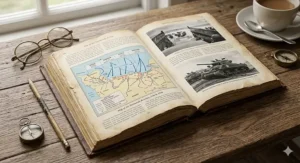
UK Readers’ Guide: British Perspective on D-Day
British involvement in the normandy landings history often receives less attention in popular culture than American contributions, largely because Hollywood dominates war film production. Yet understanding the British and Canadian role proves essential to comprehending how the invasion succeeded.
British Beaches: Gold and Sword
The British 50th Northumbrian Division landing at Gold Beach achieved remarkable success on D-Day itself. By nightfall they’d penetrated further inland than any other Allied force, securing the village of Bayeux—the first French town liberated—and linking up with American forces from Omaha to the west. The 50th Division’s performance that day represented the culmination of four years’ combat experience stretching back to North Africa and Sicily.
Sword Beach, assigned to the British 3rd Infantry Division, proved more challenging. German resistance around the heavily fortified position at Ouistreham required support from specialised tanks and Royal Marine commandos. The British push toward Caen on D-Day itself fell short of objectives—a “failure” that historians still debate. Was Montgomery’s plan overly ambitious, or did understandable caution after heavy casualties prevent a breakthrough that might have shortened the war?
When reading d day history books as a UK audience, pay attention to how different authors treat this question. American writers sometimes criticise British “slowness” at Caen without acknowledging that Montgomery’s forces drew German armour onto their sector, allowing American breakout further west. British authors sometimes overstate Montgomery’s strategic genius. The truth likely sits between these positions—Montgomery’s planning proved sound but execution encountered difficulties he hadn’t anticipated.
British Innovation: The Funnies and Mulberries
One area where British contribution remains indisputable involves specialised armoured vehicles nicknamed “Hobart’s Funnies” after their developer, Major-General Percy Hobart. These included flail tanks for mine clearance, bridge-layers, flame-throwers, and swimming tanks. American forces at Omaha declined to use most Funnies, contributing to their higher casualties. British and Canadian beaches, equipped with these innovations, generally suffered lighter losses despite comparable German defences.
The Mulberry harbours represented British engineering triumph. After the violent Channel storm destroyed the American Mulberry at Omaha, the British harbour at Arromanches became the primary logistics hub supplying Allied armies. By war’s end, more tonnage passed through this temporary artificial port than pre-war Marseille handled. The House of Commons Library’s research briefing on D-Day notes that the British Normandy Memorial now stands as testimony to the 22,442 people who died under British command during the campaign. Yet how many UK students learn about these innovations in school? The oversight does British history disservice.
Commonwealth Contributions Often Overlooked
Canadian forces landing at Juno Beach deserve far more recognition than most accounts provide. The 3rd Canadian Infantry Division faced heavily defended positions and rough seas that delayed their landing, exposing them to prepared German fire. Despite this, they pushed further inland than any division except the British 50th, linking the British and American beachheads.
Similarly, the Royal Canadian Air Force, Royal Australian Air Force, and other Commonwealth units filled crucial roles in the air campaign. Polish pilots flew with the RAF, Free French paratroopers dropped into Normandy, and naval forces from multiple nations participated in the bombardment. The normandy invasion books that present this as purely Anglo-American operation miss the coalition warfare reality.
How Brexit Affects D-Day Book Availability
A practical consideration for 2026 UK buyers: some American and European publishers now face higher import costs post-Brexit, occasionally making certain titles more expensive or slower to ship to Britain. Amazon.co.uk generally stocks UK editions of major titles, but obscure or specialist works may come from European suppliers with attendant delays.
Check listing details carefully. “Usually dispatched within 1-3 days” indicates UK warehouse stock. “Dispatched from outside the UK” may mean longer waits and potential customs complications. For gifts or time-sensitive purchases, prioritise items clearly stocked domestically.
Long-Term Value: Building Your D-Day Library
Whilst some readers content themselves with a single comprehensive account, serious students of normandy invasion books eventually build collections that provide multiple perspectives. Understanding how to curate this library strategically maximises value and minimises redundancy.
The Core Trio: Three Books Every Collection Needs
For balanced understanding, acquire at minimum one classic narrative (Ryan), one modern comprehensive account (Beevor), and one specialist focus (either Holland’s logistics or Milton’s testimony). This combination provides historical continuity, contemporary scholarship, and depth in a specific dimension. Total investment: approximately £30-£40 on Amazon.co.uk.
Reading these in sequence—Ryan first for grounding, Beevor second for depth, specialist third for perspective—creates scaffold of knowledge. Each subsequent book builds on rather than merely repeating what came before. You’ll notice Beevor referencing sources Ryan couldn’t access; Holland explaining logistical details both earlier authors assumed or ignored.
Expanding Beyond the Basics
Once you’ve absorbed core texts, branch into primary sources and specialist studies. Lewis’s compilation of eyewitness accounts lets you encounter raw testimony without authorial interpretation. From there, you might pursue unit histories (specific divisions or regiments), biographical accounts of key commanders, or technical studies of equipment and weapons.
Amazon.co.uk’s recommendation algorithm proves surprisingly useful here. After purchasing core D-Day titles, the site suggests related works on Allied strategy, German defensive doctrine, French Resistance, or wartime intelligence. Many of these tangential topics illuminate D-Day from unexpected angles—understanding Ultra codebreaking, for instance, explains why Allies knew German dispositions so precisely.
Balancing Print, Kindle, and Audiobook Formats
Each format serves distinct purposes. Physical books allow easy reference—flipping between maps and text, checking endnotes, comparing photographs. Amazon.co.uk’s print editions of major d day history books typically include maps as endpapers and photo sections that Kindle versions struggle to replicate.
Kindle editions excel for travel and reference. If you’re visiting Normandy, carrying Morgan’s heavy photographic book proves impractical, but the Kindle version weighs nothing and allows zooming on images. Similarly, Kindle’s search function helps locate specific topics across multiple books instantly—try finding every reference to Pointe du Hoc across five physical books versus keyword search in digital versions.
Audiobooks suit commuting or exercise. Beevor and Holland’s accounts run 20+ hours as audiobooks—unrealistic to read in single sittings but perfect for daily commutes over several weeks. Be aware that maps and photographs don’t translate to audio; you’ll need supplementary visual materials for full comprehension.
Resale Value and Collection Management
Quality normandy invasion books hold value remarkably well. First editions of Ryan’s The Longest Day from 1959 now fetch collector prices. Even standard reading copies maintain decent resale value on platforms like Ziffit or Music Magpie. Unlike novels that depreciate rapidly, military history sustains demand from successive generations of readers and researchers.
This means your library represents investment as well as education. Hardcover editions particularly maintain condition and value better than paperbacks. If you’re torn between £9.99 paperback and £14.99 hardcover, the latter may cost only £3-£4 more after eventual resale.

FAQ: Your D-Day History Books Questions Answered
❓ Which d day history book should I start with if I know nothing about World War II?
❓ Are normandy invasion books on Amazon.co.uk authentic for UK delivery and pricing?
❓ Do d-day veterans stories books cover British forces adequately or just American troops?
❓ Can I read operation overlord books on Kindle or are physical copies better for maps and photos?
❓ What's the difference between books about D-Day specifically versus normandy landings history generally?
Conclusion: Your Next Steps in D-Day History
The journey through d day history books ultimately proves as much about self-discovery as historical education. Which aspect captivates you—the strategic chess match of commanders, the logistical miracle of supplying armies across water, or the intimate human courage of teenagers facing machine-gun fire? Your answer determines which titles from Amazon.co.uk’s extensive collection will prove most rewarding.
What sets the best normandy invasion books apart from lesser accounts isn’t merely accuracy or prose quality, though both matter. Rather, the finest works transform 6 June 1944 from abstraction into visceral reality. When Beevor describes German commanders’ realisation that the invasion isn’t a feint, when Ambrose recounts paratroopers scattered across flooded fields, when Milton shares a French civilian’s terror as her village becomes battlefield—these moments transcend mere information transfer. You’re not learning history; you’re experiencing echoes of lives lived under unimaginable stress.
For UK readers in 2026, these books serve additional purpose beyond entertainment or education. The normandy landings history represents perhaps the last time Britain functioned as true military superpower, fielding forces comparable to American scale and pioneering innovations that shaped modern warfare. The UK government’s recent D-Day commemorations remind us that understanding this achievement—and the cooperation between democracies it represented—feels particularly vital as geopolitical tensions resurface across Europe.
Start with one book from this guide. Whether you choose Ryan’s timeless narrative, Beevor’s comprehensive analysis, or Morgan’s visual documentation, commit to reading it properly rather than skimming. Take notes, look up unfamiliar terms, and follow the maps. Then, armed with that foundation, expand your library strategically based on which aspects intrigued you most. Within a few months, you’ll possess not just knowledge but genuine understanding of humanity’s largest amphibious invasion.
The soldiers who waded through surf at Gold Beach, who dropped into darkness over Sainte-Mère-Église, who commanded destroyer fire support from churning Channel waters—they deserve more than cursory awareness. These operation overlord books and d-day veterans stories preserve their experiences for generations who never knew war. Reading them isn’t mere hobby; it’s act of remembrance and gratitude.
Recommended for You
- 7 Best World War 2 Books UK 2026
- 7 Best Victorian London History Books That Transform Your Understanding (2026)
- 7 Best Queen Victoria Biography Books UK 2026
Disclaimer: This article contains affiliate links. As an Amazon Associate, I earn from qualifying purchases. If you purchase products through these links, we may earn a small commission at no additional cost to you.
✨ Found this helpful? Share it with your mates! 💬🤗
