

In This Article
Between September 1940 and May 1941, London endured 57 consecutive nights of bombing that killed over 42,000 civilians and injured 50,000 more, according to Imperial War Museums. The Blitz wasn’t merely a military campaign—it was a psychological assault that tested the mettle of ordinary Londoners who huddled in Anderson shelters, watched St Paul’s Cathedral emerge from smoke, and rebuilt their lives amidst the rubble each dawn.

Yet here’s what the history books often miss: the Blitz experience varied dramatically depending on whether you lived in the working-class East End or the affluent West End, whether you were a child collecting shrapnel as playground treasure or a mother desperately trying to maintain normalcy whilst bombs fell overhead. The most compelling blitz london history books don’t just recount statistics—they resurrect the voices of those who lived it, from firefighters battling infernos to diarists scribbling by candlelight in Underground stations.
In this guide, I’ve curated seven exceptional books available on Amazon UK that capture different facets of the Blitz experience. Whether you’re drawn to academic rigour, personal memoirs, or photographic documentation, these titles provide perspectives you won’t find in sanitised textbook accounts. What sets these books apart is their commitment to showing the Blitz in all its complexity—the courage and the criminality, the resilience and the trauma, the mythologised “Blitz spirit” alongside the rather messier reality of rationing, looting, and class tensions that warfare exposed.
Quick Comparison Table
| Book Title | Best For | Price Range (£) | Format Available |
|---|---|---|---|
| The Blitz: The British Under Attack by Juliet Gardiner | Comprehensive social history | £8-£15 | Paperback, Hardback, Kindle, Audible |
| London Was Ours: Diaries and Memoirs by Amy Helen Bell | Primary source accounts | £15-£25 | Hardback, Kindle |
| Blitz Kids by Duncan Barrett & Nuala Calvi | Children’s experiences | £10-£18 | Paperback, Kindle, Audible |
| The Bombing of London 1940-41 by John Conen | Chronological raid analysis | £12-£20 | Hardback |
| Air Raid Shelters of the Second World War by Stephen Wade | Shelter culture & design | £10-£16 | Paperback, Kindle |
| The Blitz: London Then and Now by John Neville | Visual before/after | £8-£14 | Paperback |
| Memories of a Wartime Childhood in London by Douglas Model | Personal memoir | £9-£15 | Paperback, Kindle |
From this comparison, Juliet Gardiner’s comprehensive history offers the best value for readers seeking authoritative coverage of the entire Blitz period, whilst Amy Helen Bell’s collection of diaries provides unmatched intimacy and emotional authenticity. Budget-conscious readers will find excellent options in the £8-£15 range, though investing in the £15-£25 bracket rewards you with richer primary source material and more rigorous scholarly apparatus. What’s particularly noteworthy is that UK buyers benefit from Amazon’s free delivery on orders over £25, so pairing two titles—say, Gardiner’s overview with Barrett and Calvi’s child-focused account—gives you both breadth and depth whilst qualifying for free postage.
💬 Just one click — help others make better buying decisions too! 😊
Top 7 Blitz London History Books — Expert Analysis
1. The Blitz: The British Under Attack by Juliet Gardiner
Juliet Gardiner’s magnum opus stands as the definitive modern account of the Blitz, and for rather good reason. Unlike earlier histories that focused narrowly on London or military strategy, Gardiner charts the bombing campaign across the entire United Kingdom—from Liverpool’s devastated docks to Belfast’s industrial heartland to Coventry’s near-obliteration. Her approach combines meticulous archival research with over 200 Mass Observation diaries, creating a narrative that feels simultaneously authoritative and deeply human.
What distinguishes this from other blitz london history books is Gardiner’s refusal to romanticise the “Blitz spirit” mythology. Yes, she documents extraordinary courage and community solidarity, but she also unflinchingly examines the class tensions, governmental incompetence, and black-market profiteering that thrived amidst the chaos. The book reveals how working-class East Enders initially bore the brunt of attacks whilst wealthier West End residents remained relatively unscathed—a disparity that only shifted when Buckingham Palace itself was bombed in September 1940, prompting the Queen Mother’s famous remark that she could “now look the East End in the eye.”
UK readers particularly appreciate Gardiner’s attention to regional experiences beyond the capital. The Liverpool Blitz, Manchester’s Christmas raids, and the Clydebank disaster all receive substantive treatment. She draws on local newspapers, council records, and regional archives that American historians typically overlook. The writing strikes that ideal British balance—scholarly without being stuffy, accessible without dumbing down complex political dynamics or strategic decisions.
Customer feedback from Amazon UK consistently praises the book’s readability and emotional resonance. One reviewer noted how Gardiner’s vivid descriptions made them “feel the terror of hearing the bombers’ drone overhead,” whilst another appreciated her contextualization of wartime rationing, evacuation chaos, and the awkward coexistence of terror and tedium that characterised civilian life.
Pros:
✅ Comprehensive national coverage beyond just London
✅ Balances academic rigour with compelling narrative flow
✅ Challenges simplistic “Blitz spirit” mythology with nuanced analysis
Cons:
❌ Dense at 560 pages—requires committed reading time
❌ Limited photographic illustrations compared to visual histories
Price & Value: Available in the £8-£15 range depending on format. The paperback typically sits around £11, making it exceptional value for a work of this scholarly calibre. Hardback editions fetch £14-£15, whilst the Kindle version often appears at £9.99 during promotional periods. For the depth of research and breadth of coverage, this represents outstanding value—you’re essentially getting six books’ worth of content at a single book’s price.

2. London Was Ours: Diaries and Memoirs of the London Blitz by Amy Helen Bell
Amy Helen Bell’s collection does something rather remarkable: it restores individual voices to a historical event too often reduced to statistics and propaganda imagery. Drawing on over 200 personal diaries, letters, and memoirs from Londoners across all social classes, Bell constructs a polyphonic narrative that captures the Blitz’s psychological and emotional dimensions in ways that conventional histories cannot match.
What makes these primary sources so valuable is their immediacy. Unlike memoirs written decades later with memory’s inevitable softening and reshaping, these are real-time accounts—scribbled in air raid shelters, jotted between sirens, recorded whilst the fear and uncertainty were still visceral. A typist describes the “blood-red light” that illuminated her shelter when a bomb struck nearby. A firefighter details the exhaustion of battling blazes for 72 consecutive hours. A mother chronicles the impossible task of maintaining bedtime routines whilst bombs fell overhead.
Bell’s genius lies in her curation and analysis. She doesn’t simply reproduce diary entries chronologically; instead, she organises them thematically around loss, courage, community, class conflict, and gender dynamics. This approach reveals patterns and tensions that individual diarists wouldn’t have recognised—the way evacuation disrupted working-class family structures, how women’s wartime factory work challenged pre-war gender assumptions, or how rationing exposed Britain’s pre-existing nutritional inequalities.
UK reviewers on Amazon particularly value Bell’s inclusion of voices from beyond the educated middle class. Whilst many wartime diaries were kept by literate professionals, Bell has unearthed working-class accounts that provide unvarnished perspectives on governmental failures, inadequate shelter provision, and the grinding poverty that made wartime privations doubly harsh. One Sheffield factory worker’s diary entries about hunger and cold during the winter of 1940-41 are particularly sobering.
The book does demand patience from readers. Bell’s introductory chapters contain substantial literary and historiographical theory—she’s an academic, after all, and wants to position these diaries within broader frameworks of memory studies and narrative construction. Some Amazon reviewers found these opening sections rather heavy going. However, persevering readers are rewarded when Bell shifts from theory to the diaries themselves, which crackle with life, fear, and the odd flash of mordant British humour.
Pros:
✅ Authentic voices from all social classes and regions
✅ Emotional depth that statistics-heavy histories cannot capture
✅ Reveals class and gender tensions alongside celebrated unity
Cons:
❌ Academic introduction may deter general readers initially
❌ Thematic organisation sometimes disrupts chronological clarity
Price & Value: Typically £15-£22 for the hardback edition, with Kindle versions around £12-£14. Whilst pricier than some titles on this list, you’re paying for unique primary source material that required years of archival excavation. The hardback’s quality binding and paper make it suitable for library collections or repeated reference use. Given the rarity of these diary excerpts elsewhere, this pricing feels justified for serious students of the London bombing WW2 books genre.
3. Blitz Kids: True Stories from the Children of Wartime Britain by Duncan Barrett and Nuala Calvi
Published to commemorate VE Day’s 80th anniversary, this 2025 release focuses on a demographic often overlooked in wartime histories: the 10 million British children who experienced the Blitz firsthand. Barrett and Calvi have crafted 15 compelling narratives drawn from extensive interviews with now-elderly survivors, capturing childhood experiences that range from terrifying to oddly exhilarating.
What these civilian war experience books reveal is how children processed trauma through play and adaptation. Young Kitty from London’s East End collected steaming shrapnel as treasures. Christopher from Liverpool turned bombed-out buildings into adventure playgrounds. Little Doreen from Coventry learned to recognise different aircraft by their engine sounds. These weren’t just coping mechanisms—they were children asserting agency and normalcy in circumstances designed to annihilate both.
The authors excel at balancing innocence with horror. We read about a child’s excitement at seeing searchlights criss-cross the night sky, then immediately confront the trauma of that same child waking to find her home destroyed and her pet cat buried beneath rubble. The book doesn’t shy from depicting how bombing shattered families—fathers killed whilst firefighting, mothers succumbing to stress-related illnesses, siblings permanently scarred by what they witnessed.
UK readers on Amazon UK particularly appreciate the geographic diversity. Whilst London features prominently, the book also documents children’s experiences in Hull, Plymouth, Manchester, and Belfast. Each city’s Blitz had unique characteristics—Hull endured 1,000 hours of bombing, Belfast’s shipyards drew concentrated attacks, Plymouth suffered because of its strategic naval base—and children’s stories reflect these local realities.
The writing strikes an accessible tone without infantilising either the child subjects or adult readers. Barrett and Calvi previously co-authored Sunday Times bestsellers The Sugar Girls and GI Brides, demonstrating their knack for transforming oral histories into page-turning narratives. Here, they’ve applied that same skill to wartime childhood, creating a book that educates whilst genuinely moving readers to tears.
Customer reviews frequently mention the book’s emotional impact. One reader noted it “captures your heart” whilst making wartime experiences “vivid” for younger generations who cannot fathom such deprivation and danger. Another praised how the book complements Juliet Gardiner’s adult-focused history, providing the child’s-eye perspective that academic histories typically lack.
Pros:
✅ Unique child-focused perspective on home front books
✅ Geographic diversity beyond London-centric narratives
✅ Emotional accessibility for readers unfamiliar with the period
Cons:
❌ Only 15 stories—some readers wanted more depth per subject
❌ Limited analysis of long-term psychological impacts
Price & Value: The paperback typically retails around £10-£14, with Kindle editions at £8-£11 and Audible versions at £12-£15. For a 2025 release with fresh interviews and contemporary publishing quality, this represents fair value. UK buyers benefit from Amazon’s frequent promotional pricing on Headline Publishing titles, so watching for deals can shave a few pounds off. The audiobook narration by Julie Maisey has received particular praise for capturing the emotional nuances of each child’s story.
4. The Bombing of London 1940-41: The Blitz and its Impact on the Capital by John Conen
For readers who appreciate rigorous chronological detail, Conen’s 2024 release offers something rather different: a raid-by-raid analysis of every major bombing incident London endured during those eight catastrophic months. This isn’t light bedtime reading—it’s a reference work that documents exactly what happened, where, when, and to whom across the capital’s 33 boroughs.
Conen’s approach combines military history with social documentation. Each raid entry includes the Luftwaffe’s targeting objectives, tonnage of bombs dropped, casualty figures, and—crucially—the specific buildings, streets, and landmarks destroyed or damaged. This granular detail allows readers with family connections to specific areas to trace what happened to their grandparents’ neighbourhoods. One Amazon UK reviewer discovered that her grandmother’s street in Stepney was hit during the raid of 19 October 1940, finally explaining family stories about temporary housing in church halls.
The book systematically addresses how different raid types affected London. Early attacks targeted the East End docks and industrial sites. Later raids aimed at transportation infrastructure, hitting major railway termini and goods yards. The devastating 29 December 1940 firebombing of the City of London—the so-called “Second Great Fire”—receives exhaustive treatment, documenting how inadequate water supplies hampered firefighting efforts and allowed flames to consume medieval churches and Wren masterpieces alike.
What elevates this beyond mere military chronicle is Conen’s attention to the human cost behind statistics. When he records “1,436 civilians killed” during the 10-11 May 1941 raid, he follows with details about overwhelmed mortuaries, the logistical nightmare of mass burials, and the psychological trauma inflicted on rescue workers who spent days extracting bodies from collapsed buildings. He also documents the “incidents”—the bland bureaucratic term for disasters that would have dominated peacetime headlines—where entire apartment blocks vanished, bus queues were obliterated, or Underground stations suffered direct hits.
UK readers appreciate Conen’s use of British archival sources including London County Council records, borough council civil defence reports, and contemporary newspaper accounts from The Times, Daily Mirror, and Evening Standard. American histories of the Blitz often rely heavily on secondary sources; Conen’s original research in National Archives at Kew and the London Metropolitan Archives provides fresh details unavailable elsewhere.
The book’s chronological structure also reveals patterns that thematic histories obscure. You can trace how bombing intensity waxed and waned based on weather, moon phases, and shifting German strategic priorities. The relative lull in late November 1940, for instance, corresponded with Luftwaffe redeployment to attack provincial cities—a pattern that meant Liverpool, Manchester, and Coventry bore London’s respite whilst the capital caught its breath.
Pros:
✅ Unparalleled detail for genealogical and local history research
✅ Systematic coverage of all 33 London boroughs
✅ Fresh archival research unavailable in earlier histories
Cons:
❌ Dense, reference-work style requires motivated reading
❌ Limited personal narratives compared to diary-based histories
Price & Value: The hardback typically costs £15-£20, reflecting both its 2024 publication date and substantial 400+ page length. There’s currently no Kindle edition, which some digital-first readers find inconvenient. However, for researchers, genealogists, or London history enthusiasts wanting definitive detail about specific raids, this pricing is reasonable. The book’s reference value means it’ll remain useful for decades, unlike more impressionistic histories that date quickly.
5. Air Raid Shelters of the Second World War: Family Stories of Survival in the Blitz by Stephen Wade
Stephen Wade’s social history examines a dimension of the Blitz often relegated to footnotes: the shelters themselves and the peculiar culture that developed within them. During peak periods, 177,000 Londoners sheltered nightly in Underground stations, whilst countless others huddled in backyard Anderson shelters, communal surface shelters, or the Morrison shelters that doubled as indoor kitchen tables. These weren’t merely passive refuges—they became temporary communities with their own social hierarchies, entertainments, and survival strategies.
Wade’s strength lies in his attention to shelter diversity and the class implications thereof. The wealthy could afford reinforced basement shelters in their Mayfair townhouses. Working-class families made do with damp, cramped Anderson shelters in postage-stamp gardens, or risked overcrowded, poorly ventilated public shelters where disease spread rapidly. The book documents how shelter allocation exposed pre-war inequalities, with poorer boroughs receiving inadequate provision whilst affluent areas enjoyed better facilities.
The Underground shelters receive particularly detailed coverage. Wade describes how initially banned by authorities fearing “shelter mentality” would sap morale, the Tube stations were essentially stormed by desperate Londoners who simply purchased platform tickets and refused to leave, as documented by the London Transport Museum’s wartime archives. The government eventually relented, and London Transport was tasked with providing bunks, sanitation, and canteen services. What emerged was an underground city—complete with libraries, first-aid posts, concert performances, and even a newspaper (the Swiss Cottage Express, written by and for shelterers at Swiss Cottage station).
For readers interested in air raid shelter stories, Wade provides numerous first-hand accounts collected through oral histories and archive research. He’s drawn on interviews with survivors from London, Sheffield, Hull, Liverpool, Plymouth, and Coventry, ensuring geographic breadth. These accounts reveal the fear, boredom, camaraderie, and occasional terror of shelter life—the relief when the all-clear sounded, the horror when bombs struck nearby stations (at Balham and Bank, direct hits killed hundreds), and the mundane challenges of sleeping upright on hard platforms whilst strangers snored beside you.
The book also examines shelter design and construction from an engineering perspective. The Anderson shelter—6 feet tall, 6 feet wide, constructed from 14 corrugated steel sheets bolted together and buried 4 feet deep with soil heaped over the top—was distributed free to households earning under £5 weekly. Wade explains how effective design made them remarkably blast-resistant; many Andersons survived with occupants intact even when the houses beside them were obliterated. The Morrison shelter (essentially a steel cage you slept under) similarly protected countless families from collapsing ceilings.
UK customers on Amazon appreciate Wade’s inclusion of regional shelter experiences beyond London. Liverpool’s repurposed railway tunnels, Hull’s inadequate shelter provision (which contributed to the city’s disproportionate casualties), and the makeshift shelters of Plymouth all receive attention. This geographic breadth makes the book valuable for anyone researching wartime home front books with regional focus.
Pros:
✅ Unique focus on shelter culture and design
✅ Strong regional coverage beyond London
✅ Engineering details appeal to technical readers
Cons:
❌ Sometimes reads like oral history archive rather than polished narrative
❌ Limited photographic documentation of shelter interiors
Price & Value: Typically £10-£14 for paperback, with Kindle editions around £8-£11. The Pen & Sword Military imprint produces quality military history at accessible prices, and Wade’s book follows that pattern. For readers specifically interested in the shelter dimension—whether for research, family history, or general curiosity—this represents excellent value, as no comparable title covers this ground so thoroughly.
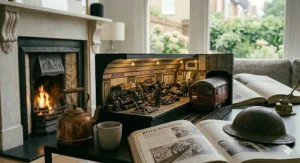
6. The Blitz: London Then and Now by John Neville
Neville’s photographic history offers something distinctly visual: paired images showing specific London locations during and after the Blitz. On the left page, you see a bombed-out shell—perhaps the ruins of a Wren church or a row of obliterated shops. On the right page, you see the same vantage point photographed years later, showing either restored buildings or modern replacements. The effect is simultaneously sobering and hopeful.
What makes this particularly valuable for UK readers planning London visits is the inclusion of detailed maps pinpointing each photographed location. You can trace Blitz damage across central London’s streets, from the East End docks to Westminster, from the City to Southwark. This transforms the book from passive history into active exploration tool—you can literally walk the Blitz’s geography, standing where wartime photographers stood, comparing past devastation with present renewal.
The photograph selection emphasises how comprehensively bombing altered London’s physical fabric. Medieval churches that survived the Great Fire of 1666 were reduced to hollow shells. Georgian terraces collapsed into rubble. Victorian warehouses along the Thames burned for days. Yet the photographs also document remarkable survival—St Paul’s Cathedral emerging unscathed from surrounding infernos, Westminster Abbey somehow dodging direct hits, individual buildings standing isolated amidst complete devastation.
Neville’s brief captions provide historical context without overwhelming the visual impact. You learn that the Blitz destroyed or damaged one-third of the City of London, that 20,000 homes were destroyed in a single night, that certain streets were hit repeatedly whilst adjacent roads escaped relatively unscathed. The randomness of destruction becomes viscerally apparent when you see how a bomb’s ten-metre deviation determined whether buildings survived or vanished.
UK reviewers particularly value this book as a tourist companion. One Amazon customer described using it during a London walking tour, standing at each location whilst comparing the “then” photo with present reality. This experiential dimension distinguishes Neville’s work from purely textual histories—you’re not just reading about the Blitz, you’re encountering its physical traces in contemporary London’s streetscape.
The “now” photographs also prompt reflection on post-war rebuilding philosophy. Some sites were lovingly restored to pre-war appearance. Others were replaced with brutalist concrete blocks that make no attempt to harmonise with surviving Georgian or Victorian neighbours. These jarring juxtapositions reflect debates about how Britain should remember and commemorate the Blitz—preserve, rebuild identically, or embrace modernity?
Pros:
✅ Visual format suits readers who prefer images over dense text
✅ Doubles as practical London walking tour guide
✅ Reveals bombing’s random geographic patterns
Cons:
❌ Limited narrative context compared to text-heavy histories
❌ Some “now” photographs feel dated (book first published 1990s)
Price & Value: Generally £8-£14 for used or newer editions. The book has remained in print through multiple publishers, so edition quality varies. Hardback editions from the 1990s can be found quite cheaply second-hand (around £3-£5 plus postage) on Amazon Marketplace, whilst newer paperback reprints cost £10-£14. For visual learners or London visitors wanting a portable reference, even the higher end of this price range represents solid value. The maps alone justify the cost if you’re planning a Blitz heritage walk.
7. Memories of a Wartime Childhood in London by Douglas Model
Douglas Model’s memoir offers intensely personal testimony from someone who lived through the Blitz aged 6 to 11—old enough to remember vividly, young enough to experience events through a child’s simultaneously innocent and perceptive lens. Model, who later became a consultant physician, has written a remarkably candid account that refuses to glamorise or sentimentalise his childhood trauma.
The memoir begins with Model’s peaceful early years in suburban London, establishing a baseline of normalcy—playing in gardens, attending primary school, enjoying family Sunday roasts—that makes the subsequent disruption all the more jarring. When war erupts, Model’s narrative shifts to trembling in an Anderson shelter whilst explosions drew progressively nearer, hearing shrapnel rain on the corrugated roof, and emerging each morning to a changed landscape of rubble, dust, and acrid smoke.
What distinguishes Model’s account from many wartime memoirs is his willingness to describe fear honestly. Too many retrospective accounts, written decades later by elderly survivors, emphasise resilience and cheerful endurance—the mythologised “Blitz spirit” that political rhetoric required, as documented by the London Museum’s analysis of wartime propaganda. Model instead recalls genuine terror, the nightmares that persisted for years, and the way chronic stress manifested in childhood anxieties. His parents’ attempts to maintain domestic routine—insisting on regular meals, bedtimes, and homework—now strike him as both admirable and slightly absurd given the chaos surrounding them.
The memoir also captures the peculiar moral education bombing provided. Young Douglas learned about death not abstractly but through direct encounters with destroyed homes, injured neighbours, and hushed conversations about who hadn’t survived the previous night’s raid. He witnessed the fall of France through his parents’ increasingly worried radio listening. He gradually understood concentration camps and Nazi atrocities through fragments of adult conversation not entirely shielded from children’s ears.
Model’s medical background informs his analysis of wartime nutrition, childhood health, and the long-term psychological impacts of sustained stress. He notes how rationing affected his generation’s physical development, how disturbed sleep patterns became normalised, and how trauma shaped the personality of everyone who endured those years. These clinical observations coexist with more innocent memories—collecting downed aircraft fragments, playing in bomb craters, and the odd excitement of watching searchlights and anti-aircraft fire illuminate the night sky.
UK readers on Amazon UK appreciate Model’s balanced perspective. He neither indulges in nostalgia nor succumbs to bitterness. Instead, he presents his childhood honestly—acknowledging both the hardship and the odd adventures it provided, recognising his parents’ courage whilst noting governmental failures, celebrating survival whilst honouring those who didn’t survive. The writing eschews literary flourish for straightforward clarity, which somehow makes the emotional impact more potent.
Pros:
✅ Authentic child’s perspective free from rose-tinted nostalgia
✅ Medical insights into wartime health impacts
✅ Honest about fear and trauma alongside resilience
Cons:
❌ Limited geographic scope (focuses on author’s specific London suburb)
❌ Somewhat shorter than other memoirs at around 200 pages
Price & Value: The History Press edition typically costs £9-£15 depending on format. Published in 2022, it’s still in print with good availability on Amazon UK, usually qualifying for Prime next-day delivery. For readers interested in wartime London memoirs told from a child’s viewpoint, this pricing is entirely reasonable. The book’s relatively recent publication means the writing benefits from contemporary sensibilities around childhood trauma whilst preserving authentic wartime memories from someone who genuinely lived through them.
How Civilian Life Functioned Amidst the Bombing
Understanding the Blitz requires grasping how Londoners maintained something resembling normal existence whilst their city burned nightly around them. This wasn’t the romanticised “Keep Calm and Carry On” of propaganda posters—it was messy, exhausting adaptation punctuated by terror and loss.
The daily rhythm became grimly predictable. Mornings brought damage assessment—checking if your home still stood, if neighbours survived, if your route to work remained passable. Daytime allowed precarious normality: factories operated, shops opened (if still standing), children attended school (in basements or shelters). Workers developed dark humour about productivity measurements that didn’t account for sleepless nights or bomb-delayed commutes.
As dusk approached, the ritual began. Windows were blacked out with thick curtains or painted glass—showing even a sliver of light risked hefty fines and neighbourly wrath, as enforced under civil defence regulations detailed by Historic UK. Families gathered provisions for the night ahead: thermos flasks, blankets, gas masks, identity papers, perhaps a novel or pack of cards. The wail of air-raid sirens became London’s evening soundtrack, prompting the hurried shuffle to shelters.
Food rationing added grinding hardship atop bombing stress. From January 1940, butter, sugar, and bacon were rationed, followed progressively by meat, tea, cheese, eggs, and fats. Each person received a ration book with coupons limiting purchases to minuscule amounts—4 ounces of bacon weekly, 2 ounces of tea, one egg. The government promoted “Dig for Victory” campaigns encouraging Londoners to transform lawns and parks into vegetable plots. Many Anderson shelters were surrounded by gardens producing cabbages, potatoes, and runner beans—at least bomb-damaged soil proved rather fertile.
The black market thrived despite governmental efforts to suppress it. Those with money and connections could obtain rationed goods at inflated prices. Bombed buildings provided cover for looters who stripped valuables before rescue services arrived. Some entrepreneurial criminals filed false compensation claims for non-existent damaged property. The war created unprecedented opportunities for those willing to exploit chaos and bureaucratic overload.
Yet genuine community also flourished. Neighbours who’d never previously spoken now shared shelters, swapped ration coupons, and collectively minded children. Street wardens became trusted figures who knew every household, could account for every resident during raids, and marshalled firefighting efforts when incendiaries fell. Women’s Voluntary Service members operated mobile canteens, providing tea and sandwiches to rescue workers and bombed-out families throughout the night.
The psychological toll accumulated inexorably. Chronic sleep deprivation became universal—even on quiet nights, Londoners slept fitfully, anticipating sirens. Children developed anxieties that persisted for decades. Adults self-medicated with tobacco and alcohol; cigarette consumption soared despite rationing. Doctors noted epidemic stress-related ailments—ulcers, hypertension, nervous exhaustion—that conventional medical care couldn’t adequately treat.
Transport disruptions added daily frustration. A night’s bombing might crater roads, collapse bridges, or sever Underground lines, forcing commuters into lengthy detours. London Transport displayed remarkable resilience, clearing debris and restoring service within hours where possible, but some routes remained blocked for weeks. Workers accepted that arriving late was inevitable and employers adapted or went bankrupt from absent staff.
Entertainment provided crucial psychological relief. Cinemas remained open except during immediate raids, showing Hollywood films and British productions that offered a few hours’ escapism. Dance halls hosted servicemen on leave and civilians desperate for normality. Theatres staged productions in basement venues or matinee performances before bombing hours. The BBC maintained programming continuity, broadcasting news bulletins, music, and comedy shows that maintained morale through wireless sets that became household fixtures.
What emerges from studying these civilian war experience books is recognition that “the Blitz spirit” wasn’t inevitable or uniform. Some Londoners demonstrated extraordinary courage; others broke under strain. Some communities pulled together; others fractured along class lines. The reality was more complex, contradictory, and human than the propaganda version Britain celebrates. Acknowledging this complexity doesn’t diminish the genuine resilience shown—it makes that resilience more remarkable, because it wasn’t automatic or effortless but deliberately chosen amidst temptations toward selfishness, despair, or flight.

Choosing the Right Blitz Book for Your Interests
Selecting among blitz london history books depends largely on what draws you to this period. Are you seeking comprehensive overview, intimate personal testimony, visual documentation, or academic analysis? Each book type serves different needs and rewards different reading approaches.
For Academic Research or Comprehensive Understanding
Juliet Gardiner’s The Blitz: The British Under Attack remains the gold standard. Its 560 pages combine rigorous scholarship with accessible prose, making it suitable both for university coursework and general reading. Gardiner draws on archives, government records, Mass Observation diaries, and contemporary newspapers to construct a national narrative that extends well beyond London. The book’s thematic organisation—chapters on shelter policy, evacuation logistics, civil defence organisation, propaganda efforts—allows readers to explore specific topics deeply whilst understanding how they interrelated within the broader wartime system.
Students writing essays on home front books will find Gardiner’s extensive bibliography invaluable, pointing toward primary sources and scholarly debates. The book’s analytical framework challenges simplistic “Blitz spirit” narratives without descending into cynicism, acknowledging both genuine community solidarity and the class tensions, governmental failures, and criminal opportunism that coexisted with heroism.
For Emotional Connection and Primary Sources
Amy Helen Bell’s London Was Ours offers unmediated access to wartime voices. If you find conventional histories too detached or analytical, these diaries provide raw emotional immediacy. You’re not reading about fear abstractly—you’re encountering a mother’s frantic description of clutching her infant whilst bombs fell, a teenager’s confusion about simultaneously fearing and being oddly thrilled by searchlights, an elderly pensioner’s quiet despair at losing everything accumulated over a lifetime.
Bell’s collection particularly suits readers with family connections to the Blitz. If your grandparents lived through this period, these diaries might resonate powerfully, providing context for family stories or unexplained traumas that rippled through generations. The thematic organisation allows you to explore specific aspects—women’s experiences, children’s perspectives, class dynamics—without reading the entire 400-page volume chronologically.
For Younger Readers or Family History
Duncan Barrett and Nuala Calvi’s Blitz Kids makes the perfect gift for teenagers or young adults whose great-grandparents survived the Blitz. The narrative approach—following individual children through specific bombing experiences—creates page-turning momentum whilst educating about historical realities. The writing avoids condescension, trusting younger readers to handle difficult material about death, injury, and trauma without gratuitous detail.
Teachers will find this book excellent for classroom use. Each chapter profiles a different child from a different city, allowing discussion of geographic variation in Blitz experiences. The accessible prose suits even reluctant readers, whilst the emotional content prompts valuable discussions about resilience, trauma, and historical memory.
For London Visitors and Visual Learners
John Neville’s The Blitz: London Then and Now transforms historical study into active exploration. The paired photographs—wartime destruction beside contemporary views—allow you to viscerally understand bombing’s physical impact. The included maps pinpoint each location, enabling self-guided walking tours that connect past and present.
This book suits readers who struggle with dense text but engage readily with visual material. The format also works beautifully for collaborative reading—sharing the book with family members, comparing images, discussing what’s changed and what endures. If you’re planning a London trip and want to understand the city’s wartime history beyond museum exhibits, this book provides portable, practical guidance.
For Regional or Specialist Focus
Stephen Wade’s Air Raid Shelters of the Second World War serves readers interested specifically in shelter design, culture, and regional variation. If your family history involves specific shelter experiences—perhaps a grandparent who sheltered in Liverpool’s railway tunnels or Hull’s inadequate public shelters—Wade’s geographic breadth proves invaluable. The engineering details appeal to technically-minded readers curious about why Anderson shelters proved so effective or how Morrison shelters saved lives.
John Conen’s The Bombing of London 1940-41 similarly suits specialist interests. Genealogists tracing family histories, local historians researching specific boroughs, or military history enthusiasts wanting raid-by-raid detail will find Conen’s chronological approach essential. This isn’t light reading, but for motivated researchers, it’s an indispensable reference.
For Personal Memoir and Medical Perspective
Douglas Model’s Memories of a Wartime Childhood in London offers something between academic history and pure memoir. Model’s medical background informs his reflections on health impacts, childhood development, and long-term psychological consequences. If you’re interested in how sustained stress affected children’s physical and mental health, Model provides insights that purely historical accounts omit.
The memoir format also suits readers who prefer continuous narrative over thematic organisation. You follow Model’s chronological journey from pre-war innocence through Blitz trauma to post-war adjustment, experiencing the war’s progression through one child’s eyes. This creates emotional engagement whilst avoiding the fragmentation that sometimes afflicts oral history collections.
What These Books Reveal About British Resilience
The concept of “Blitz spirit” has become shorthand for stoic British resilience under pressure—the notion that Londoners cheerfully endured bombing with cups of tea, witty quips, and unwavering morale. These blitz london history books complicate that narrative considerably, revealing a reality far messier, more contradictory, and ultimately more human than the mythology suggests.
True resilience wasn’t automatic or effortless. It required deliberate choice amidst temptations toward panic, selfishness, or despair. The diary entries Amy Helen Bell collects reveal people wrestling with fear, questioning why they stayed when evacuation remained possible, and sometimes breaking under accumulated stress. Juliet Gardiner documents governmental fears that bombing might spark social breakdown—mass flight from cities, refusal to work, demands for negotiated peace. That breakdown never materialised, but its possibility haunted officials throughout 1940-41.
What prevented collapse? Partly British cultural norms around emotional restraint and “keeping a stiff upper lip”—values that pre-dated the war but proved adaptive under bombardment. Partly social pressure within tight-knit communities where cowardice or selfishness would be witnessed and remembered. Partly pragmatic recognition that panic achieved nothing; bombs fell whether you panicked or remained calm, so maintaining composure offered illusory control over uncontrollable circumstances.
Class dynamics shaped resilience differently across social strata. Working-class East Enders who’d endured pre-war poverty, overcrowding, and unemployment possessed psychological resources that middle-class Londoners lacked. They’d survived hardship before; bombing was merely additional hardship atop existing burdens. Wealthier West Enders, accustomed to comfort and security, sometimes struggled more when their privilege couldn’t shield them from shared danger. The Queen Mother’s comment about “looking the East End in the eye” after Buckingham Palace was bombed acknowledged this class dimension—only shared suffering created genuine solidarity across Britain’s rigid social hierarchy.
The books also reveal resilience’s darker flipside. Black-market profiteering, looting of bombed buildings, false insurance claims, and theft from the dead all flourished amidst chaos. Stephen Wade documents how some individuals exploited shelter allocation systems, reserving premium shelter spaces through connections whilst poorer neighbours endured overcrowded, unsanitary facilities. Douglas Model recalls playground hierarchies where children competed over collected shrapnel and aircraft fragments—wartime scarcity creating new status markers even among the young.
Yet authentic heroism coexisted with venality. Firefighters battled blazes knowing their own homes might be burning simultaneously. Air raid wardens guided rescue efforts despite exhaustion and danger. Nurses tended the injured in hospitals repeatedly bombed. Women managed households, queued for scarce provisions, maintained employment, and kept children fed whilst husbands served overseas. These weren’t mythologised heroes but ordinary people choosing courage when circumstances demanded it.
Perhaps the most striking revelation across these civilian war experience books is how trauma persisted long after bombs stopped falling. The Blitz ended in May 1941 when Germany redirected the Luftwaffe toward the Soviet Union, but psychological aftershocks continued for decades. Model describes nightmares that plagued him into adulthood. Survivors interviewed by Barrett and Calvi admit they’ve never fully discussed their experiences even with family. The stoicism that enabled survival during bombing often prevented processing trauma afterward—you simply carried on because that’s what was expected, even when carrying on meant suppressing fear, grief, and anger that had nowhere to go.
Modern readers might find this unresolved trauma troubling. Contemporary psychology emphasises processing difficult experiences, seeking therapy, acknowledging emotional wounds. The wartime generation generally lacked such resources and wouldn’t have utilised them if available—discussing feelings was considered self-indulgent when millions suffered worse. This creates tension between celebrating resilience and recognising its costs. The Blitz spirit was real, but so was the trauma it required suppressing.
London Under Fire: What Made the Blitz So Devastating
The Blitz’s destructive power stemmed from multiple factors: German tactical innovation, British defensive limitations, London’s dense urban geography, and the deadly combination of high-explosive and incendiary bombs that created firestorms surpassing individual explosions’ destructive capacity.
The Luftwaffe employed approximately 1,000 aircraft nightly during peak periods—348 bombers supported by 617 fighters on the opening raid of 7 September 1940, known as “Black Saturday,” as detailed in Britannica’s comprehensive Blitz overview. These weren’t precision strikes but area bombing designed to destroy civilian morale alongside military-industrial targets. The doctrine, influenced by Italian theorist Giulio Douhet, posited that terrorising civilians would force governments to seek peace. Britain’s experience would later influence Allied strategic bombing of German cities, creating a grim escalation where both sides concluded that civilian suffering might break the enemy’s will.
High-explosive bombs—ranging from 50kg to massive 1,800kg “Satan” bombs—created craters, collapsed buildings, and ruptured water mains and gas lines. But incendiaries proved equally deadly, as explained in Wikipedia’s detailed Blitz article. The Luftwaffe dropped thousands of magnesium-thermite incendiary bombs designed to ignite fires that overwhelmed firefighting capacity. The 29 December 1940 raid on the City of London employed this tactic devastatingly—incendiaries sparked over 1,400 fires simultaneously, creating a firestorm that consumed eight Wren churches and destroyed millions of books in Paternoster Row’s publishing district.
London’s geography exacerbated vulnerability. The Thames served as a navigation beacon visible even through clouds, guiding bombers to target-rich docklands. Centuries of dense construction meant terraced houses shared walls, allowing fires to spread rapidly between buildings. Medieval street patterns created narrow lanes where fire trucks couldn’t manoeuvre effectively. Victorian warehouses along the Thames stored flammable goods—timber, rubber, paint, paper—that burned spectacularly once ignited.
British defences improved gradually but remained inadequate throughout 1940. Anti-aircraft artillery achieved few kills; most shells fell back to earth as deadly shrapnel that killed more Britons than Germans. Night fighters struggled without effective airborne radar—early Bristol Blenheims were essentially blind after dark. Ground-based radar could detect incoming raids but couldn’t guide interceptors to specific bombers amidst darkness and clouds. By 1941, the RAF fielded better night fighters (Bristol Beaufighters) and improved radar, but the Luftwaffe had already shifted focus eastward toward Russia.
The casualty toll reflected this defensive weakness. London suffered approximately 42,000 deaths and 50,000 serious injuries between September 1940 and May 1941. Peak nights killed over 1,400—the 10-11 May 1941 raid remains the deadliest single night. Beyond London, provincial cities endured proportionally worse devastation: Coventry lost 568 killed in a single November night, Belfast suffered 745 deaths in April 1941, and Hull endured 1,000 hours of bombing across multiple raids.
These wartime London memoirs document not just deaths but the manner of dying. High-explosive bombs buried victims in collapsed buildings where they suffocated or died from crush injuries before rescuers could excavate them. Incendiary fires consumed entire families trapped in burning buildings. Blast effects turned glass windows into lethal shrapnel clouds. Some victims were never found—obliterated entirely by direct hits or incinerated beyond identification in firestorms.
The psychological dimension multiplied the physical destruction’s impact. Unpredictability proved particularly traumatic—you never knew whether tonight’s raid would spare your street or obliterate it. Randomness meant prudent precautions offered no guarantees; some who sheltered died when bombs struck their Anderson or Morrison shelters, whilst others survived exposed in houses that should have collapsed. This arbitrary quality of survival or death haunted survivors and appears repeatedly in the diaries Bell collects and the memories Model recounts.
Material destruction reshaped London’s physical and social geography for decades. Bomb damage created vacant lots that remained undeveloped until the 1960s. Entire neighbourhoods vanished, their tight-knit communities scattered to suburban housing estates or provincial towns. The post-war rebuilding—particularly the brutalist architecture of the 1960s-70s—reflected both bomb damage’s extent and changing attitudes toward preservation versus modernisation. Neville’s then-and-now photographs capture this transformation, showing how wartime destruction enabled post-war urban planning that might never have occurred otherwise.
Understanding the Blitz’s devastation requires grasping both its immediate horror and its long-term consequences. The eight months of sustained bombing killed tens of thousands, traumatised millions, and permanently altered Britain’s capital. Yet Londoners endured, adapted, and eventually rebuilt—not because they were inherently more resilient than other populations but because circumstances offered no alternative. Surrender wasn’t an option; flight was impractical; breaking down achieved nothing. So they carried on, night after terrifying night, until finally the bombers stopped coming and the work of recovery could begin.
Frequently Asked Questions About Blitz London History Books
❓ Are blitz london history books suitable for secondary school students studying WWII?
❓ Which Blitz book provides the most detailed information about specific London boroughs?
❓ Do Amazon UK prices for these Blitz history books fluctuate significantly?
❓ Are there Blitz history books specifically covering air raid shelter experiences in British cities beyond London?
❓ Can I find these blitz london history books in UK public libraries, or must I purchase them?
Conclusion: Why These Voices Matter in 2026
Eighty-six years after Black Saturday, why do blitz london history books still command attention? Partly because that generation of survivors is disappearing—the youngest Blitz children are now in their mid-eighties, their firsthand testimony vanishing as memory fades and death claims the last witnesses. These books preserve voices that would otherwise be lost, ensuring that fear, courage, trauma, and resilience aren’t reduced to sanitised textbook summaries or propaganda imagery.
But these histories resonate beyond preservation. Contemporary Britain faces different crises—pandemic, economic uncertainty, climate disruption—that prompt questions about collective resilience under sustained pressure. The Blitz offers neither simple template nor reassuring precedent, but it does illuminate how people respond when normal life collapses and institutions prove inadequate. The diaries Bell collects, the childhood memories Model recounts, the raid chronology Conen documents—all reveal humans adapting, enduring, sometimes breaking, often demonstrating unexpected strength amidst circumstances designed to destroy them.
The books reviewed here represent different approaches to understanding that extraordinary period. Gardiner provides scholarly rigour and national scope. Bell offers emotional immediacy through primary sources. Barrett and Calvi preserve children’s voices before that generation passes entirely. Conen documents precise detail for researchers. Wade examines shelter culture’s social dimensions. Neville enables visual-spatial understanding. Model provides personal testimony balancing innocence and trauma.
Together, they construct a multifaceted portrait of London under fire—neither the heroic myth of propaganda nor the reductive cynicism that dismisses all wartime narratives as fabrication. The reality they reveal is more complex and more human: courage coexisting with venality, resilience alongside trauma, community solidarity fractured by class tensions yet ultimately holding when most needed. These are histories worth reading not because they make us feel good about British character but because they honestly depict humans under extreme pressure, making choices between selfishness and sacrifice, despair and determination, collapse and carrying on.
If you’re seeking comprehensive understanding, Juliet Gardiner’s The Blitz remains essential—the scholarly foundation upon which deeper exploration builds. If you want emotional connection to individual voices, Amy Helen Bell’s diary collection provides unmatched intimacy. If you’re drawn to children’s perspectives before that generation passes, Barrett and Calvi’s Blitz Kids offers poignant testimony. Each book serves different needs; ideally, read several to grasp this multifaceted history’s full complexity.
Whatever draws you to these wartime London memoirs and civilian war experience books—family history, academic interest, historical curiosity, or reflection on resilience—these seven titles offer pathways into a period that shaped modern Britain profoundly. The Blitz killed tens of thousands, traumatised millions, and transformed London’s physical and social landscape. Yet Londoners endured, adapted, and eventually rebuilt. Understanding how and why matters not just for historical knowledge but for recognising human capacity to survive, resist, and ultimately prevail when circumstances seem designed to break us entirely.
Recommended for You
- 7 Best Battle of Britain Books UK 2026
- 7 Best D Day History Books UK: Expert Reviews 2026
- 7 Best World War 2 Books UK 2026
Disclaimer: This article contains affiliate links. As an Amazon Associate, I earn from qualifying purchases. If you purchase products through these links, we may earn a small commission at no additional cost to you.
✨ Found this helpful? Share it with your mates! 💬🤗
