
In This Article
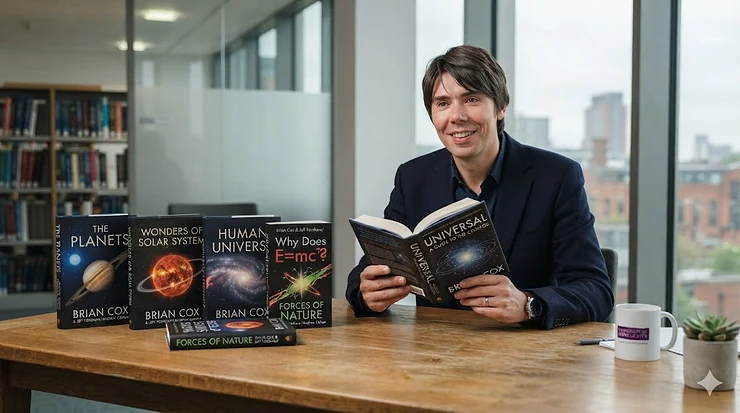
There’s a particular kind of magic that happens when a physicist who once played keyboards in a pop band sits down to explain the birth of the universe. Brian Cox — professor, broadcaster, and former D:Ream bandmember — has spent the better part of two decades doing exactly that. His brian cox science books don’t just explain physics; they make you feel it. That warm, slightly awestruck sensation of realising you live inside a story bigger than anything you could have invented.
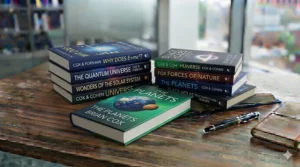
But here’s the honest truth: not all of his books are created equal. Some will stop you in your tracks at page one. Others are best suited to readers who already know their quarks from their quasars. If you’ve been staring at his back catalogue on Amazon.co.uk wondering where on earth to start — or which title to gift to someone who watched the BBC series and got a bit obsessed — you’re in exactly the right place.
This guide covers the best brian cox science books available on Amazon.co.uk right now, ranked by accessibility, depth, and sheer reading pleasure. Each one is fully available for UK delivery, and several qualify for free next-day delivery for Amazon Prime members. Whether you want accessible cosmology books for a curious teenager or something to really challenge a physics enthusiast, there’s a Cox title here for you.
Quick Comparison: Brian Cox Books at a Glance
| Book Title | Co-Author | Best For | Difficulty | Price Range (GBP) |
|---|---|---|---|---|
| Wonders of the Solar System | Andrew Cohen | Complete beginners | ⭐ Easy | Around £10–£15 |
| Wonders of the Universe | Andrew Cohen | Beginners–Intermediate | ⭐ Easy | Around £10–£15 |
| Why Does E=mc²? | Jeff Forshaw | Curious general readers | ⭐⭐ Moderate | Around £9–£14 |
| The Quantum Universe | Jeff Forshaw | Science enthusiasts | ⭐⭐⭐ Challenging | Around £9–£14 |
| Black Holes | Jeff Forshaw | Intermediate–Advanced | ⭐⭐⭐ Challenging | Around £10–£15 |
| Human Universe | Andrew Cohen | Philosophy + science fans | ⭐⭐ Moderate | Around £10–£15 |
| Forces of Nature | Andrew Cohen | Visual learners, gift-buyers | ⭐ Easy | Around £12–£20 |
The table above reveals something interesting: Cox’s most commercially successful books — the Wonders series and Forces of Nature — are actually his most accessible. If you’re buying for someone who isn’t already a science reader, start there. The Cox–Forshaw collaborations (Why Does E=mc²?, The Quantum Universe, Black Holes) demand rather more from the reader, but repay the effort handsomely. For gift-buyers, the hardback edition of Forces of Nature is the clear standout — it’s genuinely beautiful to hold.
💬 Just one click — help others make better buying decisions too! 😊
Top 7 Brian Cox Science Books: Expert Analysis
1. Wonders of the Solar System — Brian Cox & Andrew Cohen
The book that launched a generation of amateur astronomers. Wonders of the Solar System, the companion volume to the beloved BBC Two series of the same name, is where most people sensibly begin their journey through brian cox science books. Published in 2010 and still in print, it takes readers from the volcanic surface of Io to the rings of Saturn — and somehow manages to feel like an adventure rather than a lecture.
What the spec sheet won’t tell you: this is as much a visual experience as a written one. The full-colour photography is genuinely stunning, and the hardback edition holds up beautifully on a coffee table or bookshelf. The paperback is cheaper and perfectly readable, but if you want the full effect of Cox’s BBC Wonders series energy translated into print, go hardback.
In terms of content, Cox explains phenomena like the tidal forces that crack the ice of Europa and the atmospheric chemistry of Saturn’s moon Titan in language so clear you almost feel cheated — as if this should have been harder to understand. The physics presenter books rarely achieve this balance of rigour and accessibility, but this one does. UK readers should note it pairs brilliantly with a rewatch of the BBC iPlayer series on a rainy evening (of which we have no shortage).
UK reader feedback: consistently praised for being both scientifically reliable and completely gripping — rare praise indeed.
✅ Gorgeous full-colour photography
✅ Genuinely accessible for complete beginners
✅ Perfect gift for ages 14+
❌ Some scientific data now over a decade old
❌ Kindle edition loses much of the visual impact
Price range: around £10–£15 for paperback; hardback typically £15–£25. Eligible for free delivery with Amazon Prime, or free on orders over £25.

2. Wonders of the Universe — Brian Cox & Andrew Cohen
If Solar System lights the fuse, Wonders of the Universe detonates the bomb. This is the bigger, bolder sibling — a book that reaches beyond our planetary neighbourhood into the raw fabric of spacetime itself. The four main themes (empire of the sun, stardust, falling, and messengers) tackle entropy, the life cycles of stars, gravity, and electromagnetic radiation. Heady stuff, handled with characteristic Cox lightness of touch.
What separates this from a standard pop-science title is the way Cox frames scale. The universe explained cox-style isn’t just “here are some big numbers”; it’s a narrative about what those numbers mean for the human experience. Why does the Sun’s eventual death matter to us now? What does entropy tell us about why time only flows in one direction? These aren’t rhetorical questions — they receive actual answers, artfully delivered.
The accessible cosmology books market is surprisingly crowded, but this one earns its place near the top. UK readers who watched the original BBC series will find the book fills in gaps the television format couldn’t accommodate, particularly on the thermodynamics side. Slightly denser than its predecessor, but never intimidating.
UK reader feedback: repeatedly described as “life-changing” and “the book that made me fall in love with physics” — which is quite the endorsement.
✅ Broader scientific scope than Solar System
✅ Beautifully printed hardback available
✅ Pairs well with the BBC tv series books ecosystem
❌ Slightly more demanding than the first book
❌ Like all BBC tie-ins, the visual edition is far superior to the ebook
Price range: around £10–£15 paperback, available on Amazon.co.uk with Prime next-day delivery.
3. Why Does E=mc²? (And Why Should We Care?) — Brian Cox & Jeff Forshaw
Here’s where things get interesting. Why Does E=mc²?, the 2009 debut collaboration between Cox and his University of Manchester colleague Jeff Forshaw, is not a coffee table book. It is a proper attempt to explain Einstein’s special relativity to a general readership — and it largely succeeds, which is no small feat.
The approach is admirably honest: Cox and Forshaw don’t pretend you can understand E=mc² without encountering the concepts of spacetime and four-dimensional geometry. Instead, they walk you through those concepts step by careful step, using geometry, thought experiments, and a wonderful visit to CERN’s Large Hadron Collider as narrative scaffolding. According to Wikipedia, this was the first full-length book from the Cox–Forshaw partnership, and it set the tone for everything that followed.
Who is this for? The curious reader who’s watched the BBC series, felt genuinely excited, and now wants to understand the actual physics rather than just the beautiful imagery. You don’t need A-level maths, but you do need patience and a willingness to re-read certain passages. What you get in return is a genuine understanding of one of the most consequential equations in human history — and a satisfying sense of having actually earned it.
UK reader feedback: described as “demanding but enormously rewarding” — an assessment that feels about right.
✅ Genuinely explains the science, not just the metaphors
✅ Perfect for GCSE/A-level students wanting enrichment
✅ Paperback well priced for students on a budget
❌ Requires real concentration — not a beach read
❌ Some maths-averse readers find it challenging
Price range: around £9–£14 paperback, freely available on Amazon.co.uk.
4. The Quantum Universe (And Why Anything That Can Happen, Does) — Brian Cox & Jeff Forshaw
Quantum mechanics is one of those topics that attracts a great deal of mystical nonsense. You’ll find no shortage of books claiming quantum physics “proves” consciousness shapes reality, or that ancient wisdom traditions anticipated wave-particle duality. Cox and Forshaw are having absolutely none of that.
The Quantum Universe is a bracingly clear-eyed book. Its central argument — that quantum mechanics is strange, yes, but not inexplicably strange — runs through every chapter like a backbone. The authors root the weirdness of the quantum world firmly in experiment and mathematics, not eastern mysticism. If you’ve read pop-science books that left you more confused and vaguely spiritual, this is the antidote.
The particle physics cox approach here is characteristically rigorous while remaining just about accessible to a determined non-specialist. Topics covered include wave functions, Feynman’s path integral formulation, the Pauli exclusion principle, and — most impressively — an actual explanation of why atoms are stable. The connection to CERN’s experiments, which Cox knows from his own research, gives the book an authenticity many similar titles lack.
A word of honest warning: this is the most technically demanding of Cox’s accessible books. Plan to read slowly. Keep a notebook nearby. But if you push through, you’ll emerge with a genuine conceptual grasp of the framework that underpins all of modern technology — from semiconductors to MRI scanners.
✅ Cuts through quantum mysticism with admirable briskness
✅ Connects abstract theory to real-world technology
✅ Excellent for science students at sixth form or university level
❌ The most technically demanding book in the list
❌ Not ideal as a first introduction to Cox’s work
Price range: around £9–£14 paperback on Amazon.co.uk, Prime-eligible.
5. Black Holes: The Key to Understanding the Universe — Brian Cox & Jeff Forshaw
Published in 2022, Black Holes is Cox and Forshaw’s most recent collaboration and, arguably, their most ambitious. The thesis is bold: understanding black holes isn’t just astrophysics tourism — it’s the key to reconciling general relativity with quantum mechanics, the greatest unsolved problem in theoretical physics.
The book arrives at exactly the right cultural moment. The Event Horizon Telescope team’s 2019 image of Messier 87’s central black hole — the first direct photograph of a black hole shadow — had already electrified public interest. Cox and Forshaw capitalise on that excitement while steering it somewhere genuinely educational. The discussion of Hawking radiation alone justifies the cover price, handled with more clarity than Stephen Hawking himself ever quite managed in A Brief History of Time (controversial opinion, stated with appropriate British restraint).
For UK readers: this is the most “current” book in the series and the one most likely to prepare you for where cosmology is heading in the 2020s. Pair it with the University of Manchester’s online particle physics resources for context on Cox’s research background. Available in paperback at a very reasonable price range, and excellent as a follow-on from Why Does E=mc²?
✅ Most up-to-date science in the Cox catalogue
✅ Addresses the biggest open questions in modern physics
✅ Hawking radiation explained better than most textbooks
❌ Assumes familiarity with concepts from the earlier Cox–Forshaw books
❌ Not a standalone for complete beginners
Price range: around £10–£15, available on Amazon.co.uk.

6. Human Universe — Brian Cox & Andrew Cohen
Human Universe is the philosophical outlier in Cox’s catalogue. Where the other books in this list concern themselves primarily with the cosmos, this one turns the lens around and asks: what are we doing here? It’s the companion to the 2014 BBC series, and it explores the origins of intelligence, the Fermi paradox, the nature of consciousness, and the question of whether civilisation is common or staggeringly rare in the universe.
This is Cox in his most reflective mode. The science is still present and accurate, but the questions are bigger — and the answers, refreshingly, are often “we don’t know, but here’s the best thinking so far.” The chapter on the Drake equation and the silence of the cosmos is among the most thoughtful popular treatments of the Fermi paradox you’ll find anywhere.
For the UK reader who came to Cox through his more contemplative BBC work and wants something that sits at the intersection of cosmology, anthropology, and philosophy of science, this is the title. It’s a touch more discursive than the tighter Cox–Forshaw books, but that’s rather the point — the universe explained cox-style here includes us, which makes for a markedly different reading experience.
UK reader feedback: often described as “thought-provoking” and “the most personal Cox book” — which UK readers tend to warm to.
✅ Broadest scope of any Cox book — science meets philosophy
✅ Excellent introduction to the Fermi paradox and astrobiology
✅ Highly readable compared to the quantum-focused titles
❌ Less technically rigorous than the Forshaw collaborations
❌ Some philosophical sections will frustrate pure physics fans
Price range: around £10–£15, widely available on Amazon.co.uk.
7. Forces of Nature — Brian Cox & Andrew Cohen
The gift-buyer’s choice. Forces of Nature, the 2016 companion to the BBC One series, is the most visually spectacular book in the Cox catalogue — and that’s saying something. The photography is extraordinary: lenticular clouds above the Himalayas, bioluminescent bays in the Caribbean, the geometric precision of a snowflake under magnification. Each image is an argument in itself for the idea that the universe is governed by deep, elegant mathematics.
The content explores why nature keeps producing the same shapes and patterns — spirals, waves, hexagons, fractals — and traces these phenomena back to a handful of fundamental physical laws. It’s a more meditative book than Cox’s others; less concerned with building a complete theoretical framework and more interested in the sheer aesthetic pleasure of understanding why things look the way they do.
In terms of practical value to UK readers: this is the one to buy as a Christmas present, birthday gift, or “thank you for having me.” The hardback edition in particular is beautifully produced and feels genuinely premium. For those in smaller flats without much shelf space, note that it’s a substantial tome — best measured in coffee tables rather than centimetres.
✅ The most visually stunning book in the catalogue
✅ Perfect gift for ages 16+ regardless of scientific background
✅ Hardback feels genuinely luxurious
❌ Less theoretically rigorous than the Forshaw books
❌ Large format may not suit compact shelving in most UK homes
Price range: around £12–£20 depending on hardback vs. paperback. Worth checking current Amazon.co.uk pricing for seasonal deals.
Which Brian Cox Book Should You Start With? A Decision Guide
This is the question everyone asks, and the honest answer depends almost entirely on why you’re here.
If you watched a BBC series and want more of that: Go straight to the corresponding book. Wonders of the Solar System, Wonders of the Universe, Human Universe, and Forces of Nature are all direct companions to BBC productions. The television energy translates remarkably well to the page — you can almost hear Cox’s voice in every paragraph.
If you want to actually understand the physics: Start with Why Does E=mc²? It’s the most methodical of Cox’s books and builds a genuine conceptual foundation. Follow it with The Quantum Universe, then Black Holes. Read them in that order and you’ll have a coherent journey through modern theoretical physics that most people never take.
If you’re buying for a teenager: Wonders of the Solar System or Wonders of the Universe — both are accessible at around GCSE level and substantially more inspiring than any textbook. If the teenager in question is already doing A-level Physics, Why Does E=mc²? makes an excellent companion.
If you’re buying a gift for someone who “loves space”: Forces of Nature for the coffee table. Wonders of the Universe if they want to read properly. Either way, you won’t go wrong.
If you live in a compact flat and worry about shelf space: The paperback editions of all these titles are slim, well-printed, and stackable. The Forces of Nature hardback, however, is magnificent but large — factor in approximately 30cm of shelf width.
Getting the Most from Brian Cox’s Books: A Practical Guide
Brian Cox’s books reward a particular kind of reading — slow, curious, and willing to pause. Here are some thoughts on making the most of them.
Read with a browser open. Cox frequently references experiments, spacecraft missions, and discoveries that have their own remarkable stories. When he mentions the Voyager probe or CERN’s particle detectors, ten minutes of reading around the subject pays dividends.
Don’t skip the equations — but don’t panic about them either. In the Cox–Forshaw books, equations appear with genuine purpose. You don’t need to solve them; you need to understand what they’re describing. Read the surrounding paragraphs carefully and the equations will start to feel less like obstacles and more like shorthand for ideas you’ve already grasped.
Pair with the BBC content. The BBC has made much of Cox’s television work available via BBC iPlayer and assorted box sets. Watching an episode and then reading the relevant chapter creates a genuinely reinforcing loop of understanding.
Re-read the difficult bits in daylight. Quantum mechanics and relativity are genuinely counterintuitive. If you’re reading The Quantum Universe last thing at night and finding it impenetrable, try again with coffee in the morning. It helps. Several readers report that chapters which seemed baffling on the first pass become clear on the second — which is normal, and not a sign of inadequacy.
Buy the hardbacks for gifting, paperbacks for reading. The hardbacks photograph beautifully and feel substantial in hand. But the paperbacks are lighter, cheaper, and perfectly suited to a commute. Both the hardback and paperback editions are widely available on Amazon.co.uk, usually with free delivery when ordered with other items over £25 or via Prime.
Brian Cox Books vs. Other Popular Science Authors
Cox isn’t the only physicist writing for general audiences, and a fair guide has to acknowledge the alternatives.
| Author | Strengths | Best For | How Cox Compares |
|---|---|---|---|
| Brian Cox | Accessible, BBC-connected, visually gorgeous | Beginners to intermediate | Warmer, more personal voice |
| Stephen Hawking | Iconic, conceptually brilliant | Curious general readers | Cox is more accessible but less historic |
| Carlo Rovelli | Philosophical, literary, poetic | Readers who enjoy crossover with philosophy | Rovelli is artier; Cox is more rigorous |
| Richard Feynman | Hilarious, brilliant, deep | Enthusiasts with physics background | Feynman funnier; Cox more current |
| Michio Kaku | Speculative, big ideas | Forward-thinkers and futurists | Cox is more conservative but more reliable |
The comparison that matters most, practically speaking: Cox versus Hawking’s A Brief History of Time. Hawking’s book is a classic and required reading for any serious science enthusiast. But it’s also, frankly, quite difficult — and Cox’s Wonders books are a better starting point for most people. Read Cox first, then tackle Hawking; you’ll appreciate both more.
Cox versus Rovelli is the more interesting comparison. Carlo Rovelli’s Seven Brief Lessons on Physics is shorter, more poetic, and deliberately impressionistic. Cox is more thorough. If you want to feel physics, start with Rovelli. If you want to understand physics, go Cox.
The table above also highlights one of Cox’s genuine advantages: the BBC connection means his books arrive with built-in visual context that most popular science authors simply can’t match. Reading Forces of Nature after watching the series is a qualitatively different (and better) experience than reading any comparable standalone title.
✨ Don’t Miss These Exclusive Deals!
🔍 Take your reading list to the next level with these carefully selected books. Click on any highlighted title to check current pricing and availability on Amazon.co.uk. From stocking fillers to serious reading, there’s a Brian Cox book for everyone.
What to Expect: Real-World Case Studies
The Commuter in Leeds
Sarah, 34, started with Wonders of the Solar System after watching the BBC series with her kids. She read it on the train to Leeds city centre over three weeks. Her verdict: “I kept stopping to look things up on my phone. By the time I finished, I’d accidentally watched six documentaries about Jupiter.” She followed up with Human Universe and is now halfway through Why Does E=mc²? — a trajectory Cox himself would probably approve of.
The Sixth-Former in Edinburgh
Callum, 17, doing A-level Physics in Edinburgh, was given Why Does E=mc²? by his teacher as supplementary reading. “It explained special relativity better than any textbook I’ve read, and it’s actually interesting.” He subsequently bought The Quantum Universe of his own accord — an outcome that represents the highest possible praise for a popular science book.
The Retired Teacher in the Cotswolds
Margaret, 68, a retired secondary school teacher, received Forces of Nature as a Christmas gift. She describes it as “the most beautiful book I’ve been given in years.” She has since purchased Wonders of the Universe independently. The hardback lives prominently on her sitting room bookshelf in what she describes as “a position of honour, between the atlas and the good cookery books.”
These aren’t unusual stories. Cox’s books consistently generate this kind of chain reaction — one title leading to another, curiosity compounding interest. It’s perhaps his greatest achievement as an author: not just explaining the cosmos, but making readers want to keep exploring it.
How to Choose Brian Cox Science Books in the UK: 5 Key Questions
1. What’s your current science background? If you haven’t studied physics beyond GCSE, start with the BBC companion books (Wonders series, Forces of Nature, Human Universe). If you’ve done A-level Physics or a university science course, you’re ready for the Cox–Forshaw books immediately.
2. Are you buying to read or to give as a gift? Gifts: Forces of Nature hardback (stunning), Wonders of the Universe (crowd-pleaser), Wonders of the Solar System (safe bet for any age). For reading yourself: choose based on your interests and start with the relevant section of this guide.
3. Do you want theory or experience? The Cox–Forshaw books are theoretical — they build genuine conceptual understanding. The Cox–Cohen books are experiential — they evoke wonder and provide context. Most readers benefit from a mixture of both.
4. Are you interested in a specific topic? Planets and solar system → Wonders of the Solar System. The universe at large → Wonders of the Universe or Black Holes. Relativity → Why Does E=mc²?. Quantum mechanics → The Quantum Universe. Nature’s patterns → Forces of Nature. Human origins and consciousness → Human Universe.
5. What’s your budget? All Cox paperbacks are available in the £9–£15 range on Amazon.co.uk. For under £40, you could comfortably buy three or four titles — which, frankly, represents extraordinary value for the education you’d receive. Prime members get next-day delivery; non-Prime orders over £25 qualify for free standard delivery.
Common Mistakes When Buying Brian Cox Science Books
Starting with the hardest one. The Quantum Universe and Black Holes are wonderful books — but beginning there when you have no physics background is a recipe for frustration. Start accessible; work up to the complex.
Buying the Kindle edition of the BBC companion books. This one genuinely matters. Wonders of the Solar System, Wonders of the Universe, and Forces of Nature are substantially visual books. The photography is a central part of the experience. UK readers who order the Kindle version and feel underwhelmed are almost always responding to the absence of those images. Buy the physical editions, particularly for gifting.
Assuming the BBC companion books are “just” picture books. They’re not. Cox’s writing in the Wonders series is genuinely rigorous — it just happens to be accompanied by extraordinary photography. Don’t dismiss them as light entertainment; the science is real and the explanations are serious.
Expecting total beginner-friendliness from the Forshaw collaborations. Why Does E=mc²? is accessible, but it’s not effortless. It requires attention and occasional re-reading. Readers who go in expecting Forces of Nature-level ease may feel misled. They shouldn’t — they just need to adjust their reading pace.
Missing the collection sets. Amazon.co.uk periodically offers collection bundles (such as a three- or five-book Cox collection) at attractive prices. These represent genuinely good value and make excellent gifts. Worth checking current availability before buying titles individually.
FAQ
❓ Are Brian Cox's books suitable for complete beginners with no science background?
❓ Which Brian Cox book should I read first?
❓ Are Brian Cox books available on Amazon.co.uk with free delivery?
❓ What age are Brian Cox's books suitable for?
❓ How do Brian Cox's books compare to Stephen Hawking's A Brief History of Time?
Conclusion
Brian Cox has achieved something that very few scientists manage: he’s made the public genuinely love physics. Not as an abstract discipline, not as a collection of equations, but as a living, breathing story about where we came from, where we are, and what we’re made of. His brian cox science books carry that same energy — the sense that the universe is not only comprehensible but profoundly, almost painfully, beautiful.
The seven books in this guide offer a remarkable range of entry points. Start wherever your curiosity points you. If you finish Wonders of the Solar System and want more, Wonders of the Universe is waiting. Finish that and feel ready for the real physics? Why Does E=mc²? will not let you down. And if you want to sit with the deepest open question in modern science — how quantum mechanics and general relativity might one day be reconciled — Black Holes is a book for exactly that kind of winter evening.
All titles are available on Amazon.co.uk at prices that make building the complete collection genuinely affordable. Whether you’re reading for pleasure, education, or gift-giving, you’d be hard pressed to find a better-value introduction to the cosmos
✨ Don’t Miss These Exclusive Deals!
🔍 Ready to explore the cosmos? Click any highlighted title to check current pricing and availability on Amazon.co.uk. Free delivery available for Prime members, or on orders over £25.
Recommended for You
- 7 Best Cosmology Books Popular Science UK 2026 – Mind-Blowing Reads
- Stephen Hawking Books Collection: 7 Best Picks for UK Readers (2026)
- 7 Best Physics Books for Beginners in the UK (2026 Guide)
Disclaimer: This article contains affiliate links. As an Amazon Associate, I earn from qualifying purchases. If you purchase products through these links, we may earn a small commission at no additional cost to you.
✨ Found this helpful? Share it with your mates! 💬🤗
