

In This Article
There are very few scientists who manage to make black holes feel personal. Stephen Hawking was one of them. Whether you’re a complete newcomer to theoretical physics or someone who’s already read half of the popular science shelf at Waterstones, building a proper stephen hawking books collection is one of those quietly satisfying intellectual investments that pays dividends for years. A rainy Sunday in a British sitting room with a cup of tea and A Brief History of Time — honestly, there are worse ways to spend an afternoon.
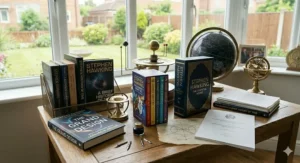
But here’s the thing: Hawking wrote a lot. Not just one landmark text but an entire body of work spanning cosmology, philosophy, children’s fiction, and memoir. Some books are dense with ideas; others are disarmingly readable. A few were written with collaborators; one was assembled from his notes after his death in 2018. Knowing which to start with, which to save for later, and which ones genuinely belong in any serious stephen hawking books collection — that’s where this guide earns its keep.
According to the Stephen Hawking Foundation, his work continues to inspire generations of scientists and curious minds worldwide. His legacy stretches far beyond the page. But the books remain the most direct route into his thinking. Let’s build your collection properly.
Quick Comparison: Stephen Hawking Books at a Glance
| Book | Best For | Difficulty | Price Range (Amazon.co.uk) | Prime Eligible |
|---|---|---|---|---|
| A Brief History of Time | All readers, absolute first read | ⭐⭐⭐ Medium | Around £7–£12 | ✅ Yes |
| The Universe in a Nutshell | Visual learners, intermediate | ⭐⭐⭐ Medium | Around £10–£16 | ✅ Yes |
| Brief Answers to the Big Questions | Modern issues, quick reads | ⭐⭐ Easy | Around £8–£13 | ✅ Yes |
| The Grand Design | Philosophy + physics blend | ⭐⭐⭐ Medium | Around £8–£12 | ✅ Yes |
| Black Holes and Baby Universes | Essays, personal insight | ⭐⭐ Easy–Medium | Around £7–£11 | ✅ Yes |
| A Briefer History of Time | Beginners, updated overview | ⭐⭐ Easy | Around £8–£12 | ✅ Yes |
| My Brief History | Biography lovers | ⭐ Easy | Around £7–£11 | ✅ Yes |
All books listed are available on Amazon.co.uk in paperback, hardback, and Kindle formats. Prime members enjoy free next-day delivery across most UK postcodes. For those without Prime, orders over £25 typically qualify for free standard delivery.
The table above tells a clear story: there is a stephen hawking books collection entry point for every type of reader. The easier reads (My Brief History, Brief Answers) make genuinely excellent starting points if the cosmos feels intimidating, while The Universe in a Nutshell rewards those ready to commit a little more brain power. Mid-range buyers looking to build a shelf should note that a complete paperback set of all seven typically costs well under £70 — outstanding value for a library that covers forty years of cosmological thinking.
💬 Just one click — help others make better buying decisions too! 😊
✨ Don’t Miss These Exclusive Deals!
🔍 Take your stephen hawking books collection to the next level with these carefully selected titles. Click on any highlighted book to check current pricing and availability on Amazon.co.uk. Whether you’re buying your first or rounding out a complete set, these picks will help you find exactly what you need!
Top 7 Stephen Hawking Books: Expert Analysis
1. A Brief History of Time: From the Big Bang to Black Holes — The One That Started Everything
Published in 1988 and still in print nearly four decades later, this is the book that made Stephen Hawking famous beyond the walls of academic physics. It covers the origin and structure of the universe, the nature of time, black holes, and the search for a grand unified theory — all in language a determined non-scientist can follow. The paperback runs to around 200 pages, which is almost comically slim given the ambition of its subject matter.
What strikes you immediately is the confidence of the prose. Hawking doesn’t hedge or qualify everything into mush. He commits. Whether he’s discussing the arrow of time or the geometry of singularities, there’s a clarity that reflects genuine mastery — the kind of person who understands something so deeply that they no longer need jargon to describe it. According to Wikipedia, the book spent 237 weeks on the Sunday Times bestseller list, which remains a staggering achievement for a book about cosmology.
For UK readers, this is the natural starting point in any stephen hawking books collection. It’s available in multiple paperback editions on Amazon.co.uk, including a 30th anniversary edition with a new foreword. UK reviews frequently note that it’s an “ideal gift” — which is accurate, though it undersells it slightly. It’s an ideal book, full stop.
UK readers mention occasional difficulty with the mathematics-adjacent chapters, but the majority find the early chapters on space and time immediately gripping. A strong consensus among British reviewers: finish the whole thing before deciding whether you’re a Hawking reader. The payoff is worth the occasional concentration required.
✅ Genuinely accessible to non-scientists
✅ Historical and philosophical depth alongside the physics
✅ The logical first entry in any collection
❌ Some middle chapters demand patient re-reading
❌ Dated slightly in areas since 1988, though core concepts remain valid
Around £7–£12 on Amazon.co.uk — arguably the best value-per-idea ratio in popular science publishing.
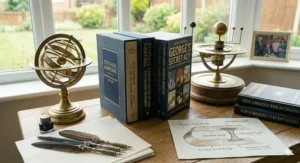
2. The Universe in a Nutshell — Physics for the Eyes as Much as the Mind
If A Brief History of Time was the landmark, The Universe in a Nutshell (2001) is the illustrated companion that updates and expands everything. Co-produced with lavish colour photographs and diagrams on nearly every page, it covers M-theory, supergravity, supersymmetry, and the possibilities of multiple dimensions. The printing quality on the Amazon.co.uk paperback is noticeably good — important when the visuals are doing as much explanatory work as the text.
What this book does exceptionally well is make abstract geometry almost tactile. The diagrams of curved spacetime, brane worlds, and eleven-dimensional physics aren’t decorative — they’re load-bearing. Hawking understood that some ideas cannot be conveyed purely in sentences, and he leans into visual communication in a way that A Brief History never quite did. For anyone who reads better when there’s something to look at alongside the words, this is genuinely transformative.
UK readers with a background in mathematics or engineering tend to find The Universe in a Nutshell particularly satisfying — it gestures towards the technical without disappearing into it. Students in A-level physics or first-year university STEM programmes often cite this as the book that made theoretical physics feel like a real career option. That’s not nothing.
UK reviewers on Amazon.co.uk consistently praise the production quality and note it makes a handsome gift. One thing worth knowing: the large-format hardback edition is notably heavier than it looks, which matters if you’re planning to read it on a commute from Leeds to London.
✅ Stunning visual design that aids understanding
✅ Updates A Brief History with two decades of new physics
✅ Excellent for visual and spatial thinkers
❌ The large hardback is cumbersome; paperback preferred for commuting
❌ Assumes familiarity with A Brief History of Time concepts
Around £10–£16 on Amazon.co.uk — the illustrated hardback costs slightly more but is worth it for the visuals.
3. Brief Answers to the Big Questions — His Final, Most Urgent Book
Published posthumously in 2018, assembled from Hawking’s writings, speeches, and interviews, this is the book that answers the questions people are most afraid to ask scientists. Is there a God? Will artificial intelligence destroy us? Should humanity colonise space? Is time travel possible? Hawking doesn’t flinch from any of them. He answers with characteristic confidence and, occasionally, unexpected warmth.
The real value of Brief Answers in 2026 — eight years after his death — is how prescient it reads. His sections on artificial intelligence and climate change feel ripped from last week’s headlines rather than from the archive of a man who died in Cambridge in 2018. The AI warnings in particular are striking. Hawking wasn’t catastrophising; he was extrapolating carefully from real physics. The Guardian described it at publication as a book that manages to be both scientifically serious and emotionally moving simultaneously. That’s a rare combination.
For UK readers building a stephen hawking books collection, this is the ideal second or third book after A Brief History of Time. It covers enough new ground to feel distinct rather than repetitive, and the relatively short chapters (some barely five pages) make it eminently readable on a train or during a lunch break in the park — all ten minutes of British summer permitting. The foreword by Eddie Redmayne is a nice touch; brief and genuine rather than performatively adulatory.
UK Amazon reviewers consistently describe it as “accessible,” “moving,” and — interestingly — “timely,” which says something about how well Hawking’s thinking has aged into our present moment.
✅ Accessible, chapter-by-chapter structure suits busy readers
✅ Addresses contemporary issues with remarkable relevance
✅ A fitting and moving final statement from one of Britain’s greatest scientists
❌ Some chapters feel slightly unfinished — a consequence of posthumous assembly
❌ Lighter on hard physics than his earlier work
Around £8–£13 on Amazon.co.uk — available in paperback, hardback, and Kindle editions.
4. The Grand Design (with Leonard Mlodinow) — Where Physics Meets Philosophy
Co-written with Caltech physicist Leonard Mlodinow and published in 2010, The Grand Design is simultaneously Hawking’s most philosophically ambitious and most controversial book. It opens with the bold assertion that philosophy is dead — that science has answered the questions once left to philosophers — and then spends the next 200 pages making the case for M-theory as the most complete description of the universe we have. Whether or not you agree with the conclusion, the argument is exhilarating.
The collaboration with Mlodinow is a genuine upgrade in clarity. Where A Brief History of Time occasionally demands the reader to simply trust Hawking’s authority, The Grand Design takes more care to build the argument step by step. The result is a book that can be finished in a weekend and leaves you with a fundamentally altered view of why the universe exists at all — which is, when you stop to think about it, quite an extraordinary thing for a short paperback to accomplish.
British philosophers of science were not universally charmed — the dismissal of philosophy as dead generated considerable debate in academic circles and in the pages of publications like Prospect magazine. That controversy is actually a mark in the book’s favour. It takes positions. In an era of hedge-everything popular science writing, The Grand Design commits.
UK readers interested in hawking cosmology books will find this an essential inclusion. It pairs excellently with A Brief History of Time — read them back to back for the full arc of Hawking’s cosmological thinking over two decades.
✅ Accessible, well-paced co-authorship structure
✅ Takes bold philosophical positions rarely seen in popular science
✅ Excellent companion to A Brief History of Time
❌ Some scientists and philosophers dispute its central thesis
❌ Shorter than expected at around 200 pages — some readers want more
Around £8–£12 on Amazon.co.uk — paperback is widely available with Prime delivery.
5. Black Holes and Baby Universes and Other Essays — The Personal Hawking
Here is where you get the man behind the equations. Published in 1993, this collection of thirteen essays and one extended interview ranges from highly technical discussions of black hole thermodynamics to unexpectedly candid reflections on his own childhood, his diagnosis with motor neurone disease at 21, and his thoughts on God, fame, and the nature of scientific discovery. It is, in the very best sense, a mixed bag — and all the more valuable for it.
What most buyers overlook about this book is that it represents the most autobiographical writing Hawking produced before My Brief History (2013). The early essays on his life in Oxford and Cambridge read with a quiet, dry wit that rarely makes it into discussions of his scientific legacy. He was, it turns out, a deeply funny man in a very English way — the sort who would describe a near-death experience with precisely calibrated understatement. The University of Cambridge’s official remembrance pages note his remarkable ability to communicate not just science but a sense of life lived at full intellectual intensity despite extraordinary physical constraint.
For UK readers, this book is particularly resonant. Hawking’s Cambridge life — the Backs, the Cam, the specific texture of a British academic existence — comes through vividly, and there’s something moving about reading it on this side of the Atlantic. It belongs in every serious stephen hawking books collection, though not necessarily as the first book purchased.
UK reviewers tend to rate this one highly for “humanising” Hawking, a word that comes up repeatedly. Some note that the more technical essays are considerably harder going than the personal ones.
✅ Reveals Hawking’s wit, character, and personal history
✅ Technically varied — something for every reader
✅ Excellent companion to the more purely scientific texts
❌ Technical essays are uneven in difficulty
❌ Less cohesive than single-topic books
Around £7–£11 on Amazon.co.uk — typically the most affordable entry point in his catalogue.

6. A Briefer History of Time (with Leonard Mlodinow) — The Accessible Update
Published in 2005 with Mlodinow, this is essentially a revised, condensed, and updated version of A Brief History of Time — and it’s more accessible than the original without being dumbed down. New chapters on string theory, quantum mechanics, and the search for a unified theory replace some of the older material, and Mlodinow’s influence as a clear communicator is evident throughout. If you’ve always meant to read A Brief History of Time but never quite got round to it, this is the version to start with.
The honest truth is that some readers find A Briefer History slightly easier to enjoy than its predecessor, simply because it was written with a more deliberate pedagogical intent. The chapter on the nature of scientific theories alone is worth the price of the book — it’s one of the clearest explanations of how science actually works that you’ll find anywhere in popular literature.
For anyone buying a stephen hawking books collection as a gift for a teenager who’s just discovered an interest in physics — perhaps after a school trip to the Science Museum in South Kensington, or after watching a documentary — this is the single best place to start. It’s also available in Kindle format, which matters for the generation that does all their reading on a phone.
UK readers report that this pairs beautifully with BBC documentaries on Hawking’s life, several of which are still available on iPlayer, for a well-rounded introduction to his work and world.
✅ More accessible than the original Brief History
✅ Updated with 17 years of scientific developments
✅ Ideal gift for young UK readers discovering science
❌ Purists prefer the original; this can feel slightly sanitised by comparison
❌ Shorter depth per topic than the 1988 original
Around £8–£12 on Amazon.co.uk — Kindle edition is typically the most affordable option.
7. My Brief History — The Memoir That Fills in Everything Else
Published in 2013, just five years before his death, My Brief History is Hawking’s own account of his life: childhood in Oxford and St Albans, student years at Oxford and Cambridge, the diagnosis at 21, the marriages, the scientific breakthroughs, the pop-culture celebrity. At barely 130 pages, it’s the shortest book in any complete stephen hawking books collection, but it packs in a remarkable amount. The brevity is entirely characteristic — Hawking never wasted words.
What sets this apart from other scientific memoirs is the restraint. He doesn’t overexplain or over-emote. He describes extraordinary events — being taken to hospital after a punt fell on him, receiving devastating medical news, becoming globally famous — with the same measured equanimity he applied to black hole thermodynamics. It’s rather extraordinary, and slightly devastating in the best possible way.
For UK readers who come to Hawking from The Theory of Everything (the Oscar-winning 2014 film starring Eddie Redmayne), this memoir provides the version of events as Hawking himself chose to tell it — which is revealing in its own right. It’s worth reading alongside the film rather than instead of it.
UK Amazon reviewers frequently describe it as “too short” — which is probably the best review any book can receive. Available in paperback and Kindle on Amazon.co.uk, with Prime delivery available.
✅ Exceptionally personal and direct
✅ Perfect companion to his scientific work
✅ Short enough to finish in a single sitting
❌ Some readers want considerably more detail — particularly on Cambridge life
❌ Skips lightly over some significant scientific achievements
Around £7–£11 on Amazon.co.uk — the most personal, and most overlooked, book in the collection.
How to Build Your stephen hawking books collection: A UK Reader’s Guide
Building a collection is different from buying a single book. You want a reading order that creates a journey — not just a shelf that looks impressive but leads nowhere.
Start here if you’re brand new to Hawking: A Briefer History of Time (2005) is genuinely the gentlest on-ramp. Once you’ve read that, A Brief History of Time (1988) rewards a second look — you’ll catch things you’d miss going in cold.
If you’re buying for someone else: Brief Answers to the Big Questions (2018) is the safe choice. It’s the most immediately relevant to contemporary anxieties, it’s physically beautiful as a hardback gift, and it doesn’t require prior knowledge of physics. The Daily Telegraph called it “a beautiful little book by a brilliant mind,” which does most of the gift tag writing for you.
For the complete collection in one order: The most economical approach for UK buyers is to check for bundle sets on Amazon.co.uk — several publishers and resellers offer collections of 3-6 Hawking titles at a discount. Collections typically include A Brief History of Time, The Grand Design, The Universe in a Nutshell, Brief Answers to the Big Questions, and My Brief History. Bundled sets generally fall in the £30–£55 range and usually qualify for free delivery without needing Prime membership.
A note on format: The illustrated editions (The Universe in a Nutshell in particular) lose something significant on Kindle. For everything else, digital is perfectly fine. If you’re a student in halls who counts every kilogram, Kindle is obviously the answer.

Real-World UK Reading Scenarios: Which Hawking Book Fits Your Life?
The London Commuter. If you’re spending 45 minutes each way on the Elizabeth line or Northern line, My Brief History or Brief Answers to the Big Questions are perfect tube companions. Short chapters, immense payoff. Neither requires you to remember where you were last Tuesday.
The University Student in Edinburgh or Bristol. The Grand Design and A Brief History of Time read extremely well alongside a first-year physics or philosophy of science course. The books don’t require the courses, but the conversations they spark in a seminar room are rather good. The University of Cambridge’s Centre for Theoretical Cosmology, where Hawking worked for decades, has publicly available resources that pair beautifully with his books for anyone wanting to go deeper.
The Parent of a Curious Teenager. A Briefer History of Time for the teenager. If they’ve already devoured that, move them to The Universe in a Nutshell — the visuals keep the pages turning. For younger children (roughly 8–12), the George’s Secret Key to the Universe series, co-authored with his daughter Lucy Hawking, is the natural starting point. It’s a proper children’s adventure series that smuggles real cosmology into the narrative. Available on Amazon.co.uk, separately and in box sets.
The Retired Professional. Black Holes and Baby Universes — the essays and the autobiography woven together offer something that purely scientific books cannot: a life, examined. For anyone who has the time to read reflectively rather than urgently, this is the Hawking book that lingers longest.
Common Mistakes When Buying a Stephen Hawking Books Collection
Starting with the wrong book. The most common error is buying The Nature of Space and Time (1996, co-written with Roger Penrose) as a first Hawking read. It’s superb, but it’s essentially a transcription of technical lectures. It presupposes familiarity with general relativity and quantum field theory. Most general readers will find it challenging to the point of discouragement. Save it for after you’ve read at least two or three of the accessible titles.
Buying only the famous one. A Brief History of Time is a gateway, not a destination. Reading only that book is like visiting London, seeing only Big Ben, and declaring you’ve seen England. The richness of a proper stephen hawking books collection comes from the range — the personal alongside the cosmological, the collaborative works alongside the solo efforts.
Ignoring the audiobooks. This is particularly worth mentioning for UK readers. Several of Hawking’s books are available in audio format on Amazon.co.uk, narrated by professional voice actors (Hawking’s own synthesised voice appears in some versions, which is rather extraordinary). Brief Answers to the Big Questions features narration by multiple readers including actors who knew Hawking personally. For anyone with a lengthy commute by car — the M25 beckons — these are a genuinely excellent alternative to music.
Overlooking the children’s series. The George’s Secret Key to the Universe series, co-written with Lucy Hawking, is often dismissed by adults buying for themselves. Don’t. The first three books are available in a box set on Amazon.co.uk and make outstanding gifts for anyone between the ages of eight and twelve. They are, somewhat quietly, among the best introductions to cosmology for young people currently in print.
Buying US editions. This matters more than it might seem. Some US editions imported via Amazon.co.uk Marketplace sellers are printed on inferior paper, lack the proper UK pagination, and occasionally differ in text (certain editions were slightly edited for American audiences). Always check you’re buying a UK edition — Bantam Press and Transworld Publishers handle most of the UK printing, and their editions are noticeably better produced.
What to Expect: Hawking’s Books in the Real-World Context of British Science Culture
Britain has a deep and particular relationship with popular science writing. From Richard Dawkins to Carl Sagan’s influence on a generation of BBC documentary makers, there’s a tradition here of taking scientific ideas seriously as cultural objects. Hawking sits at the apex of that tradition. He held the Lucasian Chair of Mathematics at Cambridge — the same position once held by Isaac Newton — for thirty years, which is the sort of fact that doesn’t lose its power with repetition.
His books reflect British scientific culture in specific ways. The humour is dry and self-deprecating. The confidence is immense but rarely showy. There’s a disinclination to oversell that you’d never mistake for American popular science writing. When Hawking says a theory is “elegant,” he means it with a precision that takes some unpacking but rewards the effort.
The Royal Society — the UK’s independent scientific academy — has extensive materials on cosmology and theoretical physics that provide excellent context for reading Hawking, particularly for readers who want to understand where his work sits in the broader landscape of British science.
For UK readers particularly interested in hawking cosmology books and the black holes hawking explored throughout his career, it’s worth knowing that his two most technical popular works — The Universe in a Nutshell and The Grand Design — are where his thinking about Hawking radiation, imaginary time, and the no-boundary proposal are most accessibly developed. These aren’t casual holiday reads, exactly, but they’re not textbooks either. They occupy a particularly useful middle ground.
✨ Build Your Collection Today!
🔍 Every book above is available on Amazon.co.uk — click through to check current pricing, stock levels, and delivery options. Prime members get free next-day delivery on all of them. These are books worth owning, not just borrowing.
Stephen Hawking’s Scientific Legacy: Why These Books Still Matter in 2026
Stephen Hawking died on 14 March 2018 — a date that happened to be both Albert Einstein’s birthday and Pi Day. The coincidence felt, to many people, almost too neat. But his work did not stop mattering when he died.
The theoretical physics hawking developed over a fifty-year career at Cambridge continues to shape active research. Hawking radiation — the theoretical mechanism by which black holes slowly lose mass and eventually evaporate — remains one of the most important unconfirmed predictions in all of physics. Observational astronomers are still working towards the technology needed to test it directly. When the James Webb Space Telescope produces data on black hole environments, Hawking’s equations are in the analytical toolkit.
But it’s the cultural legacy that makes the books matter in a different way. At a moment when scientific literacy feels more urgent than ever — climate modelling, AI risk, pandemic response — Hawking’s ability to communicate the importance of rational, evidence-based thinking without being preachy about it is a model worth studying. He never talked down to his readers. He never assumed they couldn’t handle difficulty. He simply explained, with tremendous precision and occasional wit, what he saw.
That attitude runs through every entry in his bibliography. You feel it on page one of A Brief History of Time and you feel it on the last page of Brief Answers to the Big Questions. Whatever the format, the implicit message is always: the universe is knowable, and knowing it matters. For a British audience shaped by the BBC’s long tradition of serious public science communication, that message lands somewhere rather deep.

FAQ: Stephen Hawking Books Collection — UK Readers’ Questions Answered
❓ Which Stephen Hawking book should a complete beginner read first?
❓ Are all Stephen Hawking books available on Amazon.co.uk with UK delivery?
❓ Is the illustrated edition of The Universe in a Nutshell worth buying over the standard paperback?
❓ What is the reading order for a complete Stephen Hawking books collection?
❓ Are Stephen Hawking's children's books suitable for UK primary school children?
Conclusion: Why a stephen hawking books collection Belongs on Every British Bookshelf
There’s a particular pleasure in owning a collection that represents a single mind, fully developed over time. Hawking’s books do that in a way few scientists’ bibliographies can match. From the cosmic ambition of A Brief History of Time to the quiet, earned wisdom of Brief Answers to the Big Questions, they trace an extraordinary intellectual life from beginning to end.
You don’t need to be a physicist to read them. You don’t need a science A-level or a subscription to Nature. What you need is curiosity about the largest questions anyone has ever tried to answer — and a tolerance for occasionally finding that the answer is: we don’t yet know, but here’s how beautiful the uncertainty is.
For UK readers, there’s the additional pleasure of reading a British scientist writing about British things in a distinctly British register. Oxford. Cambridge. The BBC Reith Lectures. A certain kind of genius expressed through understatement rather than spectacle. It’s very much ours, and it’s rather wonderful.
✨ Start Your Collection Today!
🔍 All seven books reviewed above are available on Amazon.co.uk. Click any title to check current pricing, availability, and delivery options. Whether you’re buying your first Hawking or completing the set, now is an excellent time to invest in one of the most important libraries in modern science writing.
Recommended for You
- 7 Best Physics Books for Beginners in the UK (2026 Guide)
- 7 Best Cold Case Investigations Books UK 2026 – Gripping True Crime Picks
- Best Cold Case Books UK 2026: 7 Unputdownable True Crime Picks
Disclaimer: This article contains affiliate links. As an Amazon Associate, I earn from qualifying purchases. If you purchase products through these links, we may earn a small commission at no additional cost to you.
✨ Found this helpful? Share it with your mates! 💬🤗
