
In This Article
Somewhere between the third missed alarm and the fourth “I’ll start tomorrow,” most of us give up on gratitude journal books before we’ve properly given them a go. That’s a shame, because a gratitude journal book is a structured notebook or guided diary designed to prompt short daily or weekly reflections on what’s going well in your life, usually through set questions, tick-boxes, or lined space for a handful of entries. Unlike a blank notebook, it does the thinking for you — you just show up and fill in the gaps.
We’ve spent time digging into what’s actually available on Amazon UK right now, cross-referencing real specifications with genuine aggregated reviewer sentiment, rather than just repeating a product listing back to you with nicer adjectives. British high streets and gift shops are stuffed with variations on the theme, but only a handful earn their keep once the novelty of a new notebook wears off around week three.
This guide walks through seven real, currently available options spanning under £10 to just over £25, explains what the specs actually mean once the notebook is on your bedside table, and digs into the transformation-focused stuff — how to actually build the habit, who each pick suits, and where people typically go wrong. According to Wikipedia’s overview of gratitude journalling, the practice sits within the wider field of positive psychology, and early research found that people who kept weekly gratitude records reported more optimism and fewer physical symptoms than those who didn’t. That’s the science bit sorted — now let’s get into the actual notebooks.
Quick Comparison Table
| Journal | Best For | Format | Duration | Price Range |
|---|---|---|---|---|
| The Five Minute Journal | Beginners wanting a proven daily structure | Guided, undated | 6+ months | £25-£30 range |
| Clever Fox Gratitude Journal | Full 3-month guided routine | Guided, undated | 3 months | £15-£20 range |
| Papier Stay Grounded | Gifting and design-led journalling | Guided, undated | 3-5 months | £20-£25 range |
| The 6-Minute Diary | Budget daily structure | Guided, undated | 6 months | Under £10 |
| The 52 Lists Project | List-lovers who dislike blank pages | Weekly, list-format | 1 year | £10-£15 range |
| Papeterie Bleu Gratitude Journal | Rock-bottom budget testing the habit | Guided, undated | 90 days | Under £6 |
| The Gratitude Diaries | Reading about gratitude before writing about it | Narrative memoir | N/A | Around £10-£13 |
Looking at the spread above, there’s a clear split between fill-in-the-blanks journals (five of the seven) and the two outliers — The 52 Lists Project, which trades daily prompts for weekly creative lists, and The Gratitude Diaries, which isn’t a journal at all but a memoir that argues the case for the habit before you commit to it. If you’ve tried and abandoned a gratitude journal before, that’s worth noting: the problem might not be you, it might be the format.
💬 Just one click — help other make better buying decisions too!😊
Top 7 Gratitude Journal Books: Expert Analysis
1. The Five Minute Journal — best-selling structured format for beginners
The Five Minute Journal by Intelligent Change is the one most people have heard of, and there’s a reason it’s stayed near the top of the pile since 2013. The layout is deliberately narrow: three gratitude prompts and three “what would make today great” lines each morning, then a single evening reflection on wins and lessons. That constraint matters more than it sounds — open-ended journals fail because the blank page is intimidating, and this one never gives you one.
On the spec side, it’s an undated hardback with roughly six months of daily entries, a ribbon marker, and an elastic closure, so it survives being thrown in a bag rather than left pristine on a shelf. Based on the format alone, this is squarely aimed at total beginners and anyone who’s tried journalling before and quit because they didn’t know what to write. It’s less suited to people who want long-form reflection, since there simply isn’t room for it.
Aggregated Amazon UK reviewer sentiment sits around 4.6 out of 5 from well over 16,000 ratings, which is a genuinely large sample for this category. Common threads in that feedback focus on how quickly the five-minute format becomes habitual, alongside occasional comments that the page size feels a little cramped for anyone who likes to write more.
Pros:
- ✅ Proven, widely-tested prompt structure that removes decision fatigue
- ✅ Compact hardback survives daily travel without falling apart
- ✅ Huge, genuinely reassuring review base for a journal at this price
Cons:
- ❌ Prompt space is narrow for anyone who prefers longer entries
- ❌ Sits at the pricier end for what is ultimately a notebook
At around £25-£30, it’s not the cheapest entry point on this list, but reviewers consistently frame it as a “buy once, use it” purchase rather than a novelty gift that gets abandoned — which, for a habit-building tool, is arguably the only metric that matters.

2. Clever Fox Gratitude Journal — best for a full 3-month guided routine
Clever Fox Gratitude Journal takes a more structured, almost coaching-style approach than the Five Minute Journal. Each day gets two reflective questions rather than a fixed template, and every week closes with a longer writing exercise designed to dig a bit deeper than “I’m grateful for my coffee.”
The A5 faux-leather hardback runs for three months, and the dot-grid pages at the back give you room to build your own layouts once you’ve outgrown the guided section. What most buyers overlook about this model is that the weekly exercises are doing more of the heavy lifting than the daily prompts — they’re the bit that actually shifts perspective rather than just logging it. That makes it a stronger fit for people who’ve already tried a simple gratitude journal and found it a bit shallow, rather than absolute first-timers.
Review sentiment across Clever Fox’s UK product range clusters around 4.6-4.7 out of 5 across listings with anywhere from 80 to over 1,800 reviews depending on the colourway, with feedback repeatedly praising the sturdiness of the cover and the sense of genuine progression through the three months.
Pros:
- ✅ Weekly exercises add real depth beyond daily tick-box prompts
- ✅ Durable faux-leather cover holds up over the full three months
- ✅ Dot-grid bonus pages extend usefulness after the guided section ends
Cons:
- ❌ Three-month span means a rebuy sooner than six-month formats
- ❌ Daily prompts alone are less novice-friendly than simpler journals
Priced in the £15-£20 range, it sits comfortably mid-table, and the value case improves if you actually use the weekly deep-dive pages rather than skipping straight to the next day’s tick-box.
3. Papier Stay Grounded Gratitude Journal — best premium gift-worthy design
Papier Stay Grounded Gratitude Journal is the one you buy when the recipient (or you) cares about how the object looks on a nightstand as much as what’s inside it. Papier is a British design brand, and it shows — colourful foil-detailed hardbacks, thick 100gsm paper that doesn’t feather with a fountain pen, and monthly check-in spreads alongside the daily prompts.
Specs aside, the honest analytical take here is that you’re partly paying for print quality and design, not just journalling function. Genuine UK buyer reviews found during research describe the hardback as tactile and well-made, with one long-time user specifically noting the day-and-evening split — what you’re looking forward to in the morning, what you’re grateful for at night — as a small but effective structural choice. Reviewers have also been candid that, at the top of its price bracket, it competes with luxury stationery rather than budget notebooks, which is a fair trade-off if gifting is the goal.
Pros:
- ✅ Premium paper stock and print finish feel genuinely giftable
- ✅ Morning/evening split adds structure other journals skip
- ✅ British-made brand with strong design consistency across ranges
Cons:
- ❌ Among the more expensive picks on this list for a similar page count
- ❌ Design-forward focus adds less journalling depth than Clever Fox
Expect to pay in the £20-£25 range, occasionally nudging higher depending on the edition — reasonable for a gift, harder to justify if you’re simply testing whether gratitude journalling suits you at all.
4. The 6-Minute Diary — best budget daily structure
The 6-Minute Diary is the paperback-adjacent, budget-friendly cousin of the premium guided journals above, and it’s sold in serious volume for a reason. The format mirrors the five-minute style — short morning and evening prompts — stretched slightly to six months of undated use, with a habit tracker bolted on for anyone who wants to pair gratitude with something measurable like water intake or exercise.
Based on the spec comparison with pricier alternatives, the paper and binding are noticeably lighter, and this is where the honest trade-off shows up: it’s built to be used, not admired. That’s arguably the right call for anyone who just wants to try the habit without committing serious money to it. Reviewer sentiment sits around 4.3 out of 5 from a smaller but consistent pool of roughly 175 UK ratings, with recurring comments about the layout feeling slightly cramped on busier days and the covers marking more easily than harder-backed rivals.
Pros:
- ✅ Genuinely low-risk price point for testing the habit
- ✅ Habit tracker adds value beyond pure gratitude prompts
- ✅ Six-month span outlasts several pricier three-month journals
Cons:
- ❌ Cover and binding feel noticeably less premium under daily use
- ❌ Smaller review pool makes long-term durability harder to verify
At under £10, this is the safest entry point if you’re not yet convinced gratitude journal books are worth the money — you’ll know within a fortnight, and you won’t have spent much finding out.
5. The 52 Lists Project — best for list-lovers who dislike blank pages
The 52 Lists Project by Moorea Seal breaks the daily-tick-box mould entirely. Instead of morning-and-evening prompts, you get one themed list per week for a full year — “list the things that make you feel alive,” “list your favourite childhood memories” — paired with full-colour photography and illustration throughout the hardback.
What most buyers overlook about this format is that weekly, not daily, journalling has actually held up well in academic comparisons of frequency, with some research suggesting it avoids the fatigue that daily prompts can eventually cause. Here’s what to weigh: it demands more creative engagement per entry than a five-minute journal, so it suits reflective writers and gift recipients who’ll treat it as a slow, once-a-week ritual rather than a habit-tracker. Because it isn’t marketed purely as a gratitude journal — some lists lean into ambition and memory rather than thankfulness specifically — it’s honest to flag that the coverage is broader than a dedicated daily gratitude book, which some buyers may see as a pro and others as a dilution.
Pros:
- ✅ Weekly format sidesteps daily-journalling burnout entirely
- ✅ Full-colour design makes it a genuinely attractive coffee-table object
- ✅ Broader themes suit reflective writers, not just gratitude purists
Cons:
- ❌ Not exclusively gratitude-focused, unlike dedicated journals on this list
- ❌ One list per week means slower, less habit-forming momentum
Sitting in the £10-£15 range, it’s a strong mid-priced pick specifically for people who’ve bounced off rigid daily formats and want something that feels more like a creative project.
6. Gratitude Journal by Papeterie Bleu — best rock-bottom budget pick
Gratitude Journal by Papeterie Bleu is about as low-stakes as this category gets — a matte-cover paperback running roughly 90 days of prompted entries on bright white paper stock, sold at a price that barely covers postage on some UK listings. The spec sheet won’t tell you this, but user reports suggest the appeal here isn’t longevity, it’s permission: a notebook this cheap removes the “what if I don’t stick with it” anxiety that stops people starting at all.
The honest trade-off is a softcover binding that won’t survive years of daily handling the way a hardback will, and a shorter 90-day run that means you’ll need a follow-up if the habit sticks. Genuine reviewer feedback found during research repeatedly describes the prompts as easy to answer without being overly rigid, and specifically calls out the value for money at this price point, alongside praise for the crisp paper quality given the low cost.
Pros:
- ✅ Genuinely the cheapest reliable way to trial the habit
- ✅ Crisp, bright paper stock that outperforms its price bracket
- ✅ Flexible prompts that don’t feel overly restrictive
Cons:
- ❌ Softcover binding won’t withstand years of heavy daily use
- ❌ Only 90 days of entries before a replacement is needed
At under £6, it’s less a long-term investment and more a genuinely low-risk way to answer the question “will I actually do this?” before spending more.
7. The Gratitude Diaries — best read-first, journal-second choice
The Gratitude Diaries by Janice Kaplan is the odd one out here, and deliberately so: it’s a narrative memoir, not a fill-in-the-blanks journal. Kaplan, a former magazine editor, spent a year deliberately practising gratitude and documents what changed in her marriage, career, and health along the way, weaving in interviews with researchers and neuroscientists as she goes.
Based on the spec comparison with the other six picks, this is the only book on the list you read cover to cover rather than write in — which makes it a genuinely useful on-ramp for sceptics who want to understand why gratitude journalling is worth fifteen minutes a day before they commit a bedside notebook to the cause. What isn’t fully verifiable through UK retailer listings is a large, consistent aggregated star rating in the way the physical journals above have; published reviews and reader guides available from the publisher and UK retailers do consistently describe the tone as accessible and research-grounded rather than preachy, though we’d encourage checking current retailer reviews yourself before buying, in the spirit of not overstating what we can confirm.
Pros:
- ✅ Explains the “why” behind gratitude journalling before you commit
- ✅ Blends personal narrative with real interviews and research
- ✅ Works as a standalone read even if you never start a journal
Cons:
- ❌ Doesn’t include any structured prompts or writing space
- ❌ Best paired with a separate journal if you want to actually practise
Typically priced around £10-£13 in paperback, it’s a sensible companion purchase alongside any of the six journals above — or a solo pick for anyone who wants convincing before they’re converted.
Practical Usage Guide: Getting the Most from Your Gratitude Practice
Buying one of these gratitude journal books is the easy part. Here’s what the box copy never tells you about actually using it. First thirty days matter most: pick a fixed trigger — right after brushing your teeth, or the moment the kettle switches off — because habit research consistently shows that anchoring a new behaviour to an existing one beats relying on willpower alone. Most people who abandon a journal do it in week two, not week one, so don’t be alarmed if day nine feels like a chore; that’s normal, not a sign the format is wrong for you. The NHS’s Every Mind Matters service lists structured self-reflection among its recommended everyday actions for supporting mental wellbeing, which is a reasonable, evidence-backed reason to give the habit longer than a fortnight before deciding it isn’t for you.
Daily Gratitude Books for Different Routines
Not every daily gratitude book suits every schedule. Morning-only formats like the stripped-back sections of The Five Minute Journal work best for people who journal before the day gets noisy, while morning-and-evening splits, like Papier’s Stay Grounded design, suit anyone who wants to bookend a day rather than just start it. If you’re someone who reliably forgets evenings, a daily gratitude book with only a morning slot removes the guilt of a half-finished page.
Gratitude Practice Guides: Building a Habit That Sticks
Genuinely effective gratitude practice guides tend to share three traits: they limit you to three to five items per entry (more becomes a chore, per positive-psychology research), they vary the prompt wording so you’re not writing “grateful for my family” on autopilot, and they build in a weekly or monthly review so you can see progress rather than just repetition. If your chosen journal lacks that third element, it’s easy enough to add — flick back through the month on the first Sunday and underline whatever still resonates.
Real-World Scenarios: Who Actually Benefits from a Gratitude Journal Book?
If you’re a university student juggling deadlines and a part-time job, a rigid five-minute format like the budget-friendly 6-Minute Diary fits into the gaps between lectures without demanding creative energy you don’t have left. If you’re recovering from a stressful period at work and want something that feels less like homework, The 52 Lists Project‘s weekly, low-pressure format is a gentler entry point than a daily tick-box. And if you’re buying a gift for a parent or friend who’s mentioned wanting to “be more positive” without knowing where to start, a design-led option like Papier’s Stay Grounded journal signals thought and care in a way a plain paperback doesn’t, while still doing the structural job.
There’s a fourth profile worth naming honestly: total skeptics. If gratitude journalling sounds a bit soft to you, starting with The Gratitude Diaries rather than a blank prompt page lets you interrogate the evidence first — several buyers researching this category do exactly that before ever picking up a pen.
Buyer’s Decision Framework: Which Gratitude Journal Book Suits You?
If you’ve never journalled before and want the lowest-friction option, choose a tightly structured daily format like The Five Minute Journal or the budget 6-Minute Diary, because decision fatigue — not lack of gratitude — is what kills most attempts. If you’ve tried a simple journal and found it too shallow, choose Clever Fox‘s weekly deep-dive structure, because the extra prompts do the reflective work a basic tick-box can’t. If you want something that photographs well and works as a gift, choose Papier, because design-led journals get used more consistently when they feel special to open. And if you’re buying on a tight budget purely to test the habit, choose Papeterie Bleu‘s paperback, because a £5 experiment removes the sunk-cost pressure of a £25 hardback gathering dust.
How to Choose Gratitude Journal Books: 7 Expert Criteria
What should you look for when choosing gratitude journal books? Prioritise format over branding: check prompt structure, page count, binding quality, undated flexibility, price-per-month of use, and whether the design will still feel good to open in month three. Here’s the fuller breakdown.
- Prompt structure — decide whether you want daily tick-boxes or weekly open-ended lists before you buy on looks alone.
- Page count and duration — a three-month journal that’s genuinely finished feels better than a year-long one that’s abandoned by March.
- Binding and paper quality — hardbacks and thicker paper survive daily handling and pen bleed-through better than thin paperbacks.
- Undated vs dated pages — undated formats let you start any day of the year without guilt over skipped dates.
- Price per month of realistic use — a £25 journal used for six months costs less per month than a £6 one replaced every 90 days.
- Design and portability — a journal that feels good to hold and travels well in a bag gets opened more often than one left on a shelf.
- Verified reviewer sentiment — check whether genuine buyer feedback mentions actual long-term use, not just first impressions on unboxing.
Gratitude Journal Books vs Positive Affirmations Books
It’s worth being precise about the difference, because the two categories get lumped together constantly. Gratitude journal books ask you to record specific things that already happened and that you’re thankful for — concrete, backwards-looking, evidence-based reflection. Positive affirmations books, by contrast, typically involve repeating or writing forward-looking statements about who you want to be or believe yourself to be, regardless of whether the evidence currently backs it up.
| Feature | Gratitude Journal Books | Positive Affirmations Books |
|---|---|---|
| Focus | Specific past/present events | Aspirational self-statements |
| Evidence base | Strong (positive psychology research) | Mixed, more contested |
| Best For | Building perspective on what’s already good | Building confidence and self-belief |
| Typical Format | Daily/weekly guided prompts | Repeated statements, sometimes with journalling space |
The analysis worth drawing out here is that these aren’t competitors so much as different tools for different jobs — someone feeling low on confidence may get more from positive affirmations books, while someone feeling like life is passing them by unnoticed will likely get more from gratitude journal books. A few hybrid journals, including sections of Clever Fox‘s range, blend both approaches, which is worth checking for if you want one book doing double duty rather than buying separately.
Thankfulness Books vs Structured Gratitude Journals: What’s Actually Different
“Thankfulness books” is a term that covers a wider net than structured gratitude journals — it includes devotional-style thankfulness books aimed at religious reflection, narrative thankfulness books like The Gratitude Diaries, and even children’s thankfulness books used in schools. Structured gratitude journals, by contrast, are almost always secular, prompt-based, and designed for daily or weekly repetition rather than one-off reading.
If your interest in thankfulness books comes from a faith-based angle, it’s worth knowing that most of the mainstream UK retail options reviewed here, including all five guided journals above, are deliberately non-denominational — the prompts ask what you’re grateful for without framing it religiously, which suits a broader audience but may feel too secular if that’s specifically what you’re after.
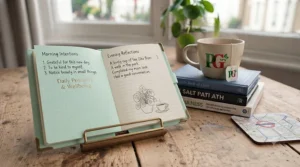
Common Mistakes When Buying Gratitude Journal Books
The single most common mistake is buying based on cover design alone and only discovering the prompt structure doesn’t suit you after the first week — this is exactly why we’ve led with format, not aesthetics, throughout this guide. The second is underestimating how quickly a daily format becomes a chore if the entries feel repetitive; varying your language, or picking a journal with genuinely varied prompts like Clever Fox‘s weekly exercises, avoids this. The third mistake is buying a dated journal and then missing a few days — the guilt of “broken streaks” is a well-documented reason people quit habits altogether, so an undated format like The Five Minute Journal or The 6-Minute Diary removes that pressure entirely. BBC Future’s reporting on expressive writing makes a related point about reflective writing more broadly: consistency over time matters more than any single “perfect” entry, which is worth remembering on the days a gratitude entry feels forced. Finally, treating the cheapest option as automatically the smartest buy ignores price-per-month of realistic use; a £6 paperback abandoned after a fortnight is worse value than a £25 journal used for six months.
Appreciation Journals for Specific Audiences: Beginners, Families & Gift-Givers
Appreciation journals — a slightly softer, often more family-oriented label for the same category — tend to be marketed toward beginners, children, or shared use between family members rather than solo daily practice. For total beginners, a simple appreciation journal with three short prompts per day, like the stripped-back sections in The 6-Minute Diary, avoids the intimidation of a blank page better than anything more elaborate. For families wanting a shared appreciation journal, look for undated formats without a strict “one entry per person” structure, so siblings or partners can genuinely take turns rather than needing their own copy. For gift-givers choosing an appreciation journal for someone else, design and durability matter more than they do for personal use — a journal that looks considered on unwrapping, like Papier’s Stay Grounded edition, tends to actually get used rather than shelved out of politeness.
Features That Actually Matter (And Those That Don’t)
Marketing copy for this category leans hard on adjectives — “transformative,” “life-changing,” “beautifully designed” — that tell you nothing about whether you’ll actually use the thing. What genuinely matters: prompt variety (so entries don’t feel identical by week three), binding quality relative to how the journal will actually be handled, and undated flexibility. What matters far less than the marketing suggests: elastic closures and ribbon markers, which are nice but not remotely make-or-break; “gratitude-inspired quotes” printed throughout, which most reviewers admit to skimming past within days; and premium packaging, which matters for gifting but adds nothing to the journalling experience itself once the box is in the recycling.
Long-Term Value & Thankful Living: Building a Habit for Life
Thinking about thankful living as a long-term practice rather than a single notebook changes the value calculation considerably. A £25 journal used consistently for six months works out to roughly £4 a month — genuinely comparable to a single coffee-shop visit — while a £6 paperback abandoned after three weeks costs more per entry than it looks on the shelf sticker.
| Journal | Typical Duration | Approx. Cost Per Month* |
|---|---|---|
| The Five Minute Journal | 6 months | Roughly £4-£5 |
| Clever Fox Gratitude Journal | 3 months | Roughly £5-£7 |
| The 6-Minute Diary | 6 months | Under £2 |
| Papeterie Bleu Gratitude Journal | 3 months | Roughly £2 |
*Based on realistic full completion at current typical price ranges; actual value depends entirely on whether the journal gets finished.
The clear takeaway from that table is that duration, not sticker price, drives real value in this category — the cheapest journal per month isn’t necessarily the cheapest sticker price, it’s whichever one you’ll actually keep filling in past week three. For genuinely thankful living as an ongoing practice rather than a one-off resolution, pairing a structured journal with a periodic review — monthly, using whichever format you’ve chosen — tends to matter more than which specific book you started with.
Frequently Asked Questions
❓ Do gratitude journal books actually work?
❓ How long should you journal in a gratitude journal book each day?
❓ What's the difference between a gratitude journal and a diary?
❓ Are cheap gratitude journal books worth buying?
❓ Can you start a gratitude journal book at any time of year?
Conclusion
There’s no single “best” gratitude journal book, and if a guide tells you otherwise, they’re probably skipping the part where they admit format matters more than brand. What the research and the reviewer sentiment both suggest is that the journal you’ll actually finish beats the journal that looks nicest on a shelf — which is why this guide has leaned so heavily on structure, duration, and real usage patterns over marketing language.
If you’re a first-timer wanting the lowest-friction start, the budget-friendly 6-Minute Diary or the more established Five Minute Journal both remove the decision fatigue that kills most attempts in week two. If you’ve tried gratitude journalling before and found it too shallow, Clever Fox‘s weekly deep-dives add genuine substance. And if you’re still not convinced the whole idea is worth your time, start with The Gratitude Diaries and let the evidence do the persuading before you commit pen to paper.
Whichever you choose, the honest constant across every pick here is that the notebook itself is only ever half the equation — the other half is showing up on day nine, when the novelty’s worn off and it starts to actually count. If you’d like a first-hand account of that exact adjustment period, Marie Claire UK’s month-long gratitude journalling experiment is a candid, UK-specific read on what changes and what doesn’t.
Recommended for You
- Positive Psychology Books: 7 Best Picks to Rewire Your Mindset (2026)
- Happiness Books Bestsellers: 7 Life-Changing UK Picks (2026)
- Emotional Intelligence Books: 7 Best UK Picks for 2026
Disclaimer: This article contains affiliate links. As an Amazon Associate, I earn from qualifying purchases. If you purchase products through these links, we may earn a small commission at no additional cost to you.
✨ Found this helpful? Share it with your friends! 💬🤗
