
In This Article
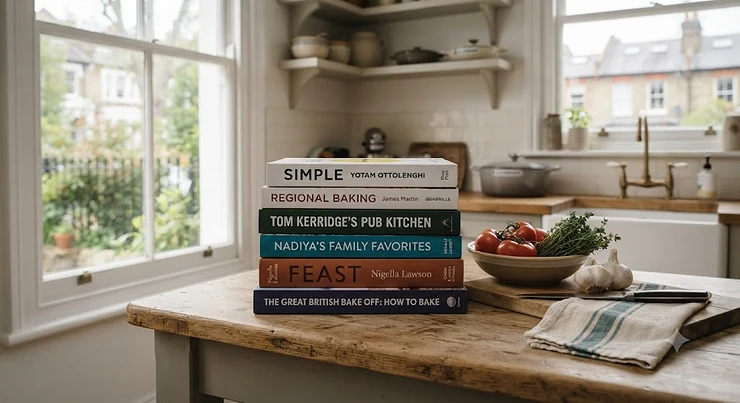
There’s a particular kind of chaos that happens in a British kitchen around 5.45pm on a Tuesday. The oven’s cold, nobody’s decided what “tea” actually is, and somewhere in the cupboard is a cookbook with a suspiciously crispy, flour-dusted cover that always somehow has the answer. That book — whichever one it happens to be in your house — is doing more work than any app, influencer reel, or 90-second recipe video ever will. Finding the best british cookbooks isn’t really about owning the prettiest hardback on the shelf; it’s about which one you’ll actually reach for at 5.45pm, tired, with half an onion and low expectations.
What is a British cookbook? In simple terms, it’s a recipe collection written by a British author, published for a UK kitchen, that teaches either classic British cuisine, contemporary British-influenced cooking, or both — typically using metric measurements, gas mark oven settings, and ingredients easily found on a British high street…
This guide cuts through the noise. We’ve researched seven genuinely well-regarded titles — spanning traditional british recipes, modern flavour-forward cooking, and everything in between — and paired honest analysis with real, sourced context, so you can work out which book deserves a permanent home on your worktop rather than a decorative one on your shelf. Whether you’re after uk cookbook bestsellers with a devoted following, or something leaning harder into classic british cooking and regional heritage, there’s a clear pick further down. Britain’s culinary identity has always been shaped by waves of migration and trade as much as by tradition, something the Wikipedia entry on British cuisine documents in surprising depth — and the best cookbooks on this list all wrestle with that blend in their own way, some leaning nostalgic, others distinctly modern.
Quick Comparison Table
Before the deep dive, here’s the lay of the land. This snapshot pulls together the seven books by budget tier, what they’re best known for, and who should buy them — useful if you’re skimming on your phone in a bookshop queue.
| Cookbook | Price Range | Best For | Recipe Count |
|---|---|---|---|
| Delia Smith’s Complete Cookery Course | under £20 | Total beginners wanting foolproof basics | 500+ |
| Mary Berry’s Complete Cookbook | £20-£25 range | One do-it-all family reference | 650+ |
| The British Cookbook | £30-£40 range | Regional and traditional deep-dives | 550+ |
| Be-Ro Home Baked Recipe Book | under £5 | Budget-friendly heritage baking | 100+ |
| Jane’s Patisserie | £15-£20 range | Modern, forgiving home baking | 100+ |
| Ottolenghi SIMPLE | £20-£28 range | Fast, flavour-heavy weeknight cooking | 130 |
| Nigella Lawson’s How to Eat | £12-£16 range | Building real cooking instinct | 350+ |
Looking at the spread, the split really comes down to ambition versus economy: Be-Ro Home Baked Recipe Book and Delia Smith’s Complete Cookery Course sit at the accessible end and reward patience over flair, while The British Cookbook asks for a bigger outlay in exchange for genuine culinary scholarship. If you’re choosing based on sheer usefulness-per-pound, Mary Berry’s Complete Cookbook edges ahead simply on recipe volume, though Jane’s Patisserie wins for anyone whose “cooking” mostly means “baking something with a drip finish.”
💬 Just one click — help others make better buying decisions too!😊
Top 7 Best British Cookbooks: Expert Analysis
Right, the main event. Seven books, seven very different personalities, and — because nobody needs another cookbook round-up that reads like a copied-and-pasted product description — genuine reasoning behind every single pick.
1. Delia Smith’s Complete Cookery Course — the definitive classic for total beginners
There’s a reason this book has been reissued more times than most people change their kitchen taps. Originally built from Delia’s landmark 1970s BBC series, the Complete Cookery Course still functions as a genuine, structured education rather than a loose bundle of recipes. Editions run to well over 700 pages, walking readers through core techniques — pastry, stocks, roasting, sauces — before layering on the actual dishes, and that sequencing is precisely why it still sells decades later.
What most buyers overlook about this one is that it isn’t trying to be exciting. It’s trying to be correct, every single time, which is a rarer quality than it sounds. Based on the structure of the book, it’s aimed squarely at someone who’s never really cooked before and needs the “why” explained alongside the “how” — perfect Roast Potatoes, properly rested pastry, rice that isn’t gluey. Confident cooks with a decade of dinners behind them will likely find it a touch slow.
Reviewers consistently report that this is the copy they buy again after their original one falls apart from overuse, which says more about its usefulness than any marketing line could. A recurring theme in aggregated feedback is that newer readers still find the recipes “genuinely helpful rather than nostalgic,” despite the book’s age — a rare compliment for something this old.
Pros:
- ✅ Structured teaching approach builds real technique, not just recipes
- ✅ Famously foolproof — recipes rarely fail if followed as written
- ✅ Enormous scope covers savoury, baking, and entertaining in one book
Cons:
- ❌ Visual style and photography feel dated next to newer titles
- ❌ Large format makes it less practical for quick one-handed reference
At under £20, this remains one of the cheapest ways to buy real cooking competence rather than just recipes — check current price before buying, as availability and edition can vary.
2. Mary Berry’s Complete Cookbook — best all-rounder with 650+ recipes
If Delia is the teacher, Mary Berry is the reassuring aunt who’s cooked absolutely everything at least twice. This DK-published compendium runs past 650 photographed recipes across full family meals, baking, and entertaining, and it’s genuinely earned its “crowning glory of the kitchen shelf” reputation rather than just claiming it on the cover.
Here’s what to weigh: the sheer breadth means it functions less like a themed cookbook and more like a household reference — hummus sits near paella, English roast beef near croissants. That range means almost nobody flips through it without finding something they’ll actually cook that week, which is exactly the kind of quiet, unglamorous usefulness that makes a book earn its shelf space rather than just decorate it.
Aggregated reviews are strikingly consistent: readers repeatedly call it “the best cookbook I’ve ever had” after decades of buying others, though a fair few flag that it’s a genuinely heavy book — not one for balancing on a lap. A smaller but real complaint is that a handful of TV-show favourites didn’t make the final cut, so don’t assume it’s a complete Mary Berry archive.
Pros:
- ✅ Enormous, photographed recipe range across every meal type
- ✅ Foolproof, step-by-step instructions suit nervous and confident cooks alike
- ✅ Trusted, familiar voice with decades of proven television recipes
Cons:
- ❌ Large and genuinely heavy — awkward for one-handed kitchen use
- ❌ Not every show-favourite recipe made it into this edition
In the £20-£25 range, it’s arguably the best single-book investment on this list if you only want to own one classic british cooking reference — prices may vary by retailer and format.
3. The British Cookbook — deepest dive into UK regional cooking
Written by food historian Ben Mervis, this is less a cookbook and more a culinary atlas. Spanning over 550 recipes and 464 pages across England, Wales, Scotland, and Northern Ireland, it sets out to document British food as a genuinely diverse, regionally distinct cuisine rather than a single flattened “Sunday roast” stereotype.
What the spec sheet won’t tell you, but the structure makes obvious, is how much cultural context surrounds each dish. Recipes for Bonfire Night Black Peas or a Tweed Kettle salmon hash sit alongside explanations of why the same vegetable gets a different name in South Wales than it does two hundred miles north. For anyone specifically chasing uk regional recipes rather than the twenty most famous British dishes on repeat, this is the one book on the list built entirely around that mission — and it treats dishes with roots outside the UK, like chicken tikka masala, as part of that story rather than an awkward footnote.
Critics have been consistently warm toward it: The Telegraph called it “wonderfully rich,” and food trade reviewers have praised its balance of reference value and genuine cookability. Aggregated customer sentiment echoes that — readers frequently mention learning about dishes they’d never encountered, even after years of home cooking.
Pros:
- ✅ Genuinely comprehensive regional coverage across all four nations
- ✅ Rich cultural and historical context behind every recipe
- ✅ Striking photography that doubles as a coffee-table centrepiece
Cons:
- ❌ Premium price point compared with mainstream cookery bibles
- ❌ Large hardback format is less convenient for daily quick reference
At £30-£40 range, it’s the priciest pick here, but the value case is strong for anyone who wants context, not just instructions.
4. Be-Ro Home Baked Recipe Book — most affordable heritage baking guide
There’s something almost defiant about a recipe booklet that’s stayed essentially unchanged in spirit since the 1920s and is now in its 41st edition. Be-Ro’s little book — traditionally given away or sold alongside its self-raising flour — has become a genuine British baking institution, passed down through families rather than bought fresh by each generation.
Based on the spec comparison with glossier modern titles, this book wins on nothing except honesty: no lifestyle photography, no narrative asides, just over a hundred trusted, tested recipes for scones, cakes, and pastry that have worked for four generations of British households. What most buyers overlook is that its simplicity is the entire point — this is a book built for muscle memory and quick reference, not leisurely reading.
Reviewers frequently describe it in explicitly nostalgic terms — “brings back so many memories” is a common refrain — and it’s not unusual to see people buying replacement copies after their inherited one, quite literally, falls apart from decades of use.
Pros:
- ✅ Extremely low cost for a genuinely trusted recipe set
- ✅ Simple, no-fuss instructions ideal for nervous first-time bakers
- ✅ A genuine piece of British baking heritage, still updated regularly
Cons:
- ❌ Small recipe count compared with full-length cookbooks
- ❌ Minimal photography and basic presentation throughout
Usually priced under £5, it’s arguably the best-value single item on this entire list — a small outlay for a recipe set families still hand down.
5. Jane’s Patisserie — best modern baking bestseller
Jane Dunn’s debut book grew out of a blog rather than a television career, which makes its runaway success — described as the fastest-selling baking book of all time on its release — genuinely interesting from an analysis standpoint. It’s proof that a devoted online following can translate directly into uk cookbook bestsellers status.
What stands out on the spec sheet is the “customisable” framing: recipes for drip cakes, cheesecakes, and cookies are written with swaps and variations baked in from the start, rather than presented as rigid, one-way instructions. That structure matters in practice — it’s part of why the book has been described in press coverage as bringing “the Mary Berry of the Instagram age” energy to a younger baking audience, blending accessibility with genuinely indulgent results.
Aggregated reviews are enthusiastic and specific, frequently naming individual bakes — the Biscoff cheesecake and salted caramel drip cake come up again and again — rather than offering vague praise, which is usually a good sign that people are actually cooking from it rather than just admiring the photography.
Pros:
- ✅ Approachable recipes built around easy flavour customisation
- ✅ Enormous proven fanbase with a track record of reliable results
- ✅ Strong photography paired with genuinely achievable bakes
Cons:
- ❌ Baking-focused only — no savoury mains or full meal planning
- ❌ Several recipes lean rich and occasion-led rather than everyday
At £15-£20 range, it’s a smart mid-tier pick for anyone whose kitchen ambitions are mostly cake-shaped.
6. Ottolenghi SIMPLE — best for quick contemporary weeknight cooking
Yotam Ottolenghi earned his reputation on ambitious, ingredient-heavy Middle Eastern-inflected dishes, and SIMPLE exists specifically to answer the obvious complaint that followed — that his food, while brilliant, wasn’t always realistic for a Tuesday night. Every recipe here is built around at least one of six criteria: short on time, ten ingredients or fewer, make-ahead, pantry-based, low-effort, or genuinely easier than it looks.
Here’s what most spec-focused reviews miss: the “simple” branding doesn’t mean bland or basic — recipes for baked rice with tomato confit or pasta with pecorino and pistachios still carry real flavour complexity, they’re just engineered to get there faster. On paper this means a book built by someone who’s British by adoption rather than birth, cooking food shaped by London’s diversity rather than a single national tradition — which is arguably as representative of contemporary british cuisine books as anything more overtly “traditional.”
Reviewer sentiment has been consistently strong since release, with outlets naming it among the best cookbooks of its publication year, and the book has sold over a million copies — a scale few contemporary cookbooks reach.
Pros:
- ✅ Genuinely fast, achievable recipes without sacrificing real flavour
- ✅ Vibrant, well-tested combinations that rarely feel repetitive
- ✅ Beautiful photography that makes weeknight cooking feel special
Cons:
- ❌ Some ingredients like preserved lemon or za’atar can be harder to source rurally
- ❌ Less useful if you specifically want traditional british recipes
In the £20-£28 range, it’s the pick for households bored of the same five dinners on rotation.
7. Nigella Lawson’s How to Eat — best for building real kitchen confidence
Published in 1998, How to Eat is arguably the most influential British cookbook of the last thirty years that isn’t primarily about technique at all — it’s about developing judgement. Structured around over 350 recipes and organised by life situation rather than course, the book sold around 300,000 copies in Britain according to its Wikipedia entry, a striking number for a first-time author with no television series behind her yet.
What the spec sheet won’t tell you is how much of the book’s value sits in the writing itself rather than the ingredient lists. Nigella’s own framing — that Britain had gained better restaurants and glossier food media but not necessarily the ability to actually cook — still holds up as an honest diagnosis of why so many cookbooks fail their readers. Based on that structure, this suits someone who already has basic kitchen confidence and wants to develop instinct, rather than a total beginner who needs rigid step-by-step scaffolding.
Reviewer sentiment has remained remarkably consistent for over two decades, with critics repeatedly praising the prose as much as the recipes — a rare trait for a cookbook, and part of why it’s stayed in print through multiple anniversary editions.
Pros:
- ✅ Exceptional writing that teaches instinct, not just instructions
- ✅ Broad, versatile recipe range suited to real, busy home life
- ✅ Enduring classic status with decades of consistent praise
Cons:
- ❌ Prose-heavy format is less scannable than image-led modern books
- ❌ Fewer photographs throughout compared with contemporary titles
At £12-£16 range, it’s a genuinely underpriced classic for what it teaches.
Full Spec Comparison: All 7 Books Side-by-Side
| Cookbook | Style | Price Range | Best For | Format |
|---|---|---|---|---|
| Delia Smith’s Complete Cookery Course | Foundational teaching | under £20 | Beginners | Hardback/Paperback |
| Mary Berry’s Complete Cookbook | All-round family reference | £20-£25 range | One do-it-all book | Hardback |
| The British Cookbook | Regional and historical | £30-£40 range | Heritage and depth | Hardback |
| Be-Ro Home Baked Recipe Book | Simple heritage baking | under £5 | Tight budgets | Paperback |
| Jane’s Patisserie | Modern customisable baking | £15-£20 range | Baking enthusiasts | Hardback |
| Ottolenghi SIMPLE | Fast contemporary cooking | £20-£28 range | Weeknight variety | Hardback |
| Nigella Lawson’s How to Eat | Instinct-building classic | £12-£16 range | Developing confidence | Paperback |
The pattern that jumps out here is that price correlates far more with scope and production values than with actual quality — Be-Ro Home Baked Recipe Book at under a fiver still earns genuine loyalty precisely because it never overpromises. Meanwhile, The British Cookbook‘s higher price buys you research and regional breadth that none of the others attempt, so it’s only poor value if regional depth isn’t actually what you’re shopping for.
Practical Usage Guide: Getting More Out of Your British Cookbook
Buying the right cookbook is only half the job — most of them end up half-used, bookmark stuck on page 40 forever. A few habits make a real difference in the first month.
Start by reading the introductory technique sections before cooking anything, even if it feels like homework. Books like Delia’s Complete Cookery Course front-load genuinely useful groundwork — knife skills, stock basics, oven calibration — that pays off across every later recipe, and skipping straight to the “fun” recipes is the single most common reason people abandon a cookbook within a fortnight.
Second, resist the urge to cook in strict page order. Flick through once, dog-ear or sticky-note five recipes that genuinely excite you, and cook those first. Early wins build the confidence needed to tackle the trickier techniques later in the book — a small psychological trick, but a reliably effective one according to how most well-structured cookbooks are actually organised.
Third, keep a simple running note — even scribbled in the margin — of what worked and what didn’t. Oven temperatures vary by up to 10-15°C between models, so a recipe that needs five extra minutes in your kitchen is worth recording rather than relearning every time. Finally, don’t be precious about the book itself: the ones people love most, like Be-Ro’s, tend to be the most stained, cracked, and clearly used copies on the shelf.
Real-World Scenarios: Matching British Cookbooks to Your Kitchen
Cookbook advice works best when it’s grounded in an actual life rather than an abstract “best of” list, so here are three realistic profiles.
Picture a university student, newly self-catering, with a two-ring hob and a budget that doesn’t stretch much past essentials. Be-Ro Home Baked Recipe Book or Delia Smith’s Complete Cookery Course are the obvious fits here — both teach genuinely transferable technique cheaply, without assuming access to a fully stocked spice cupboard or specialist equipment.
Now picture a busy parent of two, home from work at 6pm most evenings, who wants variety without spending an hour cooking. Ottolenghi SIMPLE was built almost exactly for this scenario — its entire premise is fast, flavourful, and genuinely achievable on a weeknight, and the pantry-friendly recipes reduce last-minute supermarket runs.
Finally, picture a confident home cook hosting a big family Sunday lunch who wants to explore beyond the usual five dishes on rotation. The British Cookbook rewards that kind of curiosity directly, offering genuine regional alternatives to the standard roast — and Mary Berry’s Complete Cookbook works as a reliable backup for anything that needs to be foolproof on the day.
How to Choose the Best British Cookbooks for Your Kitchen
Choosing well comes down to matching a book’s structure to your actual cooking habits, not its cover. Here’s a practical, step-by-step approach.
- Assess your current skill level honestly. A confident cook buying another beginner-level book will feel patronised within a week; a nervous beginner buying an ambitious, technique-heavy title will feel intimidated and stop cooking from it entirely.
- Decide whether you want traditional british recipes or modern reinterpretations. Books like The British Cookbook and Be-Ro Home Baked Recipe Book lean heritage; Ottolenghi SIMPLE leans contemporary — knowing which you actually want prevents buyer’s remorse.
- Check the recipe-to-page ratio. Books like Mary Berry’s Complete Cookbook, with 650+ recipes, suit people who want maximum variety; smaller, curated books suit people who’d rather cook the same twenty dishes brilliantly.
- Consider photography needs. Visual learners benefit hugely from image-per-recipe formatting, common in Jane’s Patisserie; confident cooks may not need it at all.
- Weigh format against your kitchen space. Large hardbacks like The British Cookbook look stunning but are genuinely awkward propped open next to a hob — a stand or a smaller paperback might serve daily use better.
- Think about occasion versus everyday use. Some books, including Jane’s Patisserie, lean toward celebration bakes rather than nightly meals — useful context before assuming one book can do everything.
- Factor in price against realistic use. A £35 book used weekly is better value than a £10 book that sits unopened — cost-per-use, not sticker price, is the number that actually matters.
Traditional British Recipes vs Modern British Cuisine Books
This is arguably the most useful distinction on this whole list, and it’s rarely explained clearly. Traditional british recipes — think Delia’s roast potatoes, Be-Ro’s scones, or the regional dishes catalogued in The British Cookbook — are built around technique preservation. The goal is consistency: a Victoria sponge should taste essentially the same whether it’s made in 1975 or 2026, and books in this category are judged on how faithfully and reliably they deliver that.
Modern British cuisine books, by contrast — Ottolenghi SIMPLE being the clearest example here — treat “British” less as a fixed rulebook and more as a starting point shaped by migration, global trade, and decades of multicultural influence. That’s not a controversial framing; it’s broadly how food historians describe the evolution of the national diet, from Roman-introduced vegetables through to the more recent rise of dishes with South Asian and Caribbean roots becoming genuinely mainstream.
Neither approach is objectively superior — they solve different problems. Someone cooking for elderly relatives who want the Sunday roast they grew up with needs a traditional book; someone cooking for a household bored of repetition needs a modern one. Many well-stocked kitchens end up owning one of each, precisely because the two categories rarely overlap in what they’re trying to achieve.
Best British Cookbooks for Every Type of Cook
Not every cook wants the same thing from a recipe book, so matching by type — rather than by “best overall” — tends to produce far better results.
For total beginners, Delia Smith’s Complete Cookery Course remains the safest starting point precisely because it teaches sequence and reasoning, not just ingredients. For confident home cooks wanting range, Mary Berry’s Complete Cookbook offers enough volume that boredom is genuinely unlikely. For dedicated bakers specifically, Jane’s Patisserie and Be-Ro Home Baked Recipe Book sit at opposite budget ends of essentially the same mission — accessible, forgiving bakes that build real confidence fast.
For food history enthusiasts and anyone hosting guests who want a genuine talking point on the table, The British Cookbook offers something none of the others do: context alongside instruction. For busy professionals short on time but unwilling to compromise on flavour, Ottolenghi SIMPLE is close to purpose-built. And for anyone who already knows the basics but wants to actually understand food rather than just follow instructions, Nigella Lawson’s How to Eat remains a genuinely rare thing — a cookbook that teaches judgement.
What Makes a UK Cookbook Bestseller
It’s worth asking why some titles end up as genuine uk cookbook bestsellers while equally competent books quietly disappear. Based on the pattern across this list, three factors recur consistently.
The first is trust built over time through television or public presence — Delia, Mary Berry, and Nigella all became household names through broadcasting before their books reached bestseller lists, and that pre-existing trust lowers the risk a buyer feels when choosing a recipe blind. The second is a genuinely distinctive structural hook: Ottolenghi SIMPLE’s “six criteria” framing and Jane’s Patisserie’s customisable-recipe approach both give readers a clear, memorable reason to choose that book over a generic alternative. The third, increasingly important factor, is authentic online community — Jane’s Patisserie is the clearest example here, having built its audience organically through a blog and social following years before the book existed, which converted directly into first-week sales momentum publishers can’t easily manufacture through marketing spend alone.
What doesn’t reliably predict bestseller status, interestingly, is price or page count. Be-Ro Home Baked Recipe Book costs a fraction of the others yet remains a consistent, quiet seller purely on inherited trust and nostalgia — proof that “features that actually matter” to buyers often have very little to do with production budget.
UK Regional Recipes: Why Regional Diversity Matters in British Cooking
It’s a common misconception that “British food” describes one single, uniform cuisine. In practice, England, Scotland, Wales, and Northern Ireland each carry distinct culinary identities shaped by geography, climate, and history — a Cornish pasty and a Scottish stovies owe very little to each other beyond both being, broadly, hearty and portable.
This matters practically when choosing a cookbook. A book like The British Cookbook treats uk regional recipes as its central organising principle, deliberately including lesser-known dishes such as Dublin Bay Prawns or Bonfire Night Black Peas alongside nationally famous ones, precisely to counter the flattening effect of “generic British food” media coverage. That regional specificity also has legal weight in the UK: certain foods, including Cornish clotted cream and Welsh lamb, hold formally protected geographical status, a recognition that where a dish comes from genuinely shapes its character and quality, not just its marketing.
For home cooks, leaning into regional recipes tends to produce more interesting, less repetitive cooking than sticking to the twenty most internationally recognised British dishes. It’s also, frankly, a better way to actually understand the country’s food culture than assuming a Sunday roast tells the whole story.
Common Mistakes When Buying British Cookbooks
A few recurring buying mistakes show up again and again in how people choose — and later regret — a cookbook.
The most common is buying based on a celebrity name alone, without checking whether the book’s actual structure suits your skill level. A beginner buying Nigella Lawson’s How to Eat purely on reputation may find its prose-heavy, instinct-building style frustrating without some existing kitchen confidence to build on. The second mistake is underestimating format practicality — a gorgeous, heavy hardback like The British Cookbook can be genuinely awkward to prop open one-handed while stirring a pan, something photography on a product page never communicates.
A third common error is assuming more recipes automatically means better value. Mary Berry’s Complete Cookbook‘s 650+ recipes are genuinely useful, but a smaller, more curated book like Jane’s Patisserie can deliver more real, repeated use if its narrower focus matches what you actually cook. Finally, many buyers skip checking whether a book assumes access to specialist ingredients — some of Ottolenghi’s flavour-forward recipes lean on items that aren’t stocked in every corner shop, which matters far more in a rural kitchen than an urban one.
English Cooking Traditions: Keeping Heritage Alive in a Modern Kitchen
English cooking traditions have survived centuries of upheaval — Roman imports, Tudor spice trade, wartime rationing, postwar immigration — by quietly absorbing outside influence rather than resisting it, a pattern well documented in food-history sources covering the evolution of British food from Roman Britain onward. That absorption is exactly why a curry can sit comfortably in a book about English cooking traditions without feeling like a contradiction.
Keeping those traditions genuinely alive at home, rather than just nostalgically referenced, comes down to a few practical habits. First, cook the “unfashionable” classics occasionally — suet puddings, proper gravy from pan juices, a real Sunday roast — because these are exactly the dishes most at risk of quietly disappearing from everyday repertoires in favour of quicker alternatives. Second, use a book that explains technique rather than just listing steps, since traditions are transmitted through understanding, not just repetition; that’s precisely where Delia Smith’s Complete Cookery Course earns its reputation. Third, don’t treat tradition and modernity as opposites — books like The British Cookbook demonstrate that heritage recipes and contemporary interpretations can genuinely coexist on the same table without either one feeling like a compromise.
Frequently Asked Questions
❓ What is the best british cookbook for a complete beginner?
❓ Which cookbook covers the most traditional british recipes?
❓ Are older cookbooks like Delia's still worth buying in 2026?
❓ What's the cheapest way to start building a British cookbook collection?
❓ Is Ottolenghi's cooking considered authentically British?
Conclusion
There’s no single “best” British cookbook, and honestly, any list that claims otherwise is oversimplifying a genuinely personal decision. What matters is matching the book to the kitchen it’s actually going into — a nervous beginner and a confident Sunday-lunch host need entirely different things from the same shelf. Delia Smith’s Complete Cookery Course remains the safest all-round starting point for classic british cooking fundamentals, Mary Berry’s Complete Cookbook offers the broadest everyday utility, and The British Cookbook rewards anyone chasing genuine regional depth rather than the same twenty familiar dishes.
For budget-conscious bakers, Be-Ro Home Baked Recipe Book and Jane’s Patisserie cover both heritage and modern ends of that spectrum cheaply, while Ottolenghi SIMPLE and Nigella Lawson’s How to Eat suit households wanting either speed or genuine culinary instinct. Whichever direction feels right, the honest answer is that the best british cookbooks are simply the ones that end up genuinely flour-dusted, cracked at the spine, and covered in your own margin notes within the first month.
Recommended for You
- Gratitude Journal Books: 7 Best UK Picks to Try in 2026
- Positive Psychology Books: 7 Best Picks to Rewire Your Mindset (2026)
- Happiness Books Bestsellers: 7 Life-Changing UK Picks (2026)
Disclaimer: This article contains affiliate links. As an Amazon Associate, I earn from qualifying purchases. If you purchase products through these links, we may earn a small commission at no additional cost to you.
✨ Found this helpful? Share it with your friends! 💬🤗
