

In This Article
The Dunkirk evacuation remains etched in British consciousness as one of the Second World War’s most extraordinary episodes. Between 26 May and 4 June 1940, Operation Dynamo saw 338,226 Allied troops rescued from the beaches and harbour of Dunkirk in northern France—a feat Winston Churchill initially expected might save barely 45,000 men. What followed was a remarkable display of British resolve: the Royal Navy working alongside hundreds of civilian vessels, from Thames pleasure cruisers to Dover fishing boats, crossing the Channel under relentless Luftwaffe bombardment to ferry home a defeated but unbroken army.
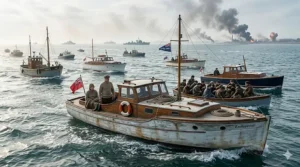
Eight decades on, finding the right dunkirk evacuation books to understand this pivotal moment can be daunting. The shelves of Amazon.co.uk overflow with accounts ranging from dense naval staff histories to gripping eyewitness narratives. Some readers want meticulous tactical analysis; others crave the human stories behind the “Dunkirk spirit.” What most UK readers overlook is that not all Dunkirk books are created equal—many American editions focus heavily on different aspects than what British audiences typically find compelling, and several classics have been superseded by more recent scholarship drawing on declassified material.
This guide evaluates seven essential dunkirk evacuation books currently available on Amazon UK, covering everything from Walter Lord’s classic narrative to photographic studies and specialised accounts of the little ships. Whether you’re a military history enthusiast, a student researching Operation Dynamo, or simply curious about this defining moment in British history, you’ll find practical recommendations matched to your specific interests. We’ve prioritised books with strong UK availability, reasonable pricing in pounds sterling, and content that resonates with British readers’ understanding of this national story.
Quick Comparison: Top Dunkirk Evacuation Books at a Glance
| Book Title | Focus | Best For | Price Range (£) | Format Options |
|---|---|---|---|---|
| The Miracle of Dunkirk (Lord) | Narrative history | First-time readers | £8-£14 | Kindle, Paperback, Hardback |
| Nine Days That Saved An Army (Grehan) | Day-by-day account | Detail seekers | £12-£20 | Paperback, Hardback |
| Operation Dynamo Images of War (Mace/Grehan) | Photographic history | Visual learners | £10-£16 | Paperback |
| Naval Staff History (Gardner) | Official naval records | Researchers | £20-£35 | Hardback |
| Dunkirk Little Ships (Sharp) | Little Ships focus | Maritime enthusiasts | £9-£15 | Paperback |
| 100 Objects (Mace) | Artefact-based | Museum visitors | £12-£18 | Paperback |
| Dunkirk 1940 Campaign (Dildy) | Military analysis | Strategy students | £11-£17 | Paperback |
From this comparison, several patterns emerge worth noting. Walter Lord’s narrative account consistently offers the best entry point for readers new to the subject—it’s gripping, comprehensive, and priced accessibly under £15 in most formats. For those after maximum detail, John Grehan’s day-by-day chronicle provides unparalleled depth at mid-range pricing. Visual learners should gravitate towards the Images of War series, which packs over 150 period photographs into a digestible format. What surprises many UK buyers is that the official Naval Staff History, whilst the most expensive option here, remains the gold standard for serious researchers—its £20-£35 price tag reflects its status as a facsimile of Admiralty documents originally classified until 1949. Budget-conscious readers will find several excellent options in the £9-£15 bracket, particularly Sharp’s Little Ships account and Lord’s Kindle edition, both offering tremendous value for comprehensive coverage.
💬 Just one click — help others make better buying decisions too!😊
Top 7 Dunkirk Evacuation Books: Expert Analysis
1. The Miracle of Dunkirk: The True Story of Operation Dynamo by Walter Lord
Walter Lord’s account stands as the definitive narrative history of Dunkirk for general readers. Published originally in 1982 and reissued by Open Road Media, this book employs Lord’s signature technique of weaving together hundreds of eyewitness interviews into a seamless chronological narrative. The 320-page volume covers not just the evacuation itself but the French campaign’s collapse and the political decisions that led to Operation Dynamo.
What sets Lord’s work apart is his ability to make you feel present on those beaches. Rather than drowning readers in regimental movements and tactical minutiae, he focuses on human experience: the destroyer captain navigating bomb-strewn waters, the private queuing for days under shellfire, the yacht owner from Teddington who motored his 30-footer across the Channel. Lord interviewed survivors extensively in the 1970s—many now deceased—capturing first-hand testimony that later authors couldn’t access. His writing reads more like a thriller than an academic history, yet the scholarship is impeccable.
UK readers particularly appreciate Lord’s balanced treatment of French contributions to the rearguard defence, a topic often glossed over in more jingoistic British accounts. The book also explores uncomfortable truths: the chaos on the beaches, instances of indiscipline, and the thousands left behind. Available on Amazon.co.uk in Kindle (around £9), paperback (£10-£13), and hardback (£12-£16) formats, with Prime delivery typically 1-2 days. Customer reviews consistently praise its readability and emotional impact, with several UK readers noting it surpasses more recent bestsellers for sheer storytelling craft.
Key strengths: Gripping narrative pace, extensive first-hand accounts, balanced perspective
Who it suits: Anyone seeking their first comprehensive Dunkirk book, history enthusiasts wanting an engaging read rather than dry analysis
Minor drawbacks: Less tactical detail than military specialists might want, occasional American editorial choices in phrasing
✅ Pros:
- Reads like a thriller whilst maintaining historical rigour
- Incorporates testimony from hundreds of survivors
- Covers French and Belgian perspectives often ignored elsewhere
❌ Cons:
- Published 1982, so predates some recent archival releases
- Less detailed on RAF operations than naval/army aspects
Price verdict: Around £9-£16 depending on format—exceptional value for a 320-page masterwork that remains relevant 40+ years after publication.
2. Dunkirk: Nine Days That Saved An Army by John Grehan
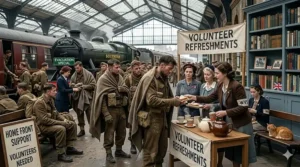
John Grehan’s 2018 volume from Frontline Books takes a methodical day-by-day approach to Operation Dynamo, devoting separate chapters to each of the nine days from Sunday 26 May to Monday 3 June 1940. This 272-page hardback draws heavily on official records, ship logs, RAF squadron reports, and German documents to construct the most detailed blow-by-blow account currently available.
What British readers find invaluable is Grehan’s integration of recently declassified material from The National Archives at Kew. His access to Admiralty files and War Office documents allows unprecedented insight into the evacuation’s logistics: which vessels sailed when, casualty figures by day and location, even the specific routes minesweepers cleared through the Channel. For anyone researching family members who served at Dunkirk, this book proves indispensable—Grehan names hundreds of individual ships and units, making it easier to trace ancestors’ movements.
The book’s chronological structure means you experience the evacuation as it unfolded: the initial pessimism on Day One, the desperate fight for the perimeter on Day Four, the final frantic hours on Day Nine. Grehan doesn’t sensationalise, instead letting the archival record speak—but the inherent drama shines through. UK military historians rate this among the finest modern Dunkirk studies for its rigorous sourcing and comprehensive coverage of all nine days’ events. Available on Amazon UK in hardback (around £15-£22) and paperback (£12-£18), with good Prime delivery availability.
Customer feedback from UK readers highlights its usefulness for serious study whilst remaining accessible to non-academics. Several mention using it for A-level and undergraduate research projects. The main criticism centres on dense passages of ship movements that some casual readers find tedious—but that’s precisely what researchers value.
Key strengths: Unmatched chronological detail, extensive archival sourcing, useful for genealogical research
Who it suits: History students, family researchers, readers wanting comprehensive daily breakdown rather than narrative flow
Minor drawbacks: Can feel dense in ship-list sections, less engaging for casual readers than narrative histories
✅ Pros:
- Day-by-day structure makes events crystal clear
- Names individual vessels and units extensively
- Draws on recently released National Archives material
❌ Cons:
- Dense ship-list passages slow narrative momentum
- Less focused on individual human stories than other titles
Price verdict: In the £12-£22 range—premium pricing justified by unparalleled detail and recent scholarship for serious enthusiasts.
3. Dunkirk Evacuation – Operation Dynamo: Nine Days That Saved An Army (Images of War) by Martin Mace & John Grehan
Part of Pen & Sword’s popular Images of War series, this 128-page photographic history from 2019 delivers exactly what its format promises: over 150 period photographs documenting the evacuation, organised chronologically across the nine crucial days. Co-authors Martin Mace (publisher of Britain at War magazine) and John Grehan bring decades of photo archive expertise to curating these images.
What makes this volume special for UK readers is its British photographic emphasis. Unlike some Dunkirk books that lean on widely reproduced German propaganda photos, Mace and Grehan draw extensively from Imperial War Museum collections, Royal Navy archives, and private family albums. You’ll see images of Dover Harbour Command coordinating the operation, RNLI lifeboats heading to sea, soldiers queuing in orderly British fashion on La Panne beach, and the heartbreaking aftermath photographed by advancing Germans. Several photographs appear in print for the first time since 1940.
The accompanying text is concise but informative—brief chapter introductions set context for each day’s images, whilst extended captions explain what you’re seeing. This isn’t a coffee table book to merely browse; it’s a visual documentary that brings home the evacuation’s scale and horror. UK reviewers consistently mention specific photographs that affected them: wrecked Hurricanes on Dunkirk airfield, destroyers listing after bomb hits, exhausted soldiers sleeping on Dover quaysides. The book works brilliantly for visual learners and complements more text-heavy histories.
Available on Amazon UK typically in the £10-£16 range for paperback, with excellent Prime availability. Customer reviews praise its production quality—printed on good-quality paper stock with clear reproduction of even grainy wartime photos. Several UK teachers mention using it as a classroom resource for GCSE and A-level students studying the Second World War.
Key strengths: Extensive period photography, British archival focus, excellent visual complement to text histories
Who it suits: Visual learners, students, anyone wanting to see rather than just read about Dunkirk
Minor drawbacks: Text is secondary to images, limited tactical/strategic analysis
✅ Pros:
- Over 150 carefully curated period photographs
- Strong British archival sources rather than recycled German propaganda shots
- High-quality paper and reproduction for the price point
❌ Cons:
- Includes stills from 1958 film Dunkirk which some purists find unnecessary
- Text serves only to contextualise images, not standalone reading
Price verdict: Around £10-£16—outstanding value for a visual history with this production quality and photographic breadth.
4. The Evacuation from Dunkirk: ‘Operation Dynamo’ by W.J.R. Gardner (Naval Staff Histories)
This is the real deal for serious researchers: a facsimile of the official Naval Staff History of Operation Dynamo, originally compiled in 1949 and classified for decades. Published by Routledge in 2000 as part of their Naval Staff Histories series, this 308-page hardback provides the British Admiralty’s official record of the evacuation based on wartime documents, ship logs, and officer reports submitted immediately after Dynamo concluded.
What sets this apart is its documentary authority. This isn’t an author’s interpretation filtered through decades—it’s the Royal Navy’s contemporary analysis compiled whilst memories were fresh and records intact. You’ll find exhaustive detail on every aspect of naval operations: which destroyers sailed when, minesweeper routes, losses by vessel type, ammunition expenditure, even administrative minutiae like fuel consumption rates. The book lists hundreds of vessels by name with their specific roles and fates.
For UK researchers, this is the gold standard reference. If you’re investigating what happened to HMS Wakeful or trying to trace when the Thames barge Ena crossed the Channel, this is where you find definitive answers. The writing style is dry—it’s an official report, not entertainment—but the wealth of primary source material is unmatched. Gardner’s editorial introduction contextualises the document and guides readers through its structure, whilst the appendices include invaluable data tables.
Available on Amazon UK typically in the £20-£35 range for hardback—premium pricing, but justified for what amounts to primary source access. Kindle edition occasionally appears around £18. UK military historians and postgraduate researchers rate this indispensable despite its cost. Customer reviews mention using it to cross-reference family members’ service, verify claims in other books, and understand naval logistics at a level of detail simply unavailable elsewhere.
Key strengths: Official Admiralty documentation, exhaustive vessel listings, unmatched primary source authority
Who it suits: Serious researchers, military historians, anyone needing definitive factual reference rather than narrative history
Minor drawbacks: Dry official writing style, expensive, limited availability can mean longer delivery times
✅ Pros:
- Official Royal Navy record compiled from wartime documents
- Lists every vessel involved with operational details
- Essential primary source for serious Dunkirk scholarship
❌ Cons:
- Reads like a ship’s log—fascinating data but minimal narrative flow
- Premium pricing at £20-£35
- Focuses almost exclusively on naval operations, minimal army/RAF coverage
Price verdict: £20-£35 range—expensive but irreplaceable as the official naval record; indispensable for researchers despite the cost.
5. Dunkirk Little Ships by Nigel Sharp
Maritime historian Nigel Sharp’s 2015 volume from Amberley Publishing focuses specifically on the civilian vessels that became legendary as the “little ships”—the approximately 700 privately-owned craft from 14-metre Thames pleasure cruisers to 6-metre ship’s lifeboats that joined the evacuation. This 224-page paperback fills a genuine gap in Dunkirk literature by concentrating on vessels often relegated to brief mentions in broader histories.
Sharp brings particular expertise here: he’s spent decades researching Britain’s maritime heritage and has connections to the Association of Dunkirk Little Ships (ADLS), the organisation that preserves vessels that participated. The book documents not just the 1940 evacuation but the vessels’ subsequent histories—which still survive, where they’re based, their current condition. For UK readers fascinated by maritime history, this proves endlessly interesting: you learn about Tamzine, a Leigh-on-Sea cockle boat that now rests in the Imperial War Museum, or Papillon, a 1906 launch still sailing from Chichester.
What British readers particularly value is Sharp’s detailed coverage of how these vessels were requisitioned, who crewed them (many civilian owners sailed their own boats), and what they endured crossing the Channel. You discover that pleasure cruisers designed for Thames day trips faced 110-kilometre open-sea passages under air attack, that many crews had no charts or compasses, and that boat owners from Richmond to Ramsgate answered the Admiralty’s call within hours. Sharp’s writing balances maritime technical detail with human stories, making it accessible to non-sailors whilst satisfying enthusiasts.
Available on Amazon UK typically around £9-£15 for paperback, with good Prime delivery. Customer reviews from UK maritime heritage enthusiasts consistently praise its combination of technical boat details and historical narrative. Several mention using it whilst visiting surviving little ships on display or attending the annual ADLS Return to Dunkirk commemoration. The book includes useful appendices listing surviving vessels by location.
Key strengths: Specialised focus on civilian vessels, documents boats’ post-war fates, maritime technical detail balanced with accessibility
Who it suits: Maritime heritage enthusiasts, anyone fascinated by the little ships specifically, readers in south-east England near where many vessels are preserved
Minor drawbacks: Narrower focus means less coverage of military vessels and land operations
✅ Pros:
- Comprehensive coverage of civilian vessels often relegated to brief mentions
- Documents which little ships survive and where to see them today
- Written by acknowledged maritime heritage expert
❌ Cons:
- Narrow focus means it complements rather than replaces broader Dunkirk histories
- Maritime technical terminology may challenge non-sailing readers occasionally
Price verdict: Around £9-£15—excellent value for specialised maritime history that fills a genuine gap in Dunkirk literature.
6. The Dunkirk Evacuation in 100 Objects by Martin Mace
Martin Mace’s 2018 volume from Pen & Sword takes an innovative approach: telling the Dunkirk story through 100 artefacts, from helmets and weapons to ship’s wheels and memorial plaques. Each object gets a 1-2 page treatment combining high-quality photography with historical context explaining its significance. The 224-page hardback works both as a reference book and a compelling narrative structured chronologically through the evacuation.
What makes this particularly valuable for UK readers is its focus on tangible heritage you can visit. Many objects featured are on permanent display in British museums—the Imperial War Museum London, Duxford, Portsmouth Historic Dockyard, Dover Museum, and smaller local collections. Mace includes visiting information, making the book a practical guide for heritage tourism. You learn about the wreck of destroyer HMS Bourrasque lying in 10 metres of water off Dunkirk (accessible to divers), the collections of lifebelt fragments at Ramsgate Maritime Museum, and memorials from Dover to Deal.
The object-based approach proves surprisingly effective at conveying Dunkirk’s reality. A corroded rifle dug up from Dunkirk beach makes the scale of abandonment visceral. A lifebelt from the paddle steamer Medway Queen connects you to specific rescue missions. A German propaganda leaflet dropped on the beaches reveals the psychological warfare dimension. UK reviewers frequently mention objects that particularly moved them, with several noting the book inspired heritage site visits they wouldn’t have otherwise made.
Available on Amazon UK in the £12-£18 range for hardback, with consistent Prime availability. Customer feedback highlights its usefulness as a coffee table book that actually gets read rather than merely displayed—guests pick it up and become engrossed. Teachers mention using specific object entries for classroom discussion. The production quality is excellent for the price, with full-colour photography throughout.
Key strengths: Innovative object-based narrative, practical heritage tourism guide, high-quality photography and production
Who it suits: Heritage tourism enthusiasts, readers who learn well through tangible artefacts, anyone planning to visit Dunkirk sites or UK museums
Minor drawbacks: 100 object entries mean some historical topics get less depth than dedicated narrative histories provide
✅ Pros:
- Fresh approach through physical objects rather than conventional narrative
- Functions as practical museum and heritage site guide
- Excellent photography and production quality for price point
❌ Cons:
- Object-entry format means some historical threads get fragmented
- More useful alongside a narrative history than as sole Dunkirk book
Price verdict: Around £12-£18—good value for a handsomely produced volume that combines history with practical heritage tourism guidance.
7. Dunkirk 1940: Operation Dynamo by Doug Dildy (Osprey Campaign Series)
Doug Dildy’s 2010 entry in Osprey’s Campaign series delivers exactly what that long-running series promises: 96 pages of focused military analysis with colour maps, order-of-battle diagrams, and specially commissioned battlescene artwork. This paperback concentrates on tactical and operational aspects: German strategy, Allied defensive dispositions, the asymmetric air-sea battle that decided Dynamo’s success.
What UK military history students value is Dildy’s even-handed treatment of all combatants. As an American author, he brings useful outsider perspective to British Dunkirk mythology—acknowledging heroism without jingoism, recognising failure alongside success. The French rearguard defence at Lille receives proper attention, as does the Luftwaffe’s tactical challenges attacking ship targets. Dildy’s analysis of why German panzers halted short of Dunkirk—once attributed solely to Hitler’s order—explores the operational and logistical factors that actually influenced the decision.
The Osprey format means concise writing supported by excellent visual aids. Colour maps show the shrinking Allied perimeter day by day. Orders of battle detail which British, French, and Belgian units held which sectors. Three-dimensional battlescene paintings depict key moments: Stuka dive-bombers attacking destroyers in Dunkirk Roads, rearguard infantry fighting house-to-house in Bergues, the final evacuation from the eastern mole. For readers who find dense text overwhelming, Osprey’s visual approach makes complex military operations comprehensible.
Available on Amazon UK typically in the £11-£17 range for paperback, with excellent Prime delivery. UK customer reviews from military history enthusiasts and wargamers consistently praise its balanced analysis and useful maps. Several A-level and undergraduate students mention using it for coursework, noting its clear structure and authoritative tone. The main criticism centres on Osprey’s 96-page format necessarily compressing events—but that brevity is precisely what some readers want.
Key strengths: Focused military analysis, excellent maps and visual aids, balanced international perspective
Who it suits: Military history students, wargamers, readers wanting tactical/operational analysis without narrative embellishment
Minor drawbacks: 96-page format means some depth sacrificed for breadth, less human interest than narrative histories
✅ Pros:
- Clear tactical/operational analysis accessible to non-specialists
- Excellent colour maps and order-of-battle diagrams
- Balanced treatment of German, French, and British perspectives
❌ Cons:
- Osprey 96-page format means compressed coverage
- Less personal detail and human stories than longer narrative histories
Price verdict: Around £11-£17—solid value for focused military analysis in Osprey’s proven format, ideal as introduction or quick reference.
How to Choose the Right Dunkirk Book for You: A Practical Framework
Selecting from Amazon UK’s extensive Dunkirk catalogue requires clarity about what you actually want from the reading experience. Start by asking yourself three key questions: Are you reading for general interest or specific research? Do you prefer narrative storytelling or analytical detail? And how much prior knowledge of 1940 France do you bring?
For first-time readers approaching Dunkirk with general curiosity, Walter Lord’s The Miracle of Dunkirk remains the optimal entry point. Lord’s narrative approach means you’re gripped from page one, learning the history almost incidentally whilst following individual soldiers’, sailors’, and airmen’s experiences. The £9-£16 price point represents excellent value, and the Kindle option suits reading on commutes or whilst travelling. Only after absorbing Lord’s accessible overview does it make sense to explore more specialised volumes. Starting with dense official histories or tactical analyses risks making Dunkirk feel like homework rather than the inherently dramatic story it is.
Students and researchers face different requirements. If you’re writing A-level coursework, undergraduate essays, or postgraduate theses, you need sourceable references and detailed chronology—John Grehan’s day-by-day account provides exactly that citation-rich analysis. For family history research tracing ancestors who served at Dunkirk, the Naval Staff History’s exhaustive vessel listings prove indispensable despite its premium pricing. Always check your educational institution’s library holdings first—many UK university libraries stock the expensive Gardner volume, saving you £30. When purchasing for research, prioritise books with proper bibliographies and source notes rather than popular histories that mix unattributed anecdotes.
Maritime heritage enthusiasts represent a distinct audience with specialised interests. If you’re drawn to the little ships specifically—perhaps you’ve seen Princess Elizabeth at Dover or attended the Dunkirk Veterans’ Association commemorations—Nigel Sharp’s focused study delivers exactly what broader histories gloss over. Similarly, if you’re planning heritage tourism to Dunkirk sites or UK museums with Dunkirk collections, Martin Mace’s 100 Objects volume functions as practical guide alongside historical account. These specialised volumes work brilliantly for their target audiences but leave gaps that require complementing with more comprehensive histories.
Visual and tactile learners benefit enormously from the Images of War photographic history. Some people simply absorb information better through pictures than prose—if you find yourself skim-reading text but studying photographs intently, that £10-£16 investment in the Mace/Grehan photo volume delivers better value than a text-heavy history you’ll never finish. The same logic applies to the 100 Objects approach: seeing a corroded rifle or lifebelt makes Dunkirk tangible in ways pure text cannot. These aren’t “lesser” approaches to history—they’re different valid learning styles that publishers increasingly recognise.
Budget-conscious readers can access quality Dunkirk history without breaking the bank. Lord’s Kindle edition at around £9 offers exceptional value—320 pages of compelling narrative for less than two pints in a London pub. Sharp’s Little Ships paperback frequently appears under £12. Watch for Amazon UK’s frequent Kindle sales, when serious histories drop to £1.99-£4.99. The key mistake budget buyers make is assuming cheapest equals best value—a £5 poorly-researched popular history wastes money if it leaves you confused, whereas a £15 authoritative volume you’ll reference repeatedly for years represents genuine value.
Consider format practicalities too. Hardbacks suit readers who’ll reference books repeatedly and appreciate durability, whilst paperbacks offer portability for commuter reading. Kindle editions work brilliantly for highlighting passages and searching keywords, though complex maps reproduce poorly on smaller screens. Audiobooks suit some learners—but Dunkirk histories with extensive ship listings and tactical detail translate poorly to audio compared to pure narrative works. If you’re sight-impaired or dyslexic, check whether Kindle versions support text-to-speech or adjustable fonts before purchasing.
Finally, remember that combining complementary volumes often works better than seeking one “perfect” book. A common approach among UK enthusiasts pairs Lord’s narrative with either Grehan’s detailed chronology or the Images of War photos—three books covering different aspects for a combined £30-£45 provides more comprehensive understanding than any single volume. Students might pair Dildy’s tactical analysis with Gardner’s official naval record. The “best” choice depends entirely on your specific learning goals, available budget, and reading preferences.

The Little Ships: Why Civilian Vessels Defined Britain’s Dunkirk Mythology
The “little ships” occupy outsized space in British cultural memory of Dunkirk, and rightly so. Whilst Royal Navy destroyers evacuated the majority of troops—over 200,000 from Dunkirk harbour—the image of civilian yachts, Thames barges, fishing smacks, and pleasure cruisers crossing the Channel under Luftwaffe attack crystallised something essential about British character at its most tested moment. Understanding why these vessels matter requires looking beyond military logistics to national identity and collective memory.
The Admiralty initially requisitioned around 700 civilian craft, though only about 400-500 actually reached Dunkirk. These ranged from substantial motor yachts owned by wealthy individuals to tiny ship’s lifeboats barely 6 metres long. Many belonged to ordinary people—a Thames lighterman’s barge, a Dover fisherman’s trawler, a Southend pleasure boat operator’s launch. When the Admiralty called, they came. Some owners sailed their own boats; others had Royal Navy crews take command. Either way, these vessels faced open-sea passages they were never designed for, crossing 110 kilometres to beaches under shellfire and air attack, then ferrying exhausted soldiers to larger ships offshore.
What makes this remarkable from a British perspective is the spontaneity and ordinariness of it. There was no grand mobilisation, no months of preparation—the Ministry of Shipping and Small Vessels Pool simply sent out calls to boatyards and yacht clubs along the south-east coast on 27 May 1940. Within 48 hours, hundreds of vessels had assembled at Dover, Ramsgate, and Sheerness. Crews included professional Thames watermen, weekend sailors who’d never navigated beyond the Medway estuary, elderly retired skippers returning to sea, even teenagers who’d grown up messing about in boats on the Thames. This cross-section of British maritime society—from baronets to bargemen—embodied a class-transcending national effort that the country desperately needed to believe in after France’s shocking collapse.
The little ships also solved a practical problem the Royal Navy couldn’t. Dunkirk’s harbour had been bombed and could only accommodate a limited number of large vessels simultaneously. The beaches—particularly La Panne and Bray-Dunes where thousands of troops waited—shelved so gradually that destroyers and transports couldn’t approach close enough to embark men directly. The original plan relied on soldiers wading out to ships’ boats sent ashore, a slow process under fire. Enter the little ships: shallow-draught vessels that could navigate right up to the beach, load 30-50 men, then ferry them to destroyers anchored offshore. This improvised system transformed evacuation rates, particularly on the eastern beaches where the majority of rescues occurred.
For UK readers interested in this aspect specifically, Nigel Sharp’s Dunkirk Little Ships provides unmatched detail on individual vessels, their characteristics, who crewed them, and which survive today. The Association of Dunkirk Little Ships maintains registers and organises annual commemorative crossings to Dunkirk—attending one of these events, seeing the actual surviving boats under way, makes the 1940 story viscerally real in ways no book alone can achieve. Over 50 little ships still survive in working condition, from Sundowner, a 19-metre motor yacht that made multiple trips, to Papillon, an Edwardian steam launch lovingly maintained.
The mythology around the little ships sometimes obscures military realities—the Royal Navy did the heavy lifting in terms of numbers evacuated—but the symbolic importance remains genuine. These civilian vessels represented Britain at bay, improvising with whatever came to hand, amateurs and professionals working side-by-side against overwhelming odds. That story resonated powerfully in 1940 and continues resonating today, particularly for British audiences grappling with questions of national character and capability. Any comprehensive understanding of Dunkirk requires appreciating both the tactical role these vessels played and the disproportionate place they occupy in British collective memory.
Dunkirk Evacuation vs 1940 French Campaign: Understanding the Broader Context
One consistent weakness in popular Dunkirk books is treating the evacuation in isolation from the wider French campaign that necessitated it. The dunkirk retreat history makes little sense without understanding how the British Expeditionary Force (BEF) ended up trapped on that French beach in the first place—yet many readers come to Dunkirk literature with only vague knowledge of the preceding six weeks’ military disaster. This matters because the evacuation’s true significance—both strategically and psychologically—depends on grasping just how close Britain came to losing its only field army.
The Fall of France in 1940 unfolded with astonishing speed. When Germany attacked on 10 May 1940, the Anglo-French alliance confidently expected to hold. The French Army was considered Europe’s finest; Britain’s 10 divisions, whilst smaller, were well-trained and equipped; Belgian and Dutch forces would add depth. French defensive strategy centred on the Maginot Line fortifications along the German border and a mobile response to any German thrust through Belgium—the same route invaded in 1914. Allied planning assumed any German offensive would take weeks or months to resolve, allowing time to marshal resources and respond.
Instead, within 10 days the entire Allied strategic position had collapsed. German armoured columns burst through the Ardennes forest—terrain the French high command deemed impassable for tanks—and reached the Channel coast at Abbeville by 20 May, cutting off the BEF and French First Army in a vast pocket. This Sichelschnitt (sickle cut) achieved strategic shock that paralysed Allied decision-making. French forces that should have counterattacked stood immobilised by confusion and communication breakdown. British commanders initially expected to break out southward and rejoin French forces, only belatedly accepting that evacuation by sea offered the sole escape route.
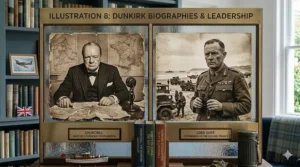
What UK readers often don’t realise is how controversial the decision to evacuate proved at the time. The French government saw British withdrawal as betrayal—abandoning France to fight alone. Churchill faced immense political pressure to commit more RAF squadrons to the Continental battle, even as Air Chief Marshal Dowding insisted Britain needed those fighters to defend against invasion. Lord Gort, BEF commander, made the tactically sound but politically fraught decision to pull back to the Channel coast against direct orders to attack southward. These tensions profoundly influenced Anglo-French relations for years afterward.
The wider campaign’s failure also explains why Dunkirk felt so miraculous. By late May 1940, British military and political leadership expected to lose most of the BEF—Churchill estimated saving perhaps 45,000 men as optimistic. The army’s equipment couldn’t be saved: the BEF left behind essentially all its tanks, artillery, vehicles, and heavy weapons at Dunkirk. Those 338,226 rescued soldiers represented Britain’s trained professional army—without them, defending against German invasion would have been nearly impossible. From this perspective, Dunkirk wasn’t victory but catastrophic defeat made barely tolerable by successful evacuation. Britain had been comprehensively outfought.
Yet that same evacuation success transformed defeat into something Britain could build upon psychologically. The “Dunkirk spirit”—keeping calm under pressure, improvising solutions, ordinary people achieving extraordinary things—became central to wartime British identity. This reframing proved crucial for national morale through the following year’s darkest moments: the Blitz, the Atlantic U-boat campaign, defeats in Greece and Crete. Dunkirk established a narrative template: Britain bloodied but unbowed, defeated in battle but undefeated in spirit, buying time to ultimately prevail.
For deeper understanding of this campaign context, readers should supplement Dunkirk-focused books with accounts of the wider Battle of France. The National Archives at Kew holds extensive War Office files documenting British decision-making. Serious students might explore W.J.R. Gardner’s Naval Staff History alongside accounts of the land campaign to understand how naval, army, and air operations intersected. The key insight is that Dunkirk represented both military failure and psychological victory—a paradox central to how Britain understood its role in 1940 and beyond.
Operation Dynamo: The Naval Planning Behind the Miracle
The popular image of Dunkirk emphasises spontaneity—fishermen and yacht owners rushing to rescue stranded soldiers—but the actual evacuation succeeded because of meticulous Royal Navy planning under Admiral Bertram Ramsay. Understanding Operation Dynamo requires appreciating the technical and logistical challenges naval planners solved under desperate time pressure. Any serious study of dunkirk evacuation books should include at least one volume covering Dynamo’s operational aspects; the Gardner Naval Staff History remains the gold standard for this dimension.
Ramsay commanded Dover from underground headquarters in tunnels beneath Dover Castle—the famous “Dynamo Room” that gave the operation its codename. When ordered on 26 May to prepare an evacuation, he faced seemingly insurmountable problems: the distance (110 kilometres from Dover to Dunkirk), the shallow approaches requiring small craft, the need for minesweeper channels through German minefields, the Luftwaffe threat, and catastrophic shortage of suitable vessels. British shipping worldwide numbered thousands, but withdrawing ships from Atlantic convoys or Mediterranean stations would take weeks. Ramsay had to work with whatever vessels were immediately available in home waters.
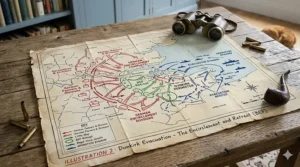
The solution combined three routes of varying length and danger. Route Z, the longest at 134 kilometres, followed swept channels avoiding known minefields but took 6-7 hours each way—too slow. Route X cut the distance to 89 kilometres but passed within German coastal artillery range—several ships were lost. Route Y, 101 kilometres, provided the best compromise once cleared of mines. Naval staff had to calculate tide times, allocate berths in Dunkirk harbour, direct ships to specific beaches, arrange fighter cover windows with RAF Fighter Command, and coordinate communications—all whilst under constant revision as circumstances changed.
The oft-overlooked aspect is the rearguard naval action that protected the evacuation. Destroyers didn’t just ferry troops; they provided anti-aircraft fire, screened larger transports, conducted anti-submarine patrols, and shelled German positions advancing on the perimeter. The Royal Navy lost six destroyers sunk and 19 damaged during Dynamo—nearly a quarter of the destroyer force committed. Minesweepers swept channels under fire; motor torpedo boats laid smokescreens; armed trawlers escorted convoys. This wasn’t passive rescue but active naval warfare against an enemy controlling air and increasingly land approaches.
British readers studying this operational dimension discover that the “miracle” resulted from professional competence as much as desperate improvisation. Ramsay’s staff maintained detailed logs (preserved in the Naval Staff History) showing which vessels sailed when, casualty figures by route and time, ammunition expenditure, even fuel consumption rates. This bureaucratic thoroughness under extreme pressure exemplifies British military culture at its most effective. The evacuation succeeded because navy planners combined aggressive improvisation with meticulous record-keeping.
One often-misunderstood point: whilst the little ships rightly receive iconic status, the Royal Navy’s larger vessels evacuated the majority of troops. Destroyers HMS Codrington, Sabre, Saladin and others made multiple round trips, each carrying 600-900 men. Passenger ferries like Mona’s Queen and King Orry handled thousands. The little ships’ contribution lay less in gross numbers than in solving the beach-to-ship transfer problem and creating that enduring image of ordinary citizens under fire. Both aspects mattered, but accounts emphasising only the little ships whilst underplaying destroyer crews’ sacrifices distort the historical picture.
For UK naval history enthusiasts, the Dunkirk evacuation represents one of the Royal Navy’s finest hours—not for battle victories but for logistics, improvisation, and sheer bloody-minded determination to rescue the army despite catastrophic losses. Six destroyers sunk, 19 damaged, over 200 smaller vessels lost—yet Ramsay’s staff kept sending more ships, refining routes, adjusting tactics, until the final soldier was lifted on 4 June. This operational dimension of Dunkirk deserves attention equal to the human drama; they’re inseparable aspects of the same story.
The 1940 Dunkirk Rescue: Separating Myth from Historical Reality
British cultural memory of Dunkirk has ossified into mythology that, whilst inspiring, sometimes obscures what actually happened. Any responsible exploration of dunkirk evacuation books must address where popular understanding diverges from historical evidence—not to diminish the achievement but to appreciate it accurately. UK readers particularly benefit from questioning received narratives, as British national identity remains tangled with Dunkirk interpretation even 86 years later.
Myth One: Little ships did most of the evacuation. Reality: Royal Navy destroyers, passenger ferries, and minesweepers evacuated approximately 230,000 men directly from Dunkirk harbour. Little ships contributed crucially by ferrying an additional 100,000+ troops from beaches to larger ships offshore, but couldn’t have succeeded without naval vessels doing the heavy lifting. The myth persists because it’s emotionally satisfying—amateur civilians saving the day—but undervalues professional naval crews who faced equal danger.
Myth Two: Dunkirk was a victory. Reality: Britain suffered catastrophic military defeat, losing the Battle of France and abandoning virtually all heavy equipment—2,472 guns, 68,000 vehicles, 20,000 motorcycles, 416 tanks. The BEF left behind everything except the soldiers themselves. That 338,226 men escaped rather than becoming prisoners represented salvage from disaster, not triumph. Churchill himself told Parliament, “Wars are not won by evacuations.” The mythologising came later as psychological necessity during Britain’s darkest hour.
Myth Three: German hesitation handed Britain the escape. Reality: Hitler’s famous “halt order” on 24 May—stopping panzer divisions short of Dunkirk—resulted from multiple factors: Rundstedt’s concern about tank losses, Göring’s promise that the Luftwaffe could finish the job alone, marshy Flanders terrain unsuitable for armour. Recent scholarship suggests operational and logistical factors mattered more than any single decision. German ground forces actually maintained heavy pressure on the shrinking perimeter throughout; evacuation succeeded despite German efforts, not because Germans inexplicably allowed it.
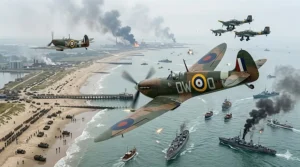
Myth Four: The RAF was absent from Dunkirk. Reality: RAF Fighter Command flew 2,739 sorties over Dunkirk, losing 145 aircraft—but operated at altitude where they were invisible to soldiers on beaches, who saw only German bombers getting through. This created bitter resentment—soldiers arrived home abusing RAF personnel—that took years to heal. Air Chief Marshal Dowding’s decision to husband fighter strength for home defence was strategically correct but left troops feeling abandoned. The perception of RAF absence proved more historically significant than the reality of RAF presence.
Myth Five: Evacuation was spontaneous and chaotic. Reality: Operation Dynamo required meticulous planning and coordination. Admiral Ramsay’s staff at Dover maintained detailed control: designating swept routes, allocating berths, directing ships to specific beaches, coordinating with French command, scheduling RAF fighter patrols. Yes, improvisation occurred—especially with civilian vessel requisitioning—but within a framework of professional naval staff work. The chaos soldiers experienced on beaches contrasted with relatively orderly coordination offshore.
Myth Six: All troops were British. Reality: Of the 338,226 men evacuated, roughly 123,000 were French, Belgian, Polish, and other Allied forces. British accounts have historically marginalised this contribution, focusing heavily on the BEF experience. French rearguard forces—particularly at Lille where they tied down German divisions—proved crucial to buying time. The final day’s evacuations prioritised lifting French troops, honouring the alliance even as France was collapsing.
Why do these myths persist? Partly because they serve psychological needs. Britain in 1940 desperately required narratives of resilience, improvisation, and national unity. The Dunkirk story—properly told—provided exactly that, even if details got simplified. Post-war, as Empire dissolved and Britain struggled to redefine itself, Dunkirk remained a cultural touchstone: proof of British character, a usable past when present seemed diminished. Films like the 1958 Dunkirk and 2017’s Christopher Nolan version perpetuate particular interpretations.
For UK readers selecting books, this means seeking authors who question mythology whilst acknowledging its power. Walter Lord’s narrative acknowledges uncomfortable truths—indiscipline on beaches, RAF-army tensions—without undermining the overall achievement. The Gardner Naval Staff History’s documentary approach cuts through mythology with primary sources. Doug Dildy’s outsider American perspective helps separate national myth from military reality. The best dunkirk evacuation books balance inspiration with accuracy, recognising that Dunkirk’s true story—survival against odds through competence, courage, and improvisation—needs no embellishment.
Imperial War Museums in London offers excellent exhibitions contextualising Dunkirk within the wider 1940 crisis. Visiting these exhibitions alongside reading provides valuable perspective—seeing actual lifeboats, soldiers’ equipment, and German propaganda leaflets makes abstract historical concepts tangible. The myth vs. reality question isn’t about debunking cherished national stories but about understanding them fully, complexity included.
Reading Dunkirk Books: Recommendations for Different UK Audiences
Not all readers approach Dunkirk with the same needs or prior knowledge. A retired Royal Navy veteran will want different content than a secondary school student researching coursework, which differs again from a Thames barge enthusiast tracing maritime heritage. This section matches specific UK reader types to optimal book choices, helping you spend your Amazon budget wisely.
For A-Level and GCSE Students: If you’re studying 20th century British history and need source-cited material for examinations or coursework, prioritise John Grehan’s day-by-day account and the Osprey Campaign volume. Grehan provides detailed chronology you can reference with confidence (“On 29 May, the perimeter contracted to…”), whilst Osprey’s clear maps and order-of-battle diagrams suit visual learners. Both cost under £20 combined and cover different strengths: Grehan for detailed chronology, Osprey for tactical analysis. Complement these with Walter Lord for engaging narrative that makes studying less tedious. Avoid starting with the Naval Staff History—its £30+ cost and dry style rarely suit school-level study unless you’re specifically researching naval operations.
For Family History Researchers: Tracing ancestors who served at Dunkirk requires books listing individual units and ships. The Gardner Naval Staff History proves indispensable if your relative served in the Royal Navy—it names hundreds of vessels with dates and operations. For army researchers, Grehan’s volume lists many infantry units by position and date. Supplement these with Forces War Records, a subscription service specifically for UK military genealogy. Remember that Dunkirk records remain incomplete—the chaos meant some units’ paperwork was abandoned or destroyed. Don’t be frustrated if you can’t find every detail; even serious historians face record gaps.
For Heritage Tourism Planners: If you’re planning trips to Dunkirk, Dover, or UK museums with Dunkirk collections, Martin Mace’s 100 Objects volume doubles as practical travel guide and history book. It directs you to specific exhibits at Imperial War Museum, Portsmouth Historic Dockyard, and local collections you’d otherwise miss. Nigel Sharp’s Little Ships book helps if you’re interested in visiting surviving vessels—many are privately owned but welcome visitors by arrangement. Combine these with Walter Lord’s narrative read before travelling; experiencing Dunkirk beaches whilst his accounts are fresh in memory makes the landscape speak.
For Maritime Heritage Enthusiasts: The Association of Dunkirk Little Ships organises annual commemorative crossings—joining one of these events whilst reading Sharp’s Little Ships volume creates unforgettable learning experience. If you’re a sailor yourself, Sharp’s technical details about how civilian vessels coped with open-sea passage they weren’t designed for will fascinate. The Images of War volume provides excellent photography of vessels under way. Thames sailing barge enthusiasts should seek out specialist articles in Classic Boat magazine about specific Dunkirk barges. This niche readership benefits from highly specialised material mainstream histories barely touch.
For Military History Postgraduates: Research students need primary sources and recent scholarship. The Gardner Naval Staff History is mandatory despite its cost—no serious Dunkirk naval thesis can proceed without it. Budget for the Grehan day-by-day account as well; its recent publication date (2018) means it incorporates newly-released National Archives material. Access academic journals via your university library: Journal of Military History, War in History, and English Historical Review occasionally publish Dunkirk-related articles with fresh interpretations. Consider French-language sources too—many Dunkirk aspects remain better documented in French archives than British ones. JSTOR and university library access provide scholarly articles unavailable elsewhere.
For Retired Armed Forces Personnel: Veterans, particularly Royal Navy and Army, often bring professional expertise that makes specialist material accessible. You’ll likely appreciate the Gardner Naval Staff History’s detailed operational orders and tactical dispositions—content that overwhelms civilian readers makes perfect sense to someone who’s read similar documents throughout their career. The Osprey Campaign volume provides good tactical analysis at accessible length. If you served in Afghanistan or Iraq, you’ll recognise parallels in Dunkirk’s evacuation logistics to operational withdrawals you may have experienced. Your professional background means you can handle technical material that requires glossaries for general readers.
For Casual History Readers: You’re reading for interest and enjoyment, not research or study. Walter Lord’s narrative proves perfect—gripping, well-written, comprehensively covering the topic in one accessible volume. Skip the expensive Naval Staff History unless you develop intense specialist interest. The Images of War photo volume suits coffee table browsing. Avoid getting paralysed by choice; start with Lord, and if you’re still interested after finishing, then explore more specialised volumes. Many casual readers discover unexpected depth of interest—you might start with Lord and progress to collecting multiple volumes. But equally, one good narrative history may satisfy your curiosity completely, and that’s absolutely fine.
For International Readers: If you’re outside the UK but interested in Dunkirk, be aware that British cultural memory loads this event with meanings that may seem disproportionate to military significance. British readers approach Dunkirk with 80+ years of mythology about national character. International readers benefit from this emotional distance—you can assess the evacuation more objectively. Doug Dildy’s Osprey volume, written by an American, provides that balanced external perspective. Lord’s narrative, whilst engaging, reflects American sympathies with British wartime experience that colours interpretation. Understanding Dunkirk fully requires recognising both what objectively happened and what Britain made of it psychologically.
One final recommendation across all reader types: visit Dunkirk itself if remotely feasible. The beach stretches kilometres, helping you grasp the evacuation’s geographic scale. The town’s Musée Dunkerque 1940 provides excellent context. Walking the eastern mole where soldiers queued for ships makes accounts you’ve read viscerally real. Dover’s white cliffs, visible across the Channel on clear days, remind you how close yet how far home must have seemed. Heritage tourism transforms book learning into embodied understanding—a weekend trip to Dunkirk and Dover deepens comprehension more than weeks of additional reading. Combine travel with your book selections for optimal learning experience.
Frequently Asked Questions About Dunkirk Evacuation Books
❓ What's the most historically accurate Dunkirk book available on Amazon UK?
❓ Are any Dunkirk books suitable for young readers or teenagers in the UK?
❓ Which Dunkirk book best covers the little ships and civilian rescue vessels?
❓ Do any Dunkirk books explain why the evacuation was necessary and cover the French campaign collapse?
❓ Can I find Dunkirk books with UK delivery and good availability on Amazon UK?
Conclusion: Finding Your Perfect Dunkirk Evacuation Book
The challenge facing UK readers on Amazon isn’t finding dunkirk evacuation books—it’s choosing from the bewildering variety now available. This guide’s seven recommendations cover the essential range: Walter Lord’s narrative masterpiece for general readers, John Grehan’s detailed chronology for students and researchers, photographic histories for visual learners, specialised accounts of little ships and naval operations, and tactical analysis for military history enthusiasts. Between them, these volumes provide comprehensive coverage of Operation Dynamo from every significant angle.
What matters most is matching book to purpose. If you’re approaching Dunkirk for the first time with simple curiosity about this famous British moment, Lord’s £9-£16 narrative delivers exceptional value—320 pages that read like a thriller whilst teaching thoroughly. Students need Grehan’s citation-rich detail and Osprey’s clear maps. Maritime enthusiasts find their niche in Sharp’s little ships account. Serious researchers eventually require Gardner’s official naval history despite its premium pricing. No single volume suits every reader; the “best” book depends entirely on your specific needs, prior knowledge, and learning style.
Beyond individual titles, consider that Dunkirk’s full significance emerges only when you understand both military reality and cultural mythology. The evacuation represented catastrophic defeat salvaged by effective improvisation—Britain lost the Battle of France comprehensively yet rescued its army to fight another day. That paradox of disaster and deliverance shaped British wartime identity profoundly. The little ships, whilst evacuating fewer troops than Royal Navy destroyers, captured public imagination in ways that professional military operations couldn’t. Understanding Dunkirk requires appreciating both dimensions: what objectively happened and what Britain made of it psychologically.
For UK readers in 2026, Dunkirk remains relevant not just as history but as cultural touchstone. Brexit debates referenced “Dunkirk spirit”; pandemic responses invoked wartime resilience; political rhetoric continuously mines 1940 for usable metaphors. This means reading Dunkirk literature critically, questioning mythology whilst acknowledging its genuine historical basis. The best books—Lord, Grehan, Gardner—balance inspiration with accuracy, recognising that the true story needs no embellishment. If you’re spending your money on Amazon UK, invest in these authoritative accounts rather than populist retellings that sacrifice accuracy for emotional impact.
Start with one book suited to your level and interests. Read it thoroughly. If you develop deeper fascination—and many readers do, as Dunkirk’s inherent drama grips unexpectedly—then expand to complementary volumes covering different aspects. Combine reading with heritage tourism: visit Dover Castle’s underground headquarters, walk Dunkirk’s beaches, explore Imperial War Museum’s collections. The evacuation happened in specific geographic spaces that still exist; experiencing them alongside reading transforms abstract history into tangible reality. A weekend trip to Kent and northern France, combined with two or three well-chosen books from this guide, provides comprehensive Dunkirk education that purely academic study can’t match.
The miracle of Dunkirk wasn’t supernatural intervention but human beings performing extraordinarily under extreme pressure. Naval planners improvising with inadequate resources. Destroyer captains making multiple crossings despite mounting losses. Rearguard infantry buying time with their lives. Civilian boat owners sailing into danger. And ultimately, 338,226 men brought safely home when defeat seemed certain. That achievement deserves understanding through quality historical accounts rather than simplified mythology. Choose your books wisely, read critically, and you’ll appreciate why Dunkirk continues resonating in British consciousness 86 years later.
Recommended for You
- 7 Best Blitz London History Books UK Readers Must Own 2026
- 7 Best Battle of Britain Books UK 2026
- 7 Best D Day History Books UK: Expert Reviews 2026
Disclaimer: This article contains affiliate links. As an Amazon Associate, I earn from qualifying purchases. If you purchase products through these links, we may earn a small commission at no additional cost to you.
✨ Found this helpful? Share it with your mates! 💬🤗
