

In This Article
Here’s a peculiar thing about the human brain: it is almost pathologically curious about itself, yet most of the books written about it seem designed to kill that curiosity stone dead. You pick one up, hit the word “glutamatergic” on page three, and promptly go and make a cup of tea. The book collects dust. The curiosity quietly retreats.

It doesn’t have to be that way. The best neuroscience books for beginners manage something genuinely remarkable — they translate one of the most complex subjects in science into prose so clear and engaging that you’ll find yourself reading at midnight, mildly astonished by your own behaviour. That three-pound lump of grey matter you’ve been carrying around your whole life suddenly becomes the most fascinating object in the known universe. Which, arguably, it is.
Neuroscience, at its most accessible, is the study of how the brain gives rise to thought, emotion, perception, memory, and identity — and why it so frequently gets all of the above slightly wrong. The British Neuroscience Association describes it as one of the fastest-growing scientific disciplines of the 21st century, and for good reason: advances in brain imaging and molecular biology have rewritten much of what we thought we knew.
This guide covers seven of the best neuroscience books for beginners currently available on Amazon.co.uk — chosen not because they appear on every generic list, but because they actually work. Whether you’re a curious reader in Edinburgh, a psychology student in Bristol, or simply someone who has started wondering why they keep making the same decisions, there’s something here for you.
Quick Comparison: 7 Best Neuroscience Books for Beginners (UK)
| Book | Author | Best For | Reading Level | Format | Price Range (Amazon.co.uk) |
|---|---|---|---|---|---|
| Incognito: The Secret Lives of the Brain | David Eagleman | Complete beginners | Very accessible | Paperback / Kindle | Under £10 |
| The Brain: The Story of You | David Eagleman | Visual learners, TV fans | Very accessible | Paperback / Kindle | Under £10 |
| Livewired | David Eagleman | Understanding plasticity | Accessible | Paperback / Kindle | Under £10 |
| Behave | Robert M. Sapolsky | Deep-dive readers | Moderate | Paperback / Kindle | Around £10 |
| How Emotions Are Made | Lisa Feldman Barrett | Emotion & mental health interest | Moderate | Paperback / Kindle | Under £15 |
| The Brain That Changes Itself | Norman Doidge | Hope & recovery stories | Very accessible | Paperback / Kindle | Under £10 |
| The Man Who Mistook His Wife for a Hat | Oliver Sacks | Medical story lovers | Very accessible | Paperback / Kindle | Under £10 |
The table above reveals something useful immediately: the entry price for world-class brain science is remarkably low. Several of these paperbacks are available on Amazon.co.uk for well under £10 — some even cheaper on the used market. Budget is genuinely no barrier here. However, reading level matters more than price when you’re just starting out. If you’ve never read anything in this space before, Eagleman or Sacks is where you begin. If you’re already comfortable with popular science and want something with a bit more intellectual heft, Sapolsky or Barrett will reward you enormously.
💬 Just one click — help others make better buying decisions too! 😊
✨ Don’t Miss These Exclusive Deals!
🔍 Take your neuroscience reading to the next level with these carefully selected books. Click any highlighted title to check current pricing and availability on Amazon.co.uk. These picks will help you find exactly what you need!
Top 7 Neuroscience Books for Beginners: Expert Analysis
1. Incognito: The Secret Lives of the Brain — David Eagleman
If you’re only going to read one neuroscience book for beginners, make it this one. Eagleman’s central argument is quietly devastating: most of what your brain does, it does without telling you. Your conscious mind — the bit that feels like “you” — is essentially a press secretary for processes it has no real access to. The book uses that unsettling premise as a launchpad for one of the most entertaining journeys through cognitive science you’ll find in print.
Eagleman writes with the rare combination of genuine expertise and absolute refusal to be boring. He’s a neuroscientist at Stanford, but he explains complex systems through stories about Mel Gibson, Ulysses, and magicians — and it works brilliantly. UK readers will particularly appreciate the sections on how unconscious bias shapes decision-making; the applications to British public life, jury selection, and even recruitment are quietly thought-provoking.
Currently rated 4.5 stars from over 3,300 reviews on Amazon.co.uk, with British readers consistently praising its accessibility. One UK reviewer neatly compared it to “Brian Cox for the brain.”
✅ Perfect gateway into neuroscience for non-scientists
✅ Genuinely funny without sacrificing rigour
✅ Paperback widely available, often well under £10
❌ Some readers find the legal reform section in the second half less convincing
❌ A few concepts warrant a slow re-read
Price range: Under £10 (paperback). Excellent value — and it’s the sort of book you’ll want to lend to someone immediately after finishing it.
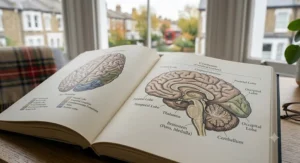
2. The Brain: The Story of You — David Eagleman
This is the companion book to Eagleman’s Emmy-nominated BBC/PBS television series, which means it’s structured like a six-part documentary — brisk, visual, and enormously good at covering enormous ground without leaving you behind. It asks a deceptively simple question: what does it mean to be you? Then it spends 200 pages dismantling the comfortable answer.
Where Incognito digs deep into the unconscious, The Brain casts a wider net. Reality, memory, decision-making, social connection, the self — all examined through the lens of modern neuroscience, illuminated by brain imaging research that simply wasn’t available a generation ago. For readers who prefer breadth over depth on a first pass, this is the ideal entry point.
UK reviewers are particularly effusive, with several noting it as essential reading for anyone working in education, healthcare, or public policy. The sections on perception and reality have real implications for how we understand disagreement — something rather pertinent in contemporary British life.
✅ Brilliant overview covering memory, reality, identity, and emotion
✅ Short, fast chapters — perfect for commuting on the Tube or the train
✅ Works brilliantly alongside the TV series
❌ Slightly less depth than Incognito — serves better as an introduction than a definitive text
❌ Closely follows the documentary structure, which may feel familiar to those who’ve already seen the series
Price range: Often available for well under £10 on Amazon.co.uk — sometimes significantly less secondhand.
3. Livewired: The Inside Story of the Ever-Changing Brain — David Eagleman
Three Eagleman books in a row may raise an eyebrow, but they serve genuinely different purposes. Livewired is the most sophisticated of the trio, and the most hopeful. Its central thesis — that the brain is not “hardwired” but perpetually rewriting itself in response to experience — has profound implications for how we think about learning, recovery from brain injury, and ageing.
Eagleman coins the term “livewired” specifically to replace the misleading metaphor of hardwiring, and it’s a distinction worth taking seriously. The brain rewires around damage. Blind people’s visual cortices are recruited for touch and hearing. Soldiers who lose limbs experience phantom sensations. These aren’t curiosities — they’re the brain doing exactly what it’s built to do, and understanding this changes how you think about rehabilitation, education, and your own capacity for change at any age.
For British readers interested in neuroplasticity and rehabilitation, this is particularly valuable reading — UCL’s Institute of Neurology has been at the forefront of plasticity research for decades, and Livewired reflects the cutting edge of that field.
✅ Covers neuroplasticity with real depth and optimism
✅ Features original research from Eagleman’s own lab
✅ Includes genuinely mind-bending sections on sensory substitution and new senses
❌ Slightly more technical than the other two Eagleman titles — not quite as breezy
❌ Best read after Incognito or The Brain, not as a first book
Price range: Under £10 (paperback) on Amazon.co.uk — Prime-eligible for next-day delivery.
4. Behave: The Biology of Humans at Our Best and Worst — Robert M. Sapolsky
This is the big one. The serious one. The one you’ll read with a highlighter and quote at dinner parties for the next decade. Robert Sapolsky is a Stanford professor of biology and neurology, and Behave is his attempt to explain human behaviour — violence, compassion, tribalism, altruism — through the lens of everything from millisecond neurological events to evolutionary biology stretching back millions of years.
It is not a light read. At over 700 pages, it demands commitment. But the reward is extraordinary: by the time you’ve finished, you’ll have a genuinely integrated understanding of why humans do what they do, from the molecular to the cultural. Currently a #1 bestseller on Amazon.co.uk in evolutionary psychology, with 4.6 stars across more than 9,400 reviews — which tells you everything about how it lands with readers.
A word of practical advice for the UK reader: Sapolsky is an American academic, and a few cultural references are transatlantic. Don’t let that put you off. The science is universal, and the applications to British social and political life are, if anything, even more illuminating for not being explicitly stated.
✅ Arguably the most comprehensive popular neuroscience book ever written
✅ Integrates biology, psychology, anthropology, and neuroscience into a coherent whole
✅ Genuinely changes how you interpret human behaviour
❌ Long and dense — not a commuter read
❌ Some prior interest in biology helps, though Sapolsky is careful to explain as he goes
Price range: Around £10 (paperback) on Amazon.co.uk. Worth every penny — and then some.
5. How Emotions Are Made: The Secret Life of the Brain — Lisa Feldman Barrett
Lisa Feldman Barrett is among the top 0.1% most cited scientists in the world for her work in psychology and neuroscience, and this book is her public manifesto. The argument is radical: emotions are not universal, pre-programmed reactions hardwired into the brain. Instead, your brain actively constructs each emotional experience from past experience, bodily sensations, and cultural context.
That sounds abstract until you realise what it means in practice. Your anger is not a fixed biological event — it’s a prediction your brain is making based on everything it’s previously learned about situations like this one. Anxiety is your brain trying to manage uncertainty. This shifts the question from “why do I feel this way?” to “what is my brain predicting right now, and is it right?” That reframe alone has genuine therapeutic value, and UK readers interested in CBT, mindfulness, or mental health will find it particularly resonant.
The NHS has increasingly embraced psychologically informed approaches to emotional wellbeing, and Barrett’s framework sits comfortably alongside that shift in thinking.
✅ Genuinely revolutionary in its approach to emotion science
✅ Practical implications for mental health, parenting, and self-awareness
✅ Written with remarkable clarity for such a dense subject
❌ Challenges some widely held assumptions — which can be initially disorienting
❌ Dense in places; a slower read than Eagleman
Price range: Under £15 (paperback) on Amazon.co.uk. Available in Kindle format too.
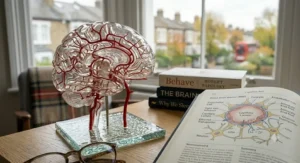
6. The Brain That Changes Itself — Norman Doidge
Norman Doidge’s book arrived at a moment when neuroplasticity was still a fringe concept in popular science, and it single-handedly changed that. Structured as a series of case studies — patients recovering from stroke, scientists developing new senses, children overcoming learning difficulties — it reads less like a science book and more like a collection of genuinely extraordinary human stories.
The emotional pull is intentional. Doidge, a psychiatrist as well as a researcher, understands that hope is as scientifically important as data. Each story demonstrates the same underlying principle: the brain can reorganise itself, compensate for damage, and learn at any age. For anyone in the UK dealing with rehabilitation after neurological illness, this is not just interesting reading — it can feel genuinely life-changing.
Oliver Sacks himself praised it as a remarkable portrait of the brain’s adaptability, which is rather like Beethoven recommending a pianist.
✅ Deeply human stories that make complex science emotionally accessible
✅ Pioneered public understanding of neuroplasticity before it became fashionable
✅ Widely used in rehabilitation and therapeutic contexts in the UK
❌ Some of the research cited has been updated since first publication — a newer edition is preferred
❌ Occasionally veers toward anecdote over rigorous data
Price range: Under £10 (paperback) on Amazon.co.uk — often much less secondhand.
7. The Man Who Mistook His Wife for a Hat — Oliver Sacks
The oldest book on this list, and in some ways the most essential. Oliver Sacks was a British neurologist — born in London, trained here — and his case studies of patients with extraordinary neurological conditions remain the gold standard for accessible neuroscience writing more than four decades after publication. The title patient genuinely could not recognise faces, using visual cues like hats and hair instead; other patients in the book have no short-term memory, experience the world as a film strip, or feel phantom limbs with acute vividness.
What makes Sacks irreplaceable is not just the science — it’s the humanity. He writes about his patients with profound respect and curiosity, treating their unusual experiences as windows into the nature of consciousness rather than mere medical curiosities. The result is a book that teaches you more about how a normal brain works by showing you what happens when it doesn’t.
For UK readers with a literary bent, this is accessible neuroscience at its most elegant. It’s also, frankly, a pleasure to read on a rainy Saturday afternoon — of which Britain provides abundant opportunity.
✅ Literary quality that transcends the science genre entirely
✅ Ideal for readers approaching neuroscience from a human interest angle
✅ Short, self-contained chapters — pick it up and put it down freely
❌ Pre-dates modern neuroimaging — some explanations have since been refined
❌ Clinical focus means it doesn’t cover the broader neuroscience landscape
Price range: Under £10 (paperback) on Amazon.co.uk. The Oliver Sacks 3-book collection set is also available for under £15 and makes an excellent gift.
How to Read Your First Neuroscience Book Without Getting Lost
The most common mistake new readers make is treating a neuroscience book like a textbook — reading sequentially, taking notes, worrying about remembering every term. Don’t. The best neuroscience books for laymen are written to be experienced, not studied, and trying to retain every detail on a first read is a fast route to abandonment.
Start with story, not theory. If you’re genuinely new to this territory, Sacks or Doidge first. Both are built around human narratives that carry you along without requiring any prior knowledge. The science arrives through the stories, which means it lands in context rather than in the abstract.
Read actively but lightly. Dog-ear pages that astonish you. Underline one sentence per page that you want to return to. Don’t highlight entire paragraphs — that way lies the illusion of learning rather than the thing itself.
Give yourself permission to skip. If a chapter isn’t landing, move on. Most of these books are designed to be dipped into non-linearly, and you can always circle back. This is particularly true of Sacks, whose chapters are deliberately standalone.
Talk about what you’re reading. Neuroscience becomes significantly more interesting the moment you start noticing it in everyday life — in your own decisions, in other people’s reactions, in the news. The commute into work, the argument you had last Tuesday, the way you felt inexplicably anxious on a grey November morning in Manchester: all of it makes more sense once you understand what’s happening underneath.
One practical tip for the British reader: several of these books are available in Audible audiobook format through Amazon.co.uk, often included with an Audible trial. For long commutes on the train between Birmingham New Street and London Euston, or the hour-long bus journey through Edinburgh’s Old Town, an audiobook can turn travel time into a rather good education.
Which Book Is Right for You? A UK Reader’s Decision Guide
Not everyone comes to neuroscience books for beginners from the same angle, and matching your starting point to the right book saves a lot of frustration.
If you’re a complete beginner who just wants to understand how the brain works: Start with The Brain: The Story of You. It’s the fastest, broadest introduction available, and it’ll tell you within a few chapters whether you want to go deeper.
If you’ve been casually curious and are ready to commit properly: Incognito is your book. It has sufficient depth to genuinely change how you think about yourself, without ever becoming inaccessible.
If your primary interest is mental health, emotions, or therapy: How Emotions Are Made will be the most directly useful. If you’ve ever done CBT or are interested in mindfulness, Barrett’s framework will give the practice a scientific foundation that makes it significantly more compelling.
If you’re a student (or the parent of one) heading towards psychology, medicine, or a life sciences degree: Behave is worth tackling before you arrive. Sapolsky’s integrative approach will give you a framework that pulls together material from half a dozen different first-year modules.
If you’d like to give a brain science gift book to someone you love: The Man Who Mistook His Wife for a Hat or The Brain That Changes Itself are the safest choices. Both are literary enough to appeal to non-scientists and scientific enough to genuinely educate. They also look rather good on a bookshelf, which — let’s be honest — matters.
✨ Don’t Miss These Exclusive Deals!
🔍 Browse all seven picks and check current pricing and Prime delivery options on Amazon.co.uk. Whether you want next-day delivery or are happy to wait for a used copy at a fraction of the price, there’s an option to suit every budget.

How to Choose Neuroscience Books for Beginners in the UK
Choosing the right book is half the battle. Here are five criteria worth considering before you buy:
- Author credentials matter, but style matters more. A brilliant neuroscientist who can’t write for a general audience won’t teach you much. Look for authors who have a track record of public communication — Eagleman’s BBC series, Sapolsky’s Stanford lectures on YouTube, Sacks’ decades of medical writing.
- Check the publication date. Neuroscience moves fast. A book from 2005 may still be excellent, but some specific claims — particularly around which brain regions do what — will have been updated. Anything published after 2015 reflects the neuroimaging revolution fairly accurately.
- Read the opening chapter before committing. Amazon.co.uk’s “Look Inside” feature is genuinely useful here. If the first three pages engage you, the book will probably work for you. If they don’t, trust that instinct.
- Consider format. Long books like Behave can feel daunting in paperback but become manageable as an audiobook during commutes or exercise. UK readers have strong access to Audible through Amazon.co.uk, often at attractive introductory prices.
- Match the book to your actual goal. “I want to understand the brain” is different from “I want to understand my own behaviour” or “I want to support someone with a neurological condition.” The books on this list serve different purposes, and picking the right one from the start makes the experience considerably more rewarding.
Common Mistakes When Buying Brain Science Books for Beginners
Buying a neuroscience book is more straightforward than understanding the brain. But a few pitfalls are worth avoiding.
Mistaking complexity for quality. Academic textbooks like Kandel’s Principles of Neural Science are exceptional within their domain. They are also completely unsuitable for anyone who isn’t already studying neuroscience at degree level. Accessible neuroscience is not dumbed-down neuroscience — it’s science that has been carefully translated for a general audience, and that translation is an art form in itself.
Buying American editions that don’t acknowledge the UK context. Most popular neuroscience books are written by American academics, and some cultural references — the legal system, healthcare, social context — are transatlantic by default. This rarely affects the science, but it’s worth knowing. Where possible, the UK paperback editions on Amazon.co.uk include British spelling and occasionally updated material.
Overlooking British authors. Dean Burnett, a Cardiff-based neuroscientist, wrote The Idiot Brain specifically for a British popular science audience and it’s wonderful — funny, self-deprecating, and rooted in the kind of dry scepticism that British readers tend to appreciate. It’s not on this main list only because the seven books above have broader scope, but it deserves a strong mention as a supplement.
Judging by review count alone. A book with 10,000 Amazon reviews isn’t automatically better than one with 500. Check the content of the reviews, not just the number. Look specifically for UK reviewers commenting on readability and how it landed for non-specialists.
Neuroscience Books vs Popular Psychology: What’s the Difference?
This distinction trips up a lot of beginners, and it’s worth clarifying. Popular psychology books — think Thinking, Fast and Slow, The Power of Habit, Atomic Habits — focus primarily on behaviour, decision-making, and mental patterns. They draw on neuroscience, but they’re primarily about psychology.
Neuroscience books for laymen go deeper into the biological substrate — the neurons, the circuits, the brain regions and chemicals that underlie those psychological phenomena. They answer the “why does this happen in the brain?” question that psychology books often leave implicit. The distinction matters because they serve different purposes: psychology books tend to be more immediately actionable (“here’s how to build better habits”), while neuroscience books are more foundational (“here’s why habits form in the first place, at the level of synaptic connections”).
The ideal reading programme, honestly, combines both. Behave and How Emotions Are Made sit closest to the boundary, which is part of why they’re such satisfying reads — they give you the biology and the behavioural implications in one place. According to research summarised by the Guardian’s science desk, public interest in neuroscience has grown substantially alongside the mental health conversation in Britain, and the best books in this genre serve both audiences simultaneously.
Frequently Asked Questions About Neuroscience Books for Beginners
❓ What is the best neuroscience book for beginners with no science background?
❓ Are neuroscience books for laymen scientifically accurate, or are they oversimplified?
❓ Which neuroscience book is best as a brain science gift for someone in the UK?
❓ How long does it take to read a typical neuroscience book for beginners?
❓ Are these neuroscience books available on Kindle or Audible through Amazon.co.uk?
Conclusion: The Best Neuroscience Books Are the Ones You Actually Read
The brain is the only object in the universe that is attempting to understand itself. That’s either deeply profound or slightly alarming, depending on what you’ve been reading lately. Either way, it’s worth investigating.
The seven neuroscience books for beginners covered here represent the best of a genuinely excellent genre — books that respect the reader’s intelligence without demanding a degree to understand them. Start with Eagleman or Sacks if you want the gentlest entry point. Move to Sapolsky or Barrett when you’re ready to go deeper. Let Doidge give you hope about the brain’s capacity for change, and let Sacks remind you that the strangest neurological cases illuminate the most fundamental truths about human experience.
The British Neuroscience Association notes that neuroscience literacy among the general public has real-world benefits — for mental health conversations, for medical decision-making, and for understanding the social world around us. These books are a genuine contribution to that literacy. All are available on Amazon.co.uk, most for under £10, all with UK delivery options that won’t make you wait long.
Your brain, as it turns out, is worth reading about. And reading about it will change it — which is perhaps the most neuroscience thing of all.
✨ Don’t Miss These Exclusive Deals!
🔍 Ready to start? Click any highlighted book title in this article to check current pricing and Prime availability on Amazon.co.uk. These carefully chosen picks will help you find the right neuroscience book for your reading level, interests, and budget.
Recommended for You
- 7 Best Human Evolution Books UK 2026: Expert Picks
- Best Biology Books for Beginners UK: 7 Picks for 2026
- Evolution Books Richard Dawkins: 7 Must-Reads for UK Fans 2026
Disclaimer: This article contains affiliate links. As an Amazon Associate, I earn from qualifying purchases. If you purchase products through these links, we may earn a small commission at no additional cost to you.
✨ Found this helpful? Share it with your mates! 💬🤗
