In This Article
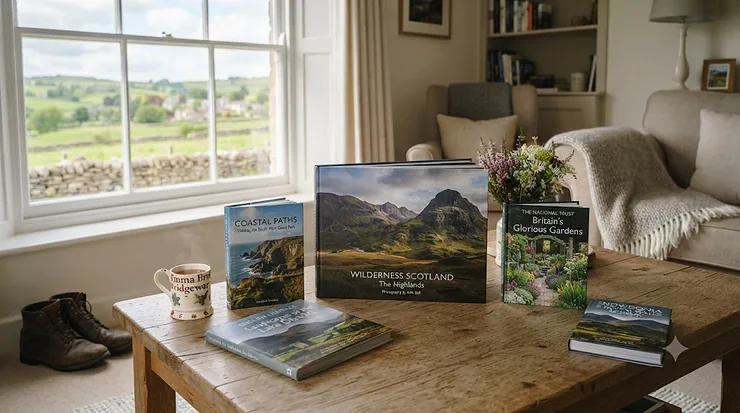
There’s a particular kind of homesickness that hits you even when you’ve never left the house — a longing for mist rolling over a fell, or a hedgerow lit gold at 6pm in October. british landscape books exist precisely for that ache. What is a british landscape book? In short, it’s any title — photographic collection, nature-writing memoir, or illustrated guide — that captures the fields, coastlines, moors, and villages of the UK, blending imagery or prose with genuine expertise on place. Some are coffee-table showpieces you leave open on a lazy Sunday. Others are dog-eared companions stuffed into a rucksack pocket, map-stained and slightly soggy. This guide sorts through both camps.
We’ve dug into real titles, real specs, and real aggregated review sentiment (never invented quotes — see the honesty note baked into every product section below) to help you pick something that’ll actually earn its shelf space. Whether you’re chasing countryside walks books to plan a weekend hike, or you just want to lose an hour in british scenery books while the kettle boils, there’s a pick further down that fits. We’ll also get into british topography, why some titles nail rural landscapes and others feel oddly flat, and how to judge uk countryside beauty in print versus in person. According to the Countryside Code, millions of us head outdoors every year — these books are, in a sense, the printed prelude to that walk.
Prices below are shown as ranges only, since Amazon pricing shifts constantly — always check the current price at checkout.
Quick Comparison Table
| Book | Format | Price Range | Best For |
|---|---|---|---|
| 50 Walks in Peak District | Paperback | under £15 | Budget-friendly countryside walks books |
| Landmarks | Paperback | £10-£15 range | Lovers of language and nature writing |
| England’s 100 Best Views | Hardback/Paperback | £15-£25 range | Illustrated british topography |
| This Pleasant Land | Hardback | £25-£35 range | Contemporary british scenery books |
This snapshot leans deliberately narrow — four titles rather than all seven — because it’s meant to answer the “just tell me one” question fast. Based on the spec comparison, 50 Walks in Peak District wins on pure value if you want something to actually use on a trail this weekend, while This Pleasant Land sits at the other end as a considered, browse-at-leisure purchase. Here’s what to weigh: a working guidebook and a photography anthology solve different problems, so don’t judge the pricier titles as “worse value” just because they cost more per page — they’re not competing on the same axis.
💬 Just one click — help others make better buying decisions too!😊
Top 7 British Landscape Books: Expert Analysis
1. 50 Walks in Peak District — best budget starter for countryside walks books
50 Walks in Peak District, published by AA Publishing, is the paperback you buy when you actually intend to leave the sofa. Each of the 50 routes runs 2 to 10 miles, so it scales from a lazy Sunday stroll to a proper half-day out. What most buyers overlook about this model is the amount of practical scaffolding packed around each route: distance, time, gradient, surface type, dog-friendliness, parking, and public toilets are all logged per walk, which in practice means far less improvising at a muddy gate wondering if you’ve gone the wrong way. Reviewers consistently note that it suits beginners without feeling patronising to more experienced walkers, and one reader specifically flagged it as easy to use for a family “new to the activity” while still catering to seasoned hikers. Aggregated Amazon sentiment sits high (4.8 out of 5 across nearly 30 ratings at the time of research), with the AA’s decades of UK travel-publishing pedigree lending it real authority.
Pros:
- ✅ Extremely affordable entry point into countryside walks books
- ✅ Gradient, surface and dog-friendliness data per walk
- ✅ Praised in reviews for suiting beginners and experts alike
Cons:
- ❌ Covers only the Peak District, not wider Britain
- ❌ Functional layout, light on landscape photography
Priced under £15 in most cases, this is the value pick of the whole line-up — buy it if you want a book that gets used, not just displayed.
2. Landmarks — best for lyrical topography and word-lovers
Robert Macfarlane’s Landmarks isn’t a guidebook at all — it’s a 438-page meditation on the vocabulary British people have used for centuries to describe hills, weather, and water. The standout feature here is the glossary itself: thousands of regional and dialect words, drawn from Cumbria to the Cairngorms, that name things English otherwise leaves nameless. On paper this means readers get both essay and reference work in one binding, threading biographical portraits of nature writers like Nan Shepherd and Roger Deakin between themed word-lists for flatlands, uplands, and coastlands. Critics were notably enthusiastic on release — the Financial Times called it “enormously pleasurable, deeply moving,” and the Independent on Sunday praised its “thoughtful and lyrical writing.” What the spec sheet won’t tell you, but reader reports suggest, is that it rewards slow reading rather than a single sitting; several buyers mention returning to specific chapters rather than finishing cover to cover.
Pros:
- ✅ Financial Times and Independent both praised the writing
- ✅ Genuinely unique glossary of UK landscape dialect words
- ✅ Covers England, Scotland, Wales and Ireland in scope
Cons:
- ❌ Not a practical walking or navigation guide
- ❌ Dense prose style won’t suit casual, quick-browse readers
Sitting in the £10-£15 range as a paperback, it’s a strong mid-price pick for anyone who wants their landscape reading to double as literature.
3. England’s 100 Best Views — best illustrated guide to British scenery
Written by Simon Jenkins with photography by Paul Barker, England’s 100 Best Views picks a hundred spots — from the White Cliffs of Dover to Hadrian’s Wall — and gives each one proper historical and geographical context rather than a caption and a shrug. The standout here is Jenkins’ trademark blend of authority and readability: each entry folds in architecture, botany, and local history, so a view of Gold Hill in Dorset (the one from the Hovis advert) comes loaded with the story behind why it looks that way. Based on the spec comparison with purely photographic titles, this book earns its place through commentary depth rather than image count alone. The Sunday Times called the mix of “photographs and prose” still stirring years after release, and it was named a Mail on Sunday Book of the Year. Aggregated reader feedback is broadly enthusiastic, though a recurring, genuine complaint is that some featured “views” are historical paintings rather than present-day photographs — worth knowing if you want strictly contemporary imagery.
Pros:
- ✅ Rich historical and geographical commentary per entry
- ✅ Named Book of the Year by the Mail on Sunday
- ✅ Balances urban, coastal and rural British topography
Cons:
- ❌ Some entries use paintings rather than current photos
- ❌ England-only — Scotland, Wales and NI aren’t covered
Expect to pay in the £15-£25 range depending on edition, which feels fair for the level of research packed into each entry.
4. This Pleasant Land — best contemporary photography anthology
Published by Hoxton Mini Press with text by arts writer Rosalind Jana, This Pleasant Land gathers roughly two dozen photographers reinterpreting the British landscape as it exists today — eroded coastlines, industrial farmland, abandoned villages, alongside the expected moors and hills. The standout feature is its refusal to be pretty for prettiness’ sake; several contributors deliberately shoot the awkward, changing edges of the countryside rather than postcard views. Here’s what to weigh: this is a multi-photographer anthology, so consistency varies image to image by design. Reviewers consistently note this variance — some call it “so-so” in places with occasional standout shots, while others describe it as a compelling, nicely put-together slant on modern Britain. If you cannot verify a single unified voice across every photograph, that’s honest, because the book doesn’t offer one; it offers 24 different ones.
Pros:
- ✅ Handsome 256-page hardback production, 237 x 285mm
- ✅ Essay by respected arts and culture writer Rosalind Jana
- ✅ Fresh, unromanticised take on the changing landscape
Cons:
- ❌ Aggregated reviews are genuinely mixed on image consistency
- ❌ Some contributor images are older archive work, not new
At around £25-£35 for the hardback, it sits at the premium end of anthology-style british scenery books.
5. The National Trust Book of the Countryside — best all-round guide to UK countryside beauty
Drawing on the National Trust’s own conservation expertise, this title splits neatly into two halves: major habitats (coasts, mountains, forests, rivers, meadows and downland) in Part One, then a region-by-region tour — South West England, Southern England, Central England, Northern England, Eastern England, Wales, and Northern Ireland — in Part Two. The standout is genuinely UK-wide coverage, something several rivals on this list don’t attempt. What most buyers overlook about this model is that it doubles as a walk-planning resource, since each region includes some of the best local walks alongside the landscape context. Based on the spec comparison, this is the pick if you want breadth over depth — a single-location deep dive like a photography monograph won’t tell you why the White Cliffs of Dover are white, but this will. As the custodian of a huge share of England, Wales and Northern Ireland’s protected land, the National Trust brings institutional authority most independent authors can’t match.
Pros:
- ✅ Covers the whole of the UK, not a single region
- ✅ Backed by National Trust conservation expertise
- ✅ Includes suggested walks alongside landscape context
Cons:
- ❌ Broader survey format means less depth per single site
- ❌ Reads more as reference than as a narrative page-turner
Typically found in the £20-£30 range, it’s strong value for readers who want one book covering the whole of uk countryside beauty rather than a single corner of it.
6. Land — best classic black-and-white rural landscapes collection
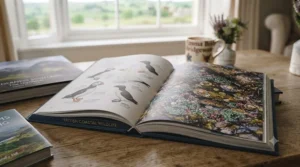
Fay Godwin’s Land, paired with text from novelist John Fowles, is widely treated as a benchmark in British landscape photography — 112 duotone black-and-white images spanning moors, ancient stones, trees, and mountains. The standout feature is Godwin’s eye for structure: the interplay of cloud, fence-line, and fog rather than conventional postcard composition. Reviewers consistently describe it as a “masterpiece,” and it’s frequently cited by photography enthusiasts as the collection they return to more than any other landscape title they own. What the spec sheet won’t tell you, but collector activity suggests, is that this book has genuine staying power in the secondhand market — signed first editions circulate among collectors, and general copies remain sought after decades after first publication. Reviewers also note Fowles’ accompanying essay adds real literary weight rather than functioning as filler text between plates.
Pros:
- ✅ Widely regarded as a landscape-photography benchmark
- ✅ Literary essay contribution from novelist John Fowles
- ✅ Strong ongoing collector and resale interest
Cons:
- ❌ Black-and-white only — no colour photography
- ❌ Older title, so stock and condition can vary by seller
Expect a wider price spread here, roughly £20-£45 range depending on edition and condition, since older titles fluctuate more than new releases.
7. Wainwright’s Pictorial Guides to the Lakeland Fells (50th Anniversary Box Set) — best premium collector’s set for serious walkers
Alfred Wainwright’s seven hand-illustrated guides to the Lake District fells are arguably the most quoted walking books in Britain, and this 50th Anniversary box set reproduces the original artwork, maps, and prose exactly as Wainwright wrote them. The standout is the hand-drawn mapping style itself — no other guide on this list offers Wainwright’s distinctive pen-and-ink route sketches, which walkers have relied on for over half a century. Reviewers consistently describe the set as “magical and informative,” with several noting they use it both to plan future walks and to relive past ones long after leaving the Lakes. Based on the spec comparison with modern GPS-driven guides, Wainwright’s approach is deliberately old-fashioned — no barcodes, no app tie-in — and that’s precisely the appeal for purists. One recurring, honestly-reported niggle: a handful of buyers received a paperback box set when a hardback was expected, so it’s worth double-checking the exact edition before ordering.
Pros:
- ✅ Complete classic 7-volume set covering all Lakeland fells
- ✅ Hand-drawn maps and prose unmatched by modern guides
- ✅ Decades-long reputation among serious UK walkers
Cons:
- ❌ Covers only the Lake District, not wider Britain
- ❌ Premium price point compared to single-region guidebooks
As a full box set, this sits at the top of the price range — typically £40-£70 depending on paperback versus hardback edition — reflecting its status as a walking-literature classic rather than a one-off purchase.
Top 7 Comparison Table
| # | Book | Format | Price Range | Best For |
|---|---|---|---|---|
| 1 | 50 Walks in Peak District | Paperback | under £15 | Budget countryside walks books |
| 2 | Landmarks | Paperback | £10-£15 range | Nature-writing and language lovers |
| 3 | England’s 100 Best Views | Illustrated hardback | £15-£25 range | British topography with context |
| 4 | This Pleasant Land | Hardback anthology | £25-£35 range | Contemporary british scenery books |
| 5 | National Trust Book of the Countryside | Hardback | £20-£30 range | Whole-UK uk countryside beauty |
| 6 | Land | Hardback (older title) | £20-£45 range | Classic rural landscapes photography |
| 7 | Wainwright’s Pictorial Guides box set | 7-book paperback/hardback set | £40-£70 range | Serious Lakeland walkers, collectors |
Looking at the comparison above, 50 Walks in Peak District delivers the strongest per-pound utility if you’re planning an actual weekend out, but if literary depth is your priority, Landmarks justifies its slightly higher word-to-page ratio. Budget buyers should note that Land and Wainwright’s Pictorial Guides sit at the top of the range because they’re treated as collector-grade classics rather than casual purchases, so the extra cost buys longevity as much as content.
Benefits vs Traditional Travel Guides
| Factor | British Landscape Books | Generic Travel Guides |
|---|---|---|
| Depth of place-specific detail | High — often single-region or single-theme focus | Low — broad, multi-destination coverage |
| Longevity on the shelf | High — designed to be revisited | Low — often outdated within a year or two |
| Emotional/aesthetic value | High — photography and prose as a standalone read | Low — largely functional, itinerary-driven |
| Practical trip-planning use | Varies by title (walking guides strong, photo books weak) | High — maps, hotels, transport included |
A generic travel guide earns its keep by getting you from airport to hotel efficiently, but it rarely survives a second reading once the trip’s over. British landscape books, by contrast, trade some of that logistical usefulness for staying power — a photography collection or a Macfarlane-style essay doesn’t go stale the way a “best restaurants 2024” listing does. If you need both, the honest answer is you’ll likely want one of each rather than expecting a single title to do both jobs well.
✨ Don’t Miss These Exclusive Deals!
🔍 Take your reading list to the next level with these carefully selected titles. Click on any highlighted book to check current pricing and availability. These picks will help you build a shelf of authentic british landscape books your whole family will enjoy!
Getting the Most from Your Countryside Walks Books: A Practical Guide
Buying a countryside walks book is the easy part — actually using it well takes a bit more care. Start by cross-checking the publication date against current path closures; footpaths do get rerouted, and even a well-reviewed guide like 50 Walks in Peak District benefits from a quick check against up-to-date Ordnance Survey mapping before you set off, especially after storms or flooding. A common mistake in the first few outings is skipping the difficulty and gradient ratings entirely — those aren’t marketing fluff, they’re the difference between a pleasant two-hour loop and an unplanned scramble in trainers. Pack the book in a dry bag or plastic wallet; paper maps and guides don’t love British weather, and a soggy, illegible route description defeats the purpose entirely. For maintenance, a light waterproof cover extends a paperback’s life through multiple seasons of use — cheap insurance for a book you’ll want to keep reaching for. Finally, cross-reference walking guides like Wainwright’s Pictorial Guides with a proper compass or phone GPS as backup; Wainwright’s hand-drawn maps are beloved for their character, but they predate digital positioning and work best alongside it, not instead of it.
Real-World Scenarios: Which British Landscape Books Suit Your Life?
If you’re a commuter who dreams of the countryside during a 40-minute train ride but rarely gets further than the local park at weekends, a photography-led title like This Pleasant Land or Land gives you the emotional payoff without requiring boots. If you’re a family with young children and a free Saturday once a month, 50 Walks in Peak District or the National Trust Book of the Countryside offer graded, low-stakes routes with practical details like parking and toilets built in. If you’re a retired couple planning a proper Lake District trip this summer, the Wainwright’s Pictorial Guides box set earns its premium price by covering the terrain in genuine depth, route by route, fell by fell. And if you’re a student or writer drawn more to language and ideas than logistics, Landmarks rewards slow, repeat reading in a way none of the purely visual titles attempt to match.
Problem → Solution: Fixing Common Frustrations with Landscape Books
A frequent complaint is buying a gorgeous photography book and never actually visiting anywhere in it — the fix is pairing a visual title like England’s 100 Best Views with one practical walking guide, so inspiration turns into an actual day out. Another common issue is guides going out of date, especially around parking and access; checking a title’s publication year before buying, and supplementing older classics like Land with current Countryside Code guidance, solves most of that friction. Some readers find single-region books frustrating if they move house or travel widely — in that case, whole-UK titles such as the National Trust Book of the Countryside avoid the problem by design. Finally, if a book feels too dense or literary for a quick browse, that’s a mismatch rather than a fault — Landmarks is built for slow reading, so pair it with a lighter, image-led title for those evenings when you want scenery rather than sentence structure.
How to Choose British Landscape Books
- Decide whether you want function or feeling. A walking guide like 50 Walks in Peak District is a tool; a photography anthology like This Pleasant Land is closer to art. Both are valid, but they solve different problems.
- Check geographic scope before buying. Single-region titles (Wainwright’s Pictorial Guides, 50 Walks in Peak District) go deep on one place; UK-wide titles (National Trust Book of the Countryside) trade depth for breadth.
- Look at publication date for anything practical. Access rights, parking, and paths change — a walking guide older than five years deserves a quick cross-check against current information.
- Weigh photography style against your taste. Black-and-white classics like Land feel timeless; multi-photographer colour anthologies like This Pleasant Land feel current but can be visually inconsistent by design.
- Consider who you’re buying for. Gifting a parent who walks weekly differs from gifting a friend who just likes nice books on a shelf — practicality matters far more in the first case.
- Factor in format and durability. Paperbacks travel better in a rucksack; hardbacks display better on a coffee table but add bulk and cost.
- Set a price band before you start browsing. With ranges spanning under £15 to over £70 across this list, deciding your ceiling first avoids overspending on a book that was only ever meant for occasional browsing.
Common Mistakes When Buying British Landscape Books
The single most common mistake is buying purely on cover image rather than checking whether the content matches intended use — a stunning cover doesn’t tell you if a book is a practical guide or a coffee-table piece. A second mistake is assuming all “landscape” titles cover the whole of Britain; several strong entries on this list, including Wainwright’s Pictorial Guides and 50 Walks in Peak District, are deliberately single-region. Buyers also frequently overlook publication dates on practical guides, then get frustrated when a footpath or car park has changed. Another pitfall is treating photography anthologies as a substitute for planning guides — Land and This Pleasant Land are gorgeous, but neither will tell you where to park. Lastly, some shoppers underestimate how much variance exists in multi-photographer anthologies; going in expecting one consistent visual voice, rather than two dozen different ones, sets unrealistic expectations for titles like This Pleasant Land.
British Landscape Books vs Generic Travel Guides
The core difference isn’t quality — it’s intent. A generic travel guide is built around itinerary logistics: hotels, transport, opening hours, all of which age quickly. British landscape books, whether it’s Landmarks‘ meditation on dialect words or Land‘s duotone photography, are built to be read and re-read as a relationship with place rather than a one-trip resource. Where a travel guide answers “what should I do this weekend,” landscape books more often answer “why does this place look and feel the way it does.” That said, a handful of titles here — 50 Walks in Peak District and the National Trust Book of the Countryside — genuinely straddle both categories, offering practical route information alongside real landscape context. If you only have room on the shelf for one type, function-first buyers should lean toward the practical guides, while readers seeking atmosphere and depth should lean toward the photography and nature-writing titles.
What to Expect: The Real Experience of British Topography in Print
Reading about british topography on the page is a different experience from seeing it live, and it’s worth setting expectations accordingly. A well-researched title like England’s 100 Best Views transforms raw geographical fact — chalk cliffs, glacial valleys, sedimentary outcrops — into something you actually picture and feel, largely because Jenkins pairs the science with story and history rather than listing elevation figures. What most buyers overlook is that topography books work best as a companion to, not a replacement for, an actual visit; the flattening effect of a printed page can never fully capture scale, especially with dramatic geological features like limestone gorges or sea cliffs. On the other hand, that same flattening is part of the appeal for readers who simply want the aesthetic and the story without leaving home. Expect strong context and interpretation from titles like this one, but temper expectations of the images alone conveying genuine scale.
British Landscape Books for Every Kind of Reader
For absolute beginners to the genre, start with something visual and accessible like England’s 100 Best Views — it’s approachable without dumbing anything down. For serious walkers who already know their OS map symbols, Wainwright’s Pictorial Guides or 50 Walks in Peak District will get far more genuine use than a coffee-table book ever would. For readers who care more about language, ideas, and slow reading than photography, Landmarks is the clear pick, rewarding attention the way a well-loved novel does. For anyone drawn to the aesthetics of uk countryside beauty specifically as a design or interiors interest — think styled bookshelves and considered coffee tables — This Pleasant Land and Land both deliver strong visual presence. And for households wanting one all-purpose reference that covers the whole of Britain rather than a single corner, the National Trust Book of the Countryside is the most sensible single purchase.
Long-Term Value: Rural Landscapes as a Collection
Building a small shelf of rural landscapes titles over time tends to hold its value better than most casual purchases, largely because well-regarded landscape photography and nature writing rarely go “out of date” the way practical guides can. Land is the clearest example here — decades after first publication, it remains actively sought after, with signed and early copies commanding real collector interest. Practical guides like Wainwright’s Pictorial Guides hold value differently: the content itself doesn’t depreciate because the fells haven’t moved, but editions and box-set completeness affect resale price. Cost-per-use is worth thinking about too — a £12 walking guide used on 30 separate weekends works out at pennies per outing, while a £30 photography book used purely for browsing delivers value in a completely different, harder-to-quantify way. Either way, treating this shelf as a slow collection rather than a single impulse buy tends to produce better long-term satisfaction than chasing whatever’s currently trending.
Frequently Asked Questions
❓ What are the best british landscape books to buy in 2026?
❓ Are british landscape books good gifts?
❓ How much do british topography books typically cost?
❓ What's the difference between countryside walks books and landscape photography books?
❓ Do I need multiple british scenery books or just one?
Conclusion
There’s no single “best” british landscape books pick because the category covers such different jobs — some titles want to get muddy boots out the door, others want to sit beautifully on a shelf and be picked up on a rainy afternoon. If you take one thing from this guide, let it be this: match the book to the actual behaviour you want to encourage, not just the cover you like most. 50 Walks in Peak District and Wainwright’s Pictorial Guides reward people who genuinely intend to walk; Land, This Pleasant Land, and England’s 100 Best Views reward people chasing atmosphere and story; Landmarks rewards readers who love language as much as landscape; and the National Trust Book of the Countryside quietly does a bit of everything for households wanting one dependable, whole-UK reference. Whichever you choose, check current prices before buying, since availability and pricing shift regularly on Amazon.
Recommended for You
- Best Countryside Books: 7 Beautiful British Reads for 2026
- 7 Best David Attenborough Books UK Fans Will Treasure in 2026
- 7 Best Natural History Books to Read in 2026
Disclaimer: This article contains affiliate links. As an Amazon Associate, I earn from qualifying purchases. If you purchase products through these links, we may earn a small commission at no additional cost to you.
✨ Found this helpful? Share it with your friends! 💬🤗
