In This Article
There’s a particular kind of guilt that builds up on a bedside table stacked with unread business books. You bought them with good intentions — a Christmas gift, a conference recommendation, a LinkedIn post that made a bold promise — and now they sit there, spines uncracked, quietly judging you every night before you turn off the lamp.
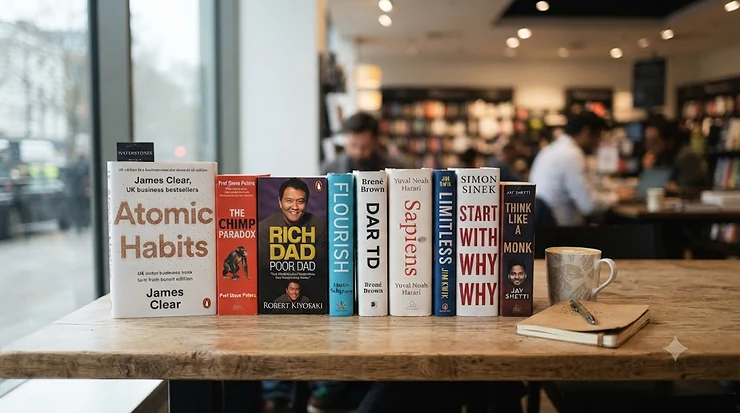
Business books bestsellers earn that label for a reason, but “bestselling” and “worth your actual reading hours” aren’t always the same thing. Some books top the charts because they say something genuinely useful in a way nobody’s managed before. Others ride a wave of hype and fade fast. This guide separates the two, working through seven real, currently available titles that have either stood the test of time or earned serious critical attention in 2026, with honest analysis of who each one actually suits — the ambitious graduate, the burnt-out middle manager, the founder three months from running out of runway.
We’ll also cover the practical side that most book roundups skip entirely: which of these make genuinely good business book gifts, which belong in a proper business classics collection, and which deserve a permanent spot on an executive reading list rather than a single read-and-donate cycle. According to the Financial Times Business Book of the Year Award, now in its third decade, the prize exists specifically to find books offering compelling insight into modern business issues — a useful filter to keep in mind as the market floods with new titles every January.
Quick Comparison Table
| Book | Author | Format | Best For |
|---|---|---|---|
| Atomic Habits | James Clear | Hardback / Paperback / Audiobook | Personal productivity, first-time readers |
| Good to Great | Jim Collins | Paperback / Hardback | Business classics collection |
| The Psychology of Money | Morgan Housel | Hardback / Paperback | Business book gifts, finance beginners |
| Shoe Dog | Phil Knight | Paperback / Hardback | Entrepreneurial memoir, gifting |
| Thinking, Fast and Slow | Daniel Kahneman | Paperback / Hardback | Executive reading list, decision-making |
| The Lean Startup | Eric Ries | Paperback | Founders, product managers |
| The Hard Thing About Hard Things | Ben Horowitz | Paperback / Hardback | CEOs, operators navigating a crisis |
Looking at the spread above, the immediate pattern is that the most enduring business books bestsellers rarely limit themselves to a narrow niche — Atomic Habits and The Psychology of Money in particular cross over hard into general non-fiction, which is exactly why they’ve sold in such volume beyond a purely business-book audience. If you’re building out a proper business classics collection, though, the analytical weight shifts toward Good to Great and Thinking, Fast and Slow, both of which reward slower, more deliberate reading rather than a single weekend sprint.
💬 Just one click — help others make better buying decisions too!😊
Top 7 Business Books Bestsellers: Expert Analysis
1. Atomic Habits — best top business books pick for actionable change
James Clear’s Atomic Habits has become something close to shorthand for behaviour-change writing since its release, built around the idea that small, 1% improvements compound into dramatic long-term results rather than relying on sudden, dramatic overhauls. The book’s central frameworks — habit stacking, the Two Minute Rule, and identifying your “Goldilocks Zone” of appropriately challenging tasks — translate cleanly from personal productivity into team management and business operations, which is precisely why it keeps appearing on business reading lists despite technically sitting in the self-help category.
Based on the spec comparison with denser strategy books on this list, what most buyers overlook about Atomic Habits is how deliberately unintimidating it is — short chapters, plain language, and a structure built for readers who don’t finish books, which is a genuine strength rather than a weakness when you’re recommending a first business read to someone who’s never picked one up. Reviewers consistently report that the book’s frameworks are easy to apply immediately, though a recurring theme in aggregated feedback is that experienced readers of behavioural science sometimes find the core ideas familiar territory rather than groundbreaking. It’s aimed squarely at readers who want practical, low-friction change rather than academic depth.
Pros:
- ✅ Extremely accessible for first-time business book readers
- ✅ Frameworks apply directly to team and personal habits alike
- ✅ Short chapters suit commuters and busy schedules
Cons:
- ❌ Feels familiar to readers already versed in behavioural science
- ❌ Light on hard business case studies compared with strategy-focused titles
Paperback copies typically sit in the £8-£12 range, with hardback and gift editions running higher — check current price, as this remains one of the most heavily discounted titles on Amazon UK.
2. Good to Great — best business classics collection anchor
Jim Collins’ Good to Great is built on a genuinely rigorous research premise: Collins and his team studied companies that transitioned from average performance to sustained excellence, comparing them against similar companies that never made the leap, to isolate what actually separated the two groups. The result is a set of frameworks — Level 5 Leadership, the Hedgehog Concept, the Flywheel Effect — that have become standard vocabulary in business school classrooms and boardrooms alike, more than two decades after first publication.
Here’s what to weigh: some of the specific companies Collins profiled as “great” have since faltered or been acquired, which critics have flagged as evidence that no framework can guarantee sustained success in a changing economy. On paper this means the book’s case studies age less well than its underlying frameworks, so it’s worth reading with that caveat rather than treating every example as gospel. What the spec sheet won’t tell you, but reviewers note, is that the Hedgehog Concept alone — the discipline of identifying what you can be the best in the world at, what drives your economic engine, and what you’re deeply passionate about — is frequently cited as worth the cover price on its own. This is essential reading for anyone building out a genuine business classics collection.
Pros:
- ✅ Rigorous, research-driven methodology rather than anecdote alone
- ✅ Frameworks remain widely taught and referenced today
- ✅ A genuine business school and MBA staple
Cons:
- ❌ Some featured “great” companies have since declined
- ❌ Denser and more academic in tone than newer bestsellers
Expect to pay around £9-£14 for a paperback edition, with hardback business classics collection editions available at a premium — check current price for the latest edition available.
3. The Psychology of Money — best business book gifts pick for finance beginners
Morgan Housel’s The Psychology of Money approaches personal and business finance from an angle most finance books skip entirely: behaviour and emotion, not spreadsheets and formulas. Structured as nineteen short, standalone essays, the book argues that financial success has more to do with how you behave under uncertainty than how much you technically know about markets, a premise built on real historical case studies of ordinary people who built and lost wealth.
Based on the spec comparison with denser financial texts, what most buyers overlook about this book is how genuinely readable it is for someone with zero finance background — there’s no jargon-heavy chapter that stops a non-specialist reader cold, which is exactly why it’s become one of the most-gifted business books bestsellers on the market. Aggregated reviewer sentiment consistently praises the book’s short-essay format for making it easy to pick up and put down without losing the thread, a rare quality in finance writing. It’s aimed at readers who want the psychology behind money decisions explained clearly, rather than technical investment strategy — pair it with a more tactical title if the recipient wants both.
Pros:
- ✅ Genuinely accessible with zero finance jargon required
- ✅ Short-essay format suits gifting and casual reading alike
- ✅ Grounded in real historical case studies, not abstract theory
Cons:
- ❌ Light on concrete, step-by-step investment tactics
- ❌ Some essays repeat similar themes across chapters
Hardback gift editions typically run £12-£18, with paperback closer to £8-£10 — check current price, as this title frequently appears in seasonal gift promotions.
4. Shoe Dog — best essential business reading memoir
Phil Knight’s Shoe Dog stands apart from every other title on this list by being a genuine memoir rather than a framework-driven guide, tracing Knight’s founding and near-collapse of what became Nike through decades of cash-flow crises, supplier disputes, and sheer stubbornness. Reviewers consistently note that the book reads more like a gripping personal narrative than a business text, which is precisely why it’s frequently cited among essential business reading even by people who otherwise avoid the genre entirely.
What most buyers overlook about Shoe Dog is how candidly Knight documents his own mistakes and near-failures, offering a genuinely honest counterpoint to the survivorship-bias problem that dogs a lot of founder success stories — Knight doesn’t present a clean, inevitable path to success, he presents years of genuinely uncertain scraping-by. On paper this means the book offers less in the way of transferable frameworks than Good to Great or The Lean Startup, but it compensates with something those books can’t provide: an emotionally honest account of what building a company from nothing actually feels like, which resonates strongly with early-stage founders navigating their own uncertainty.
Pros:
- ✅ Genuinely gripping narrative, unusual for the business genre
- ✅ Candid about failure, not just curated success
- ✅ Resonates strongly with early-stage founders
Cons:
- ❌ Fewer directly actionable frameworks than strategy-focused titles
- ❌ Told entirely from Knight’s perspective, without external verification
Prices typically range £9-£15 for paperback and hardback editions — check current price, particularly around gifting seasons when this title often appears in discounted bundles.
5. Thinking, Fast and Slow — best executive reading list pick for decision-making
Daniel Kahneman’s Thinking, Fast and Slow distils decades of Nobel Prize-winning behavioural economics research into a single, if demanding, volume built around two modes of thought: System 1 (fast, intuitive, and prone to bias) and System 2 (slow, deliberate, and effortful). For executives making high-stakes decisions under pressure, the book’s catalogue of cognitive biases — anchoring, overconfidence, loss aversion — functions less as abstract psychology and more as a practical warning system for exactly the kind of errors that derail strategic decisions.
Reviewers consistently note that this is a genuinely demanding read compared with the rest of this list — denser prose, more academic structure, and a length that rewards sustained attention rather than a quick commute read. Based on the spec comparison, what most buyers overlook is that Kahneman deliberately wrote the book to be revisited rather than read once; many executive reading lists include it specifically as a reference text to return to before major negotiations or strategic decisions, not a cover-to-cover sprint. It’s aimed at readers who want the underlying psychological science behind decision-making, not a simplified summary.
Pros:
- ✅ Grounded in genuine Nobel Prize-winning research
- ✅ Provides a lasting mental framework for spotting bias
- ✅ Rewards repeated reference use, not just one read-through
Cons:
- ❌ Denser and more demanding than most business bestsellers
- ❌ Longer format doesn’t suit quick, casual reading sessions
Paperback editions typically cost £9-£13, with hardback and box-set editions available at a premium — check current price before committing, given the book’s length and density.
6. The Lean Startup — best top business books pick for founders and product teams
Eric Ries’ The Lean Startup introduced a vocabulary that’s since become near-universal in tech and product circles: the minimum viable product, validated learning, and the build-measure-learn feedback loop. Rather than treating a business plan as a fixed document to execute against, Ries argues for treating a new venture as a series of testable hypotheses, adjusting course rapidly based on real customer feedback instead of assumptions baked in at launch.
What the spec sheet won’t tell you, but reviewers note, is how much the book’s core ideas have been absorbed so thoroughly into startup culture that some newer readers find the content feels less revolutionary than it did on release — a genuine sign of the book’s influence rather than a mark against it. Based on the spec comparison with Good to Great‘s big-company research, The Lean Startup is aimed squarely at early-stage founders and product managers operating under genuine uncertainty about whether a market even exists for what they’re building, rather than established leaders optimising an already-proven business. Aggregated feedback consistently praises its practical applicability, while some critics note the manufacturing-inspired “lean” terminology can feel slightly dated against more recent product-development writing.
Pros:
- ✅ Introduced foundational, now-standard startup vocabulary
- ✅ Highly practical framework for testing ideas cheaply
- ✅ Widely taught in accelerators and business schools
Cons:
- ❌ Core ideas now feel familiar after years of widespread adoption
- ❌ Less relevant for established, already-scaled businesses
Expect to pay around £8-£12 for a paperback copy — check current price, as this remains a consistently popular title in startup and entrepreneurship sections.
7. The Hard Thing About Hard Things — best executive reading list pick for crisis leadership
Ben Horowitz’s The Hard Thing About Hard Things occupies a genuinely distinct niche on this list: rather than offering a clean framework for growth, it’s built around the messy, often brutal decisions that come with actually running a company through genuine crisis — layoffs, near-bankruptcy, and the loneliness of decisions nobody else can make for you. Horowitz draws directly on his own experience running Loudcloud and Opsware through the dot-com crash, giving the book a grounded, occasionally uncomfortable honesty that more polished leadership books tend to avoid.
Based on the spec comparison with Atomic Habits and The Psychology of Money‘s broader accessibility, this is a denser, more specifically executive-focused read — reviewers consistently note it resonates most strongly with people who’ve actually had to make a genuinely difficult call, like laying off a team or telling investors a company might fail, rather than readers earlier in their career. What most buyers overlook is how much of the book’s value sits in its refusal to offer tidy answers; Horowitz repeatedly acknowledges there’s no formula for the hardest calls, which is exactly why it’s held its place on executive reading lists years after publication.
Pros:
- ✅ Unusually honest about genuine crisis and hard decisions
- ✅ Grounded in the author’s own lived operating experience
- ✅ Resonates strongly with founders and senior operators specifically
Cons:
- ❌ Less applicable for readers earlier in their career
- ❌ Can read as bleak rather than motivational in tone
Paperback and hardback editions typically range £9-£16 — check current price, as older editions occasionally see steeper discounts than the current print run.
Benefits vs Traditional Business Learning Methods
| Factor | Business Books | Executive MBA / Course | Podcasts |
|---|---|---|---|
| Upfront cost | £8-£20 per title | £20,000-£100,000+ | Free |
| Time investment | 4-8 hours per book | 1-2 years | Passive, ongoing |
| Depth of insight | High, but self-paced | Very high, structured | Variable, often surface-level |
| Portability | Read anywhere, any pace | Fixed schedule required | Listen while multitasking |
| Best For | Self-directed, budget-conscious learners | Structured career acceleration | Casual, ongoing exposure |
The cost gap here is worth sitting with: a stack of the seven titles on this list costs less than a single lunch with a management consultant, yet collectively represents decades of research, operating experience, and hard-won lessons from people who’ve actually built and run the companies in question. That doesn’t make books a full substitute for an executive MBA’s structured curriculum and network — but for most readers building genuine domain knowledge on a realistic budget, a well-chosen business classics collection delivers a remarkably high return relative to its cost. Podcasts fill a different gap entirely: useful for ongoing exposure to new ideas, but rarely offering the sustained, structured argument a proper book provides.
How to Choose Business Books Bestsellers
- Match the book to your actual career stage, not the bestseller rank. A book like The Hard Thing About Hard Things resonates far more with an operating CEO than a graduate three months into their first job.
- Decide whether you want frameworks or narrative. Good to Great and The Lean Startup are framework-driven; Shoe Dog is narrative-driven — both have value, but they suit different reading moods.
- Check the format against your actual reading habits. If you genuinely don’t finish physical books, an audiobook edition of a title like Atomic Habits removes that friction entirely.
- Prioritise density against available time. Thinking, Fast and Slow rewards sustained attention; if you only read in ten-minute commute bursts, a short-essay format like The Psychology of Money fits better.
- Look for evidence of staying power, not just launch-week sales. Titles still selling steadily five or more years after release, like Good to Great, have generally earned that longevity through genuine usefulness.
- Consider whether it’s for you or for gifting. Business book gifts perform best when they’re broadly accessible rather than niche — The Psychology of Money and Atomic Habits both gift well precisely because they don’t require existing business knowledge. FiveBooks’ expert recommendations are a useful independent starting point if you want a second opinion beyond bestseller charts.
- Read a sample chapter before committing to a full business classics collection purchase. Publisher websites and Amazon’s “Look Inside” feature let you gauge tone and density before buying multiple titles at once.
Practical Reading Guide: Getting the Most From a New Business Book
Buying the book is the easy part; actually absorbing and applying it is where most business reading falls apart. Start by setting a genuinely realistic pace rather than an aspirational one — a dense title like Thinking, Fast and Slow at three chapters a week is far more sustainable, and ultimately more effective, than an ambitious weekend sprint that burns out by chapter four. Keep a simple running note, digital or physical, of one specific idea per chapter you could actually apply this month; books read passively for “general knowledge” rarely change behaviour, while books read with a specific application in mind consistently do.
In the first thirty days after starting a new title, the most common mistake is treating every framework as universally applicable rather than testing it against your own context first — Collins’ Hedgehog Concept, for instance, needs genuine adaptation for a two-person startup versus a two-hundred-person company, even though the underlying question is the same. For ongoing use, revisit key chapters roughly every six months for titles built for reference rather than a single read, particularly Thinking, Fast and Slow and Good to Great, both of which are frequently cited by long-term readers as more useful on a second or third pass than the first.
Real-World Scenario: Which Book Suits Your Reading Goal?
The first-time reader building a habit. If you’re new to business reading altogether and want something that builds momentum rather than intimidates, Atomic Habits is the right starting point — short chapters, plain language, and immediately applicable ideas make it far easier to actually finish than denser alternatives, which matters more for a first read than raw depth.
The finance-anxious professional who wants clarity, not jargon. If spreadsheets and investment terminology switch your brain off, The Psychology of Money‘s short-essay, story-driven format delivers genuine financial literacy without ever requiring a finance background, making it one of the strongest business book gifts for someone starting from zero.
The senior leader navigating a genuine crisis. If you’re an operator facing a difficult call — layoffs, a funding shortfall, a leadership transition — The Hard Thing About Hard Things speaks directly to that specific, uncomfortable territory in a way more polished, success-focused books deliberately avoid.
Common Mistakes When Building a Business Reading List
The most common mistake is buying based purely on bestseller rank without checking whether the book actually matches your current situation — a founder pre-product-market-fit gains far more from The Lean Startup than from Good to Great‘s big-company research, even though both are genuine business books bestsellers. A second mistake is buying too many titles at once and finishing none of them; a single well-chosen book, actually read and applied, beats five unread books on a shelf every time.
A third mistake is dismissing older titles as outdated simply because of their publication date — Thinking, Fast and Slow and Good to Great are both well over a decade old and remain genuinely relevant precisely because they’re built on research and frameworks rather than trend-chasing. Finally, many buyers underestimate how much format affects whether a book actually gets finished: someone who reliably listens to audiobooks on a commute but rarely opens a physical book will get far more value from an audiobook edition than a beautifully bound hardback that sits unread on a shelf.

Features That Actually Matter (And Those That Don’t)
Not every quality that gets marketed on a book’s cover deserves equal weight when you’re choosing. A genuinely research-backed premise, like Collins’ comparative company study in Good to Great or Kahneman’s Nobel-winning research base, matters enormously for long-term credibility and reread value. Readability and chapter length matter more than most buyers initially assume — a book you never finish delivers zero value regardless of how good its ideas are, which is exactly why Atomic Habits‘ short, punchy chapters have driven so much of its commercial success.
On the other hand, a flashy cover blurb from a famous name is largely marketing rather than a genuine quality signal, and “instant #1 bestseller” claims in the first week after release say more about pre-order marketing budgets than long-term staying power — the more meaningful signal is whether a book is still selling steadily two, five, or ten years later. Page count is a similarly weak proxy for value; several of the shortest books on this list, including The Psychology of Money, deliver more genuinely applicable insight per page than considerably longer alternatives.
Long-Term Value & Building a Personal Library
Unlike most consumer purchases, a genuinely good business book tends to appreciate in personal value over time rather than depreciate — a title read once at twenty-five and revisited at thirty-five often reveals entirely different lessons, because the reader’s own context and experience have changed even though the text hasn’t. Building a deliberate business classics collection, rather than accumulating whatever’s trending that particular month, pays off specifically because foundational frameworks like Collins’ Hedgehog Concept or Kahneman’s System 1/System 2 model remain genuinely useful reference points years after first reading, unlike more trend-driven titles that age out of relevance within a couple of years.
Cost-per-use for a well-chosen business book is difficult to beat: even a £15 hardback, reread twice and referenced regularly over a decade, works out to a genuinely negligible ongoing cost relative to the ideas it’s shaped. For readers wanting a reliably curated starting point each year, the Financial Times Business Book of the Year shortlist is worth checking annually, since it consistently highlights titles offering genuine insight rather than fleeting trend value. Storage and physical space are worth a brief practical note too — if you’re building a proper executive reading list for an office or shared team space, paperback editions save considerable shelf space over hardback runs without sacrificing content, an easy way to fit more titles into a limited bookcase.
Business Book Gifts: What Actually Works
Gifting a business book well requires resisting the urge to pick the densest, most impressive-looking title on the shelf. The strongest business book gifts, based on aggregated recipient feedback across major UK retailers, tend to be broadly accessible rather than niche — The Psychology of Money and Atomic Habits both consistently perform well as gifts precisely because they don’t assume existing business knowledge, so they work for a graduate, a parent starting a small business, or a colleague moving into their first management role.
For a more senior recipient — someone already well-read in the genre — a beautifully produced hardback or anniversary edition of a genuine classic like Good to Great or Shoe Dog tends to land better than a newer, more niche release they may have already encountered. Pairing a book with a simple handwritten note explaining specifically why you chose it consistently outperforms an unexplained gift, according to informal reader surveys on gifting behaviour — the personal context turns a generic present into something that actually gets read rather than shelved.
What to Expect: Real-World Reading Experience
Spec sheets and blurbs rarely translate directly into lived reading experience, so here’s the practical version. A book like Thinking, Fast and Slow, at roughly 500 pages of dense argument, realistically takes most readers six to ten weeks at a sustainable pace of a few chapters a week — treating it as a quick weekend read is the single most common reason people abandon it partway through. By contrast, Atomic Habits or The Psychology of Money, both built around short, largely self-contained chapters, can genuinely be finished in a handful of sittings, which is exactly why they show up so often in “read in a weekend” recommendations.
Audiobook editions are worth specifically weighing for narrative-driven titles like Shoe Dog, where a good narrator adds genuine value to Knight’s personal storytelling voice, whereas framework-heavy books like Good to Great are sometimes easier to absorb in print, where you can flip back to reread a specific model rather than losing your place in an audio stream. None of these seven titles should be expected to replace hands-on experience entirely — reading about the Hedgehog Concept and actually applying it under real organisational pressure are genuinely different exercises, and the book’s real value lies in giving you a vocabulary and framework for that second, harder step.
Problem → Solution Guide
Problem: Starting several business books but never finishing any of them. Commit to one title at a time rather than reading three in parallel, and choose a shorter, more accessible entry point like Atomic Habits to rebuild the habit of finishing before tackling denser titles.
Problem: Struggling to retain or apply what you’ve read. Keep a single running note of one applicable idea per chapter rather than trying to remember the whole book, and revisit that note a month later to check what’s actually stuck.
Problem: Choosing a business book gift for someone whose interests you don’t fully know. Default to a broadly accessible, widely-loved title like The Psychology of Money, which consistently performs well across a wide range of recipients regardless of their specific career stage.
Problem: Finding older business classics feel dated or disconnected from a modern business. Focus on the underlying framework rather than the specific case studies — Collins’ Hedgehog Concept or Kahneman’s cognitive-bias catalogue remain genuinely applicable even when the example companies referenced have since changed.
Problem: A dense title like Thinking, Fast and Slow feels like a slog. Break it into a strict weekly chapter target rather than an open-ended commitment, and consider pairing print reading with the audiobook for a change of format on longer commutes.
FAQ
❓ What's the difference between essential business reading and general bestsellers?
❓ What are the best business book gifts for someone new to reading business books?
❓ Should I buy hardback or paperback for a business classics collection?
❓ How long does it typically take to read a business bestseller?
❓ Are older business books still worth reading in 2026?
Conclusion
Building a genuinely useful reading list from business books bestsellers comes down to matching the book to your actual situation rather than chasing whatever’s trending this quarter. If you’re just starting out, Atomic Habits offers the gentlest, most immediately applicable entry point, while The Psychology of Money remains one of the strongest all-round business book gifts precisely because it demands no prior knowledge. For a proper business classics collection, Good to Great and Thinking, Fast and Slow deliver the research-backed depth that keeps paying off years after the first read.
Founders and product teams navigating genuine uncertainty will get more immediate value from The Lean Startup, while Shoe Dog offers something none of the framework-driven titles can: an honest, occasionally uncomfortable look at what building something from nothing actually feels like. And for anyone on a genuine executive reading list, facing the kind of decisions that don’t have a clean textbook answer, The Hard Thing About Hard Things remains one of the few books willing to sit in that discomfort rather than paper over it. Choose based on where you are right now, not where the bestseller charts suggest you should be — the right book is the one you’ll actually finish.
Recommended for You
- Country Living Books 2026: 7 Best Reads for Rural Life Fans
- British Landscape Books: 7 Stunning Picks for 2026
- Best Countryside Books: 7 Beautiful British Reads for 2026
Disclaimer: This article contains affiliate links. As an Amazon Associate, I earn from qualifying purchases. If you purchase products through these links, we may earn a small commission at no additional cost to you.
✨ Found this helpful? Share it with your friends! 💬🤗
